FDA Approves KEYTRUDA® (pembrolizumab) and KEYTRUDA QLEX™ (pembrolizumab and berahyaluronidase alfa-pmph), Each With Padcev® (enfortumab vedotin-ejfv), as Treatment Before and After Surgery for Adults With Muscle-Invasive Bladder Cancer (MIBC)
First and only PD-1 inhibitor plus antibody-drug conjugate regimens approved for patients with MIBC regardless of cisplatin eligibility
Approvals based on Phase 3 KEYNOTE-B15 trial, combined with previous approvals based on Phase 3 KEYNOTE-905 trial, bring forward new options for these patients
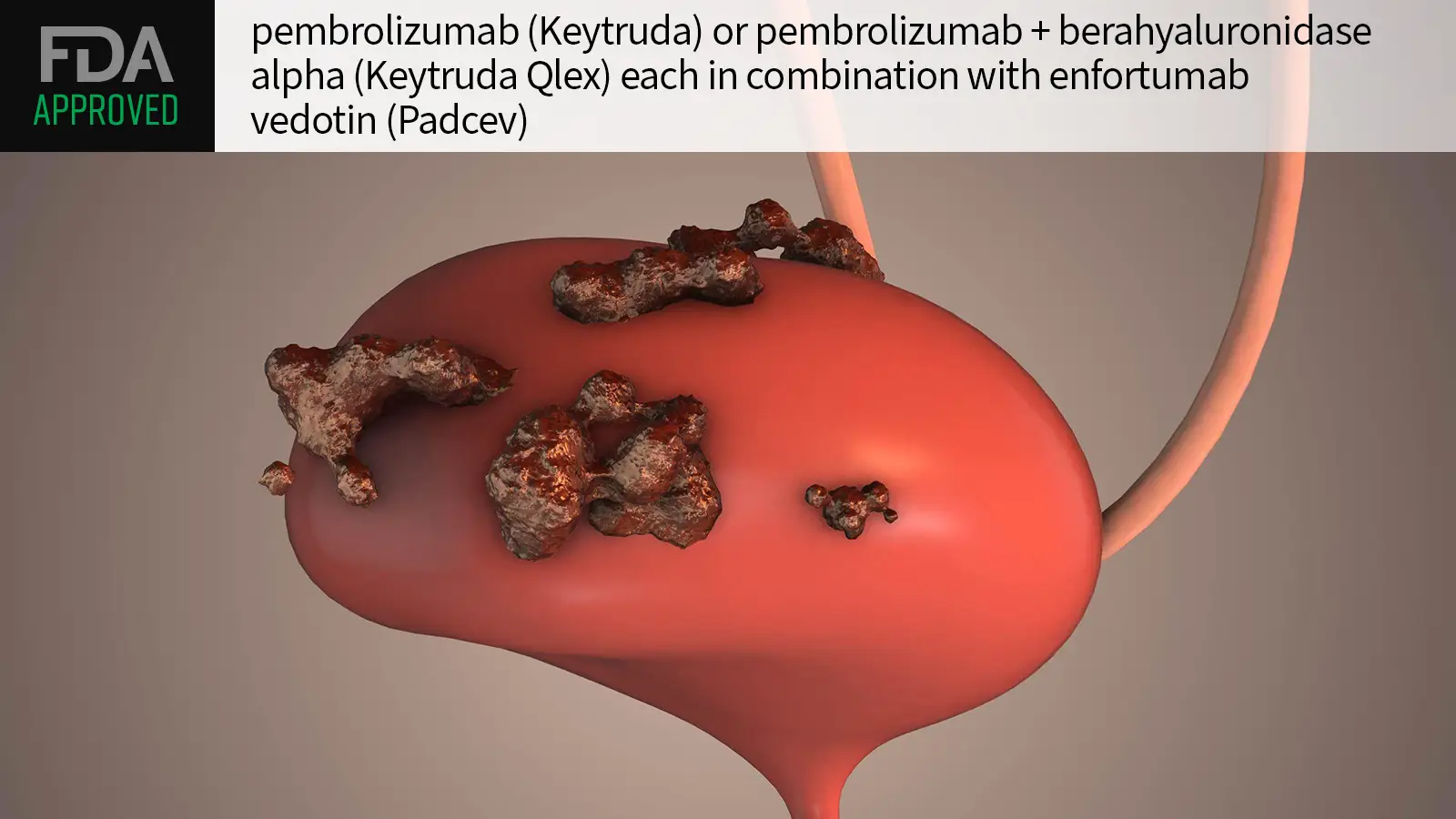
Merck (NYSE: MRK), known as MSD outside of the United States and Canada, today announced the U.S. Food and Drug Administration (FDA) approved KEYTRUDA® (pembrolizumab) and KEYTRUDA QLEX™ (pembrolizumab and berahyaluronidase alfa-pmph), Merck’s anti-PD-1 therapies, each in combination with Padcev® (enfortumab vedotin-ejfv), as neoadjuvant treatment and then continued after cystectomy as adjuvant treatment for the treatment of adult patients with muscle-invasive bladder cancer (MIBC). These approvals represent the first and only PD-1 inhibitor plus antibody-drug conjugate (ADC) regimens approved for adults with MIBC regardless of cisplatin eligibility.
These approvals are based on data from the Phase 3 KEYNOTE-B15 trial (also known as EV-304), which was conducted in collaboration with Pfizer and Astellas and enrolled 808 patients. They also expand the previously approved indication based on the Phase 3 KEYNOTE-905 trial (also known as EV-303) for KEYTRUDA and KEYTRUDA QLEX, each in combination with Padcev, in the U.S. as treatment before and after surgery for adult patients with MIBC who are ineligible for cisplatin-based chemotherapy.