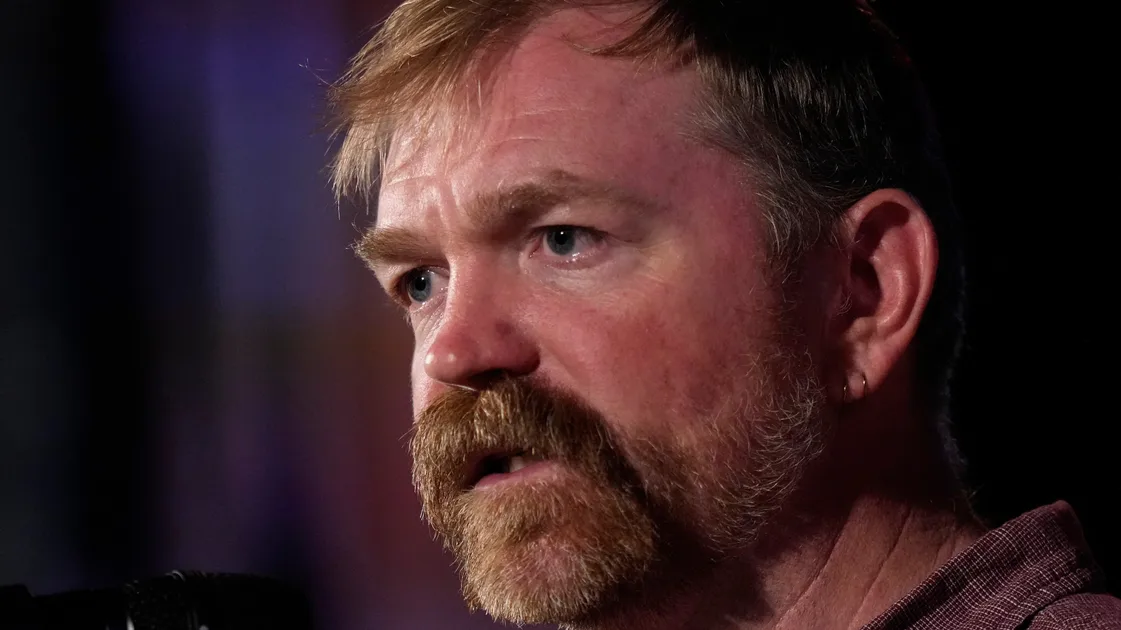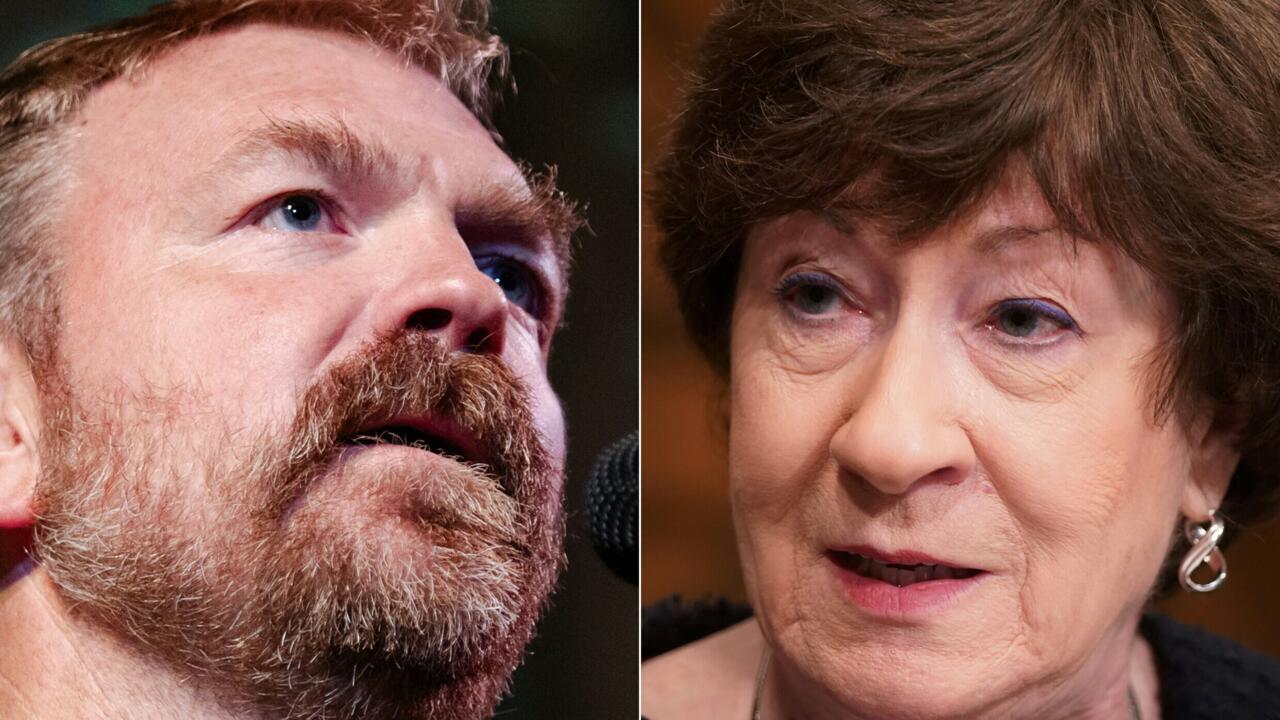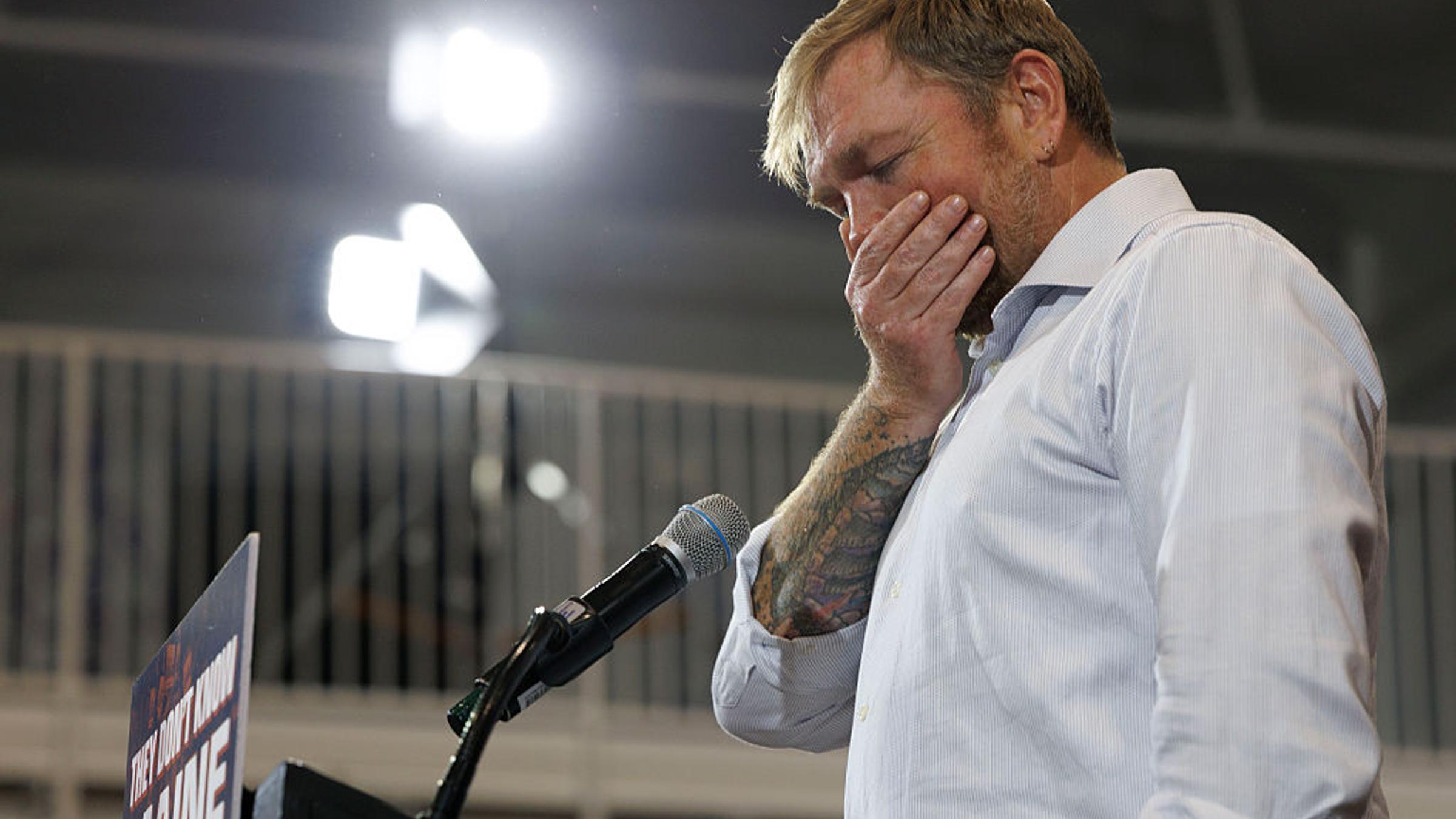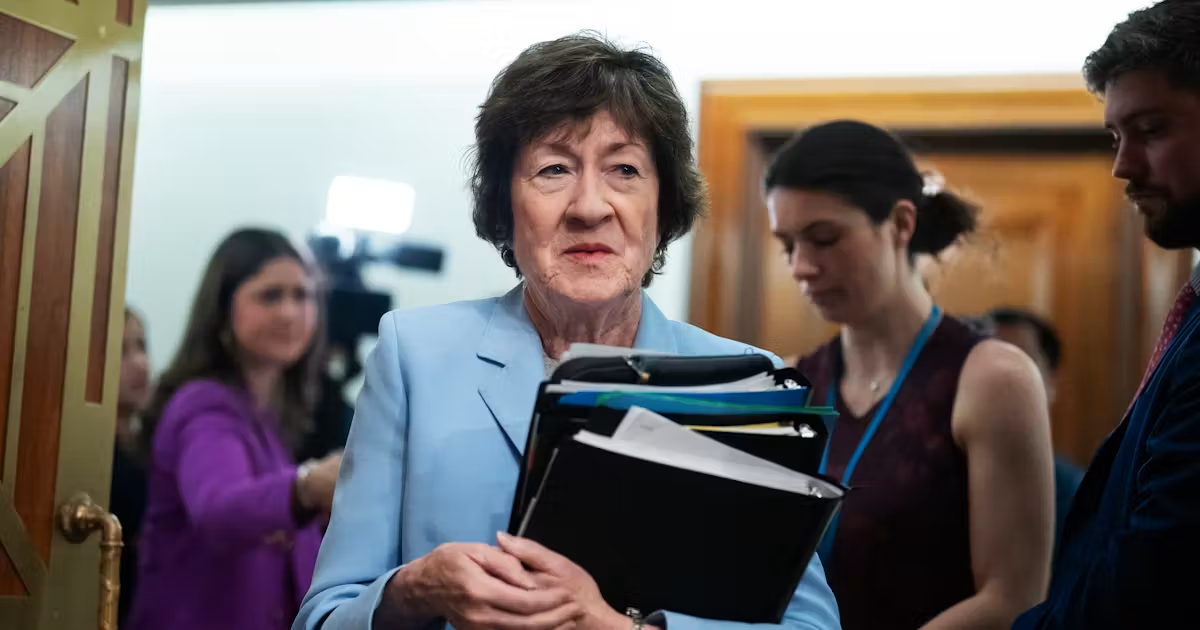
The conventional media wisdom is that Maine GOP Senator Susan Collins is sitting back and laughing this week, and well she might be. The collapse of Graham Platner’s campaign is an implosion for the ages, and it puts the state’s Democrats in a tricky situation they need to navigate skillfully in these next two weeks.But November is a long way away. If—and it’s a big but by no means insurmountable if—the Democrats make it through these next two weeks without too many bruises and unite behind a nominee, Collins is still going to be fighting for her life in a Democratic state where Donald Trump’s approval rating is 36 percent, where 85 percent say the state’s economy is fair or poor, and where the generic Democratic congressional edge in one recent poll is a hefty 11 percent. Those are all terrifying numbers for Collins, and she knows it.Before we get into all that, a few closing thoughts on Platner. I wrote about him a month ago, after The New York Times published some unsavory revelations about his treatment of some former girlfriends (while others said he was fine toward them), and right before the primary. I wrote that since he was almost certain to be the nominee, national Democrats needed to back him. I did, however, add three caveats, as experience has taught me to do in such situations: “Short of revelations involving murder, rape, or a taste for child pornography, Platner needs to be backed by Democrats to the hilt.” Well, he managed one out of three, but one is enough. It’s utterly and obviously disqualifying. Some Platner defenders have tried to say, What about innocent until proven guilty? That’s ridiculous in the context of running for office. Yes, it means everything in a court of law, where a defendant is on trial for his very freedom; there, he is absolutely entitled to a presumption of innocence, and he must be given his day in court so that we all hear his side. But a political campaign isn’t a criminal trial. In a political campaign, political judgments must be made, and the clear political judgment here is that no party can back someone facing a credible allegation of rape, for God’s sake.As for the intentionally weak vetting of Platner by the young leftist strategists who “discovered” him: I hope people have learned some obvious lessons. Daniel Moraff, the person who’s apparently largely responsible for this debacle, told The Wall Street Journal last month that he sensed a public thirsting for non-cookie-cutter candidates who challenge the status quo. That’s surely true, in a lot of places, but it hardly means you don’t need to put your candidates through the usual paces. It’s grotesquely arrogant and irresponsible, and if Collins ends up winning, Moraff will bear a huge share of the blame.However: I still say, Moraff and Platner aside, Collins could well be in far more trouble with a new Democratic nominee. Kamala Harris beat Trump by seven points in the state. And as I noted above, in a recent poll, respondents said that for Congress, they’d choose a Democrat over a Republican by 53 percent to 42 percent. On top of that, Democratic gubernatorial nominee Hannah Pingree, who will be at the top of the ticket, looks like she’s going to beat her Republican foe by around 15 points. That means Collins is going to have to convince a lot of independents to switch from the D column to the R one as they move down the ballot from governor to senator.Collins has won such voters before, but I would remind people, as they look over past elections for parallels, to take note not only of what’s similar but of what’s different.The main (as it were) case in point here is 2014. Shenna Bellows, the current secretary of state and a leading contender to replace Platner, was the Democratic nominee against Collins that year. Collins blew her out by 30 points, which some say should raise a lot of red flags.Well, there are a host of differences between 2014 and today. One, Bellows was a 39-year-old novice then, who had never held office and whose claim to fame was that she had been the head of the state’s ACLU. Two, it was the sixth year of a Democratic incumbent presidency, a notoriously hard year for candidates of said party. Three, the Maine of 2014 was in such a cantankerous state that it reelected embarrassing extremist loudmouth Paul LePage as its governor. Four, it was pre-Trump, which changes everything. Five, it was before Collins’s vote to confirm Brett Kavanaugh as a Supreme Court justice because she took him at his word that Roe v. Wade was “settled law.”I’m not saying Bellows should be the choice. I don’t know enough about the available candidates or the ins and outs of Maine politics. That’s up to those 600 Democratic delegates to sort out and decide. I’m just saying that what’s past isn’t always prologue. The point is what’s going on now. And what’s going on now, nationally and in Maine, is a strong anti-Trump sentiment—and a GOP incumbent senator who voted to confirm 22 of Trump’s 23 Cabinet nominees.What the Maine Democratic Party, and to some extent the national Democratic Party, has to do here is run a process that is widely accepted as having two qualities: It must be transparent, and it has to feel fair. The party needs to give voters and citizens regular updates on the process—this is happening today; this is happening next Tuesday—so that everyone feels they’re in the loop and no one feels sandbagged. And it needs to feel fair so that in the end, everyone at least feels that they need to accept the outcome.As for the national party, I hope Chuck Schumer has the sense to stay completely out of this. His fear of Platner turns out to have been justified, but the way he pushed Governor Janet Mills—who ran as if she didn’t really want to be there—into the race only helped Platner score the nomination. If Schumer and national Democrats are perceived as putting their finger on the scale for a candidate—for instance, in order to stop former state Senate Majority Leader Troy Jackson, who is widely seen as most Platner-like in his populist politics—they’ll only sow rancor and help Collins in the long run.In the short term, this was a good week for Susan Collins. But to paraphrase Harry Hopkins, people don’t vote in the short term. They vote in November. By then, she could very well be regretting this week’s events.Editor’s PicksHistory—in this case, through the pen of James Boswell—does not record for us the context in which Samuel Johnson offered up the famous quote that “patriotism is the last refuge of a scoundrel.” According to samueljohnson.com, the English intellectual and polymath just blurted it out on the evening of April 7, 1775, providing no context or explanation of what was on his mind. Some biographers apparently believe he was thinking of William Pitt the Elder, and the former prime minister’s frequent invocation of the term.We do, however, have more thoughts on the matter from Johnson that have survived. The year before, Johnson—something of a mixed bag, politically, but an ardent foe of slavery long before abolitionism became a movement in Great Britain—wrote and delivered to Parliament a speech he called “The Patriot.” It was election time, and Johnson was laying out for the assembled some of his ideas about the duties of public service, and what patriotism does, and does not, mean.Herewith, just a few choice quotes:“To instigate the populace with rage beyond the provocation, is to suspend publick happiness, if not to destroy it. He is no lover of his country, that unnecessarily disturbs its peace.”“Still less does the true patriot circulate opinions which he knows to be false. No man, who loves his country, fills the nation with clamorous complaints, that the protestant religion is in danger, because ‘popery is established in the extensive province of Quebec,’ a falsehood so open and shameless, that it can need no confutation among those who know that of which it is almost impossible for the most unenlightened zealot to be ignorant.”Finally, in his closing peroration, Johnson urged the next House of Commons to “unite in a general abhorrence of those, who, by deceiving the credulous with fictitious mischiefs, overbearing the weak by audacity of falsehood, by appealing to the judgment of ignorance, and flattering the vanity of meanness … arrogate to themselves the name of patriots.”As we watch (or avoid watching) Donald Trump trying to turn the celebration of the United States’ 250th birthday into a celebration of Donald Trump, we would do well to remember Dr. Johnson’s thoughts. In wondering what he might think of the president’s ideas and actions this week, there is very little mystery. Let’s review a couple of those actions, as reported by Politico Playbook Friday morning:You saw that ridiculous video of Trump “talking” with the AI Teddy Roosevelt? Well, this was meant to be part of a “living museum recreating Theodore Roosevelt’s frontier experience,” as envisioned in a “planning document” from America250, a bipartisan, congressionally chartered, decade-old plan to launch various commemorations. From Playbook: “It hoped to draw 250,000 visitors for a nationally televised celebration on July 1 featuring A-list performers, immersive historical programming, a drone spectacular and, ultimately, the Theodore Roosevelt Presidential Library’s grand opening.” Instead, it launched with a visit from Trump.The Smithsonian Folklife Festival, a decades-old Washington summer fixture that always takes place on the National Mall, was given the boot this year and forced inside the Smithsonian Castle to make way for Trump’s Great American State Fair, which has been drawing fewer attendees than a lot of Little League games.Finally, it almost goes without saying that the Trump administration stiffed America250, according to Politico. Congress appropriated $150 million to the project, but organizers have received just $25 million to date. Democrats also alleged this week that some America250 donors were tricked into donating to Trump’s personal semiquincentennial organization, Freedom 250, which is responsible for the UFC fight at the White House and the ongoing fair. (Naturally, Freedom 250 is not subject to congressional oversight, and it can keep its donors private.)But these, of course, are minor matters that will pass. The real hallmarks of Trump’s false patriotism are the things that make his tenure such a horrific embarrassment and civic tragedy to so many millions of Americans. The constant lies meant to glorify him and his reign. The toxic hatred of so many of the people he was elected to serve. The petty and immoral pursuit of his political enemies. The operatic and open corruption.These are venal acts. But as July 4 approaches, it behooves us to remember specifically that they are also unpatriotic. Or worse: They are aggressively anti-patriotic. Real patriotism is truthful and humble; it tolerates and even welcomes dissent, and, understanding that the people rule in a democracy, it serves supporters and detractors equally; it seeks justice rather than revenge; and it understands that to pursue profit from office is abhorrent.Trump knows none of that. He is a treacherous, know-nothing anti-patriot. The image that sticks with me, the photo that made me both roll my eyes and gasp in horror when I first saw it, was the one of Trump kissing an American flag. What a grotesque act of civic idolatry; in fact, let’s throw “idolatrous” in there too. And if you don’t understand why kissing a flag is an act of grotesque civic idolatry, then you, my friend, are part of the problem.Let’s close with a few more thoughts on patriotism from some people who actually knew what it means:George Washington: “Guard against the impostures of pretended patriotism.”G.K. Chesterton: “‘My country, right or wrong’ is a thing no patriot would ever think of saying except in a desperate case. It is like saying ‘My mother, drunk or sober.’”Albert Einstein: “Heroism on command, senseless violence, and all the loathsome nonsense that goes by the name of patriotism—how passionately I hate them!”And maybe my favorite, from Clarence Darrow: “True patriotism hates injustice in its own land more than anywhere else.”There is still much to celebrate about the United States of America—its art and literature and music, its scientific achievements, its physical beauty, and of course the principles of liberty it introduced to the world 250 years ago and toward which we daily and yearly strive. The anti-patriots do have the upper hand right now, but more and more people are seeing through them. In addition, they are also making real, Johnson- and Darrow-esque patriots of millions who were once disengaged. That is something to be hopeful about, and to celebrate, this weekend.Was Thursday among the darkest days in the history of the Supreme Court? You could make a case. First, a majority cleared the way for a pesticide manufacturer to get thousands of lawsuits off its books from farmers who’d used its product and gotten cancer. Next, it ruled that the administration could turn away asylum-seekers at the border. And then it held that gun owners could now freely carry their weapons into private establishments that serve the public.Let’s pause over that one for a paragraph. Here’s a good description of the particulars of the gun case and the legal arguments on both sides. But the upshot is this: Everywhere in America, gun owners will presumably be able to take their guns to shops, stores, malls, movie theaters, restaurants, bars, amusement parks, Baby Gaps, you name it. Does any rational person think that the Founders, who simply wanted men to have muskets to protect themselves from invaders, would want someone to be able to take a military-style semiautomatic rifle and 600 rounds of ammo into a Chuck E. Cheese?But the worst of Thursday’s big four decisions was Mullin v. Doe, which will allow the Trump administration to begin deporting Haitians and Syrians who were granted Temporary Protected Status by the Obama administration in 2010 and 2012, respectively. My colleague Matt Ford shredded the decision in his piece, writing that the court “effectively blessed Trump’s bigotry toward Haitians and dealt potentially catastrophic damage to federal civil rights laws.”The cases combine to give the executive branch more power. They turn several lower court decisions on their head (as The New York Times notes today, immigration hard-liners had lost case after case on TPS until yesterday). And in the case of Mullin, in particular, the highest legal authority in the land—namely, Samuel Alito, writing for the majority—pretends that Donald Trump’s blatant racism toward Haitians doesn’t exist; that there was nothing “overtly racial” in Trump’s many disgusting and false comments about the Haitian community of Springfield, Ohio, and beyond.This conservative court is out of control—blatantly partisan and ideological, the six-member majority scarcely even pretends otherwise anymore. Some major decisions about executive power—Trump’s power—are yet to be handed down this term, involving the firing of Fed Governor Lisa Cook, the removal of Democratic appointees from independent agencies, and of course the birthright citizenship case. If the court rules predictably on two of these three, or certainly on all three, it will have completed a term—with the aforementioned four decisions already on the books, as well as Callais v. Louisiana, which did away with Section 2 of the Voting Rights Act—that might well be the most reactionary in its history. And all this is on top of the earlier reversal of a 49-year-old precedent in 1973’s Roe v. Wade and the handing to Trump of sweeping immunity for all “official” acts.It’s now unavoidable: This has to be a front-and-center issue in 2028. Democratic presidential contenders will have to answer the question: What do you plan to do about the Supreme Court?Many of them will be afraid to dip a foot into these waters. They shouldn’t be. Poll after poll shows us that majorities disapprove of the court and think of its decisions as being more political than jurisprudential. According to Gallup, disapproval of the court topped 50 percent five years ago and has stayed there ever since (in contrast, that number was just 29 percent as recently as 2010). So the public—not just the progressive base of the party—is ready to hear ideas.Terms limits, the most common idea bruited, are fine. But imposing term limits won’t really change the makeup of the court for years; maybe decades. How many more rights will they strip away before then? How much more power will they give to the uber-rich to buy political campaigns and candidates? How much more immunity will they grant to corporations? How many new ways will they find to weaken protections for workers and litigants against corporate power? And perhaps most of all, how will they figure out how to allow the executive branch to undermine the laws passed by Congress and refuse to write regulations and enforce the laws Congress has passed?No—terms limits are no longer enough. It’s time to talk seriously about court expansion. And I think there’s a smart and totally constitutionally defensible way to do it. The United States has 13 federal circuit courts. That number, naturally, grew over the course of the country’s history, as the number of states grew and as the population expanded. This is relevant here because each Supreme Court justice is responsible for overseeing a certain number of circuits. Historically, Congress has expanded the number of justices as it simultaneously increased the number of circuits.Admittedly, all this happened a very long time ago. But still, it’s precedent. The court was established in 1789 at six justices. In 1807, Congress expanded the number of federal circuits to seven, and added a justice to match. In 1837, Congress created nine circuits and nine justices. In 1863—even while the United States of America had lost the 11 states of the Confederacy—Congress created 10 circuits and 10 justices. The current nine-justice format was set in 1869.Later expansions in the number of circuits did not simultaneously add justices. But why not revive that thought? The country has had today’s 13 circuits since 1982. The population of the country in 1982 was 230 million. Today, it’s around 345 million. That’s a lot more people. And the courts are horribly backlogged. That could be solved by just adding judges. But it’s also a justification for increasing the number of circuits. From there, a case can clearly be made that increasing the number of circuits requires increasing the number of high court justices. Or at the very least, Democrats can pursue a hybrid solution that would keep the number of circuits at 13 and add a large number of judges within those circuits—while increasing the size of the Supreme Court to 13. Democratic Congressman Hank Johnson of Georgia, a leader on these issues, introduced such a bill in 2023, and it had around 60 co-sponsors.It would all be completely constitutional and completely legal. Which is more than can be said for a lot of the things Trump and the Republicans are getting up to, as they try to find new and blatantly illegal ways to stop mail-in voting and otherwise take the franchise away from citizens.But the big door-opener here by Trump and the GOP is their rancidly unconstitutional mid-decade redistricting move. The Constitution clearly and plainly states that districts will be redrawn every 10 years, after the decennial census. What Trump and his party are doing with this redistricting is completely lawless.Once they’ve done that, all bets are off. Democrats should do whatever they need to do to rebalance power. But—they should stay within the law. What I’m talking about here, what Johnson’s bill would accomplish, would be entirely within the law. Congress can set the size of the Supreme Court. And I believe that a smart Democrat, framing the argument the right way, can take that case to the American people and win it. He or she can convince the voters that far from destroying the court, such an action would constitute saving it from its own extremism—and saving the rights we cherish that these ideologues are stripping away.This article first appeared in Fighting Words, a weekly TNR newsletter authored by editor Michael Tomasky. Sign up here.Latest From Politics
Susan Collins May Be Chuckling, but She’s in Far Worse Trouble Now
She was pretty clearly going to beat a man credibly accused of rape. But now? There’ll be a normal Democratic candidate in a heavily Democratic state.
5,619 words~26 min read