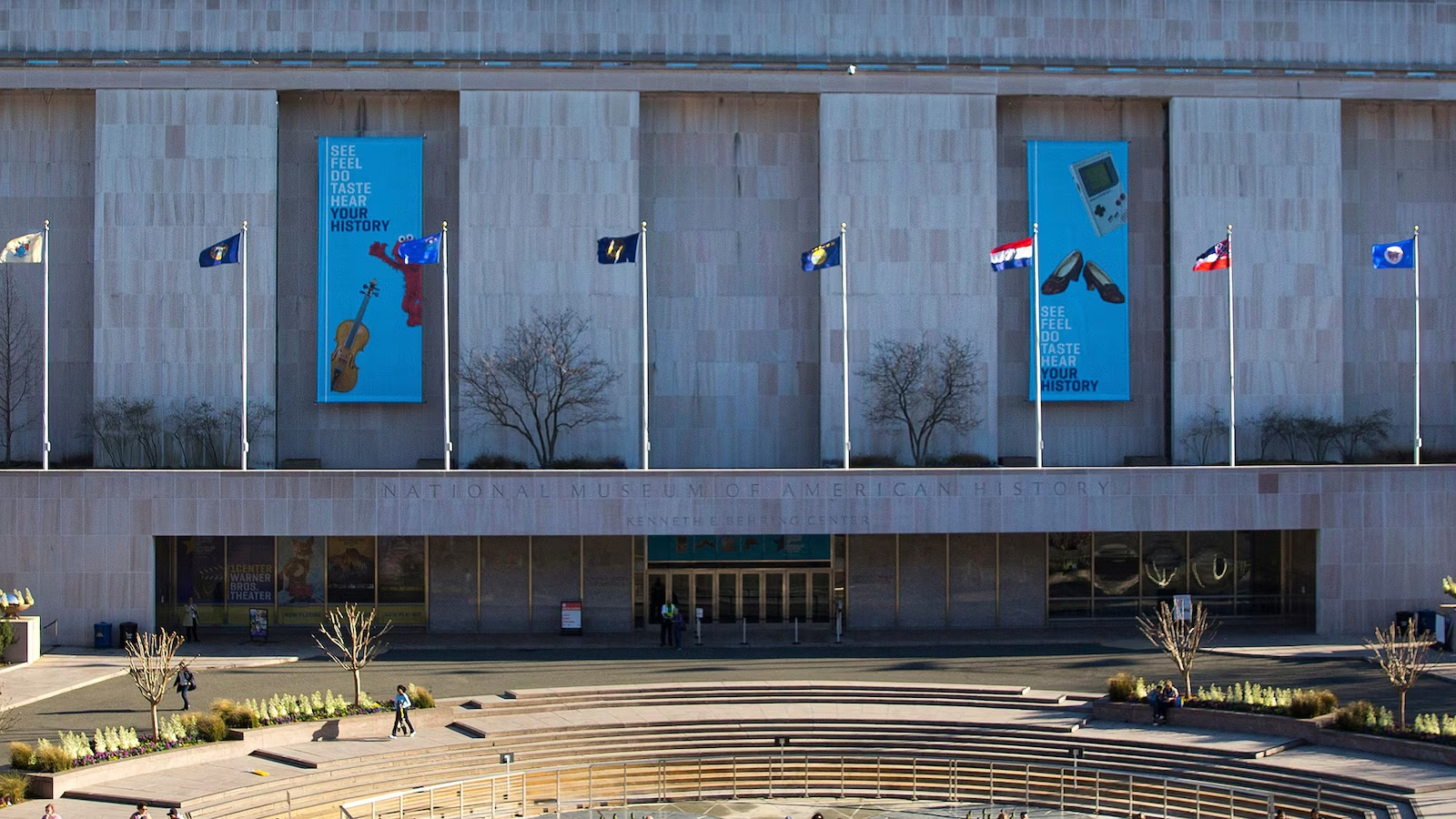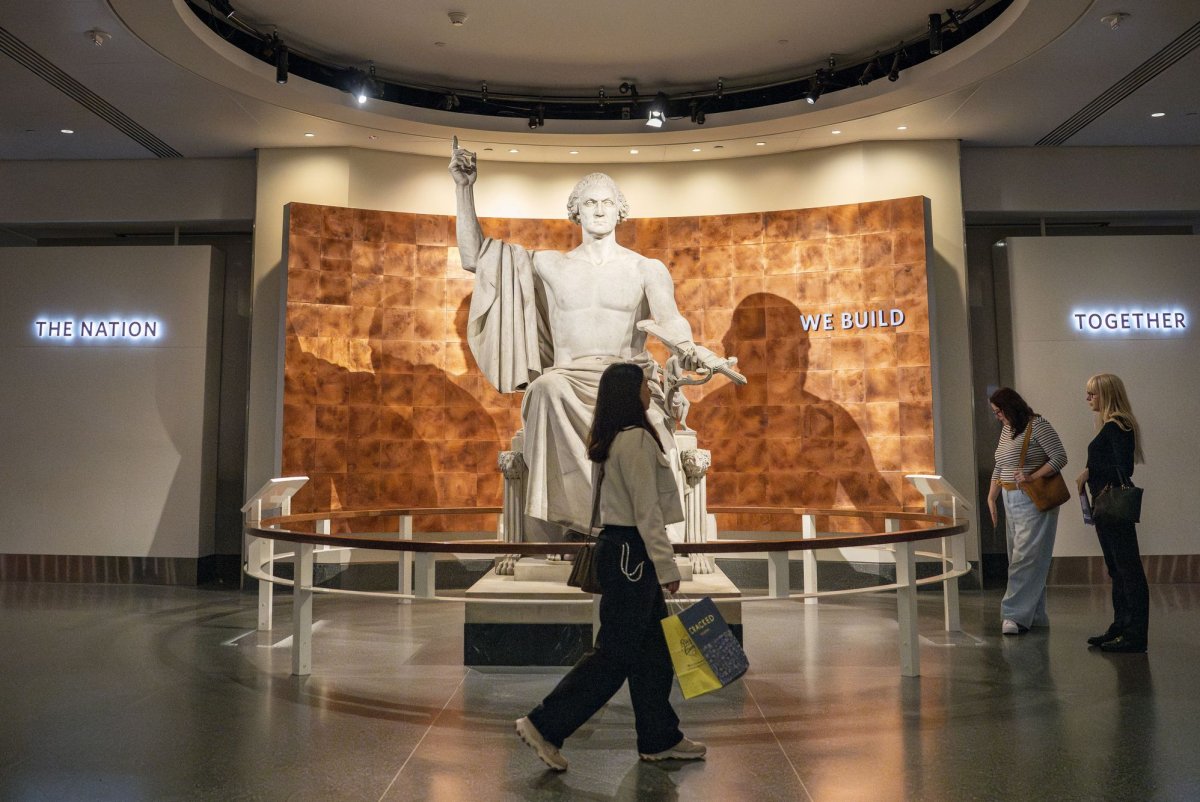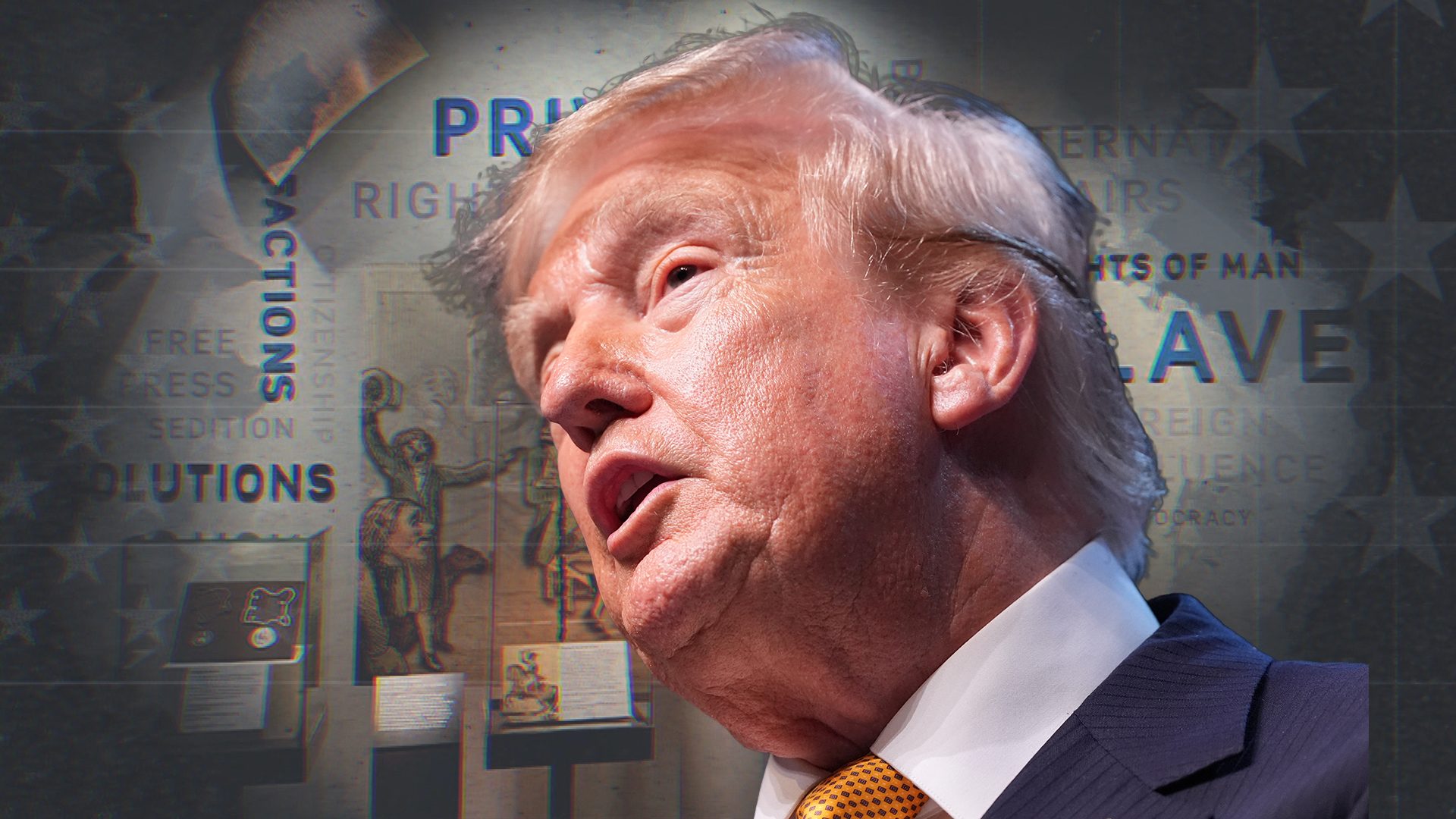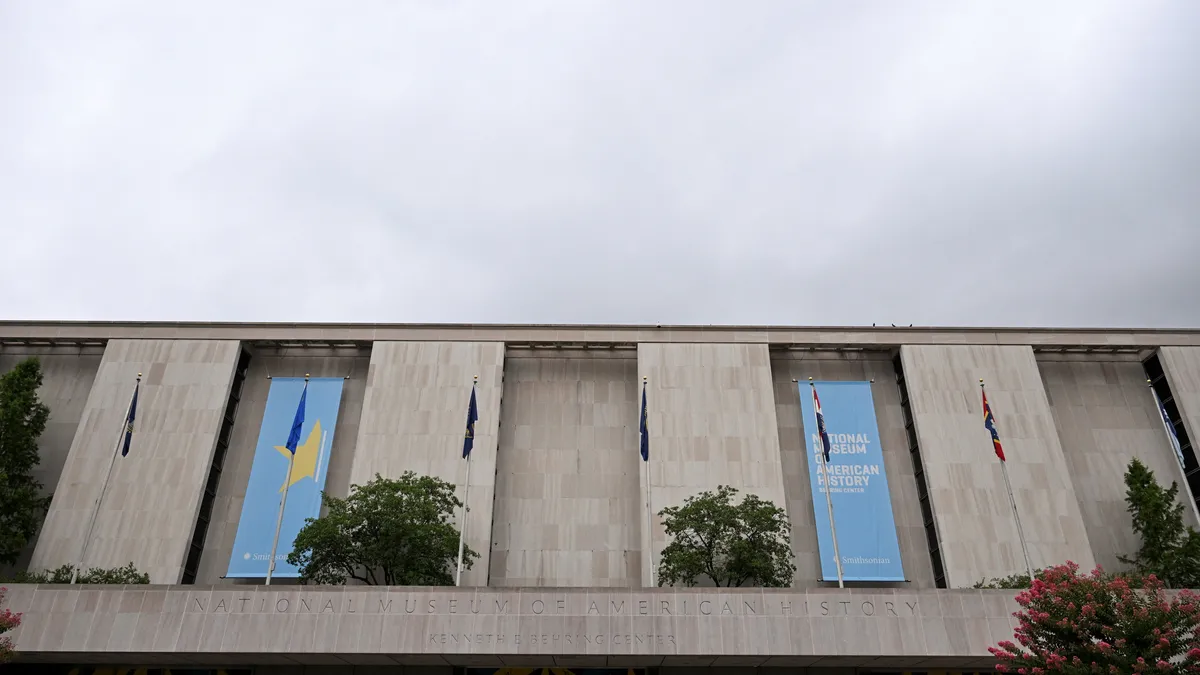
A White House report accused the National Museum of American History of promoting a "radical, activist ideology." Historians largely disagree. Visitors spoke of their support for the museum.Show Caption
WASHINGTON – Tensions between the Trump administration and Smithsonian Institution have escalated after a White House report accused the National Museum of American History of promoting a "radical, activist ideology."In the days after the report was released, historians rallied around the museum, Smithsonian leadership criticized the report and visitors – including some supporters of President Donald Trump – told USA TODAY they saw little evidence of a radical agenda at the museum.The 162-page report, released July 4 by the White House Domestic Policy Council, is part of the Trump administration’s ongoing review of the Smithsonian Institution, which includes 21 museums and the National Zoo.The report accuses the museum of overemphasizing themes like racism and inequality and said its leaders steered from historical scholarship toward social justice advocacy. The report also argues the museum's exhibits fail to sufficiently highlight American achievements and instead "teach disdain and inspire disgust of our great country."The Smithsonian Institution has not publicly addressed the claims, but in an email obtained by USA TODAY, Smithsonian Secretary Lonnie Bunch told staff the report was "not a fair characterization of the work and totality" of the American history museum.Over a dozen National Museum of American History visitors who spoke with USA TODAY on July 9, including supporters of the president, said the museum gave a fair and nuanced portrayal of American history. Meanwhile, historians, including the Organization of American Historians, have largely backed the Smithsonian.The White House stood behind the report. In a statement, Vince Haley, director of the White House Domestic Policy Council, said, "No American wants the Smithsonian's National Museum of American History to be a system of ideological activism. Unfortunately, the report demonstrates that is exactly what the Smithsonian's flagship museum has become."Here's what to know about the ongoing battle between the Trump administration and the Smithsonian Institution.White House report centers on American history museumSince returning to office, President Donald Trump has sought to reshape cultural institutions to his liking, including the Kennedy Center, universities and the Smithsonian Institution. Last year, Trump signed an executive order directing the Smithsonian to remove what he called “divisive, race-centered ideology.” He then ordered a comprehensive review of the institution and effectively forced out the director of one of its flagship museums, citing her support for diversity, equity and inclusion initiatives and alleged partisan views.The new report from the White House centers on the National Museum of American History and alleges that it overemphasizes themes of racism, oppression and inequality. It accuses the museum of framing the pilgrims as colonizers, Thanksgiving as a day of mourning, and the European settlement of America as a "profound unsettling."The report also argues that the museum intentionally downplays America’s founding, noting the absence of major exhibits devoted to the founding fathers or key events of the American Revolution as the country marks its 250th anniversary. It further criticizes the museum's programs and exhibits addressing race, immigration and gender identity, contending they prioritize advocacy over traditional historical interpretation."Smithsonian Institution, and the National Museum of American History in particular, under its current leadership and current interpretive ideology, cannot be trusted to tell America’s story honestly and in a way that is inspiring, unifying, and worthy of our great republic," the report concludes.The Smithsonian Institution has not directly responded to the White House's allegations.In his email to Smithsonian staff, Bunch said the institution's work is "driven by scholarship, accuracy, and an uncompromising commitment to telling the fullness of America's story." He added that the Smithsonian will remain steadfast in its commitment to "nonpartisanship, independence, accuracy, and integrity."What are historians saying?The Organization of American Historians, the largest professional organization dedicated to the preservation of U.S. history, condemned the report as "part of an ongoing and multi-pronged assault by the Trump administration against accurate and evidence-based history in American public life."Suse Anderson, program head of museum studies at George Washington University, said the report lacks merit and the authors "cherry picked a handful of examples that seek to paint the museum’s normal and legitimate practices as nefarious and inappropriate."The museum is a leader in its field, Anderson said, and the report is another front in the administration's larger effort to "undermine the museum field’s independence and its mission to tell diverse, inclusive stories."Dean Sobel, a museum studies professor at the University of Colorado Boulder, said he's "extremely concerned" about the administration interfering with the work of curators and academics rooted in sound research and scholarship."It's not grounded in an understanding of what museums really do," Sobel said of the White House report. "We don't tell stories simply, we tell them with all their complexities."What power does Trump have over the Smithsonian?Founded in 1846, the Smithsonian is a public-private partnership established by Congress. It's not governed by the executive branch but rather a 17-member Board of Regents that includes Vice President JD Vance, Supreme Court Chief Justice John Roberts, six members of Congress and nine members of the public.But while Trump cannot direct the Smithsonian like an executive-branch agency, he has shown a willingness to exert an enormous amount of pressure to overhaul the institution to his liking.The White House has ordered a review of exhibits and public-facing materials, and publicly urged the institution to make changes. In an executive order, Trump called on Vance to work with Congress to prohibit spending on programs that “degrade shared American values, divide Americans by race or promote ideologies inconsistent with federal law."Last year, Kim Sajet stepped down from her role directing the National Portrait Gallery after Trump said he fired her for being "a highly partisan person, and a strong supporter of DEI." Before Sajet stepped down, the Smithsonian released a statement asserting that only its secretary and board can make such decisions, not the president."All personnel decisions are made by and subject to the direction of the secretary, with oversight by the board," the institution said at the time. Nevertheless, Sajet opted to step aside, saying the move was in the best interest of the institution.But despite intense pressure from the White House, no large-scale changes to museum exhibits or placards have occurred. In July 2025, the National Museum of American History removed references to Trump from an exhibit on presidential impeachment but later restored them, though with some slight changes to the text.'This is American history,' visitors sayMore than a dozen visitors who visited the American history museum on July 9 said they found little evidence of the "extreme political activism" described in the White House's report."This is American history, whether you like it or not," said Joey Richardson, 67, a retired paper mill worker from Texas. He toured the museum while on a trip with his grandson, who's attending a youth leadership conference hosted by the conservative organization Turning Point USA.Rebecca Thapa, a sixth-grade teacher from Tulsa, Oklahoma, said the report's claims are "not anywhere close to reality." She said she finds it "disheartening" that the White House described the museum's exhibits and programming as skewed and dishonest. "Everything we saw was really positive."Wendy Kiesman, 53, of Wells, Maine, said she would like to have seen a larger emphasis placed on the founding fathers' accomplishments, echoing a top complaint in the report. But she also said she wouldn't scale back any descriptions about Alexander Hamilton and Benjamin Franklin owning slaves, which were criticized by the White House."We need to learn from our history," said Kiesman, a self-described Trump supporter. "I don't think I would change that aspect of it."Walking out of the museum, George Jones, 47, said he felt proud of his nation's history. He especially enjoyed the museum's culture wing, which highlights American achievements in film and music with cultural artifacts like Dorothy’s ruby slippers from "The Wizard of Oz" and Archie Bunker’s chair from the 1970s sitcom "All in the Family."Jones, who visited the museum with his teenage son, said the exhibits describing darker periods in American history like the transatlantic slave trade or the forced displacement of Native Americans gave him perspective on how much progress the country has made since its founding 250 years ago."In many ways, we are a country that moved past those things," he said. "We still have struggles, but slavery ended and that should be celebrated."Thao Nguyen contributed to this report.