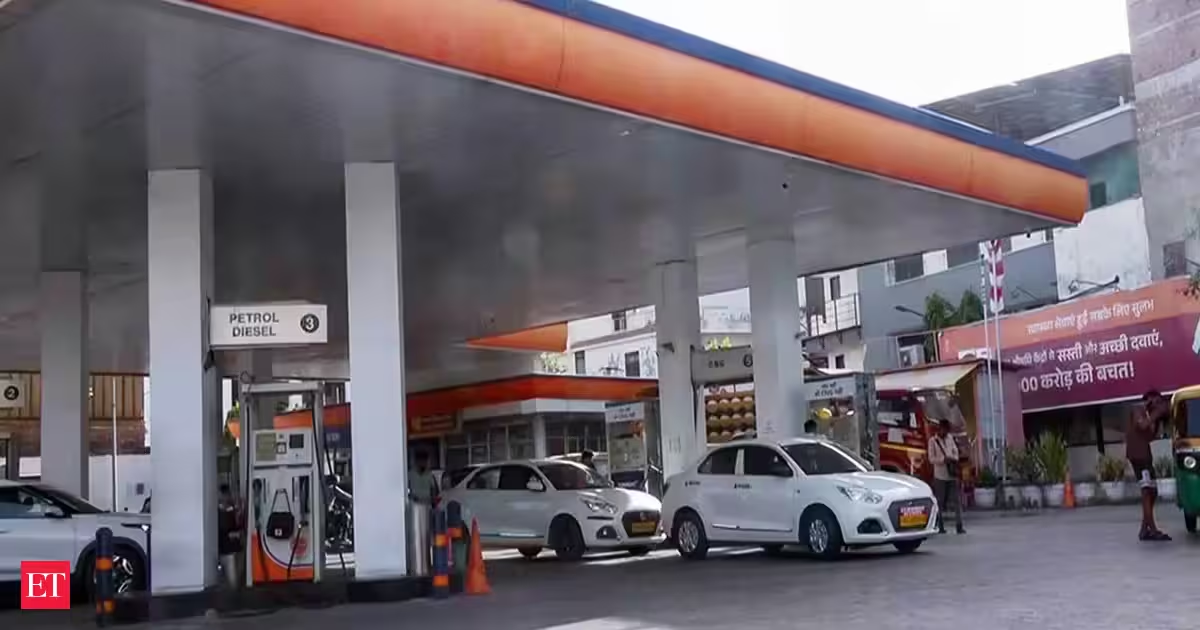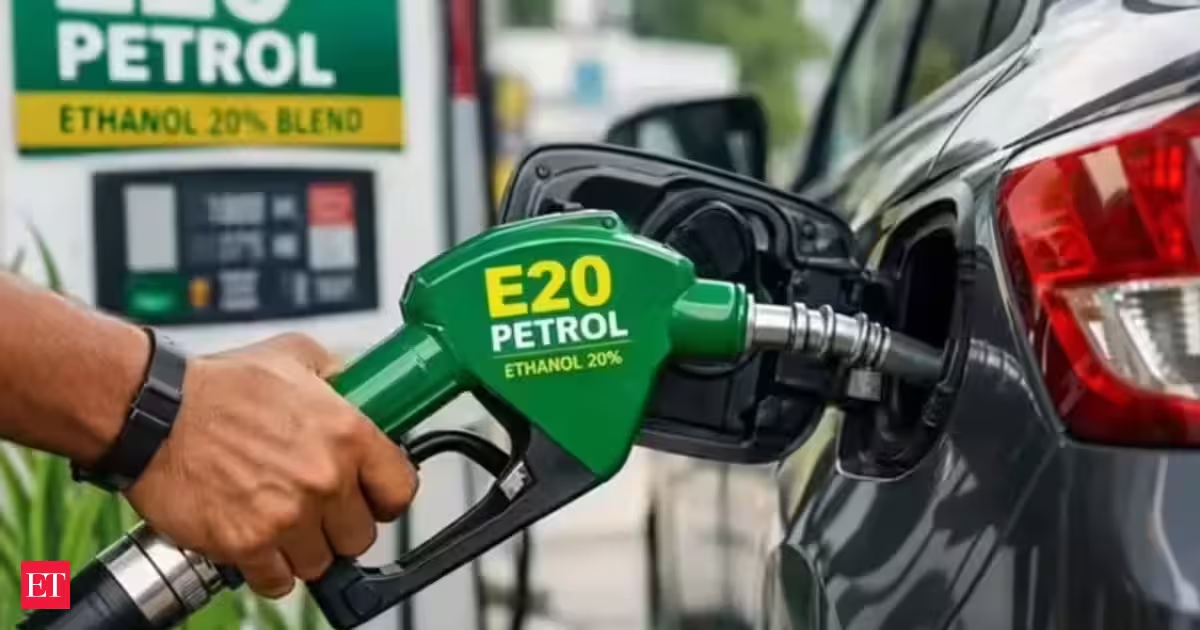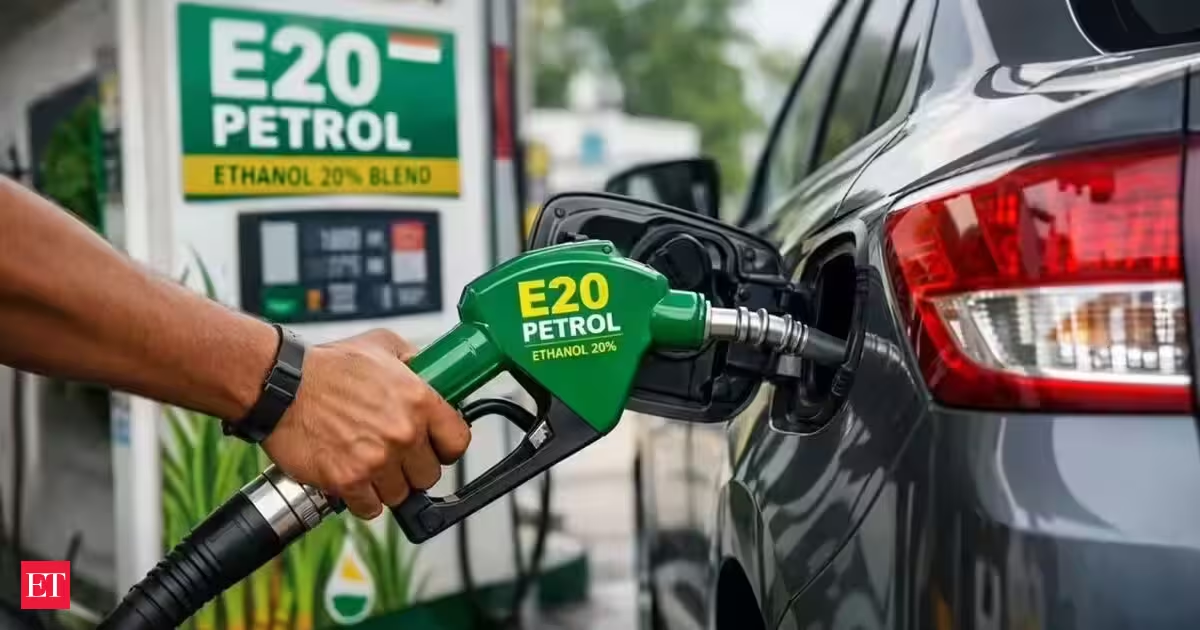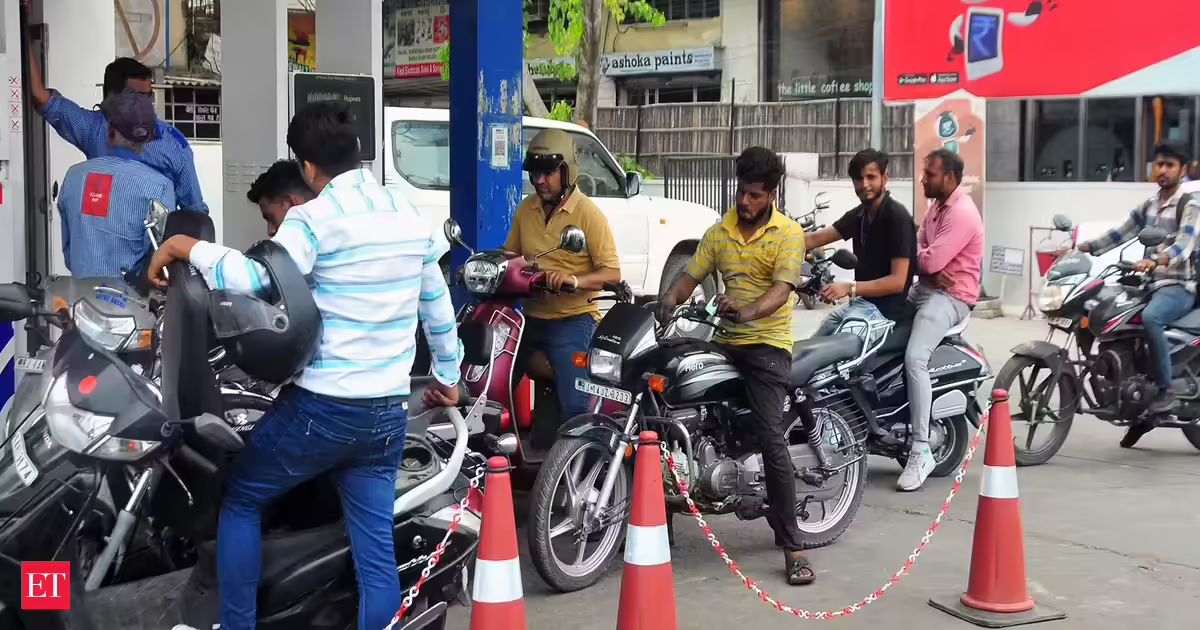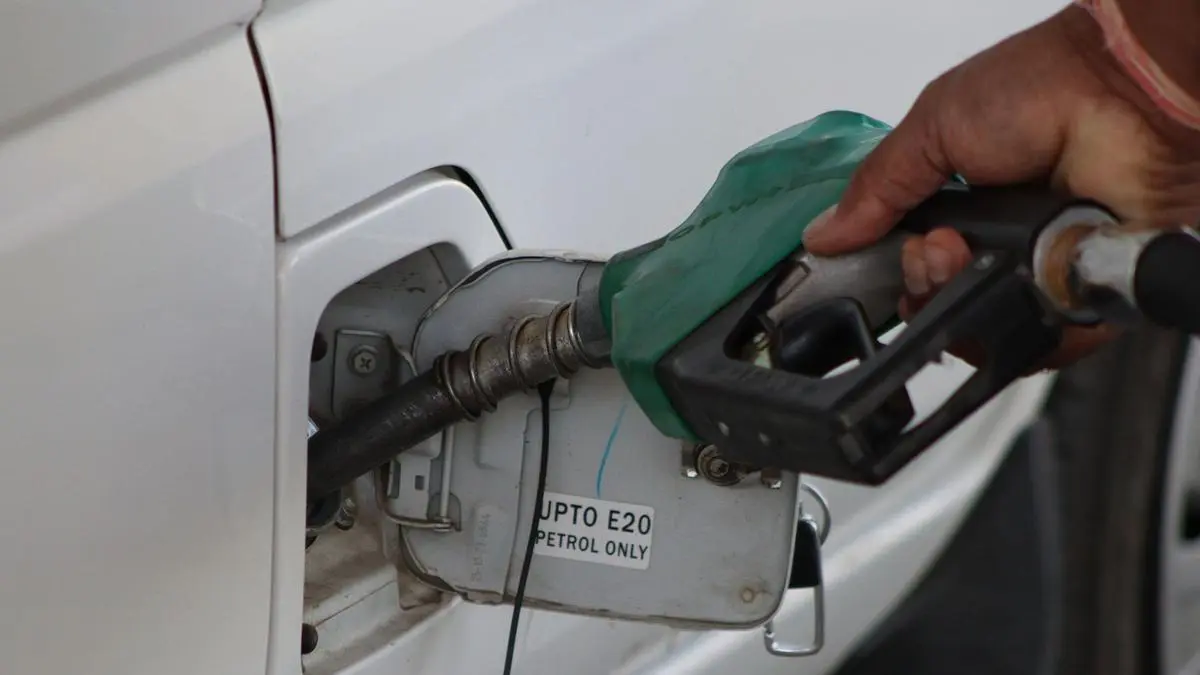
The Ministry acknowledged that some vehicles may experience a 3-5 per cent reduction in mileage with E20.
| Photo Credit:
Fahad Puthawala
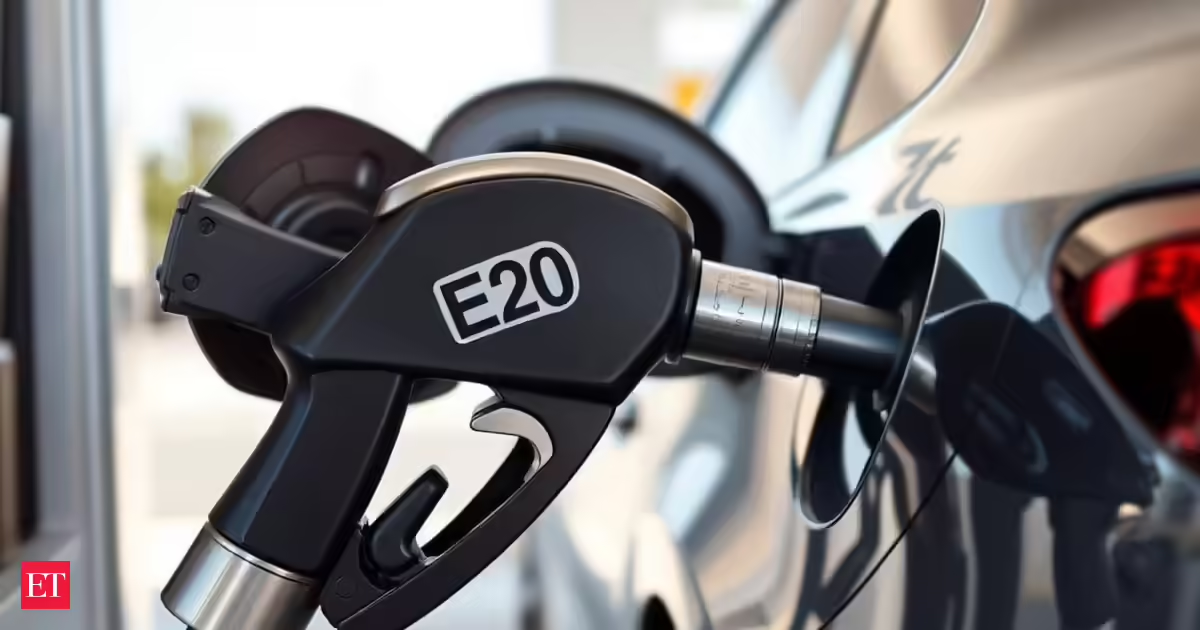
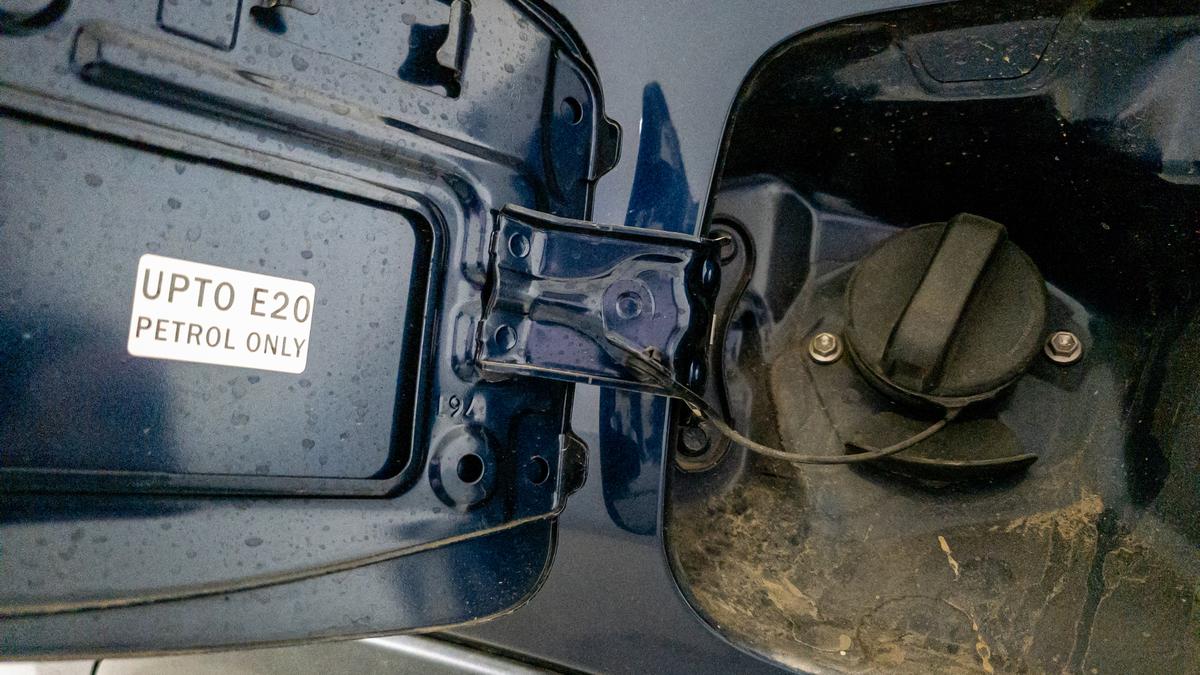
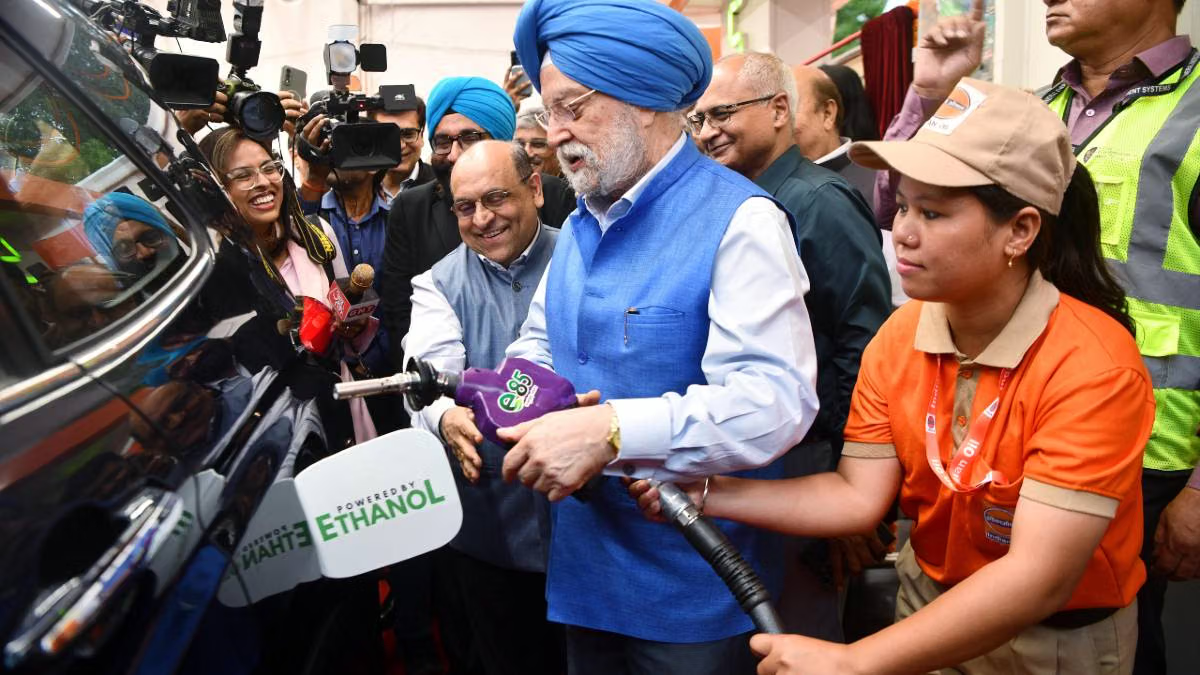
The government on Friday argued that India’s ethanol blending programme is primarily aimed at shielding consumers from global crude oil price shocks rather than reducing petrol prices at the pump, even as it acknowledged that E20 petrol is costlier to produce than conventional petrol when international crude prices are around $70 a barrel.In a detailed FAQ, the Ministry of Petroleum & Natural Gas (MoPNG) said the real objective of ethanol blending is to reduce India’s dependence on imported crude by ensuring that nearly one-fifth of every litre of petrol sold is domestically produced ethanol, the price of which remains insulated from daily swings in global oil markets.The government’s argument comes against the backdrop of relatively subdued crude prices in recent years. According to data from the Petroleum Planning & Analysis Cell (PPAC), the Indian basket of crude averaged $93.15 a barrel in FY23, $82.58 in FY24, $78.56 in FY25 and $70.99 in FY26. Between January 2023 and July 2026, the Indian basket crossed the $100-a-barrel mark only three times—March 2026 ($113.49), April 2026 ($114.48) and May 2026 ($106.23).“Today, government purchases ethanol at remunerative prices so that Indian farmers are fairly compensated. Take maize-based ethanol. We have progressively increased its procurement price and today it is around ₹71.86 per litre, even before GST, transportation, storage and depot handling costs,” the Ministry said.Consequently, when crude is around $70 a barrel, E20 (80 per cent petrol and 20 per cent ethanol) is more expensive to produce than pure petrol. However, if crude prices climb to $120-130 a barrel, the economics reverse and ethanol becomes the cheaper component, it said.“The real question is not why is E20 not cheaper, but how did India manage to protect consumers from the full impact of volatile global crude prices,” the Ministry said, adding that ethanol blending should be viewed as a measure to improve energy security rather than lower fuel prices on any given day.Petrol blendsThe Ministry also addressed concerns over the availability of different petrol blends, saying India cannot simultaneously maintain separate nationwide supply chains for E10, E12, E15 and E20 fuels. Creating parallel infrastructure for storage, transportation and dispensing of multiple blends would significantly increase logistics costs and operational complexity across the country’s fuel distribution network, it said. Instead, India has adopted a phased transition to E20 after consultations with automobile manufacturers, oil marketing companies and other stakeholders.The FAQ reiterated that the Ethanol Blending Programme, launched in 2003, seeks to reduce crude oil imports, improve energy security, lower emissions and provide higher incomes to farmers.Responding to concerns over fuel efficiency, the Ministry acknowledged that some vehicles may experience a 3-5 per cent reduction in mileage with E20. However, it said the fuel offers a higher octane rating, superior anti-knock properties, better combustion, smoother acceleration and cleaner engine operation while reducing particulate emissions and lifecycle carbon emissions by around 40 per cent.Published on July 10, 2026