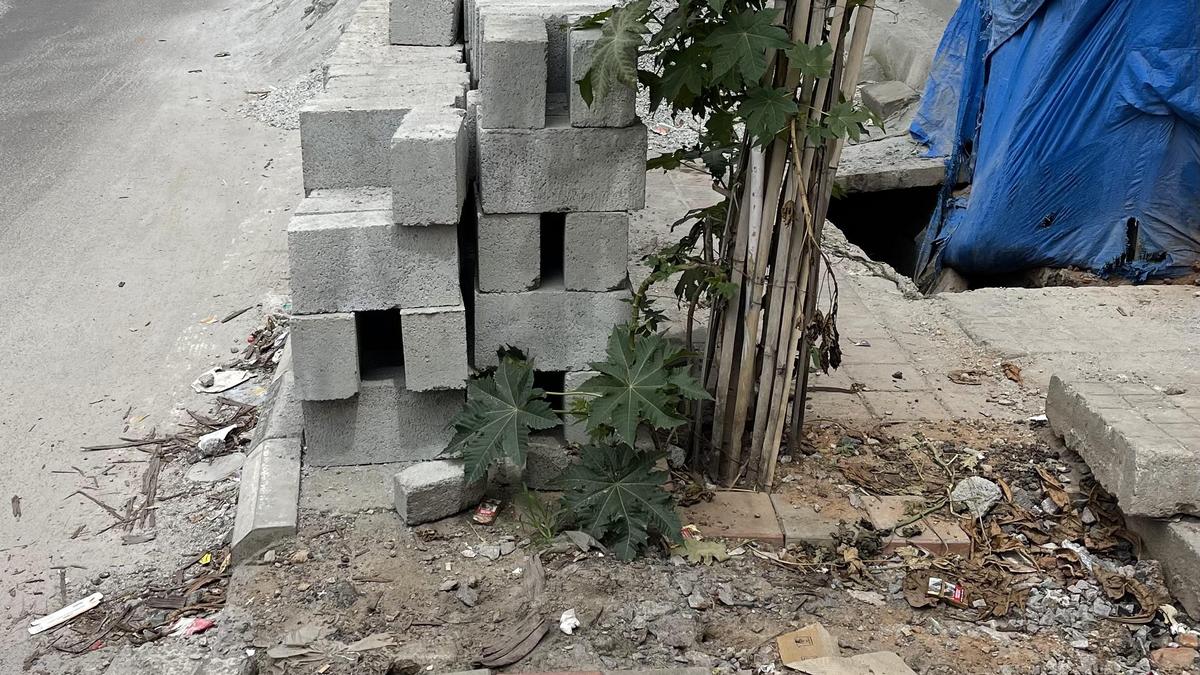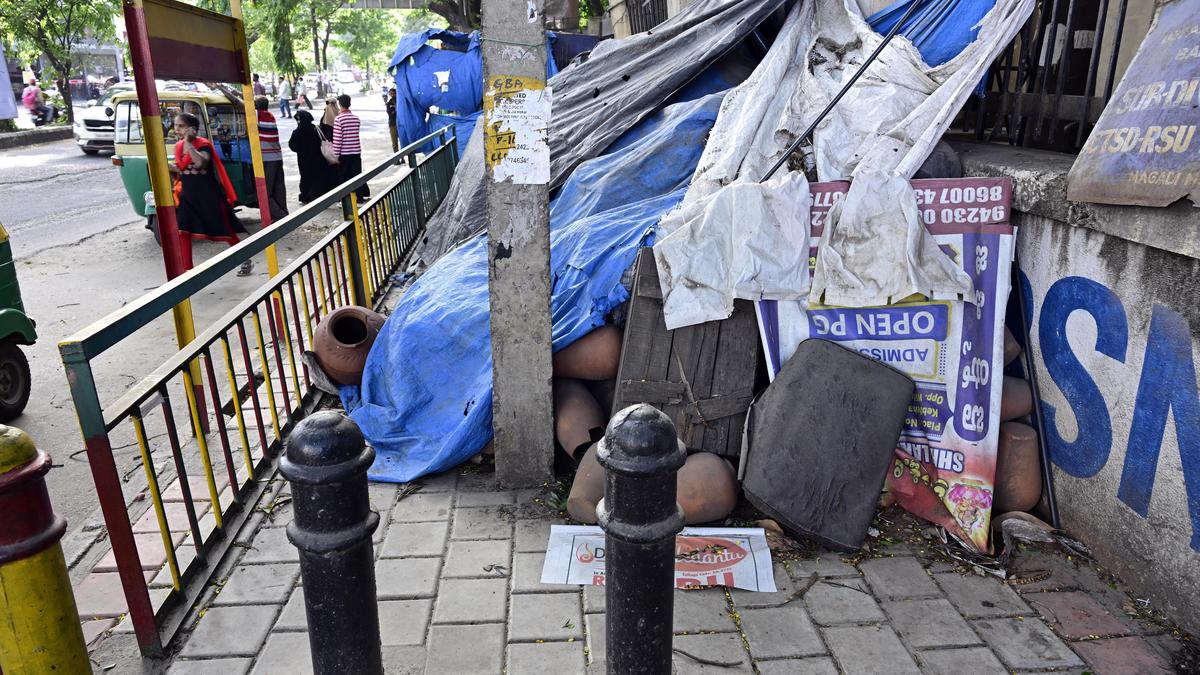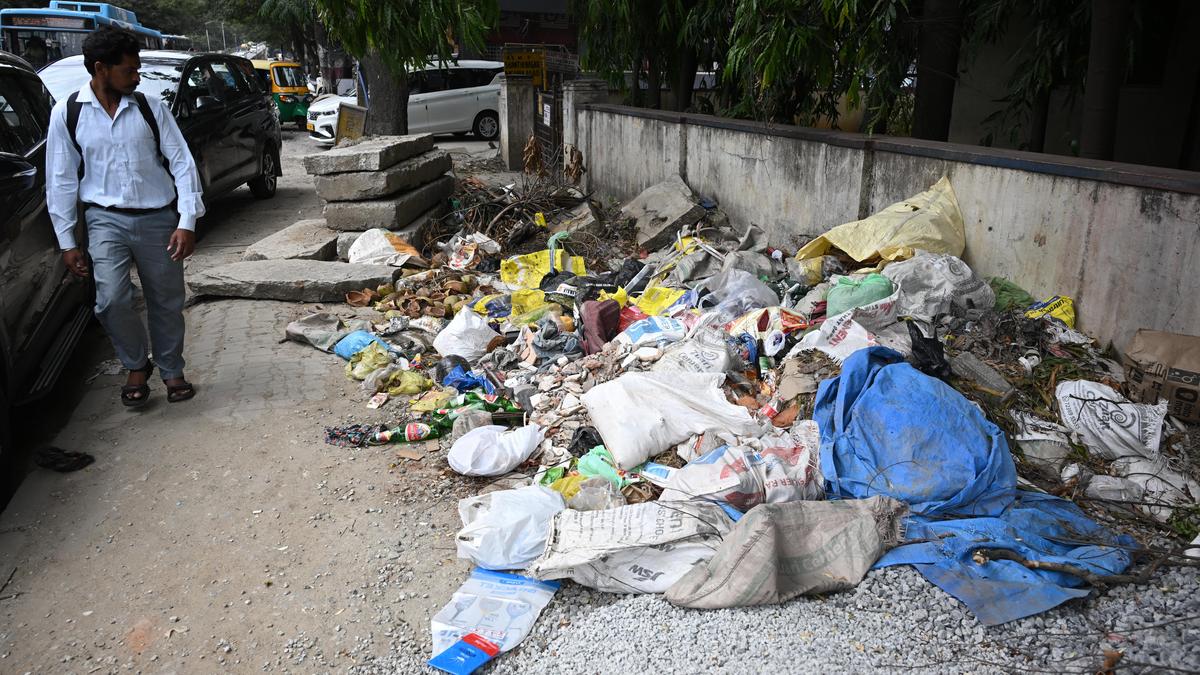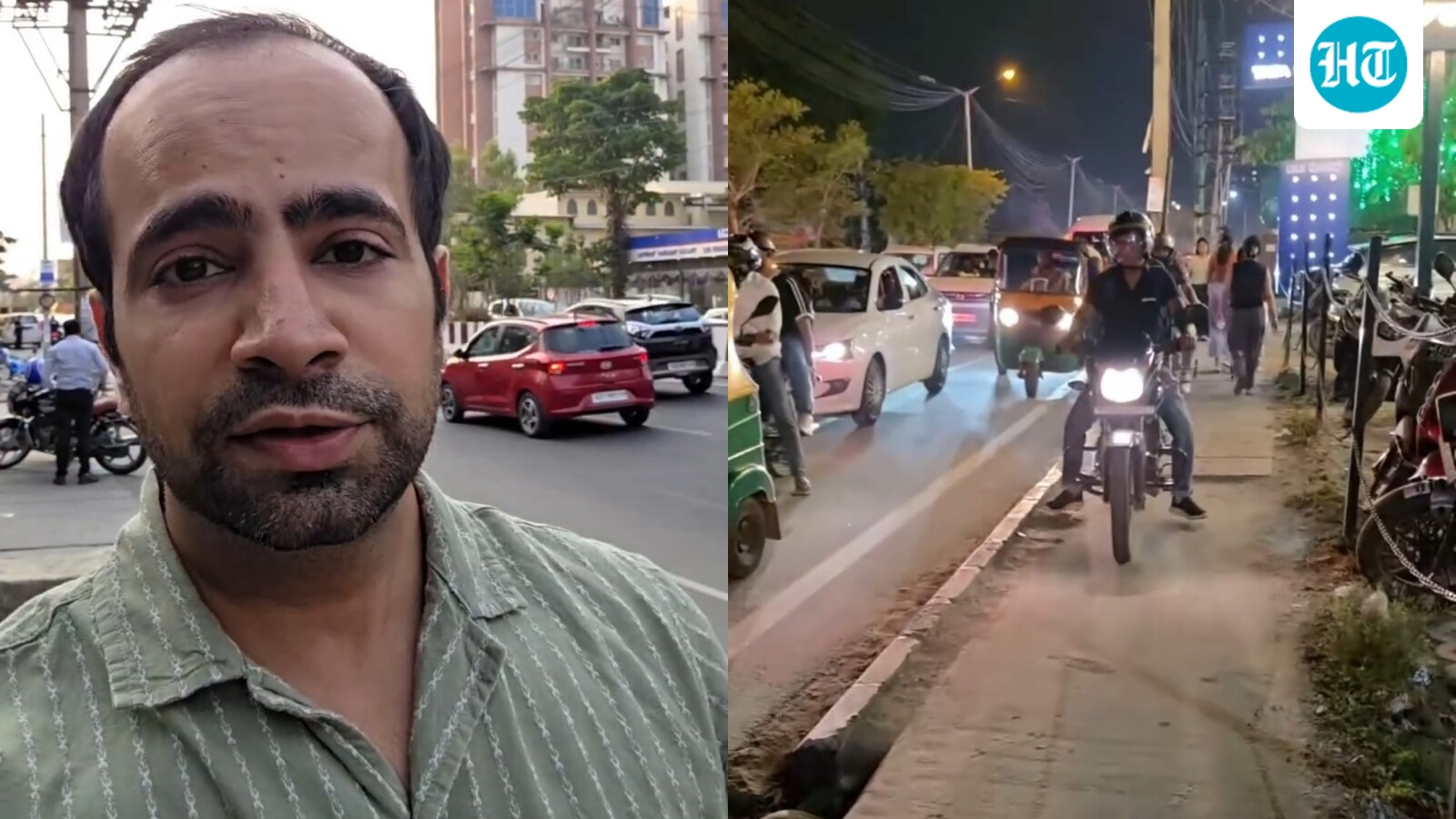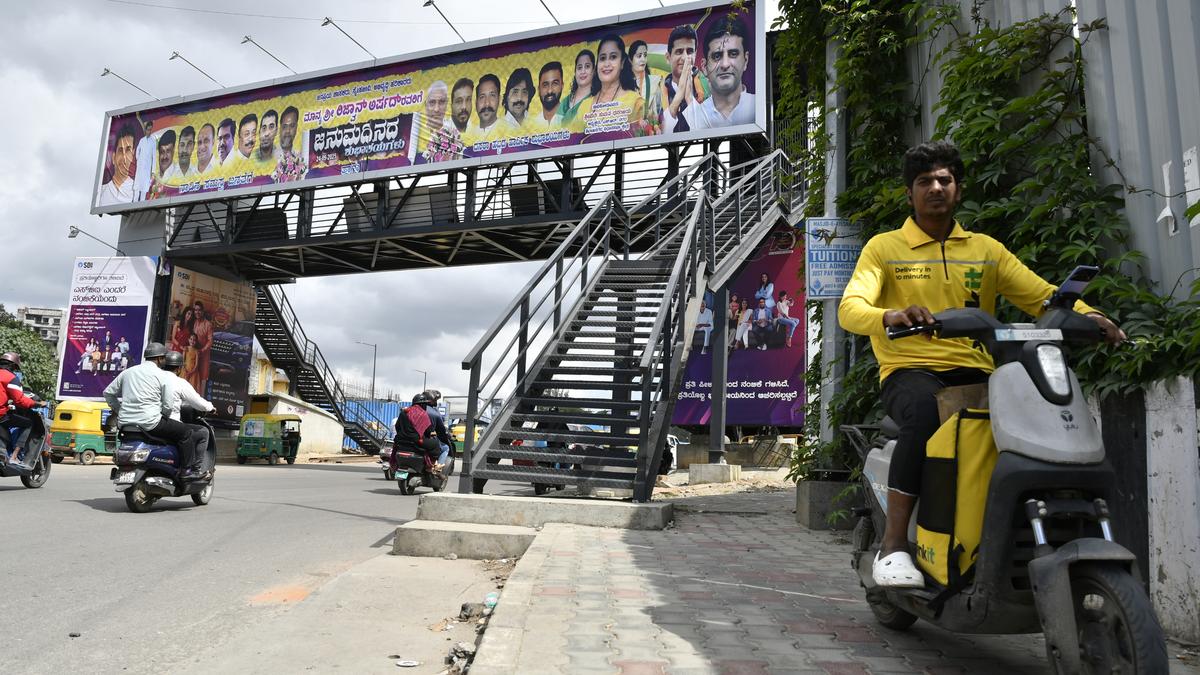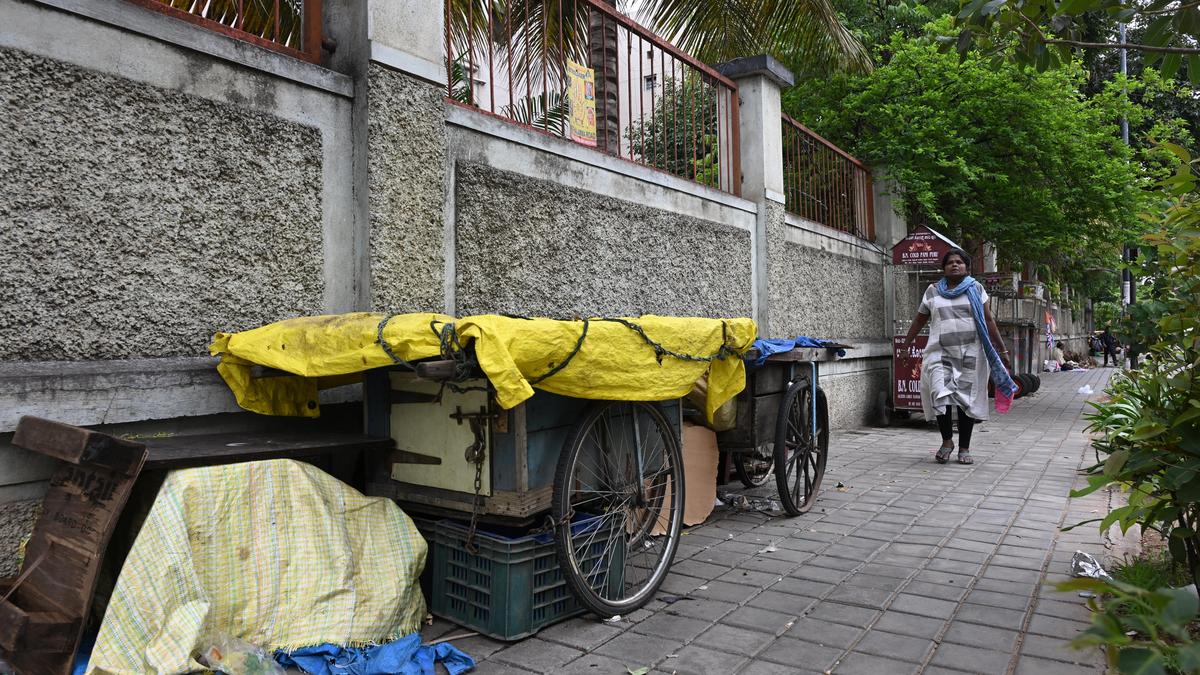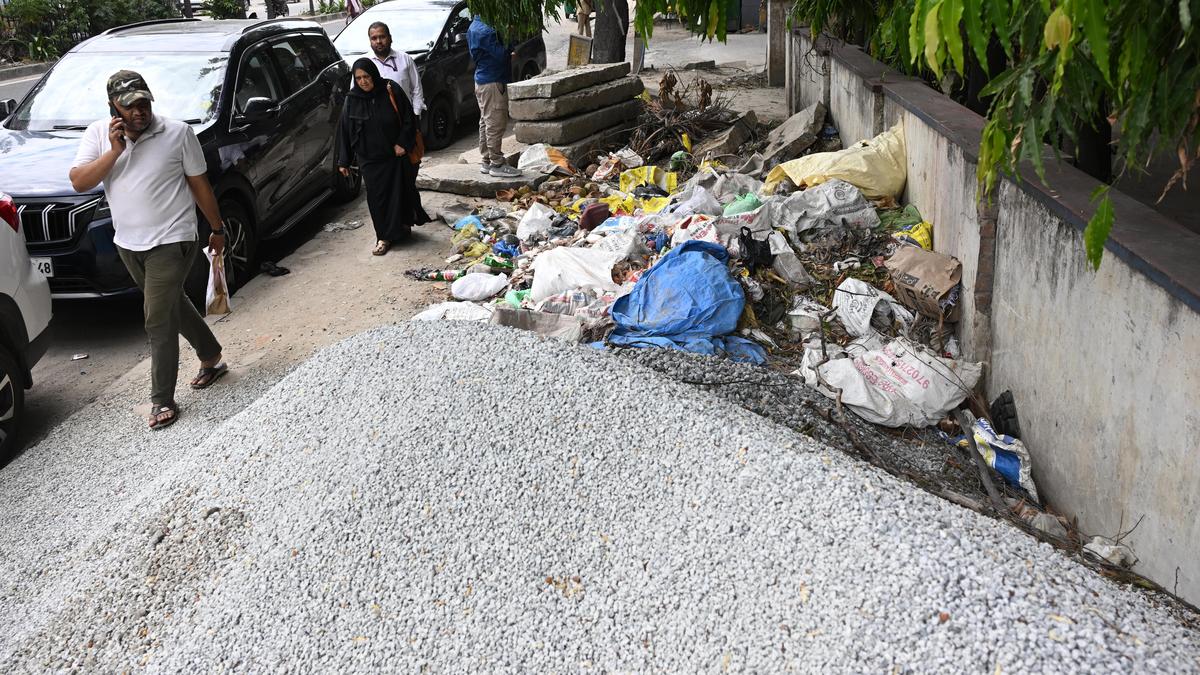
“People assume a footpath is the safest place for me. Whenever they see me walking on the road with my white cane, trying to figure out whether I am brushing past people or vehicles, they immediately help me onto the footpath. But it is even more dangerous,” said Shantanna, who is visually challenged .Shantanna, who works at a cafe near Coffee Board Junction and travels independently every day, said navigating Bengaluru’s footpaths and roads are a daily nightmare. “Footpaths are either broken or suddenly disappear. There are trees, electric poles and other obstacles in the middle of these paths. Nobody seems to have thought about whether a person with disability or someone using a wheelchair would actually be able to use these footpaths,” he said. For him, he said the challenge is not merely reaching his destination but navigating what lies in between. “I have injured myself many times after walking into trees and electric poles. There are sudden dips that my cane cannot always detect. In some places, they are several feet deep,” he added. His experience is shared by Bharathi, 58, whose husband uses a wheelchair.Ms. Bharathi said that something as simple as taking her husband to a nearby shop or hospital requires planning. “Even where footpaths are comparatively better, they have medians that don’t leave enough space for a wheelchair. Elsewhere, the pavements are broken, uneven or end abruptly, forcing us onto the road,” she said.After a point, many people like us, who are old or wheelchair bound, simply stop going out because it becomes physically and mentally exhausting, she said.For visually challenged citizens, the absence of tactile paving adds another layer of difficulty. “There have been instances where I ended up walking into unfamiliar places and got injured trying to find my way back due to lack of tactile guidance,” said Mr. Shantanna. “If the bus stops even a little ahead of or before my usual point, I struggle to locate myself. Tactile paving gives people like me a familiar path to follow. Over time, the texture becomes part of our muscle memory,” said Mr. Shantanna. They also point to another common problem – many of Bengaluru’s footpaths are nothing more than slabs placed over stormwater drains. The uneven surface, loose slabs and sudden level differences make it difficult to detect hazards using a white cane and are unsafe for wheelchair users. The experiences narrated are not isolated incidents but signs of a city that has largely overlooked accessibility in its urban planning, said Mahantesh G. Kivadasannavar, founder and managing trustee of Samarthanam Trust for the Disabled.“The biggest challenge is not the lack of infrastructure, but the lack of accessible infrastructure,” he said, arguing that accessibility cannot be treated as an afterthought or confined to installing an occasional ramp. “Instead, it has to be built into every stage of street design through continuous obstacle-free footpaths, tactile paving, accessible pedestrian crossings, and clear wayfinding.”Echoing the same, architect Naresh V. Narasimhan said the true measure of a city’s accessibility is not how it treats persons with disabilities on special occasions, but how they navigate it every single day.“In Bengaluru, footpaths continue to be designed as engineering leftovers rather than as essential public infrastructure. Broken surfaces, level changes, missing tactile paving, poorly designed ramps, utility boxes and street furniture make independent movement almost impossible for many citizens,” he said.He said that universal accessibility is not a feature to be added, it is a design principle to begin with. “When a footpath works for a wheelchair user, it works better for senior citizens, children, parents with strollers and anyone with temporary injuries. Accessibility is simply good urban design.” Mr. Narasimhan pointed out that GBA corporations have to move beyond building footpaths as civil engineering projects and start treating them as public infrastructure.“Every footpath should be designed and audited against universal accessibility standards before it is opened to the public. Accessibility cannot depend on the contractor or the ward, it must become a non-negotiable city-wide design standard,” he said.(This is the sixth in a series in which The Hindu looks at what ails Bengaluru’s footpaths, the problems faced by the various stakeholders, and what civic agencies are doing to make them safer).
Broken and inaccessible: Bengaluru’s footpaths fail persons with disabilities
Bengaluru's footpaths are unsafe and inaccessible for persons with disabilities, highlighting urgent urban planning failures in accessibility.
701 words~3 min read