In some organizations, high token counts have become a proxy for productivity. Some engineering teams are being pushed to max out context windows and wire in sprawling tool sets. More tokens can mean better agent reasoning and richer context during development, but token costs compound in production. Tokens accumulate across sessions, users, and tool calls in ways that are easy to overlook.
Datadog’s 2026 State of AI Engineering report quantifies the scale of this problem. Our research found that token usage per request more than doubled for median customers year over year and quadrupled for 90th-percentile power users among Datadog-monitored services.
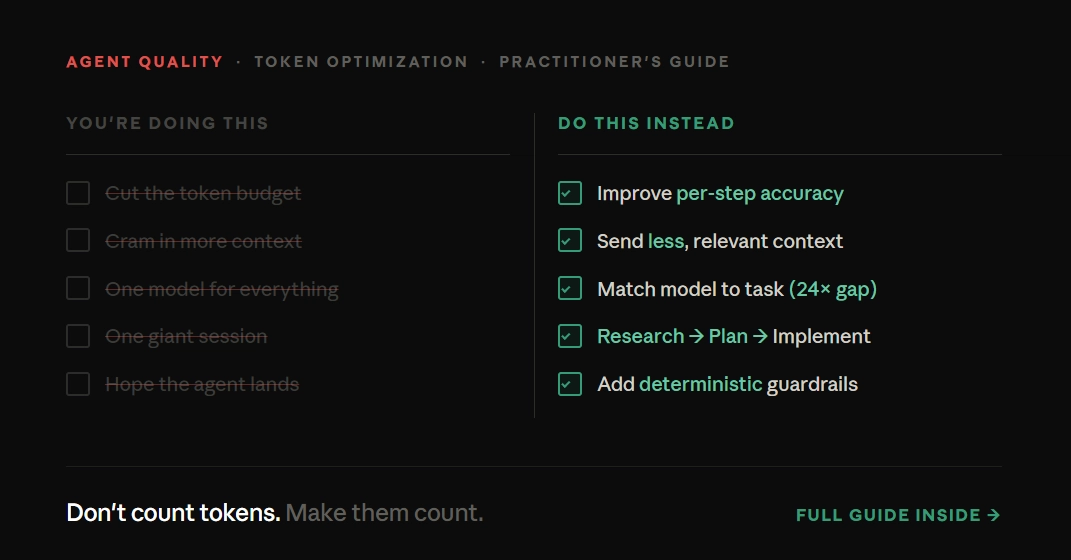
This guide covers where agentic token costs actually come from, how to control them, and specific techniques to make token costs visible, so you can catch problems before they become expensive. None of them can be validated without token visibility, so that instrumentation should be in place before you make changes.
Where agentic token costs come from and how to control them
In a single-turn prompt, cost is straightforward: input + output = total. Agentic systems work differently. Costs compound across repeated tool calls, growing session history, and retrieval loops in ways that are easy to miss until you are in production.