India has cleared a manufacturing joint venture between Dixon Technologies and Vivo, and the approval carries more weight than a single factory deal.About The AuthorAshna is a content writer who focuses on making everyday choices easier and smarter. With a strong eye for detail and a natural sense of what works in real life, she creates content that feels honest, relatable, and genuinely helpful. She is a geek for writing stories around fashion, beauty, and influential products, while bringing the same depth and detail in reviewing tech products and gadgets of day-to-day use.
Her work mainly revolves around product reviews, tech buying guides, and lifestyle edits, where she breaks down features in a way that is simple to understand but still meaningful. Instead of just listing specs, she connects products to real needs, whether it’s comfort, style, practicality, or value for money.
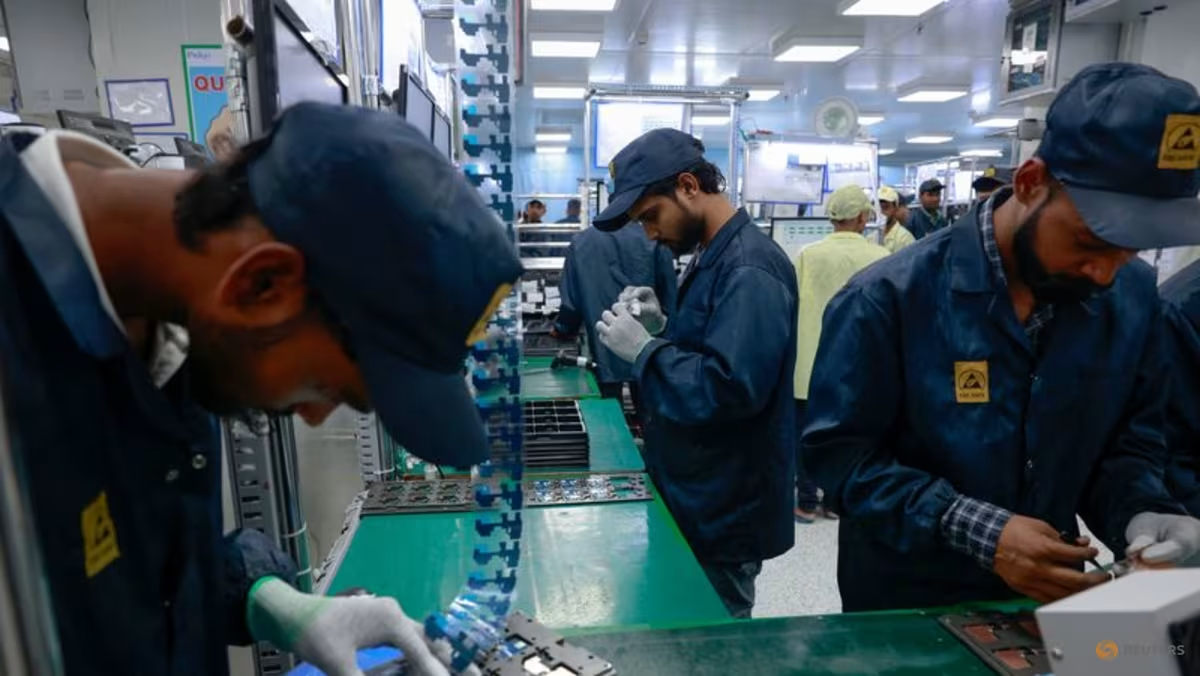
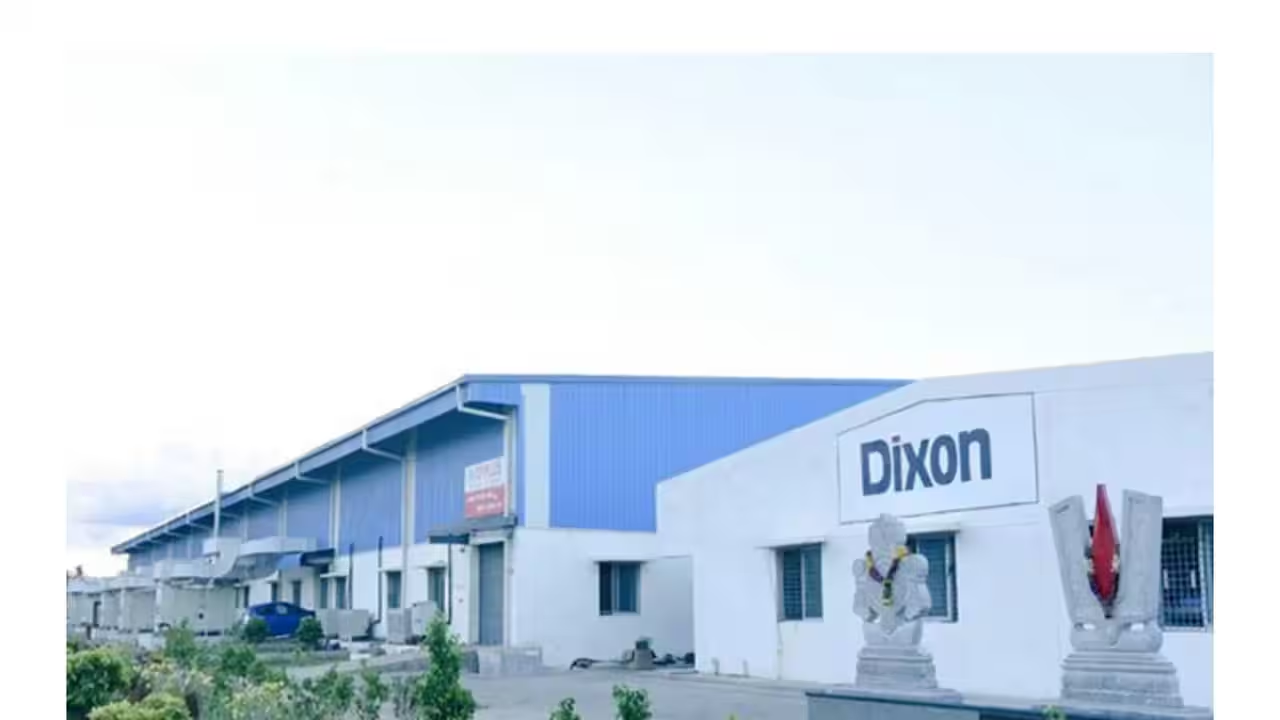
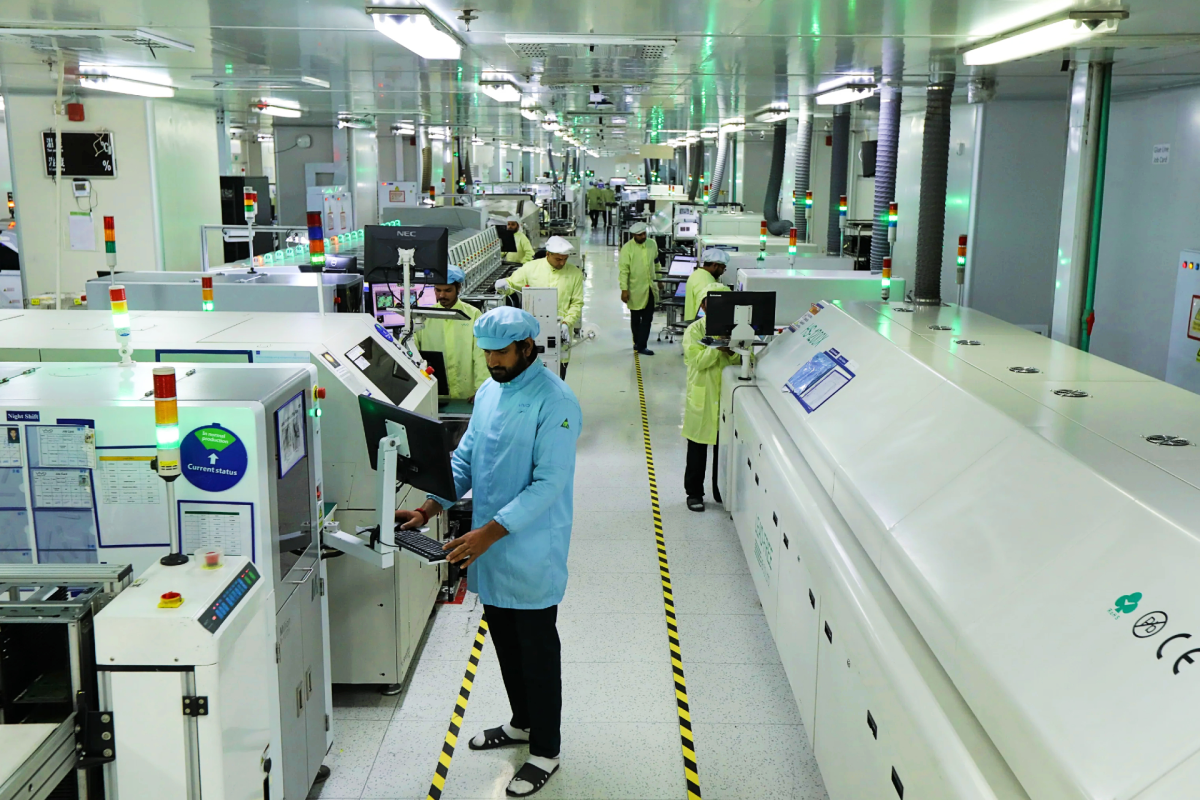
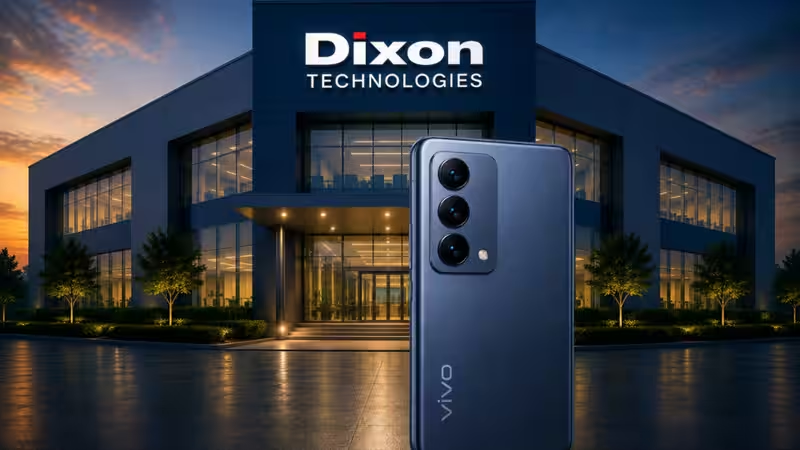
Her writing style is clear, conversational, and reader-first. She believes that good content should not confuse people but guide them. With a background in journalism and mass communication, she utilises content writing as a means to convey her emotions. When she puts her pen down, she keeps looking for the best movies to watch while enjoying her cold brew.Dixon told the stock exchanges on 9 July that it had signed agreements with Vivo Mobile India to set up a jointly owned company to build smartphones and other electronics, after the Government of India approved the plan on 8 July 2026. Dixon holds the majority. Vivo brings the volume. The nod came through Press Note 3, the rule that screens investment from countries sharing a land border with India, and it stands as one of the first big clearances since the government eased that regime this year. That timing is the real news: the deal is a template, and the template is what other Chinese phone makers have been waiting for.What Exactly Did Dixon And Vivo Sign? The deal is built on two agreements.Dixon signed a joint venture agreement to create a new company for the original-equipment-manufacturer business, the contract work of building electronic devices and smartphones for a brand. It also signed a shareholders' agreement setting out the rights, duties, management and day-to-day running of that company. Both sides still have to clear the usual conditions before the new firm is formally incorporated, so the venture is agreed rather than fully live.The new company starts small on paper. It will carry a paid-up share capital of Rs 5 crore, with Dixon and Vivo Mobile India each buying shares in line with their agreed stakes. That figure is a starting point rather than a measure of ambition; the money that matters comes later, in plant and output.Who Owns The Dixon-Vivo Joint Venture? The split is clean, and it keeps Dixon in charge.Dixon Technologies takes 51 per cent of the new company, and Vivo Mobile India holds the other 49 per cent. That makes the venture a subsidiary of Dixon rather than a shared entity of equals. Outside the venture, the two firms stay financially separate. The structure matters because it is exactly the shape India's rules reward: an Indian contract manufacturer in control, a Chinese brand as the minority partner and customer.More articles by AuthorTrending StoriesWhy Did The Deal Need Government Approval? The reason is where the money comes from.Vivo is a Chinese brand, and India's Press Note 3, brought in during 2020, requires government approval for investment from any country that shares a land border, China chief among them. The rule exists to stop sensitive assets or technology changing hands quietly through a foreign stake. Dixon told investors it received the government's approval to proceed on 8 July 2026, covering both the creation of the new company and Vivo's purchase of its shares.What changed this year is the ceiling. In March 2026, the Department for Promotion of Industry and Internal Trade eased Press Note 3 to let investors from land-bordering countries take non-controlling stakes of up to 10 per cent through the automatic route, skipping prior clearance, subject to sector caps. Vivo's 49 per cent sits well above that line, so this deal still needed a sign-off, and getting one so soon after the easing is the signal the industry has watched for.Why Does This Matter Beyond Vivo? The approval is less about one factory than about the path it clears.For years, Chinese phone brands have assembled in India but tiptoed around ownership, wary that any large stake would stall in the Press Note 3 queue. This clearance shows a workable route: pair with an Indian manufacturer, take the minority seat, let the Indian partner hold control, and the deal can pass. Every Chinese maker weighing deeper local production, and there are several, now has a live example to copy.It also strengthens the model India has been pushing all along, where an Indian contract manufacturer owns the plant and global brands rent its lines. Dixon already builds phones for several companies. A Vivo-anchored venture gives it more clout as the go-to Indian partner for any brand that wants to localise, including those chasing the same made-in-India shift that has pulled Apple's iPhone and HMD's Nokia-badged phones onto Indian assembly lines. The winner here is less Vivo than the idea that India can host the manufacturing while keeping the ownership at home.How Big Could The Joint Venture Get? Dixon's own targets are large, and best taken as ambition rather than a promise.The company has said it aims for revenue of around Rs 30,000 crore from the venture once it reaches full capacity. It is targeting production of about 11 million smartphones in the current financial year, with the lines expected to start in the December quarter, and it sees output climbing to between 20 and 22 million phones a year over the longer term. Those are Dixon's projections, tied to execution that has yet to happen, so treat them as the ceiling the company is building towards rather than a number already banked.If the plan lands even close to target, it adds serious scale to India's phone output and hands Dixon a stronger claim as the country's default contract manufacturer, the firm brands turn to when they want to build under the Android ecosystem on Indian soil.How Did The Market React? Investors treated the clearance as one fewer obstacle, and bid the stock up.Dixon Technologies shares rose on Friday, 10 July, after the news. Reports put the gain at more than 3 per cent in intraday trade, with the price moving in a band of about Rs 13,800 to Rs 14,000. The move reflects a simple calculation: a major regulatory hurdle ahead of the venture has cleared, which lowers the risk around a deal the market already liked.What It Means For India's Manufacturing Push Set against India's wider electronics ambitions, the Dixon-Vivo clearance is a quiet turning point.India has spent years trying to move from assembling phones to owning more of the value and the control around them, using production-linked incentives to pull global brands onto local lines. The friction has always been Chinese capital, welcome for the volume it brings, watched closely for the influence it might carry. This deal threads that needle. It lets Chinese brand money fund Indian factory capacity while an Indian company holds the majority and the keys. For a government trying to grow manufacturing while holding on to control, that is close to the ideal shape, and the speed of this approval suggests it wants more deals cut to the same pattern. The final company is still weeks of paperwork away. The precedent it sets is already working.FAQWhat did the government approve for Dixon and Vivo? The Government of India approved the creation of a joint venture company between Dixon Technologies and Vivo Mobile India, and Vivo's purchase of shares in it, under Press Note 3 of 2020. The approval is dated 8 July 2026.Who owns the Dixon-Vivo joint venture? Dixon Technologies holds a 51 per cent majority stake and Vivo Mobile India holds the remaining 49 per cent. The venture is a subsidiary of Dixon, and beyond it the two firms stay financially separate.Will the joint venture make only Vivo phones? The main job is building smartphones for Vivo, but the agreement lets the company take on manufacturing of electronic products for other brands too, the way Dixon already builds for several companies.When will production begin, and how big could it get? Dixon targets about 11 million smartphones in the current financial year, with lines expected to start in the December quarter. It projects output rising to 20 to 22 million phones a year over time, and revenue of around Rs 30,000 crore at full capacity. These are company targets, not confirmed results.Is the deal fully finalised? Not fully. The venture still needs the usual conditions and any remaining statutory approvals to be completed before the new company is formally incorporated.Why does this deal matter for other Chinese phone makers? It is one of the first big clearances under the eased Press Note 3 regime, and it shows a workable route: a Chinese brand takes a minority stake while an Indian manufacturer holds control. Other Chinese makers can now follow the same template.end of article