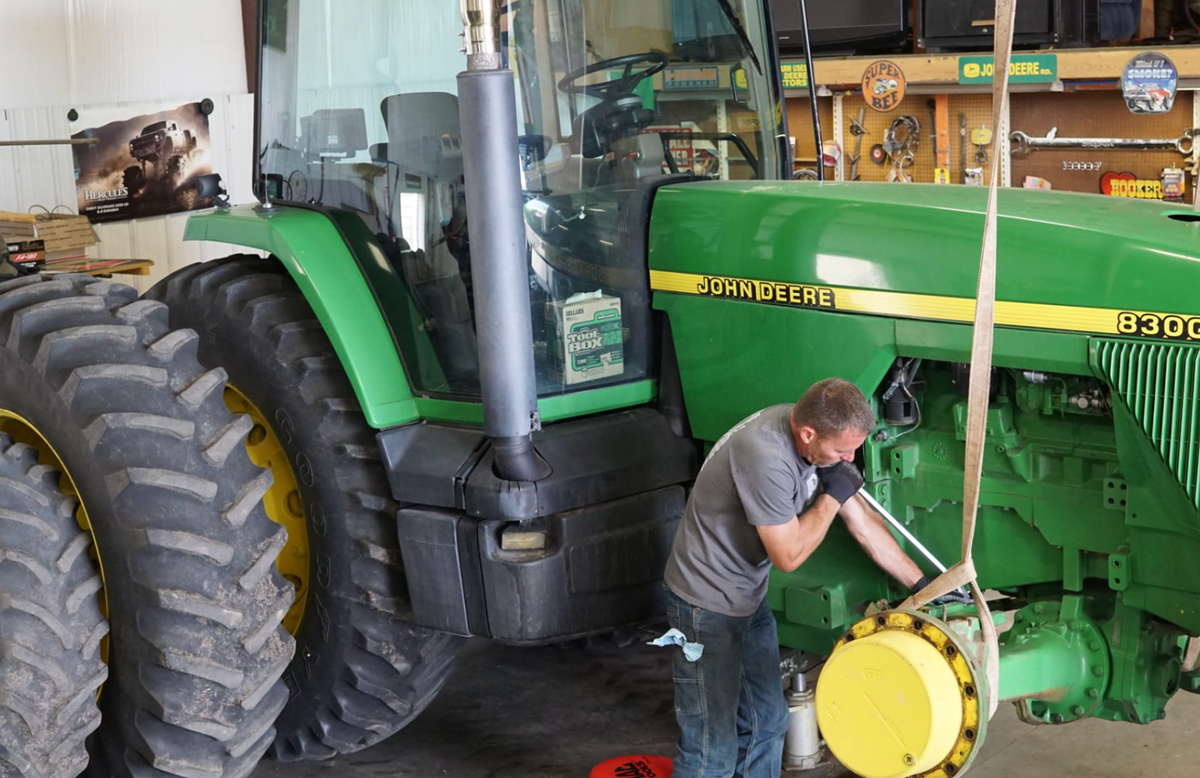
The FTC and attorneys general for several states reached a settlement this week with the company that manufactures John Deere tractors to let farmers and independent shops fix their own equipment. Previously, they had to rely on authorized dealers, which increased the cost and wait time for repairs. Tractors aren’t the only thing that manufacturers have made it hard to repair without proprietary parts and know-how. The right to fix your own equipment has been a huge fight for years, and reflects an ongoing, broader battle in the U.S.“The McDonald’s ice cream machine, which is so famously broken — there’s a website dedicated (to it) called McBroken,” said Nathan Proctor, senior campaign director for the consumers’ rights group PIRG.He said those ice cream machines are so often out of order because the manufacturer isn't eager to share the specific software codes needed to fix them. That was also the case for John Deere, up until the recent settlement.“Farmers may now get what they need to fix this equipment without having to go to the dealer if they don't want to,” Proctor said.It’s part of a movement called “right to repair,” which Gay Gordon-Byrne lobbies for as the executive director of the Repair Association. She says fixing your own stuff was simpler before the internet.“Manufacturers used to routinely package a whole repair manual in with the product,” she said.But eventually, many manufacturers stopped providing it at all. Instead, they required consumers to go to them — or shops they chose — to get the item fixed. Gordon-Byrne argued that created a monopoly of sorts. But Cleveland State University law professor Chris Sagers said that’s kind of the point.“The creator of a machine or something is supposed to have a little bit of control over their product,” he said. “That's the boon that we give to firms for innovating.”The John Deere settlement is part of an ongoing battle to determine how much control lies with the manufacturer and how much with the consumer.
John Deere equipment owners now have the "right to repair"
Under the settlement between Deere & Co., the FTC and several state attorneys general, consumers will be able to fix their the company’s products on their own instead of having to rely on authorized dealers.
331 words~2 min read