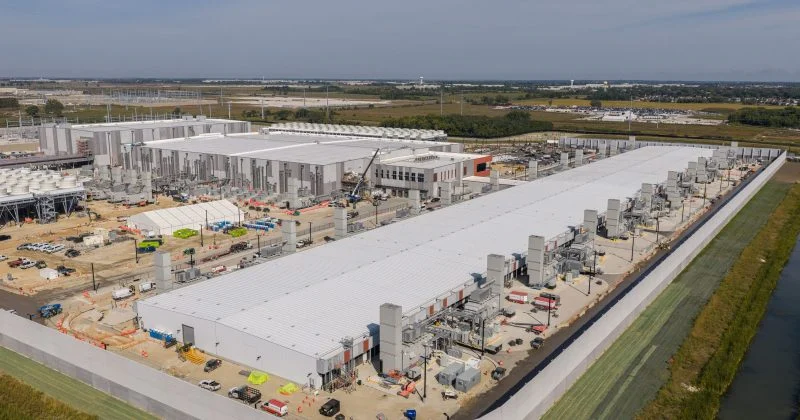
Microsoft has seen its carbon emissions rise by 25 percent Year-on-Year, driven predominantly by data center expansion.In its latest Environmental Sustainability Report, the company reported that its Scope 1, 2, and 3 emissions reached 20.29 million metric tons of CO2e, up from 16.2 million the previous year. The biggest spike was seen in its Scope 2 emissions - indirect emissions from the consumption of purchased electricity - which grew to 13 percent of the company’s total footprint, up from two percent last year.Microsoft claimed that the increase in Scope 2 emissions was attributable to its decision to stop counting unbundled renewable energy certificates (RECs), which it had previously used to offset electricity consumption while not supporting new clean energy on the grids where it operates. Instead, the firm said it is prioritizing investments that bring "net new power," even if it leads to a short-term increase in reported emissions.Despite significant increases in emissions, the company claimed it matched 100 percent of its annual global electricity consumption with renewable energy over the last financial year. Since it commenced its 24/7 matching program, Microsoft claims to have signed agreements for up to 40GW of new renewable capacity across 26 countries, of which 19GW is now online.On the data center side, the company said that its global fleet achieved an average power usage effectiveness (PUE) of 1.17 over the financial year. In addition, Microsoft said that it utilized more than 690MW of unused power within existing data centers during the year, and scaled low-power operating states to nearly four million servers globally.While the company did not explicitly disclose its overall water usage, it announced that its portfolio of owned data centers achieved a global average water usage effectiveness of 0.27 liters/kWh, a 25 percent reduction from a 2022 baseline. Microsoft also claimed to have replenished more than 14.2 million cubic meters of water during the last financial year, exceeding withdrawals for the first time.In addition, it reported that it has funded 24 new water replenishment projects during the year and now has a footprint of 34 priority watershed locations globally.Finally, regarding circularity, the company said it had achieved a 92 percent reuse and recycling rate for decommissioned servers and components, exceeding its 90 percent target for a second consecutive year. In addition, it claimed to have recycled more than 2,100 tons of UPS batteries and diverted 90.5 percent of construction and demolition waste from landfill.
Microsoft reports 25 percent increase in CO2 emissions, on back on data center growth
Claims increase is attributable to the decision to stop counting unbundled renewable energy credits
402 words~2 min read