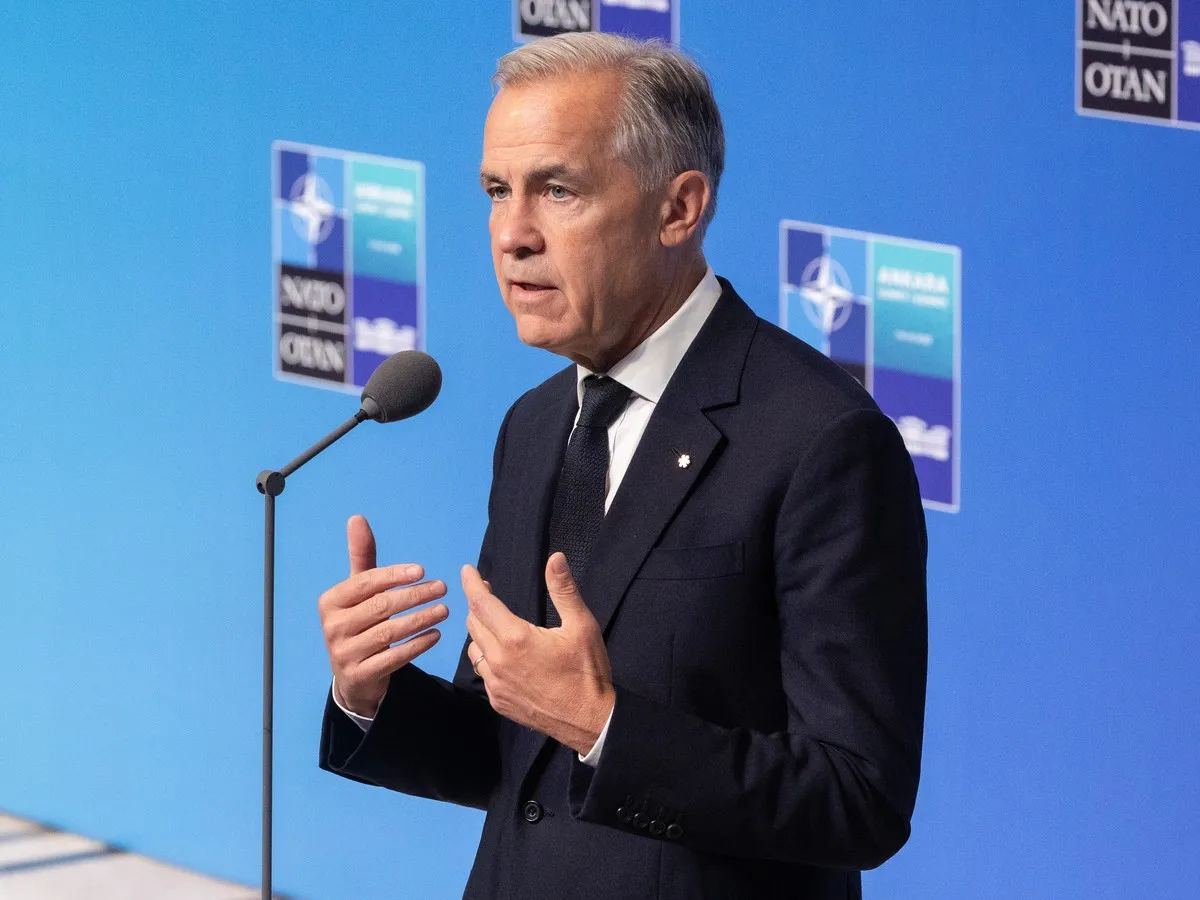
Skip to Content Subscribe Our Offers My Account Manage My Subscriptions FAQ Newsletters Canada Canadian True Crime Canadian Politics Health World Israel & Middle East Financial Post NP Comment Longreads Puzzmo Diversions Comics NP News Quiz New York Times Crossword Horoscopes Life Eating & Drinking Style Sponsored Play for Ontario Travel Travel Canada Travel USA Travel International Cruises Travel Essentials Culture Books Celebrity Movies Music Theatre Television Business Essentials Advice Lives Told Tails Told Shopping Buy Canadian Home Living Outdoor Living Kitchen & Dining Tech Style & Beauty Personal Care Entertainment & Hobbies Gift Guide Travel Guide Amazon Prime Day Deals Savings National Post Store More Sports Hockey Baseball Basketball Football Soccer Golf Tennis Driving Vehicle Research Reviews News Gear Guide Obituaries Place an Obituary Place an In Memoriam Classifieds Place an Ad Celebrations Working Business Ads Archives Healthing Epaper Manage Print Subscription Profile Settings My Subscriptions Saved Articles My Offers Newsletters Customer Service FAQ Newsletters Canada World Financial Post NP Comment Longreads Puzzmo Diversions Life Shopping Epaper Manage Print Subscription HomeNewsCanadaCanadian PoliticsCarney has had the worst first year of growth for a PM since 1963: pollDespite that 60% of Canadians think Carney has done a good job of handling the economy, a Nanos Research Group poll for Bloomberg News showsAuthor of the article: You can save this article by registering for free here. Or sign-in if you have an account.Canada's Prime Minister Mark Carney speaks during doorstep statements at 2026 NATO Leaders Summit on July 8, 2026 in Ankara, Turkey. Photo by Serdar Ozsoy /Getty ImagesCanadians support Mark Carney’s approach to managing the economy, even though he’s presided over the worst first year of growth for a prime minister since at least 1963.Enjoy the latest local, national and international news.Exclusive articles by Conrad Black, Barbara Kay and others. Plus, special edition NP Platformed and First Reading newsletters and virtual events.Unlimited online access to National Post.National Post ePaper, an electronic replica of the print edition to view on any device, share and comment on.Daily puzzles including the New York Times Crossword.Support local journalism.Enjoy the latest local, national and international news.Exclusive articles by Conrad Black, Barbara Kay and others. Plus, special edition NP Platformed and First Reading newsletters and virtual events.Unlimited online access to National Post.National Post ePaper, an electronic replica of the print edition to view on any device, share and comment on.Daily puzzles including the New York Times Crossword.Support local journalism.Create an account or sign in to continue with your reading experience.Access articles from across Canada with one account.Share your thoughts and join the conversation in the comments.Enjoy additional articles per month.Get email updates from your favourite authors.Create an account or sign in to continue with your reading experience.Access articles from across Canada with one accountShare your thoughts and join the conversation in the commentsEnjoy additional articles per monthGet email updates from your favourite authorsSign In or Create an AccountorA Nanos Research Group poll for Bloomberg News shows 60% of Canadians think Carney has done a very good or good job of handling the economy. That compares with 24% who think he’s done a poor or very poor job.Another 14% rate his performance as average, and 2% were unsure.The results are a robust endorsement of Carney’s economic stewardship. That’s despite the fact that since he was elected, real gross domestic product has shrunk by 0.05% — the worst debut for a Canadian prime minister in at least 63 years.Growth was 1.4% during Stephen Harper’s first year as leader in 2006-07, while Justin Trudeau oversaw 1.7% in 2015-16.Carney maintained his predecessor’s tighter immigration policies, which have sharply slowed non-permanent resident arrivals and dampened growth. He also entered office as trade tensions with the US — Canada’s largest export market — intensified.Consumer spending and the housing market are weakened. US President Donald Trump’s tariffs and threats are weighing on business investment and have crimped many non-energy exports.Combined, that’s meant back-to-back quarterly contractions in gross domestic product, a characteristic of a recession, though most economists and the Bank of Canada have dismissed that label for now.Amid that challenging backdrop, the polling data suggest Canadians are blaming global factors for the country’s economic woes rather than Carney himself.“The uncertainty in the Canada—US relationship — largely driven by Trump’s negotiation strategy — has likely diverted attention from the Carney government to the Trump administration,” said Nik Nanos, chief data scientist at the polling firm.“At this time they’re getting a pass on the state of Canada’s finances and stewardship of the economy.”Conservative Leader Pierre Poilievre has attacked Carney’s economic record, calling him “badly educated” in economics. He argues that despite degrees from Harvard University and the University of Oxford and experience leading two central banks, Carney has been wrong on major issues such as post-pandemic inflation. Poilievre has also criticized the pace of government action on approving major resource projects.The survey suggests his criticisms are not resonating with most Canadians.At the same time, a slower economy has also brought some affordability relief that may be helping Carney politically.Weaker-than-potential growth means less demand-driven inflation pressure, and the yearly change in the consumer price index has hovered near the central bank’s 2% target for most of Carney’s tenure, excluding the recent spike caused by rising global energy prices.Housing prices and rents are falling. Slowing population growth has meant rising output per person, reversing a multi-year stagnation in that important indicator of living standards. The job market is soft, but it’s not worsening.The federal government has also been able to run deeper deficits and boost fiscal spending amid the sluggishness, something that would have been much more difficult in a hotter economy.Carney’s ambitious investment agenda and push to build major projects is a long-term economic play — one that could be derailed if the economy overheats and generates inflation, further worsening already acute affordability pressures.“This government’s been in the process of laying the foundations for a stronger, more resilient, more independent Canadian economy,” Carney said last month. “As we do all that, the data is going to be uneven.”Our website is the place for the latest breaking news, exclusive scoops, longreads and provocative commentary. Please bookmark nationalpost.com and sign up for our daily newsletter, Posted, here. Join the Conversation This website uses cookies to personalize your content (including ads), and allows us to analyze our traffic. Read more about cookies here. By continuing to use our site, you agree to our Terms of Use and Privacy Policy.
Carney has had the worst first year of growth for a PM since 1963: poll
Despite that 60% of Canadians think Carney has done a good job of handling the economy, a Nanos Research Group poll for Bloomberg News shows
1,069 words~5 min read