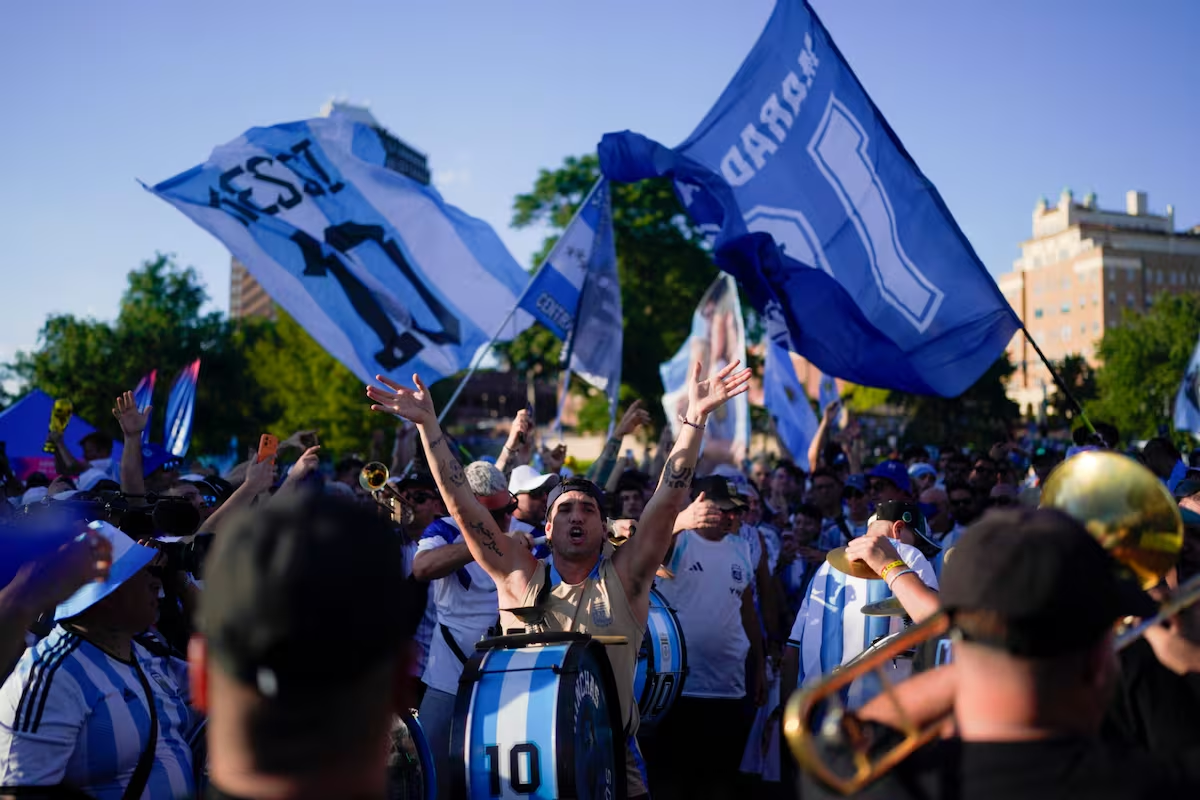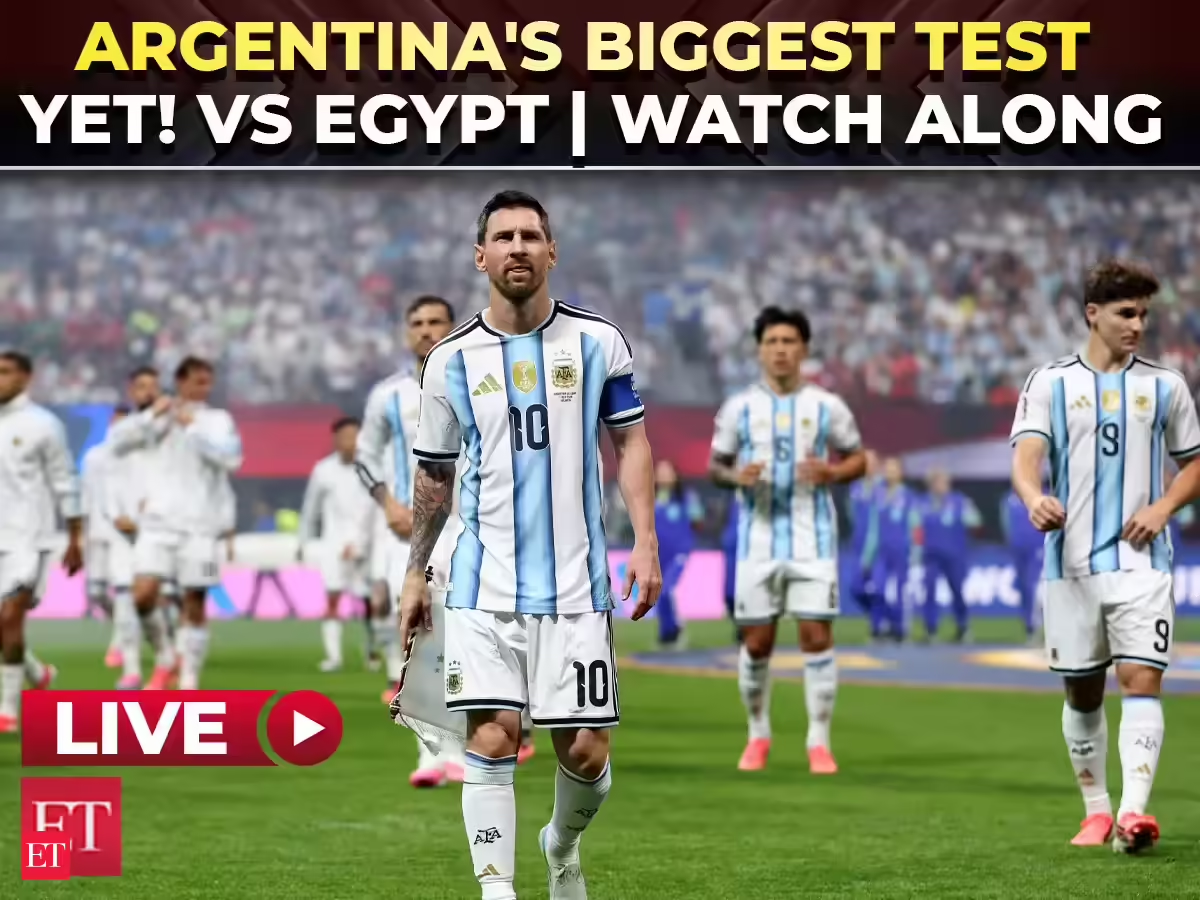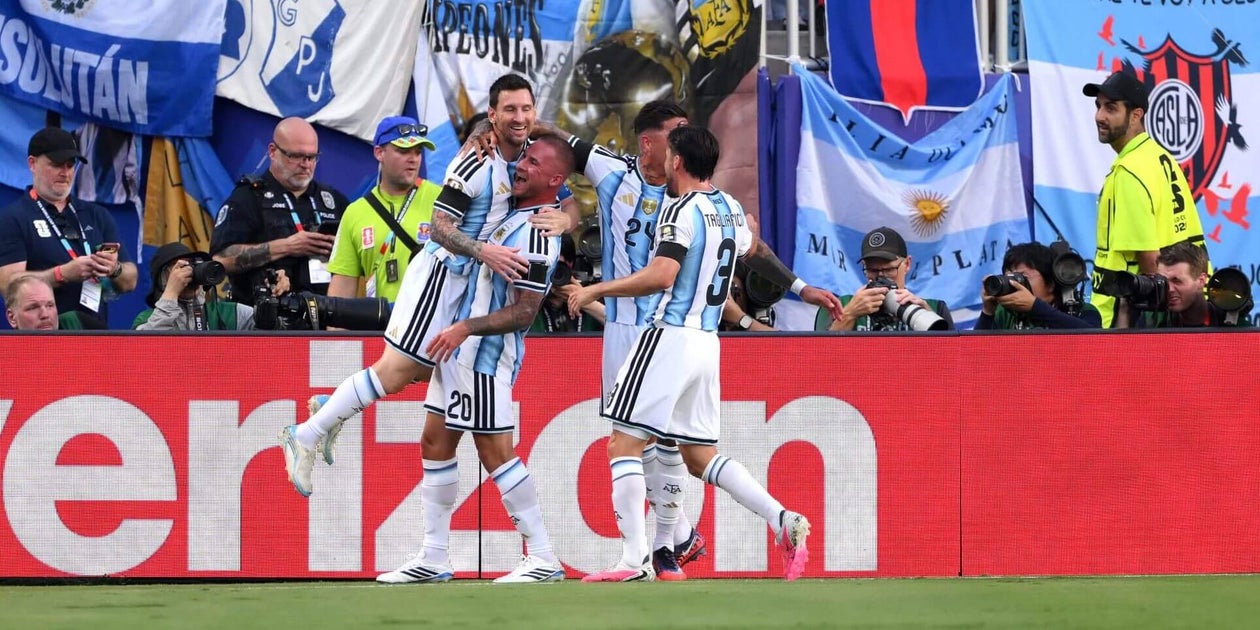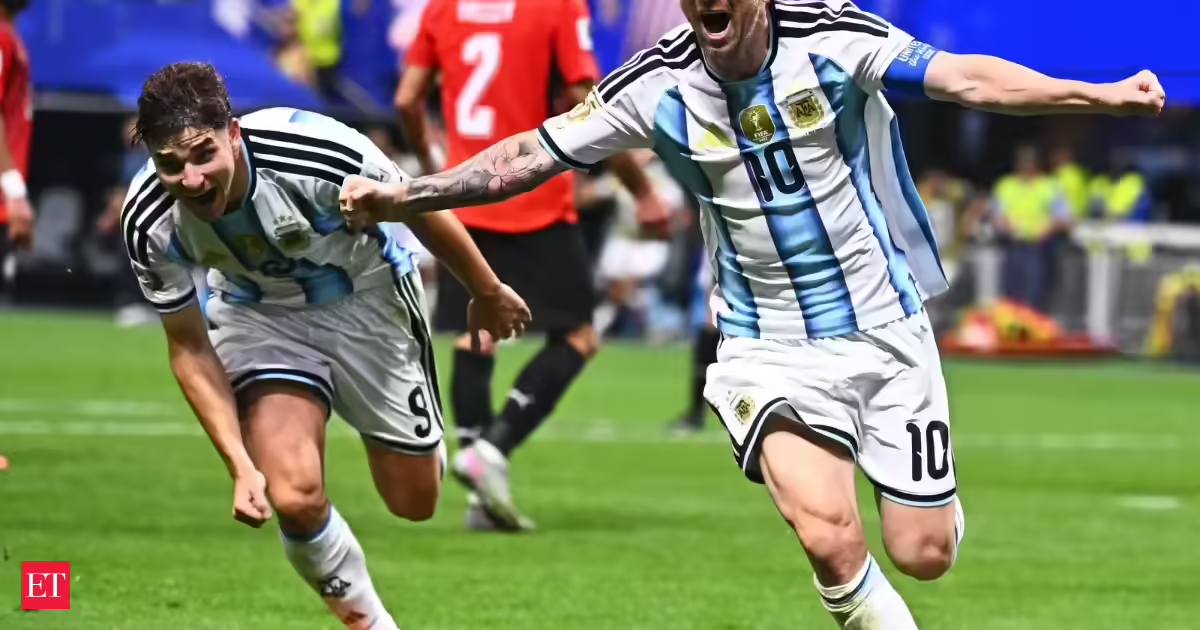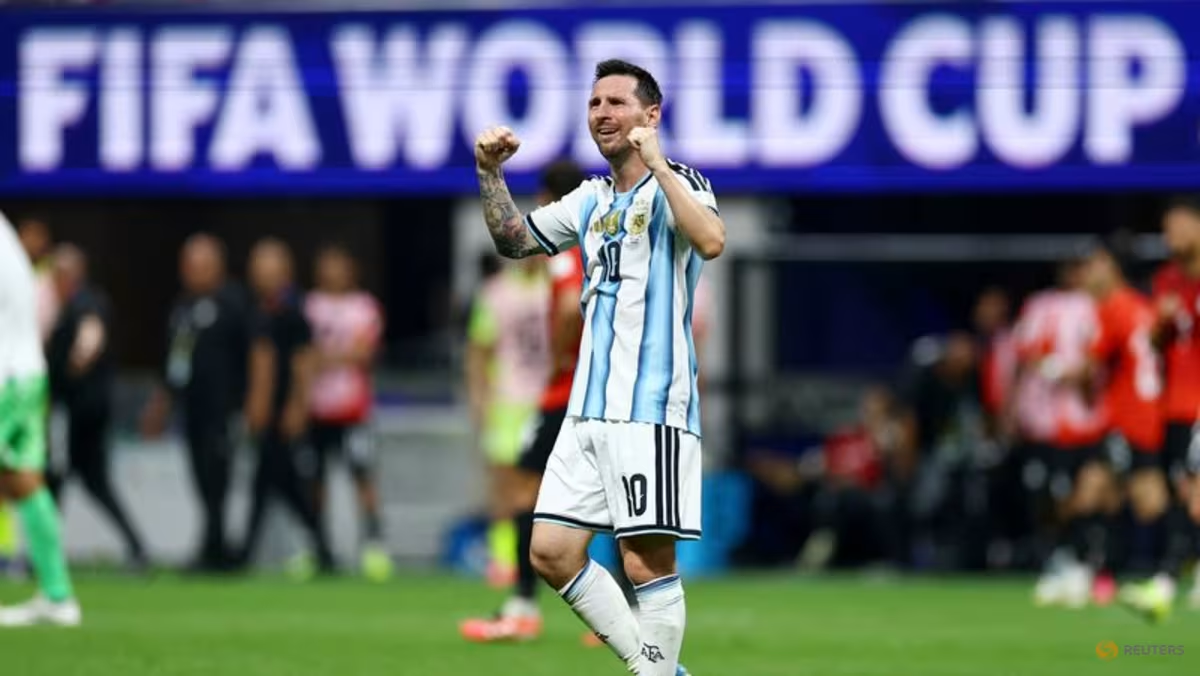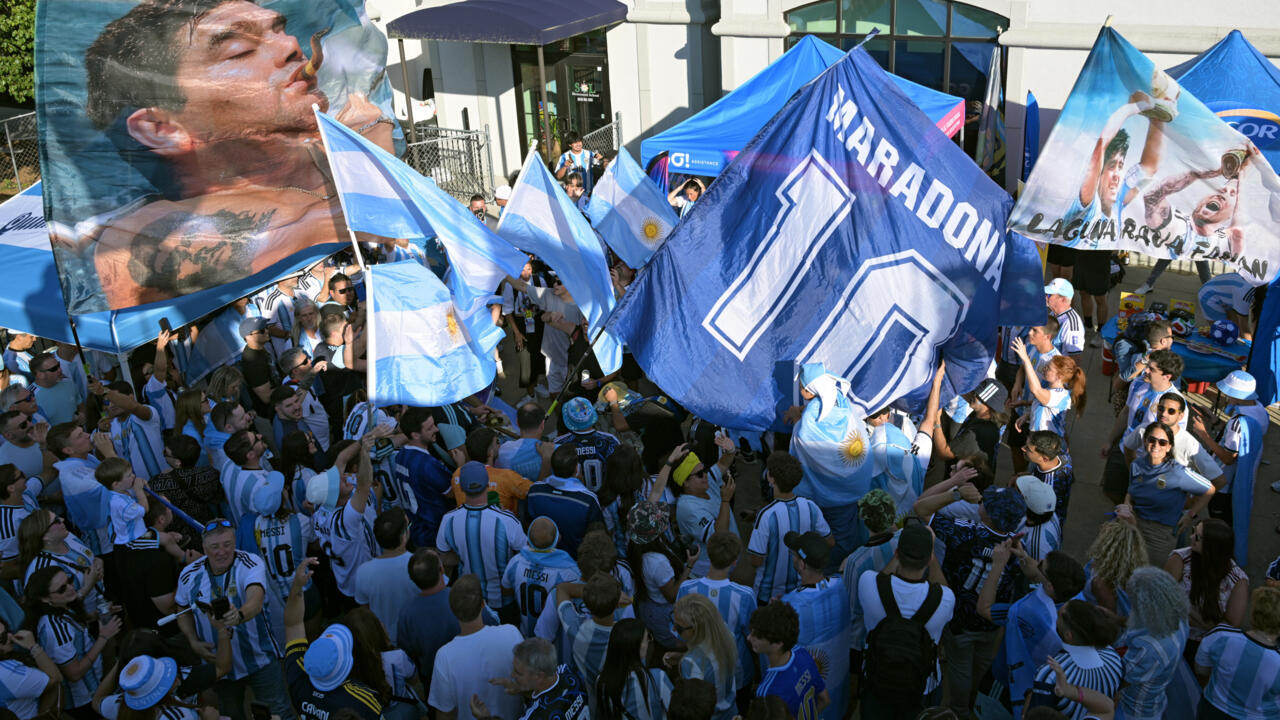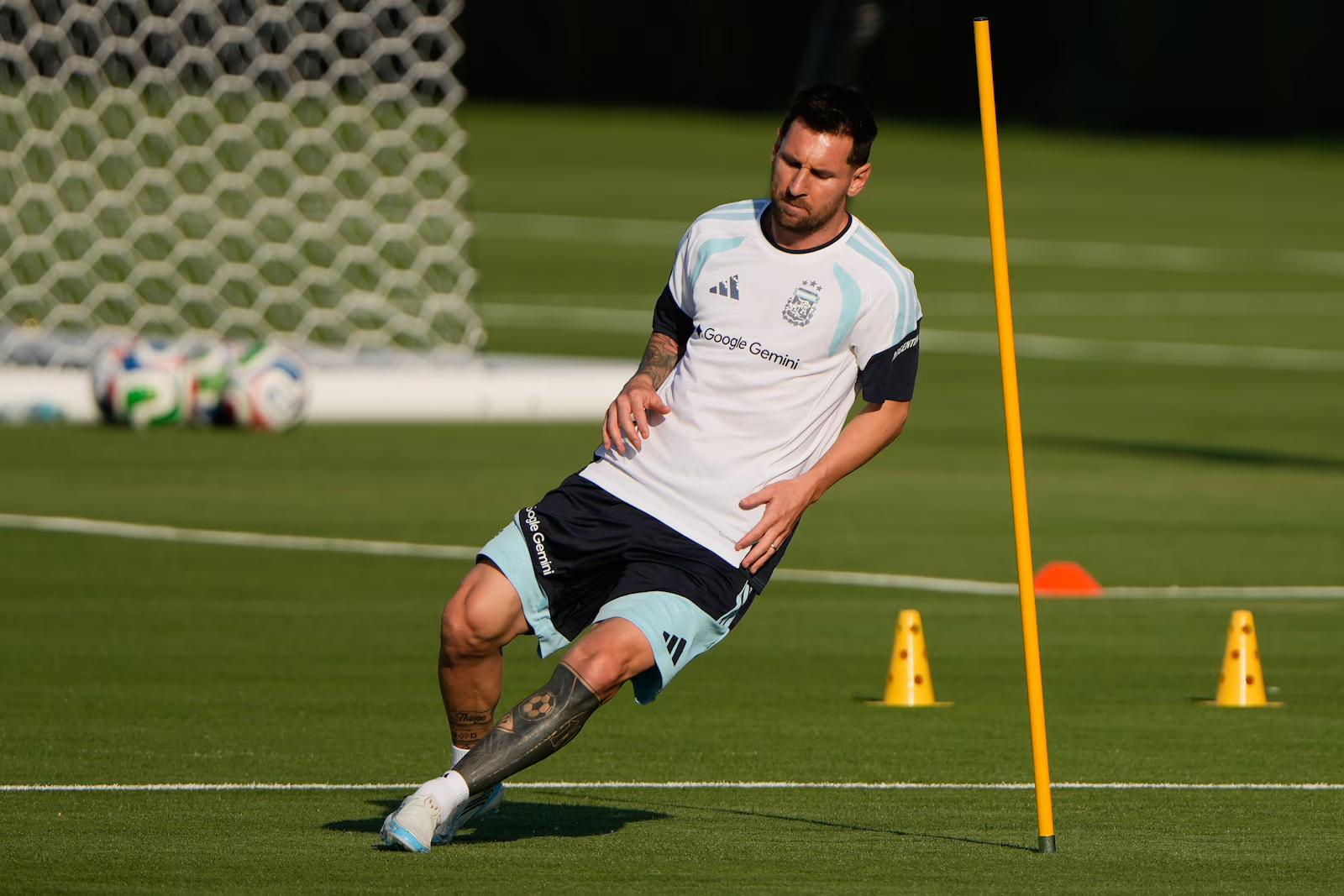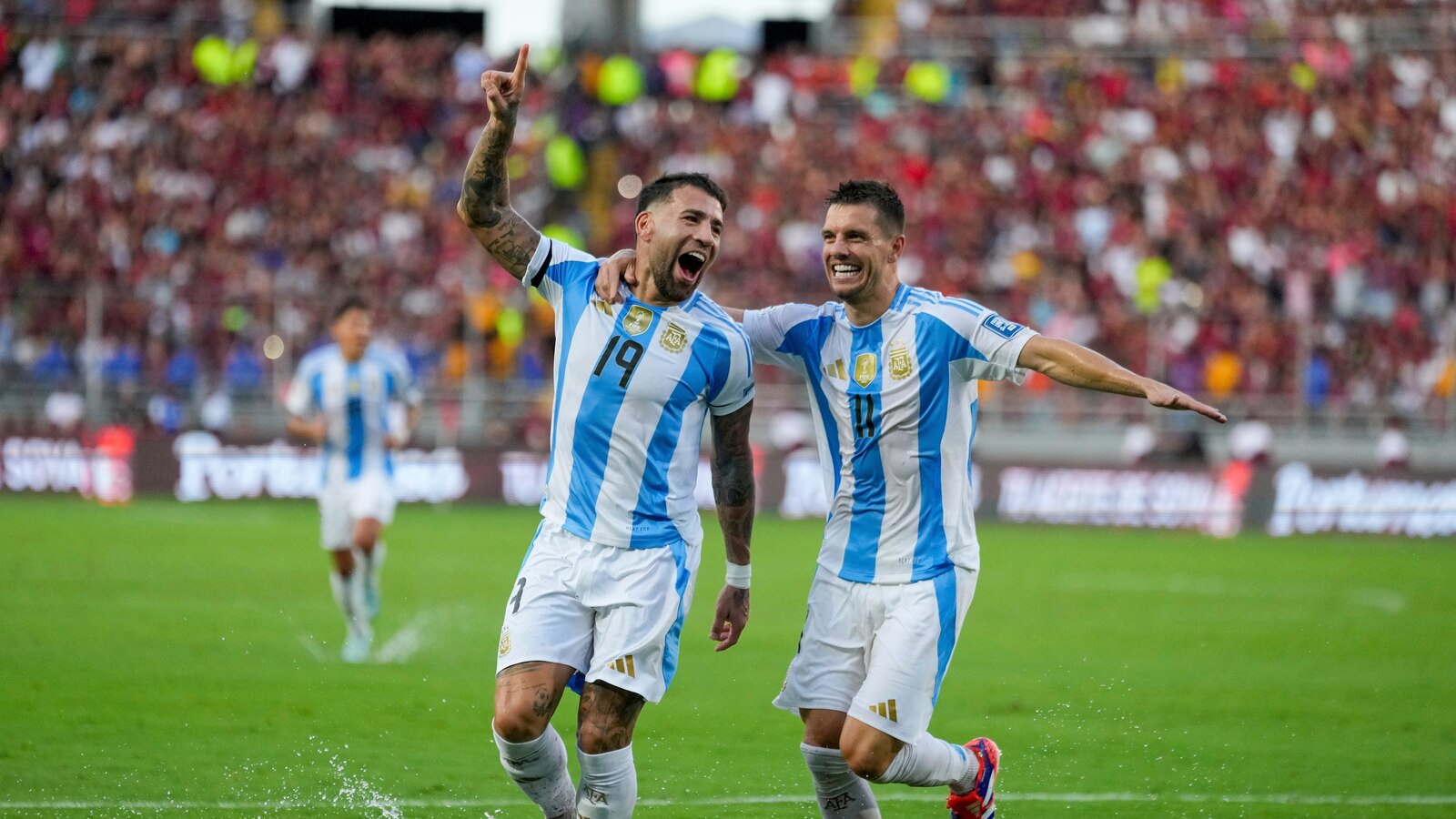
For a last time in Kansas City, then, the Argentina fans made plans to gather on the edge of Old Westport on Friday to stage a banderazo, with drums and chants and singing and meat cookouts. Kansans speak of barbecue sauce, spices and subtleties with the same precision as whiskey sommeliers. A love of cooked meat is an immediate common bond with their visitors. Many Argentina fans were waiting to greet the team plane when it landed in the downtown airport on Friday evening, still wound up after the 3-2 win over Egypt; over Lionel Messi’s late, unexpected gift to the tournament. The Argentinian jersey, the Albiceleste, matches the sweeping white and blue of the sky in this part of the country. Visitors have made regular pilgrimages to Los Hornos, an authentic Argentinian restaurant opened by an immigrant who never dreamed she’d be cooking not only for football supporters from home, but some of the players. Not Lionel Messi – yet. But she is hopeful, she told the local Fox reporter on Wednesday night, that he will come.At the Fanfest on Thursday, locals trooped up the broad hill towards the World War One Memorial and ate Kansan cooking and drank American beer in the dank, 30-degree heat as France dealt with Morocco in a perfunctory manner. It suddenly felt for all of this World Cup’s excess of inclusivity – the glut of games and teams, a more urgent narrative, driven by the dead heat of mid-July, was taking shape. Who is the best? Who will win this? If Kylian Mbappé’s France are the smart favourites, and if there’s a grudging acceptance that Tuchel’s England boys are clear-eyed and humble and have the stomach for this – “Our thumping hearts hold the ravens in” as the song goes – then Argentina’s national quest and dream-wish, to be led back to the final by their 39-year-old shaman – has become a theme all on its own. Switzerland are here in Kansas, too, of course. But it’s Friday now and nobody seems to have noticed. There are no Alpine peaks here, just endless pampas land stretching westward.The football world and more may be tuning in to see what Messi can do in Arrowhead on Saturday night, but one person who will not be watching is Hossam Hassan, Egypt’s national coach. Boycotting the remainder of the tournament was, he said in the press conference minutes after his team’s scalding 3-2 defeat in Atlanta, his way of conscientious objection. Nobody will know, of course, what is showing on the Hassan house television on Saturday. But he will.“This is my internal objection, my own way of standing up. I am not going to watch a single match of this tournament.”Lionel Messi is lifted by teammates as they celebrate after winning the 2026 World Cup Round of 16 football match between Argentina and Egypt at Atlanta Stadium in Atlanta on July 7, 2026. Photograph: Odd Andersen/AFP via Getty Images [ Gavin Cooney: Gianni Infantino playing the fame game creates conflict of interest for FifaOpens in new window ]Hassan did not have much to say about Messi or Argentina. Instead, he offered an appropriately bitter account of the way in which Egypt exited the tournament.“We are a domestic technical staff and we have at least 23 local players and we are challenging and confronting the most expensive players in the whole world. We looked better on the ball compared to the reigning champions. We were better in everything but the result. The outcome, was influenced by internal factors, on the pitch, inside the game and ahead of the game. There seemed to have been pressure exercised from the Argentinian side that brought about this outcome.”Heavy words. One imagines Gianni Infantino, still paler than Bela Lugosi despite his month in the American sun, offering his faint watery smile at this outburst. Infantino has declared a friendship with Trump: when together, these two peculiar men, outsiders still, must console each other that no matter what they do they will never get the credit. Head coach Hossam Hassan and Mohamed Salah of Egypt talk with referee Francois Letexier during the Fifa World Cup 2026 Round of 16 match between Argentina and Egypt at Atlanta Stadium in Atlanta, United States, on July 7, 2026. Photograph: Ayman Aref/NurPhoto via Getty Images [ ‘They want Messi to stay in the tournament’: Egypt’s disallowed goal against Argentina leads to claims of injusticeOpens in new window ]“We are leaving with honour, with pride,” Hassan continued. “We have not seen neither respect nor fair play because a penalty was ruled out; a second ball that should have ruled a penalty for us was not even checked by VAR. A second goal was remarkably, for whatever reason, disallowed. We have all seen this scene of the shirt being pulled back and there has not even been a VAR check in order to disallow this goal. “But life is unfair; ordinary life is unfair. But why isn’t there any fairness in sports, within football? I am not convinced by this outcome. I am not convinced by the way things unfolded during this match. I do not want to try and put it nicely here with selected wording. We have been treated unfairly today. We have suffered an injustice.”Hassan has been one of the more compelling figures of this World Cup. He was asked, before he took his leave, if he believed that against Argentina, his team had been punished for repeated, outspoken support of the Palestinian cause in Gaza.“I am only expressing an individual point of view and opinion and I dare to say that those who were listening to me did not necessarily feel empathy with people dying, children being killed who wear the shirts of Argentina, of Barcelona, of Man City, of Real Madrid. Those children are the same children – they love you, they love football. But they keep getting killed.”Palestinian artist Obai Al-Karshali paints a portrait of Egyptian National Football Team head coach Hossam Hassan on the rubble of a building. Photograph: Saeed M M T Jaras/Anadolu via Getty Images Palestine does not feature much on the local or national news in Kansas, or in any American state. Hassan’s words were easily smothered out in the general joy, the general euphoria which followed Messi’s latest act of age-defiant absurdity. Podcasters, journalists and essayists all encountered this week the stumped realisation that there is nothing much left to say about him: the superlatives seem shallow and short-falling. Let your jaw go slack and gape is the only relevant praise.The World Cup has reached that delicious point where all football fans are at once thrilled by the prospect of the high-altitude improvised theatre of the elite knockout games and sadness that the end will come at them in a rush. But with Messi also comes the piercing truth that there is no tightrope; that there may well be no next time, in four years, when he will be 43. Much has been made of the fact that Messi is just two years younger than Ronaldo, whose acceleration and elevation has been cruelly diminished. But those years, in the elite little room where the world’s best in any sport sit: those are dog years. Messi at 41 may be simply mortal.Lionel Messi celebrates winning the Fifa World Cup 2026 Round of 16 match between Argentina and Egypt at Atlanta Stadium on July 7, 2026, in Atlanta, United States. Photograph: Sebastian Frej/Getty Images So the Argentinian people who have flown up here for this odyssey on the Plains, they want Kansas to hear and remember this game, this night. They want to communicate their absolute devotion to this man.That hat-trick here in Kansas on Argentina’s opening night; the magician’s velvet-stun touch on the ball for his second goal against Cape Verde; the eight goals; this month has a fated feel.You only have to flick back two World Cups to remember that it is not. Those of us in the stadium in Nizhny Novgorod on the June night when Croatia stunned Argentina with a 3-0 victory were struck not just by the strange pall that gripped the team on the field but by the visible distress and anguish of Diego Maradona, who travelled with the carnival for that tournament as both chief supporter and living deity. That was eight years ago, and the narrative then was Messi could not quite absorb the weight of inheritance bestowed on him by this stocky, dark-haired fury in the stands who showed his love through tears and wild gestures. Four years before that, Jeff Himmelmen travelled to Messi’s old country ahead of the Brazil World Cup for a New York Times piece that carried the headline ‘The Burden of Being Messi.’“Last month, I spent time in Buenos Aires and in Rosario, Messi’s hometown, where I heard versions of this critique nearly everywhere I went, from cab drivers to coaches to professional commentators: Messi left Argentina too soon; he didn’t come up through the club ranks and play for a first-division side in Argentina, as other heroes like Diego Maradona and Carlos Tévez have done; he hasn’t sung along with the national anthem before games; he has no passion, no personality; he doesn’t ‘feel the shirt’ of the national team the way other players do. The attacks have at times been so personal that Messi has reportedly considered quitting the national side. But the one thing nobody has ever denied is that when he speaks, Messi still sounds as if he’s from Rosario, and this small fact has kept the fragile connection alive. An Argentinian soccer journalist, Martin Mazur, said: ‘The greatest gift for Messi during these years is that he never lost the Argentinian accent. You can’t imagine what it would have been for him if he hadn’t had it. They probably would have killed him.’”Fans celebrate Argentina's victory in Buenos Aires. Photograph: Tomas Cuesta/Getty Images But those sentiments were spoken in the frustration of that time and the anxiety of a football-obsessed country who had not won a World Cup since 1986. A decade has passed and they are champions of the world and revelling in defending their title. Messi still has his accent but seldom uses it to speak any public words of consequence. Somehow, he has moved from moseying through the salad days of the inconsequential US football season with Inter Miami to lighting up this World Cup in a way that has seemed to delight and surprise even him. It’s as though everything – even winning it all in Qatar – was a prelude to his unexpected summer of uncomplicated joy.Can the trance continue?There is a nagging sense that Hassan’s burning words may have followed Argentina here to Kansas, though; that they will need the famous cabalas to work for them. It would be a bitter irony for some if Switzerland – where Gianni Infantino was raised – were to break it.[ Kansas City’s unlikely World Cup dream started long ago, on a rainy night in MilltownOpens in new window ]Nonetheless, a unique night awaits the crowd in Arrowhead; the millions back home in Argentina, the wider world.“I cannot be in Messi’s head but I am convinced he plays football for moments like this,” Lionel Scaloni, the Argentina coach, said in a general reflection.“He loves the ball, he loves playing with the ball and feeling these emotions at this stage in his career ... it is very difficult to put in words. So, we tell them: we are on the other side and we tell them we want them to enjoy it up until the very last moment. Because when you do not play any more, you will regret it for life. That you cannot make it on to the pitch again. And I believe that permeates their mind. They know they are playing for the country. And I believe that was a moment that was unforgettable.”World Cup Wallchart
Lionel Messi’s World Cup dream gathers pace as Argentina take over Kansas City
Argentina supporters have turned Kansas City into a sea of sky blue and white, but Egypt's accusations after their last-16 defeat cast a shadow
1,989 words~9 min read