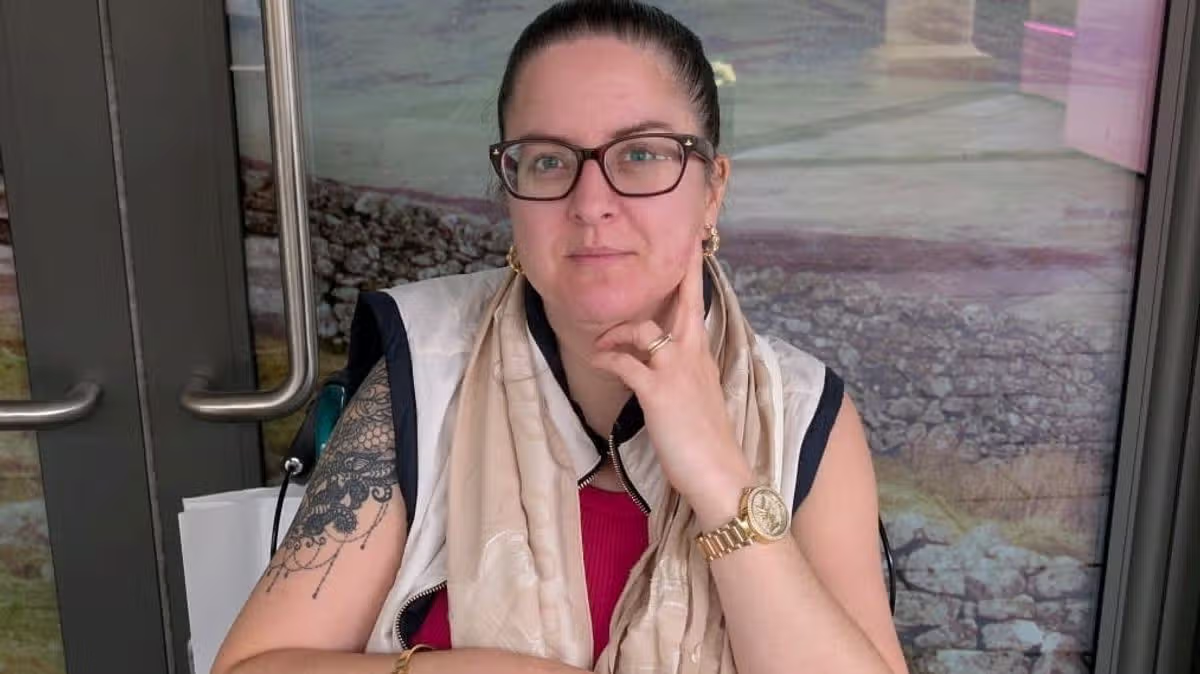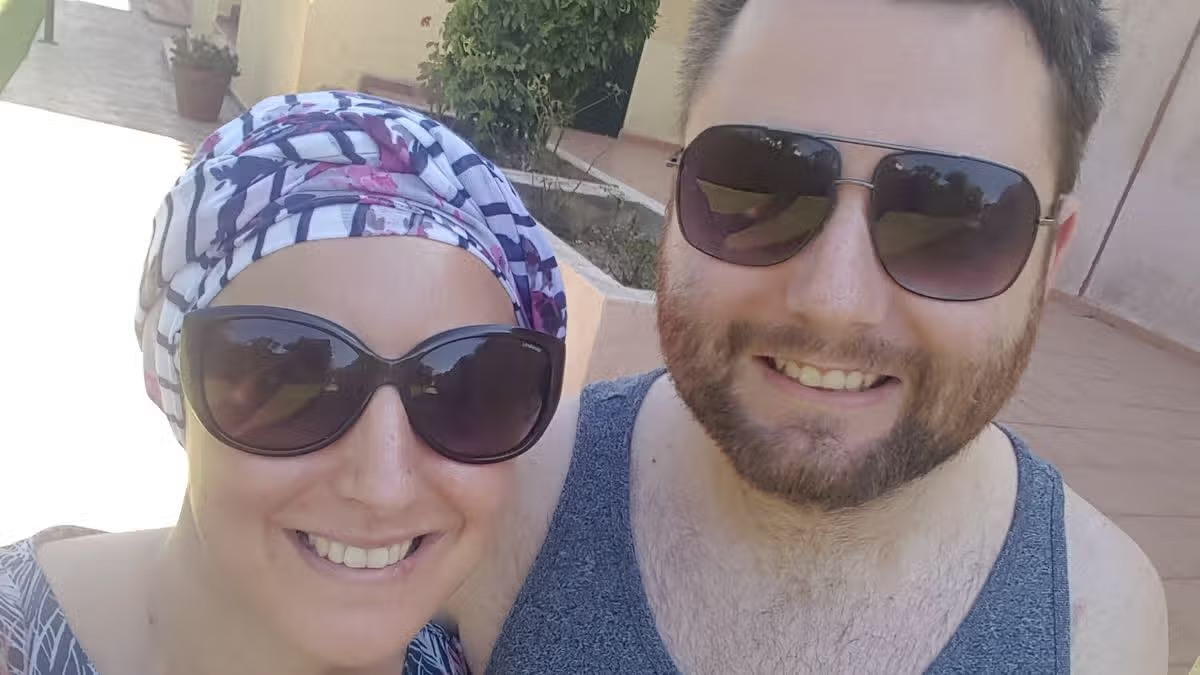
Natalie Faulkner was away in Spain when she collapsed13:56, 10 Jul 2026A woman who collapsed on holiday said she had "no reason to think our lives were about to change".But she lost the chance to become a mum after treatment for a brain tumour and is sharing her story to raise awareness of the disease and help fund research into it. Natalie Faulkner, 36, from Manchester, was staying at her family’s holiday home in Islantilla, Spain, in July 2017 when she collapsed without warning.She had walked to a shop to buy fresh bread when she suffered a seizure lasting around five minutes and woke up to find her husband, Danny, and locals gathered around her. Natalie is sharing her story to raise awareness of the disease that kills more children and adults under the age of 40 than any other cancer and to raise vital funds for Brain Tumour Research – the only national charity focused on finding a cure for all types of brain tumours.Natalie said: “Before my diagnosis, life was busy. I was working as the manager of Majestic Wine in Sale and loved spending my free time cooking, baking, reading, watching football and keeping fit. My husband Danny and I were looking forward to the future and had no reason to think our lives were about to change.“The next thing I remember after collapsing was Danny telling me not to move while our Spanish and Portuguese neighbours stood around me. It was terrifying because I'd had no warning signs at all. I hadn't experienced headaches, dizziness or any of the symptoms people often associate with a brain tumour. One minute I was planning breakfast and the next I was waking up in the middle of a medical emergency.”Natalie was taken to hospital, where scans revealed a mass on her brain. After an MRI confirmed it was a low-grade oligodendroglioma – a rare type of glioma – she underwent emergency surgery in September 2017 to remove as much of it as possible.“When they told me I had a brain tumour, I was devastated, but the care I received in Spain was incredible,” Natalie said. “They explained everything carefully and made me feel reassured during one of the scariest moments of my life. They wanted to carry out a biopsy before surgery, but I told them I just wanted the tumour removed. Knowing it was there was frightening enough.”While Natalie was recovering, her parents flew out to be with her and her dad, John, contacted Salford Royal Hospital to find out how quickly she could have been treated back home.Natalie said: “Dad later found out that if I’d had the surgery in the UK, the wait would have been six to eight weeks because further scans would’ve been needed first. It made us realise just how fortunate I was that my seizure had happened where it did and that I was able to have surgery so quickly.”After returning home to Manchester three-and-a-half weeks later, Natalie continued treatment at Salford Royal and The Christie, where she underwent six weeks of radiotherapy followed by chemotherapy.Before chemotherapy began, Natalie and Danny were referred for fertility treatment so her eggs could be collected, but there was not enough time to create embryos before cancer treatment had to start.Natalie said: “Danny and I desperately hoped we’d still have the chance to start a family one day, but there wasn’t enough time to create embryos before treatment had to begin. Losing that opportunity was one of the most heartbreaking parts of my diagnosis. While everyone focused on saving my life, I was also grieving the future we’d always imagined together.”After years of being stable, Natalie suffered a seizure at home in late 2025 while preparing to travel to London for a work conference. She was taken by ambulance to Salford Royal before being referred back to The Christie. Over the following months, she underwent further tests, regular MRI scans and medication changes, and experienced a further 34 seizures as doctors worked to identify the cause.Natalie said: "Thankfully, the scans showed my tumour hadn't started growing again, but it took months of tests and medication changes before things started to improve. There were days I was so weak I couldn't even make my friends a cup of tea. I'm slowly getting my strength back, but recovery doesn't end when treatment does. Brain tumours leave behind hidden effects that aren’t always visible."Brain tumours are indiscriminate; they can affect anyone at any age and kill more women under 35 than breast cancer. Yet just 1% of the national spend on cancer research has been allocated to brain tumours since records began in 2002, Brain Tumour Research said.This month, Natalie is taking on the 88 Squats a Day in July challenge to support Brain Tumour Research, the national charity with six Centres of Excellence determined to find a cure for all types of brain tumour.At the Brain Tumour Research Centre of Excellence at the University of Plymouth , scientists are investigating low-grade glioma, which includes oligodendroglioma, to pave the way for more effective treatments. Researchers there are looking at why gliomas occur and how they change from low to high grade.She said: “When I learnt how little funding this disease receives compared with other cancers, I knew I wanted to do something to help. I know the challenge will be tough, but if my experience can help bring us one step closer to better treatments – or one day a cure – it will be worth every squat.”Article continues belowAshley McWilliams, community development manager at Brain Tumour Research, said: "We are incredibly grateful to Natalie for sharing her story and taking on this challenge to support our work. Her experience is a stark reminder that brain tumours are indiscriminate; they can affect anyone at any age and leave people facing lifelong consequences. Stories like Natalie's highlight why greater investment in research is urgently needed so we can develop kinder, more effective treatments and, ultimately, find a cure."Brain Tumour Research funds sustainable research at dedicated centres in the UK. It also campaigns for the Government and larger cancer charities to invest more in research into brain tumours in order to speed up new treatments for patients and, ultimately, to find a cure. The charity is the driving force behind the call for a national annual spend of £35 million in order to improve survival rates and patient outcomes in line with other cancers such as breast cancer and leukaemia.To support Natalie’s 88 Squats a Day in July fundraiser, visit http://www.justgiving.com/page/natalie-faulkner
'I had brain tumour removed but was left grieving the future'
Natalie Faulkner was away in Spain when she collapsed
1,090 words~5 min read