Story audio is generated using AI
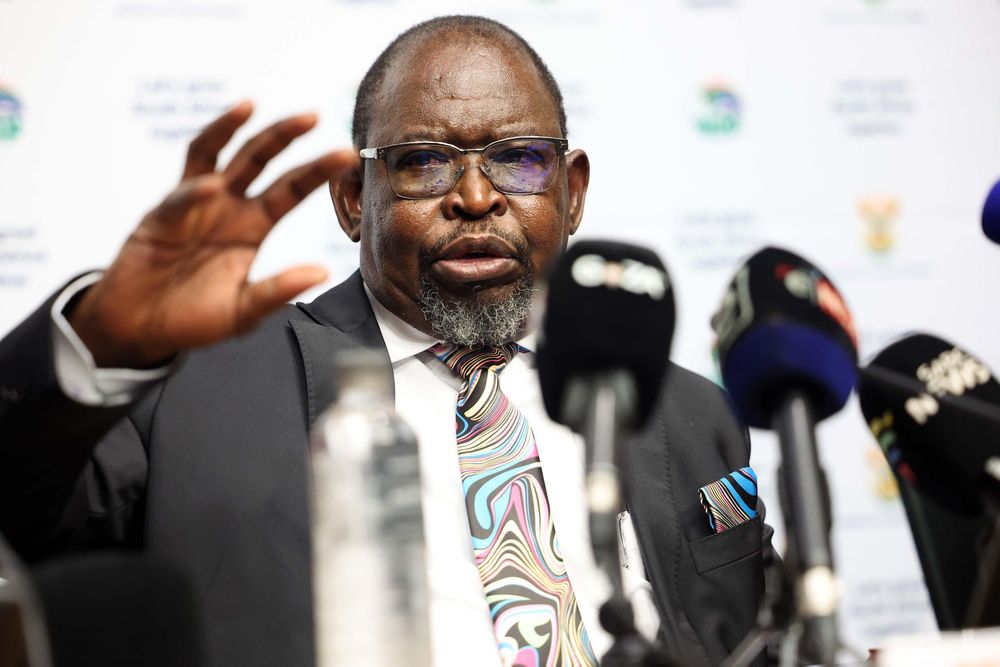
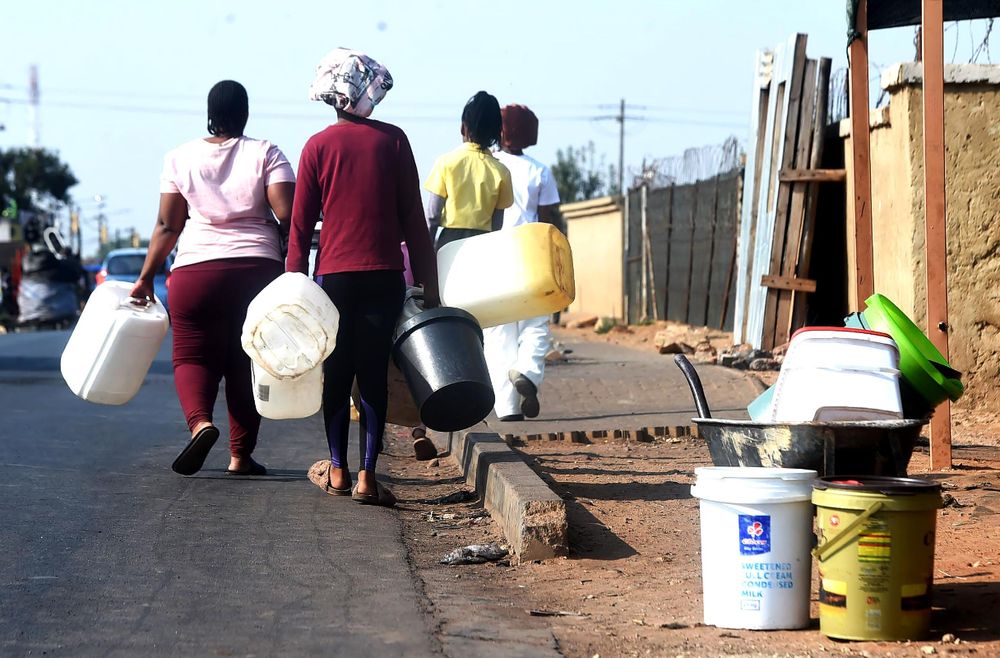
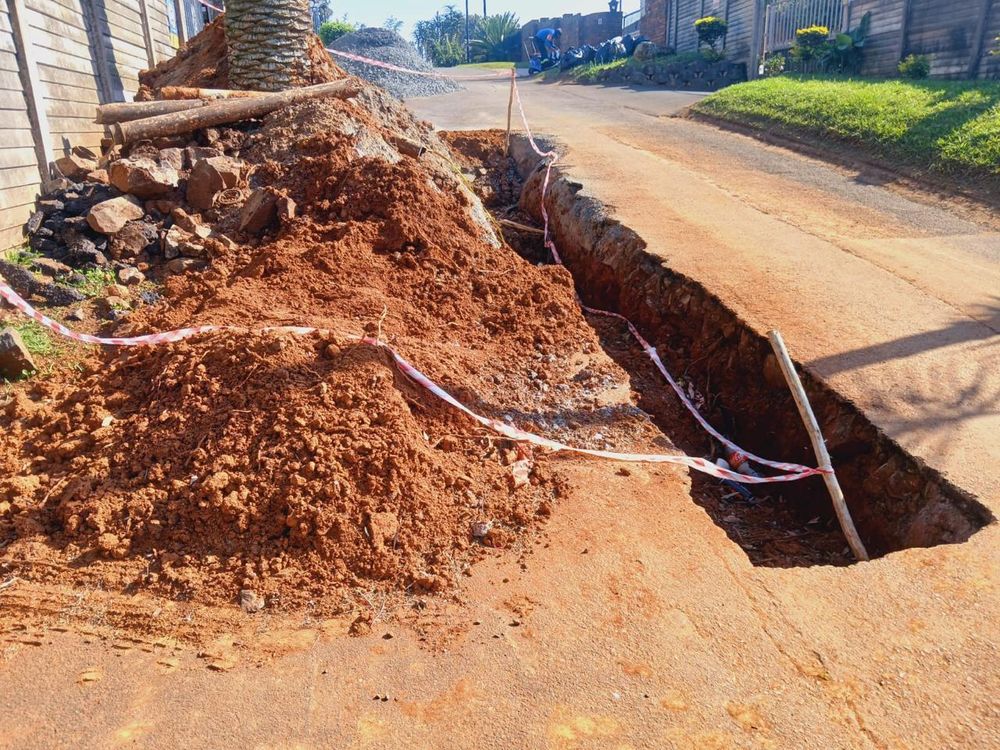
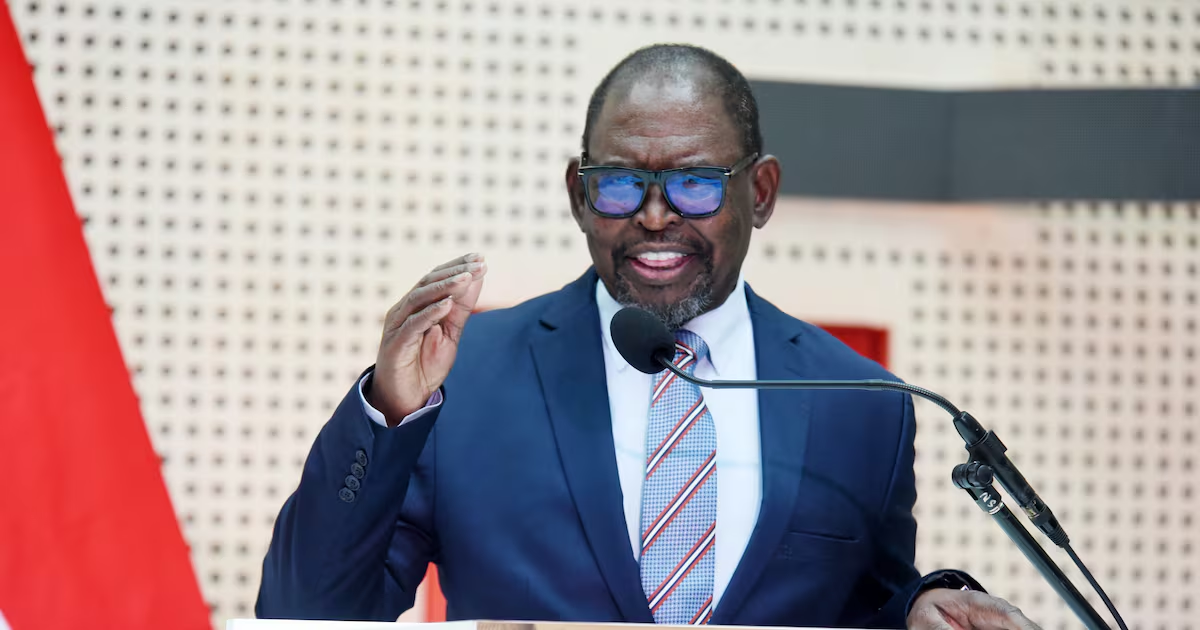
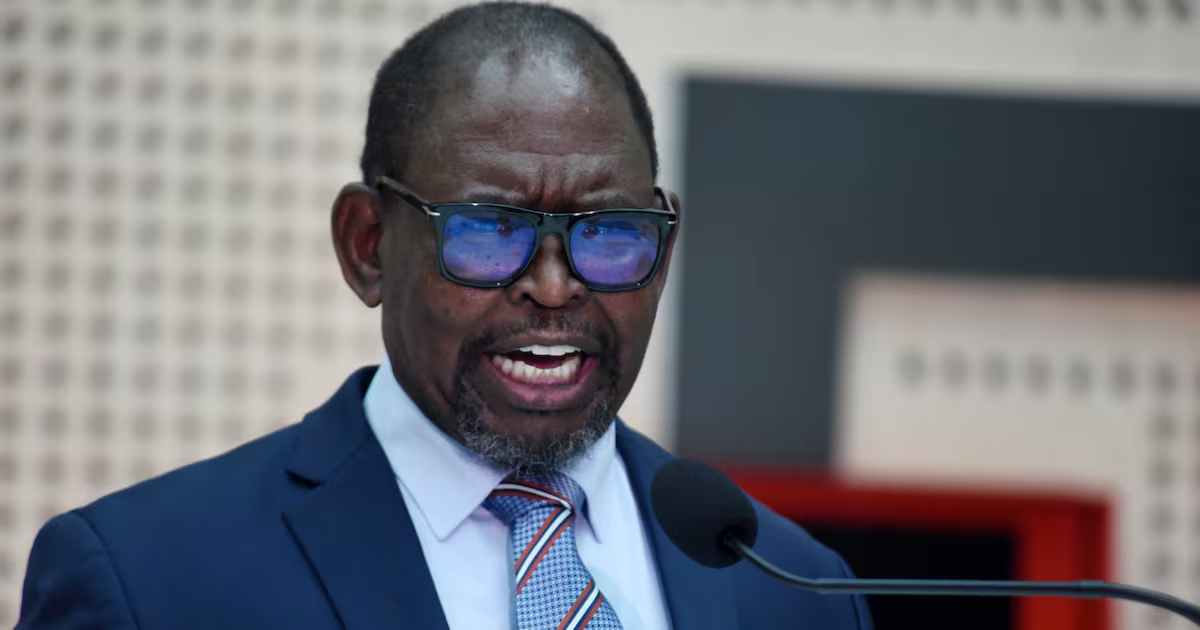
The aggregate liquidity shortfall of R128.7bn in the year to end-June 2025 across the 128 municipalities surveyed by independent governance ratings agency Ratings Afrika highlighted the significant deterioration in their financial resilience, the agency said in a report released this week. The findings corroborate the evidence of municipal financial distress emerging from reports of the auditor-general and National Treasury. Finance minister Enoch Godongwana announced this week that Treasury would withhold the equitable share from 69 municipalities because of financial mismanagement.Ratings Afrika said the “alarming” aggregate liquidity shortfall of R128.7bn compared with R107bn in 2024 and only R55bn four years ago explained the widespread breakdown in service delivery and the accelerating decay of municipal infrastructure across the country. The average operating deficit increased to R39bn, up from R35bn in 2024, indicating that municipalities were unable to generate sufficient revenue from their operations to fund essential services. The cumulative effect of these losses had been the “dramatic” deterioration in municipal liquidity, with liquidity shortfalls indicating a lack of sufficient cash and liquid assets to meet short-term obligations. The ability of municipalities experiencing severe liquidity stress to continue operating as going concerns was “increasingly questionable”, the agency said. It warned that “without decisive intervention, municipalities will remain trapped in a cycle of operating losses, worsening liquidity shortages and declining service delivery”. “Despite years of warning signs, most municipalities continue to operate at a loss as a result of poor financial management and weak governance. If left unchecked, South Africa faces a growing risk of systemic municipal failure with profound social and economic consequences.” The report published the results of Ratings Afrika’s annual Municipal Financial Sustainability Index (MFSI), which assesses the financial performance of South Africa’s 120 largest local municipalities and eight metropolitan municipalities based on the financial results for the financial year to end-June 2025. The average financial sustainability score for the local municipalities assessed fell to 33 out of 100 from 36 in 2021 (or 27 excluding those in the Western Cape) and to 40 for metros, down from 42.“Such low scores point to widespread weaknesses in financial management, governance and fiscal discipline. These trends are not merely indicators of financial distress; they are evidence of a systemic failure that is increasingly undermining service delivery, infrastructure sustainability and economic growth,” the report said. With an average score of 57, the Western Cape remained the highest-performing province, the only one with an average score above 50 and the province where municipalities could, on average, be regarded as financially sustainable. The MFSI assesses the financial sustainability of a municipality across six key components: operating performance; liquidity management; debt governance; budget practices; affordability; and infrastructure development. Each component is individually scored and weighted to produce an overall index score, which is measured against a benchmark of 100. Cape Town remained the only metropolitan municipality classified as highly financially sustainable in 2025, having achieved healthy operating surpluses and substantial cash reserves, providing both the capacity to invest in infrastructure and a meaningful buffer against future financial pressures. Nelson Mandela Bay was the only other metropolitan municipality whose financial sustainability could be regarded as fair in 2025, but it was on a declining trend. A major contributor to the liquidity crisis was the low average revenue collection rate of only 83.9%. This meant that municipalities failed to collect about 16% of the revenue they billed each year, effectively writing off a substantial portion of their income. Unless revenue collection improved significantly, many municipalities would continue their downward financial spiral and ultimately face collapse, the report said. Cape Town stood out with a collection rate of 98%. Ratings Afrika noted that the experience of Western Cape municipalities showed that South Africa’s current municipal funding model was not fundamentally flawed or broken. Cape Town mayor Geordin Hill-Lewis noted that Cape Town’s overall index score of 71 was a full 35 points higher than the average score of 36 for the other metros. “Good governance enables us to invest an SA-record R40bn in basic infrastructure over the next three years, while still offering the lowest property rates of South Africa’s cities,” he said in a statement.Business Day