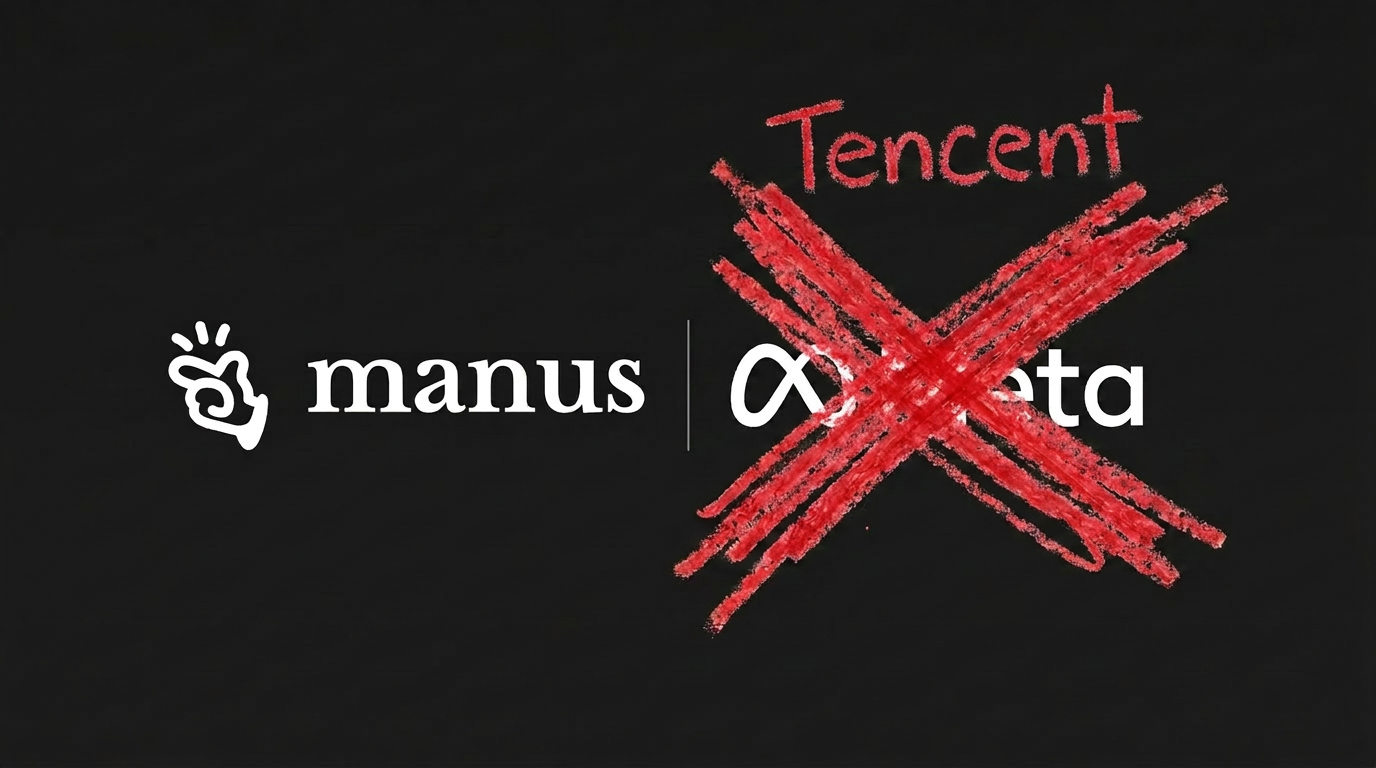
Chinese technology company Tencent is in discussions to become the biggest shareholder in artificial intelligence (AI) startup Manus, according to a Reuters report.The talks come after Chinese regulators ordered Meta to reverse its $2 billion acquisition of the company. Tencent is working with Manus' early investors, including ZhenFund and HSG, to buy the company back from Meta for at least $2 billion, Reuters reported, citing sources familiar with the discussions. The Financial Times first reported the talks.How the deal unfoldedMeta announced its acquisition of Manus in December as part of its push into agentic AI.Back then, Manus chief executive Xiao Hong said, “Joining Meta allows us to build on a stronger, more sustainable foundation without changing how Manus works or how decisions are made… we will continue to iterate the product and serve users that have defined Manus from the beginning.” Unmade in ChinaHowever, soon, Beijing launched a regulatory review in April to determine whether the cross-border deal breached China's investment rules, before ordering Meta to unwind the acquisition.The decision is one of the most high-profile examples of China blocking or challenging a concluded cross-border technology deal. It also reflects tighter regulatory scrutiny as competition between Beijing and Washington over AI and advanced technologies continues to intensify.China rarely requires companies to reverse closed acquisitions, making the move particularly unusual.Also Read: In blocking Meta-Manus’ $2 billion AI deal, China is trying to stem brain drain'Singapore-washing'Another issue that reportedly drew regulatory attention was Manus' move to Singapore.Although the startup is now headquartered there, it was originally part of the Chinese firm Butterfly Effect before becoming an independent company. After raising $75 million in a round led by US venture capital firm Benchmark in May 2025, Manus shut its China offices and shifted operations to Singapore without seeking approval from Chinese regulators, according to reports.This practice, often referred to as `Singapore-washing‘, involves Chinese technology companies moving their headquarters to Singapore while maintaining strong operational links with China."Beijing has heretofore tolerated this practice, but the Manus case marks a major turning point (as the US-China AI race heats up)," Wendy Chang, at the Mercator Institute for China Studies (MERICS), told AFP in April.She added that the move sends a clear message to Chinese technology companies that attempts to bypass national regulations will not be tolerated.According to a Bloomberg News report last month, Meta has since separated its operations from Manus internally and stopped sharing data with the startup. Reuters had earlier reported that Manus' existing investors exited after the takeover.About ManusManus gained attention early last year after state media and commentators described it as China's DeepSeek. The company said it had developed the world's first general AI agent that autonomously works towards achieving a goal.Unlike companies that build their own large language models, Manus develops an agent framework that runs on top of existing Western language models. The startup is also reported to have reached an annualised revenue of more than $100 million within eight months of its launch.
ETtech Explainer: How the Meta-Manus deal came apart, and Tencent moved in - The Economic Times
Chinese regulators ordered Meta to reverse its $2 billion acquisition of the company. Tencent is working with Manus' early investors, including ZhenFund and HSG, to buy the company back from Meta for at least $2 billion.
495 words~2 min read