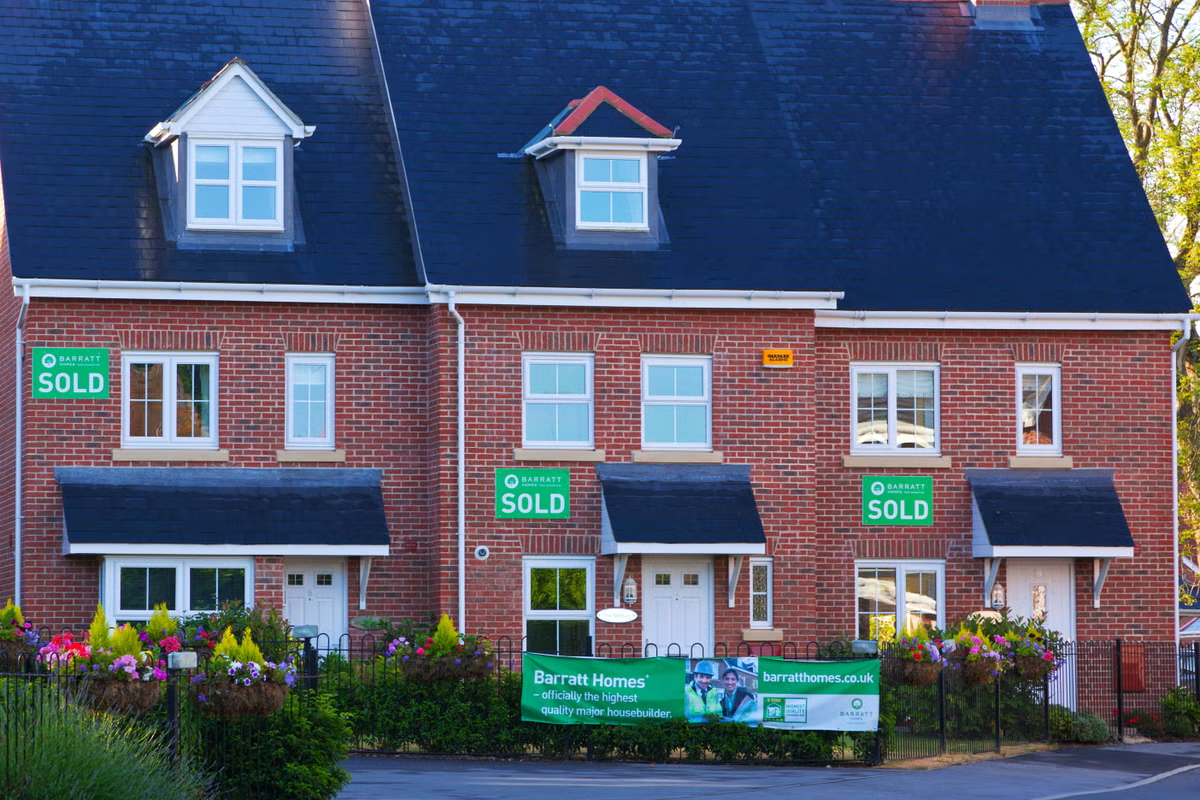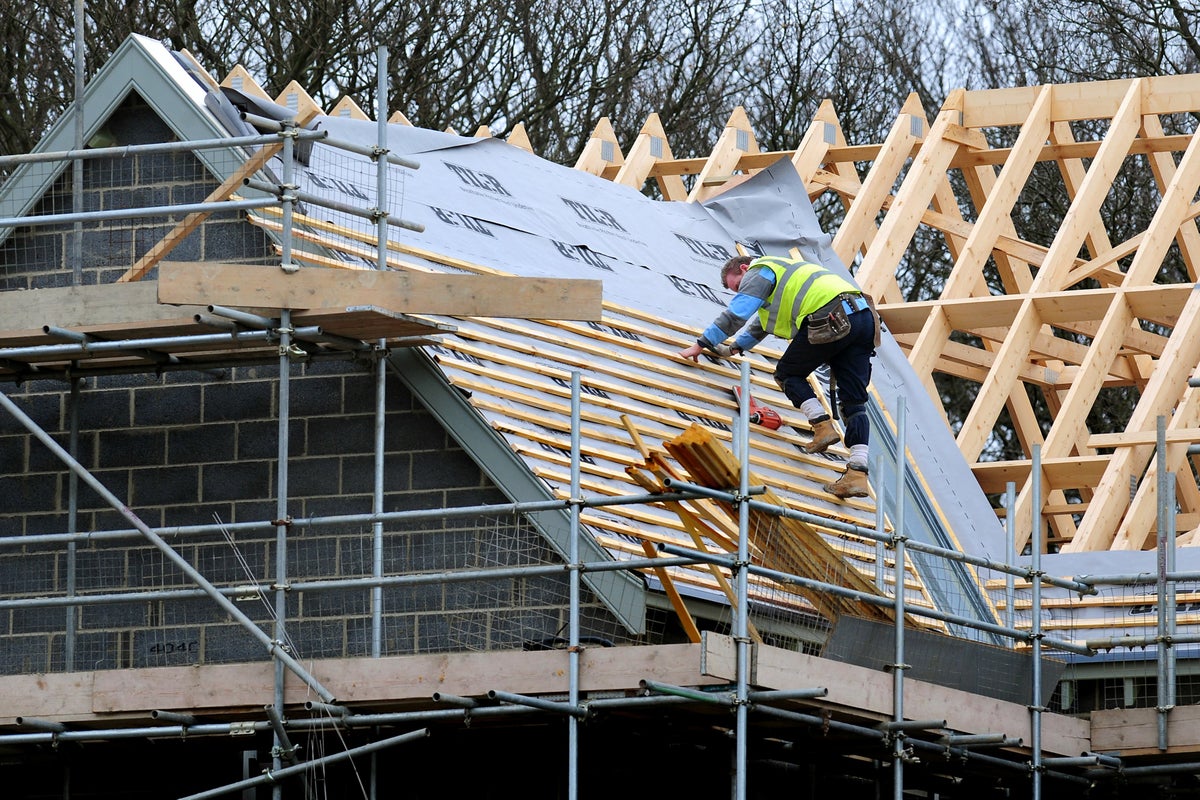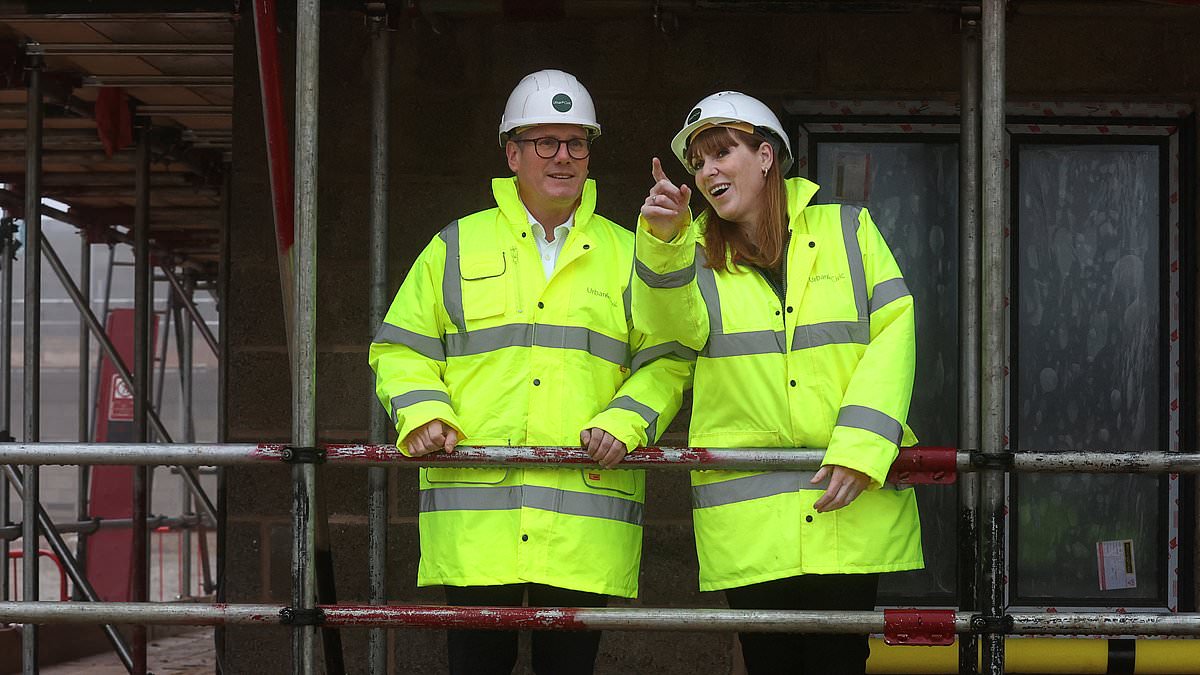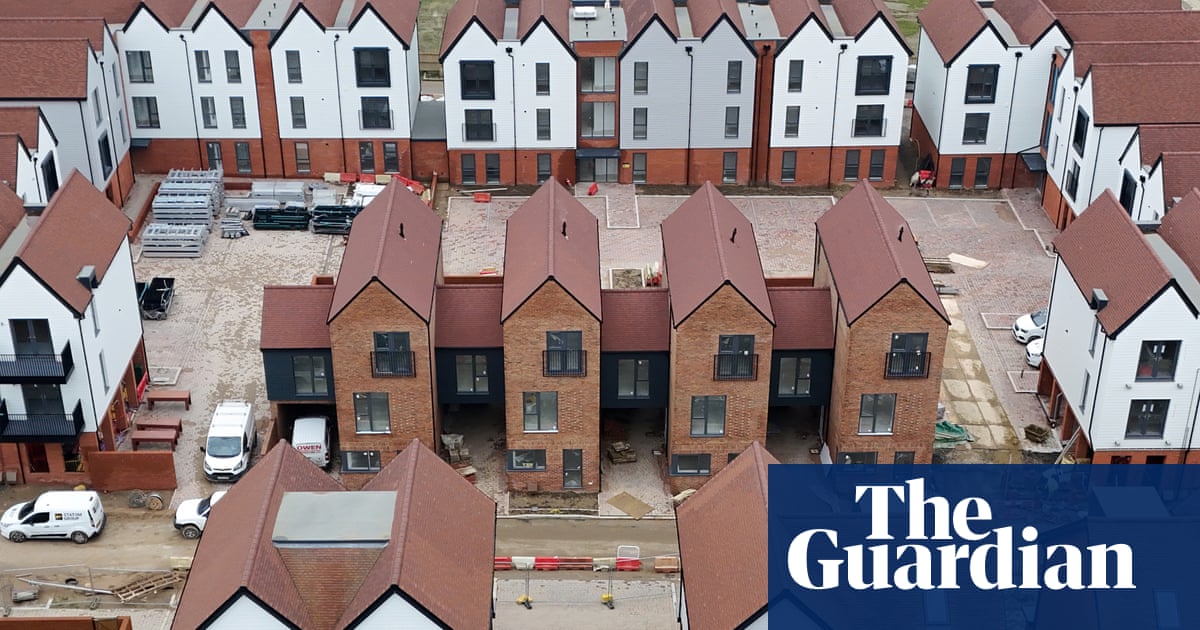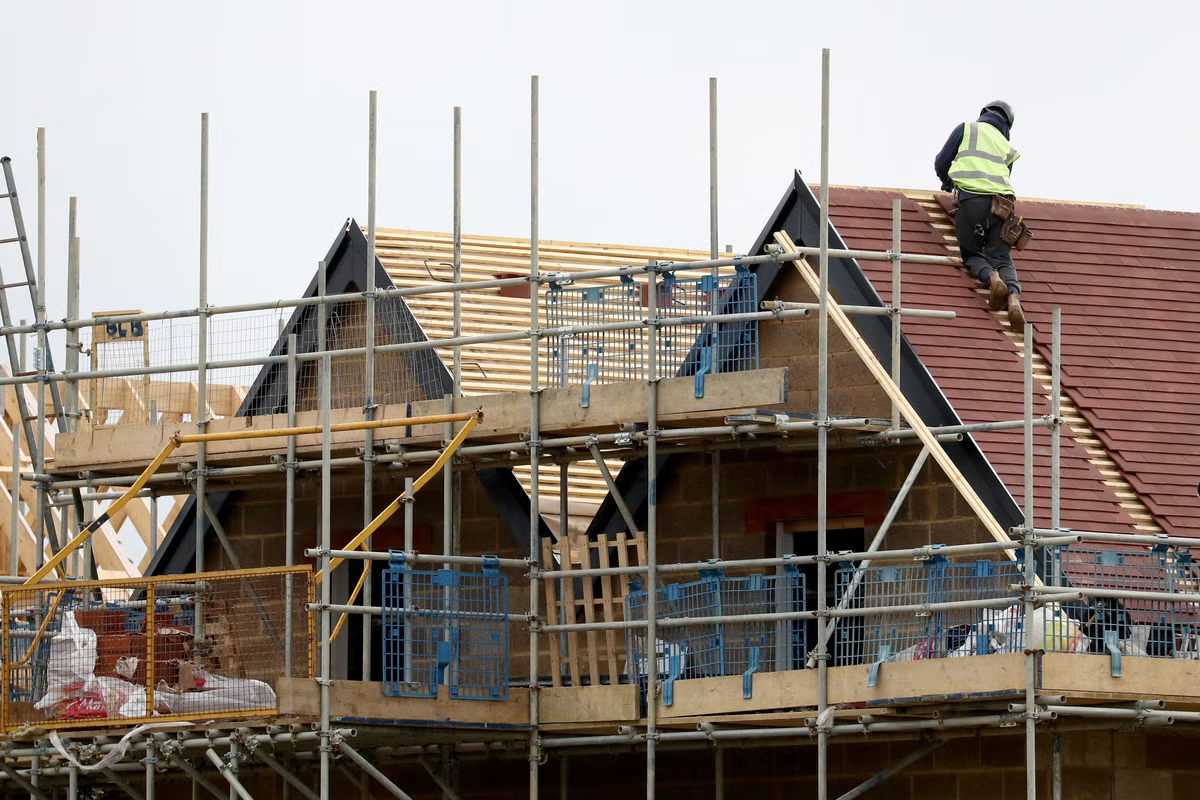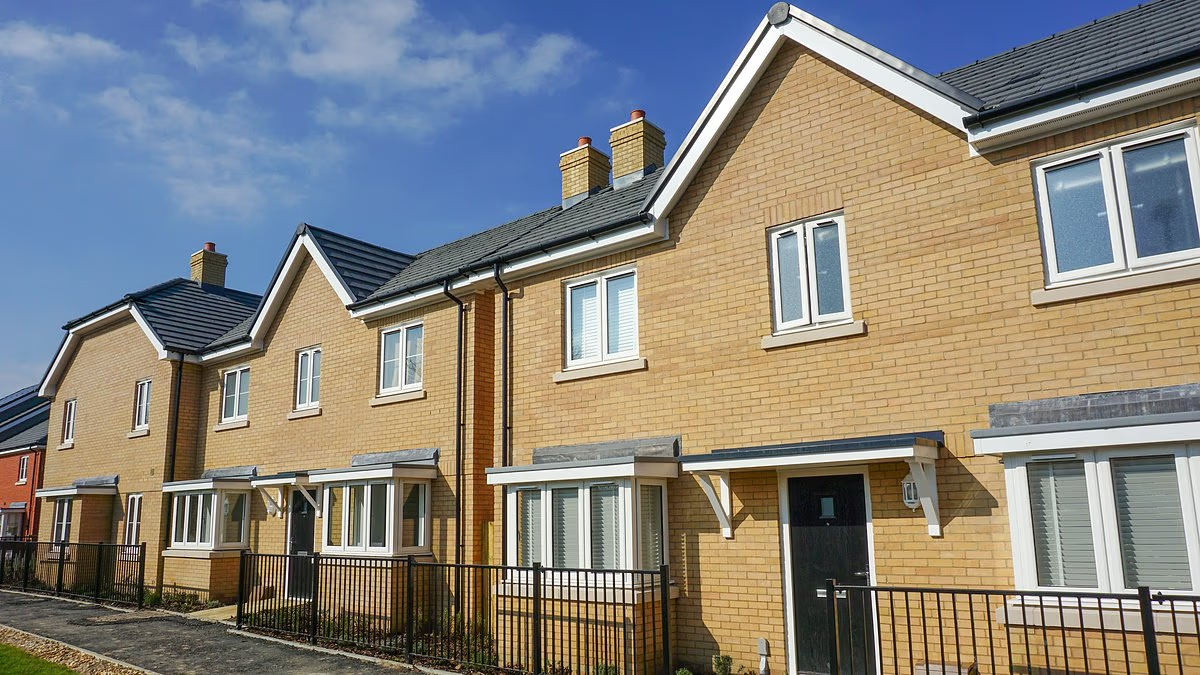
The number of new-build homes coming to the market in England has slumped to its lowest level since 2017, according to Rightmove. The data means the Labour Government is not on track to meet its aim of building 1.5million new-build homes by 2030. This requires constructing 300,000 homes annually, while the latest estimate from Savills suggests 190,602 were completed last year. Fewer new-builds coming to the market means that prices can rise as demand exceeds supply, spelling bad news for first-time buyers. Rightmove's analysis tracked the number of new-build developments listed on its online property portal over a 10-year period, excluding retirement homes. It concluded that there were not enough affordable new-build homes in the right places. For many buyers, particularly first-time buyers, affordability and higher mortgage rates remain problematic. Dwindling: The number of new-build properties coming to the market across England has fallen to its lowest level since 2017, Rightmove saidThe average two-year fixed mortgage rate is now 4.92 per cent, up from 3.53 per cent four years ago, according to Rightmove. Rightmove said stamp duty should be scrapped for first-time buyers for both new-build and resale properties. It also wants to see the launch of a Help to Buy-style scheme to bolster the first-time buyer market. The price threshold at which first-time buyers start to pay the tax was lowered from £425,000 to £300,000 in April 2025, as the stamp duty holiday put in place during the pandemic came to an end. Ahead of this year's Autumn Budget, the government should help developers more and look to 'go further with investment towards affordable housing provision', it added. Rightmove said developers were grappling with higher building costs, affordability obligations and higher interest rates. Alex Slater, Rightmove's director of new homes, said: 'First-time buyers underpin the whole housing market, but affordability and getting that first foot on the ladder is becoming more difficult.'We need a set of reforms that go further, faster and work together, from stamp duty changes to more investment in affordable housing, to give this group a better chance of getting onto the ladder and keeping the market moving.' Steve Mariner, group sales and marketing director of housebuilder Barratt Redrow, added: 'A new scheme to support first-time buyers, with developers contributing alongside government, would help people achieve their dream of homeownership, get the market moving and see more homes built and more economic growth.''For the first time in decades there is no government support to help people in England buy their first home, right when it's needed most.' Some developers are shifting to focus on affluent or larger families as many first-time buyers are left priced out of the market. In a bid to attract first-time buyers, which many developers rely heavily on, housebuilders often provide incentive packages to first-time buyers, including covering stamp duty costs. New builds numbers shrinking every yearData from estate agent Savills, published on the day Sir Keir Starmer resigned last month, projected that Labour was on course to miss its five-year target of 1.5million new homes built in England by 2030. It forecast that it would build 837,500 by that time, leaving a shortfall of by 662,500. The number of new-build properties being built is shrinking each year, Savills said, and fell 4.1 per cent to 190,602 in 2025. Meanwhile building costs are up 17.5 per cent in four years as supply chain snarl-ups, exacerbated by the war in the Middle East, drive them higher. Nathan Emerson, chief executive of Propertymark, said: 'Ensuring there is enough housing for a growing population is essential. While ambitious housing targets have been set across the UK, building new homes is only part of the challenge.'Thriving communities also need investment in jobs, education, healthcare, transport and policing, alongside robust supply chains, a skilled workforce and a stable economy to keep housing accessible for both buyers and renters equally.'Best mortgage rates and how to find them Mortgage rates have shot up again due to inflation triggered by the conflict with Iran reversing hopes that the Bank of England would cut rates. This means those remortgaging or buying a home face higher costs.That makes it even more important to search out the best possible rate for you and get good mortgage advice, whether you are a first-time buyer, home owner or buy-to-let landlord.This is Money's partner L&C can help you with its fee-free mortgage service.> Compare mortgage rates> Find the right mortgage for you To help our readers find the best mortgage, This is Money has partnered with the UK's leading fee-free broker L&C.This is Money and L&C's mortgage calculator can let you compare deals to see which ones suit your home's value and level of deposit.You can compare fixed rate lengths, from two-year fixes, to five-year fixes and ten-year fixes.If you’re ready to find your next mortgage, why not use This is Money and L&C’s online Mortgage Finder. It will search 1,000’s of deals from more than 90 different lenders to discover the best deal for you.> Find your best mortgage deal with This is Money and L&C Mortgage service provided by London & Country Mortgages (L&C), which is authorised and regulated by the Financial Conduct Authority (registered number: 143002). The FCA does not regulate most Buy to Let mortgages. Your home or property may be repossessed if you do not keep up repayments on your mortgage.
Number of new-build homes coming to market slumps to lowest since 2017
The number of new-build homes coming to the market in England has slumped to its lowest level since 2017, according to Rightmove.
890 words~4 min read