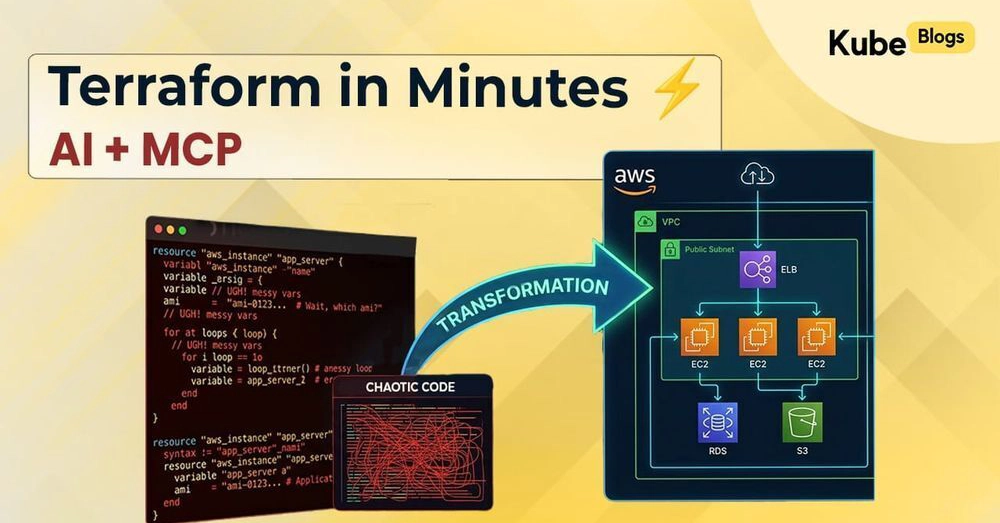
AI can generate a working Terraform module in about thirty seconds. Give it a prompt describing a VPC, subnets, NAT gateways, and route tables, and it will produce something that plans cleanly and probably applies without errors on the first attempt. That is genuinely useful, and teams that ignore it are leaving real productivity on the table.
What it will not produce is an operational infrastructure component. There is a difference, and it matters more than most discussions about AI and infrastructure seem to acknowledge.
What generated code actually is
Generated infrastructure code is syntactically correct and structurally reasonable. It reflects patterns from training data, and there is a lot of good Terraform in the world, so the output is often decent. But it reflects no knowledge of your environment.
It does not know your naming conventions, your tagging standards, your backend configuration, or your state isolation strategy. It does not know that your organisation requires specific CIDR ranges to avoid conflicts with an on-prem network, or that your compliance posture prohibits certain resource configurations, or that the module being generated is intended to work alongside three other modules that share outputs.