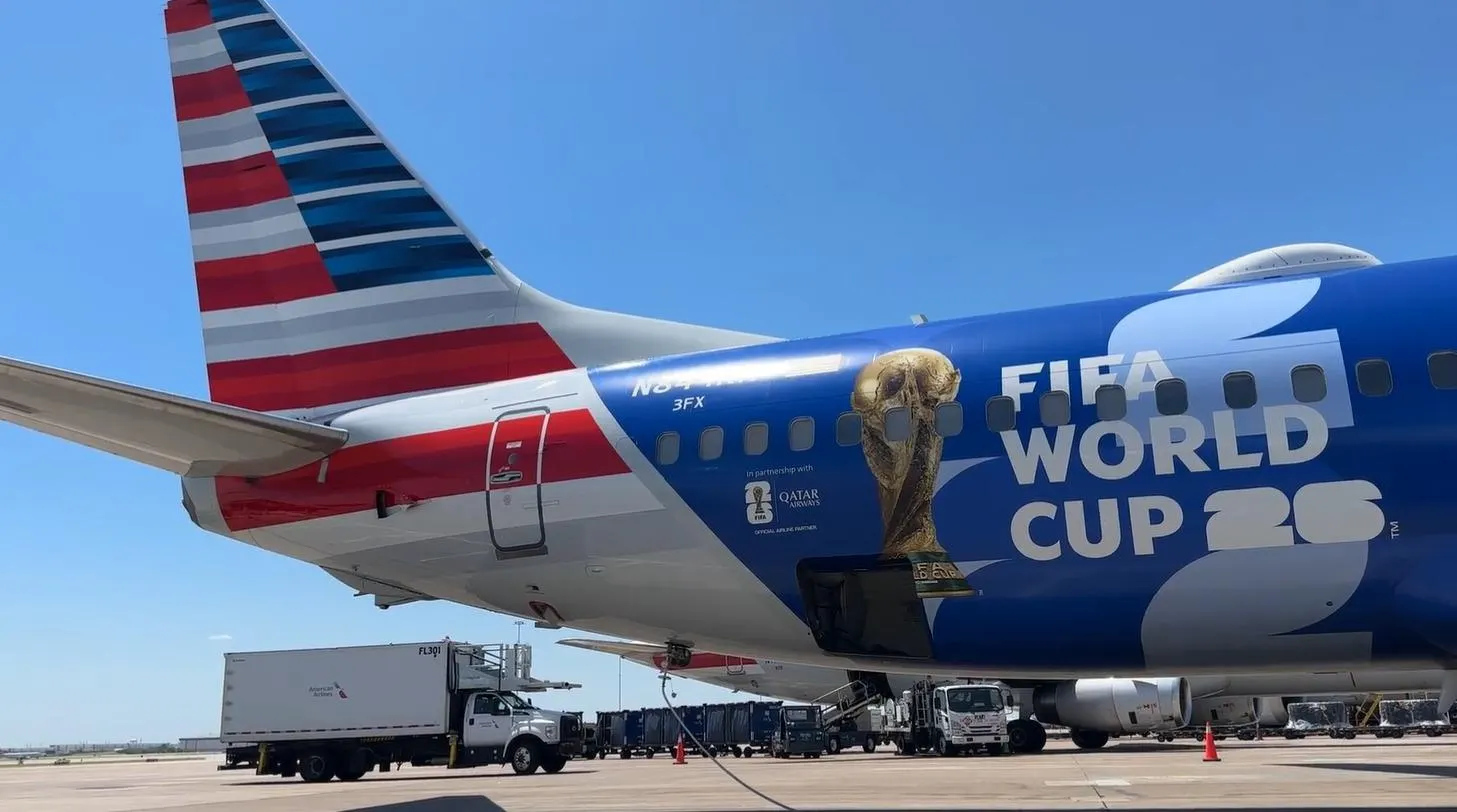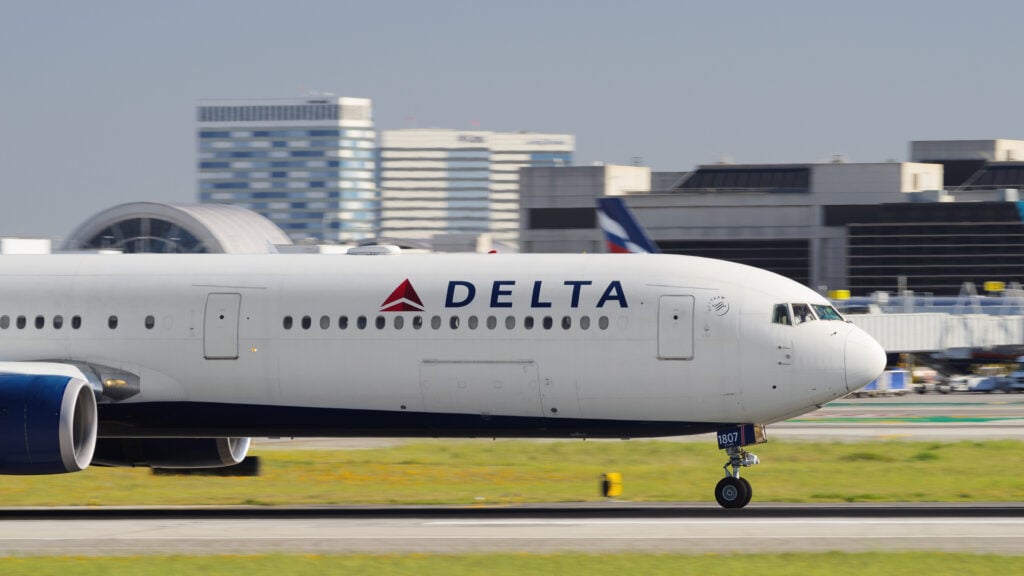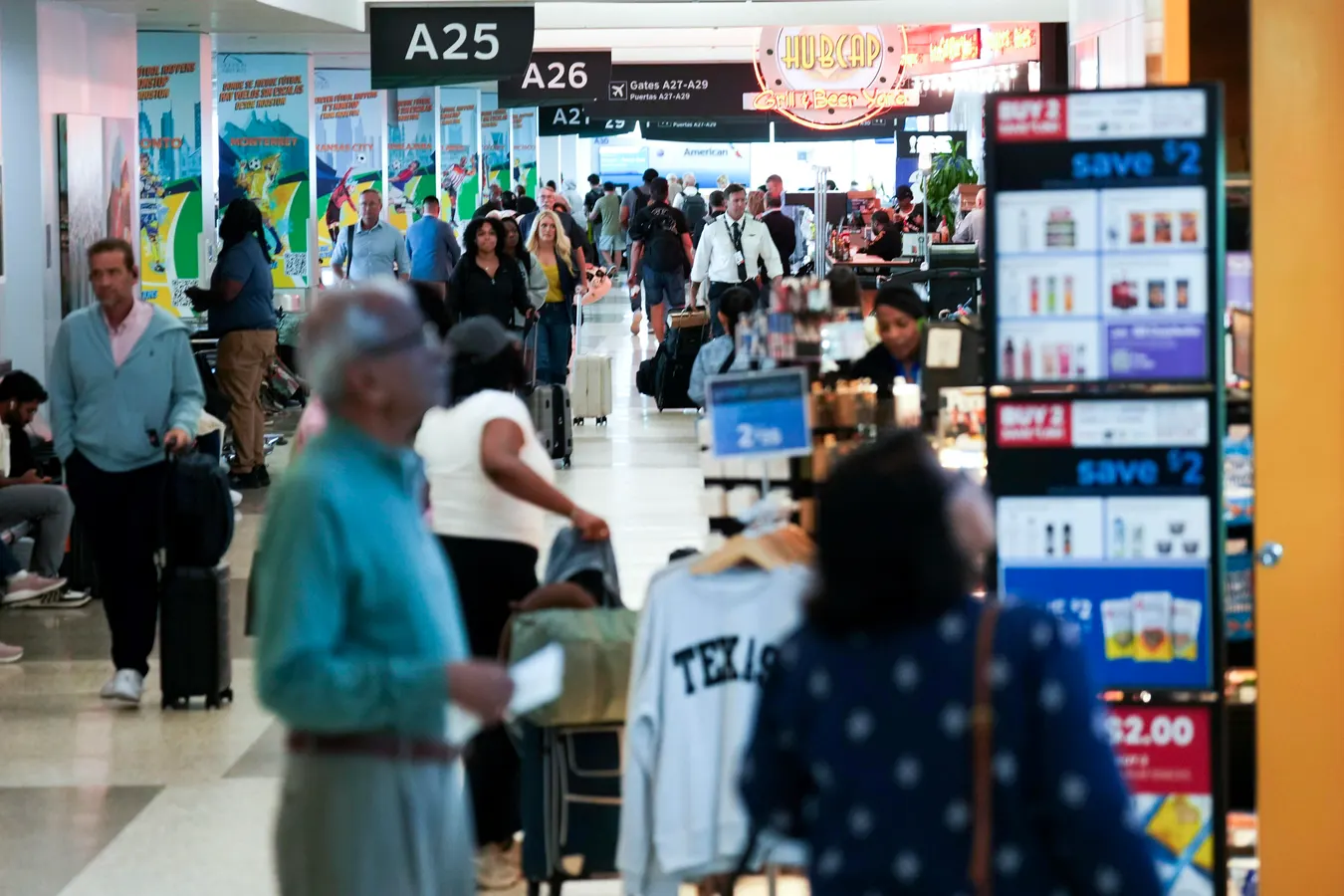
Soccer fans watch Spain celebrate over over Saudi Arabia during the FIFA World Cup 2026 match on June 21st at Atlanta Stadium. (Photo by Rich von Biberstein)Icon Sportswire via Getty ImagesThe airline industry earnings season got off to a good start Friday as Delta reported strong second quarter results, beat Wall Street estimates and forecast a profitable full year, all despite absorbing an estimated $4 billion in increased 2026 fuel costs. “We’re seeing strong demand for our product,” Delta CFO Erik Snell told reporters on a media call on Thursday. He cited “Demand for all of our segments across the board, not only our premium product.”As the industry continues to reflect broader economic trends, Snell said “Demand across the board for not only Delta but for the travel experience is so great. People are disproportionately placing their discretionary income in experiences and travel.”For instance, he cited demand stimulated by World Cup games in the United States. Delta was initially concerned, he said, “because these types of events don’t always have a positive impact,” as some travelers avoid destinations where large crowds are expected. However, he said, “We’ve been pleasantly surprised with the inbound traffic to the U.S. to support the World Cup. We’ve certainly been a beneficiary of that travel.”In general, airlines have been able to raise fares sufficiently to recapture much of the vast increase in the cost of fuel due to the Iran war. “We know the playbook at times like this when fuel is high,” Snell said, noting Delta’s $4 billion in increased full year fuel costs. In the second quarter, he said, Delta recovered about 60% of its added fuel cost, with that recovery rate expected to increase in the second half. Second quarter fuel costs were about $2 billion higher due, he saidWhen a reporter asked about the recent resumption of bombing in Iran, Snell responded, “Fuel will continue to remain volatile” and reminded that even “with higher fuel prices, we have managed to generate meaningful profit.” He noted that Delta’s ownership of a refinery benefits the carrier, contributing11 cents to the second quarter per share profit.MORE FOR YOUDelta’s continued leadership of the airline industry, which has persisted since the turn of the century bankruptcies, has been reflected in its stock price gains. Through Thursday, Delta shares were up 29% year-to-date. Southwest shares were up 19%, United was up 14% and America was up 10%.For the second quarter, Delta reported pre-tax income of $1.359 billion, down 25% from $1.820 billion in the same quarter a year earlier. Revenue was $17.7 billion, up 14%. Adjusted per share earnings were $1.56: analysts had estimated $2.02 per share. The carrier’s operating margin was 9%. In a press release, the carrier said it expects “continued momentum in 3Q with mid-teens revenue growth and double-digit margin,” as well as full-year adjusted earnings per share of $6.50 to $7.50, up 20% year over year.Delta also said American Express remuneration grew 16% to $2.4 billion. Snell said remuneration will total $9 billion for the full year. Credit card partnerships have become increasingly important to the industry, with all three global carriers saying they eventually expect annual remuneration of $10 billion. Delta/American Express continue to lead the segment. Delta’s gains reflected the broader expectations for the industry. In a note released Wednesday, Bank of America analyst Andrew Didora wrote, “We see a constructive setup into 2Q26 earnings, driven by strong demand trends and significantly lower fuel prices. Industry pricing has remained firm following the spring fare increases, while booking trends suggest a greater share of 3Q26 demand remains exposed to higher fares.”Didora said industry capacity growth “remains relatively modest through the summer before accelerating in the fourth quarter,” noting “While the near-term supply backdrop remains supportive, we expect more capacity and lower fuel to result in moderating unit revenues.
Delta Air Lines Proves Travel Itch Trumps High Fuel Prices
High demand for travel experiences, including World Cup games, enabled a Delta profit despite high fuel costs.
636 words~3 min read