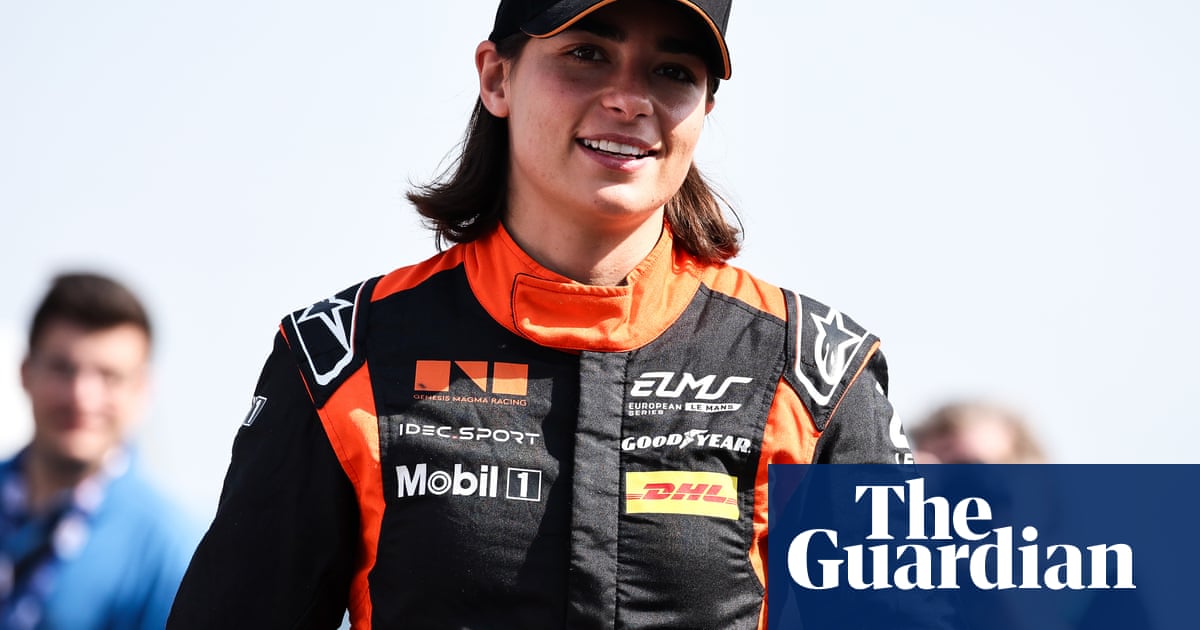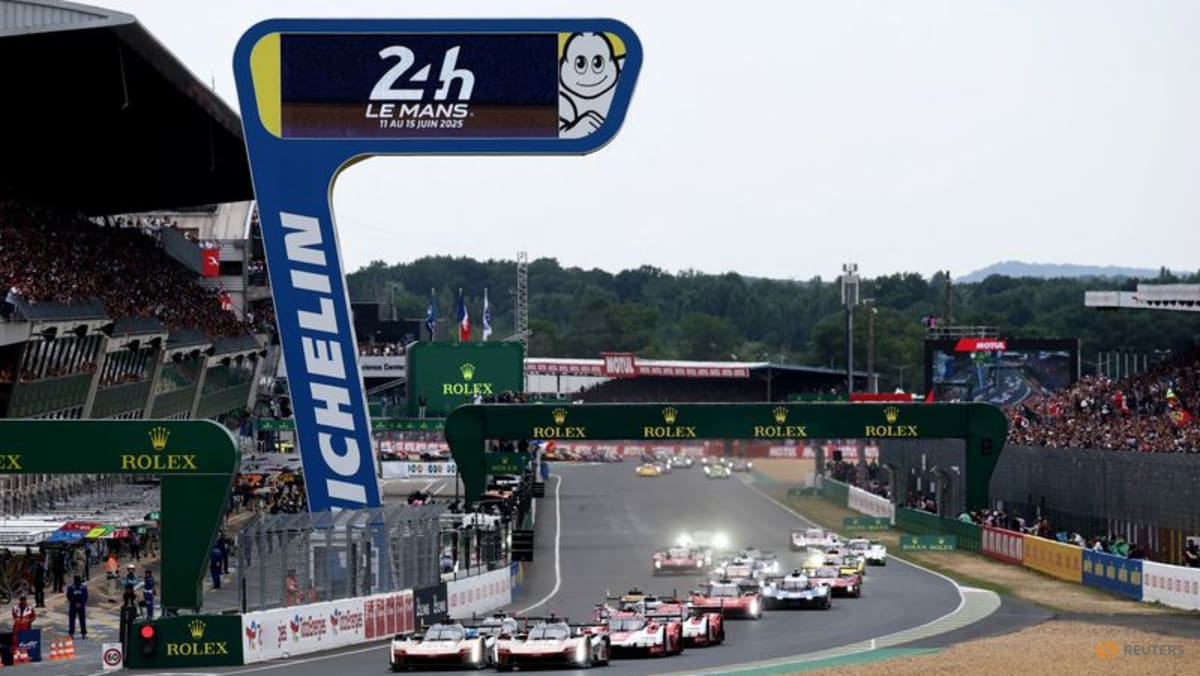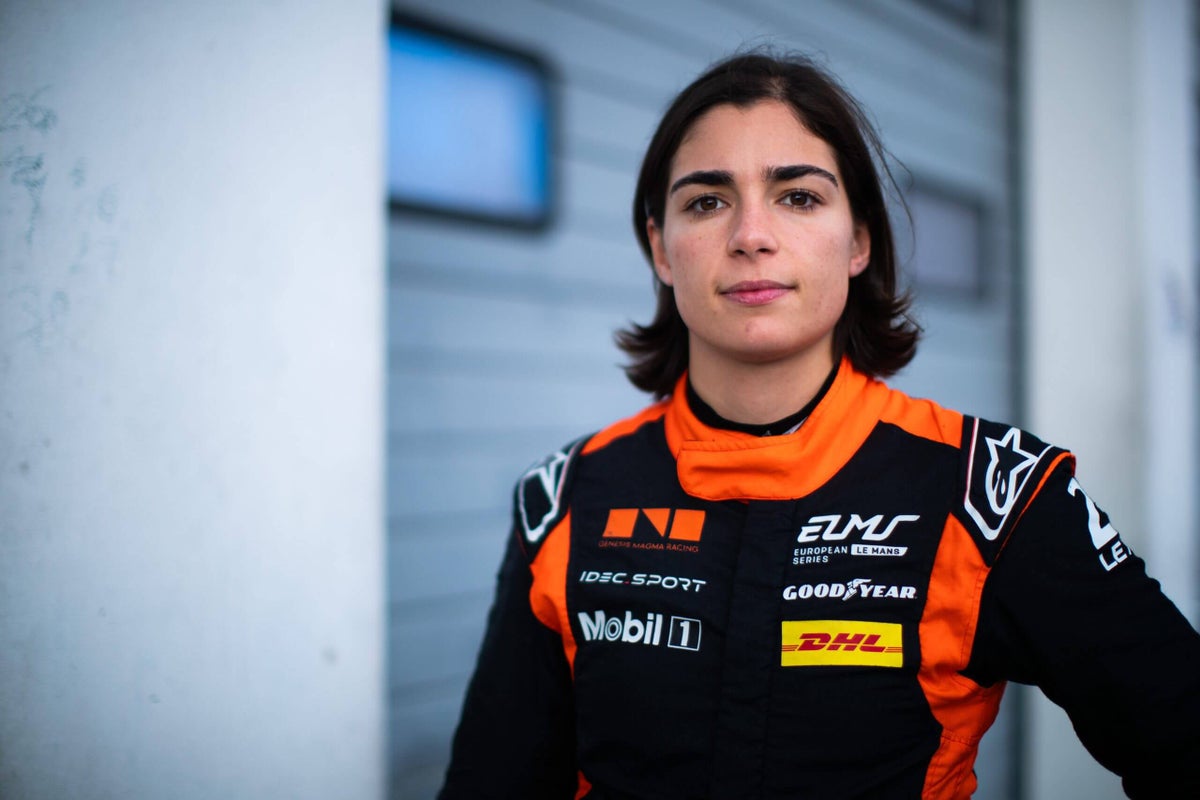
Jamie Chadwick is focused on a new motorsport division, in endurance racing.The 28-year-old Briton won the now-defunct all-female single-seater W Series championship three times, from 2019 to 2022, and then headed stateside to try her hand at Indy NXT (the development series for IndyCar).But after two years in the category, with no long-term career path towards IndyCar ahead, Chadwick took on a new challenge.She joined the Genesis Magma Racing endurance team at the end of 2024, as part of its driver development program. This marked a new chapter in Chadwick’s motorsport career. She began racing in the LMP2 category in the European Le Mans Series (ELMS).This championship is a smaller version of the World Endurance Championship (WEC) that only races on European tracks and does not include the WEC’s fastest cars, known as Hypercars. These are prototype racing machines that can match Formula 1 cars for speed in certain circumstances, fielded by major automotive manufacturers, with Genesis the premium car brand of South Korean manufacturer Hyundai.WEC and ELMS teams converge at the Le Mans 24 Hours, where LMP2 cars — small, slower and cheaper prototype designs — race alongside Hypercars and GT cars. Shortly before the 2026 Le Mans race, Chadwick became first woman driver to test the Le Mans track in a Hypercar.Chadwick’s ultimate goal is to move up Genesis’ Hypercar program to become a racer, as she currently serves as the team’s reserve driver.The Athletic spoke with Chadwick ahead of this weekend’s 6 Hours of São Paulo race to learn more about her endurance racing ambitions, the differences in car handling, what these types of tests are like and more.“I feel like endurance racing is where I ultimately want to find a home,” she said. “There’s a lot of bucket list races and big career races that I ultimately now want to be able to do and win. It’s very much where I see my future.”Editor’s note: Questions and answers have been lightly edited for clarity and brevity.Why is this the right step for your career, because it’s a big switch going from single seaters to endurance racing cars?There’s a huge amount of opportunity in endurance racing. There’s a lot of seats. You have (prototype) sports cars or GT categories. Hypercar is the pinnacle in a way, but there’s a lot of different categories, a lot of big races, and that lends itself to more opportunity for me, which is ultimately what I was looking for and needed.I had two great years in Indy NXT. But my second year, although I had some success, it wasn’t enough to warrant an immediate move up into IndyCar. At that point, it was (about) looking at where I can find the best opportunity to have a long-term profession in the sport.Jamie Chadwick (center) at the 2026 Genesis team launch. (Genesis)Can you explain the differences between Indy NXT, LMP2 and Hypercars?The Indy NXT car is quite raw. It’s quite an old car now, but it’s very much, ‘what you see is what you get.’It’s very pure in terms of power and power delivery. It’s quite heavy, but because of the way the tires are, you’re really sort of wrestling it around. A lot of the races in Indy NXT are 45 minutes to an hour, so although long-ish for a single-seater race, it’s still a sprint race with no pit stops, so you’re hustling the car for the full race.Whereas, LMP2 is an endurance race. Although there are only four-hour races in ELMS, they’re still longer races, and so naturally an element of management comes in. You start thinking about fuel saving, the tires, and you also have the added power steering. It’s a little bit more refined, but it’s still quite raw and pure, which I like. LMP2 is a one-make category. Although different teams have different setups, it’s the same across the board. So, there’s still a pureness to it.And then you go up into the Hypercar category, and that’s where things get a lot more complex. You’ve got hybrid engines, so a lot of systems with the car. I feel like there’s a lot more going on behind the wheel, and also the ultimate performance and speed of the Hypercar is very impressive.For me, when I did the laps at Le Mans, getting to experience that Mulsanne Straight (which is 3.7-miles long) flat-out in a Hypercar was something very cool.Are there fundamentals of your driving style that you’re able to keep across different categories, or does it change?There’s a lot of adaptation in everything you jump in, naturally. But, equally, the biggest thing I’m finding now — although I do say this from the endurance element — it actually feels more and more like sprint racing, every race I do, just because of the way that the reliability isn’t so much of a factor anymore with the cars.It does feel like you are pushing very hard, and it’s so competitive now with so many different teams and manufacturers. Just getting the maximum out of the car always seems to be the driving style.It’s not always easy to jump into different cars and, for me, it sometimes takes a bit longer to adapt. In my second year (in a category), I always feel much more comfortable, and everything makes a bit more sense. But it does feel like you’re just getting in the car and you’re driving as fast as you can every lap, so that doesn’t change across the board, regardless of the car.What’s it like helping develop a new Hypercar, since this is Genesis’ first year in WEC?It’s interesting because I jump in with quite big gaps in a way. I did some of the early running in the car, and that was very new for everyone in the team, and you get a feeling for where they’re at with the chassis and the systems and things. Then you jump in three, four months later, and it’s incredible to see the progress made.But that’s something I’ve quite enjoyed, because I’ve been fortunate to drive quite a lot of different cars, although not any (other) Hypercars. You can still draw on different experiences and help take the team in certain directions, although they’ve got a huge amount of experience already in the team.What were some of the advice or information that you found helpful on the day of the Le Mans test?The test was mainly just to familiarize myself (with the Hypercar), so that was the main element. Make sure I was comfortable with everything —from the seat, the procedures. A lot goes on in a Hypercar.I felt pretty comfortable. I was lucky enough to do some running in the car prior to Le Mans. I’m also super lucky that the other drivers have a wealth of experience, and they’re on standby to help and give advice whenever needed. That helps me a lot, for sure.The Genesis GMR-001 Hypercar in the pits at the 2026 Le Mans 24 Hours. (Lou Benoist / AFP / Getty Images)You’ve mentioned a lot happens within a Hypercar. Can you give any examples?The biggest difference from more traditional race cars is that you’ve got hybrid engines and with these you really use the systems a bit differently to manage the way that the car is handling. The most unusual thing for me is the energy management, so to speak, and how you feel the use of the Motor Generator Unit (MGU, the engine electric systems), because you’ve got both the internal combustion engine but also the battery (delivering power).The management of that, how you’re using that for balance, for even the way that the downshifts feel and everything, the engine braking is a slightly different feeling to what you get in a more traditional car. But what I really like is that you’ve got a lot of tools that you can use in the Hypercar. So when you sit in the seat and you look at the steering wheel, you can change the differential, the roll bars, the brake migration, the brake balance.This is important because often for the Hypercar drivers, you’re in the car for three, sometimes four hours at a time, so you need to be able to have everything tuned best for you.What are the next steps for making endurance racing and Hypercar your long-term home?The LMP2 program is part of the Genesis trajectory program, so it’s about performing as best as I can in that program.We had a great year in ELMS last year (with three race wins and third in the driver”==]]s’ championship), and we’re back again this year, so continuing to progress and hopefully having more success.The work I do in the Hypercar team is about just trying to learn as much (as possible), and develop. Hopefully one day that opens the door for a full-time race seat.Daniel Juncadella, Mathys Jaubert and Jamie Chadwick (right) celebrate their victory in the 2025 ELMS round at Paul Ricard (Genesis)How is your ELMS season going this year?It’s been good. Results wise, it’s funny. It’s not been as successful as last year (with three fourth places in the first three races), but in terms of personal performance, I’m much happier with the progress and where I’m at and how I’m performing.Where do you feel you’ve grown the most?Once you have the knowledge of the car, you understand a little bit more (about) what to expect. For me, endurance racing with traffic and multi-class racing, it’s about how much risk to take. And I think that’s the thing I would say I’ve learned the most.Last year, we were often in positions where we were winning races because we stayed out of trouble, but you don’t always get the ultimate performance out of yourself when you stay out of trouble. So, this year, that risk management is something I’m a little bit more clear on.
World Endurance Championship: Jamie Chadwick made history but is targeting bigger goals
After being unable to make her desired career progress on the IndyCar ladder, Jamie Chadwick has turned her attention to endurance racing
1,641 words~7 min read