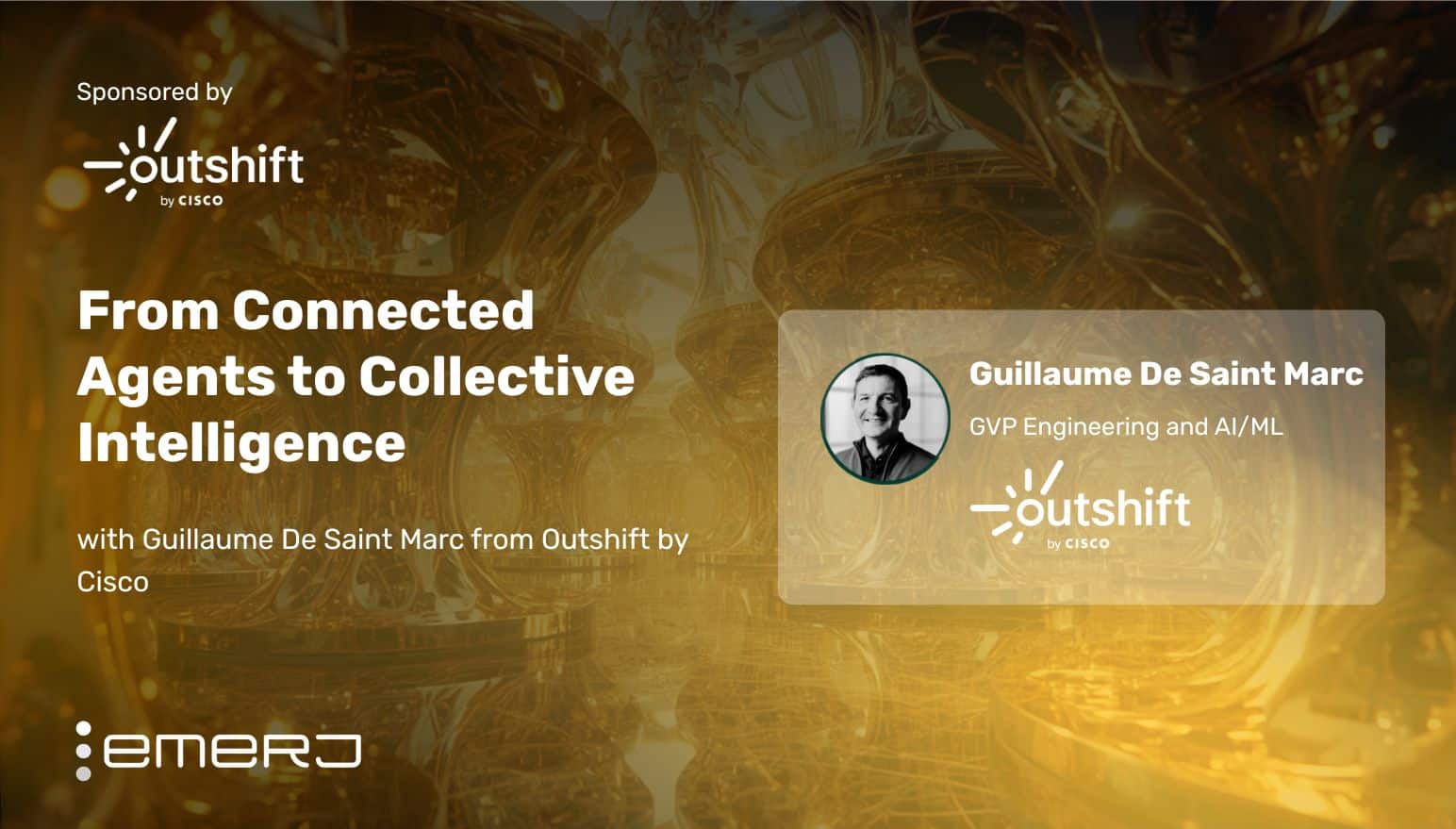
This interview analysis is sponsored by Outshift by Cisco and was written, edited, and published in alignment with our Emerj sponsored content guidelines. Learn more about our thought leadership and content creation services on our Emerj Media Services page.
Agentic AI is running into the same wall across enterprises: agents drift, deadlock, and propagate errors at machine speed because the foundations for shared meaning, shared state, and controlled access aren’t in place.
UC Berkeley researchers analyzed 1,642 real execution traces across seven production multi-agent frameworks and found failure rates ranging from 41% to 86.7% when agents had to work together rather than alone. Their taxonomy shows the breakdown is structural, not incidental: 41.8% of failures trace to missing specification and shared governance (the deadlock problem), and 36.9% trace to inter-agent misalignment — agents talking past each other on wrong assumptions (the semantic drift problem).
The same body of research demonstrates that when agents operate without real coordination, errors are amplified up to 17x versus a single agent working alone; even with centralized checkpoints, amplification still runs roughly 4.4x.