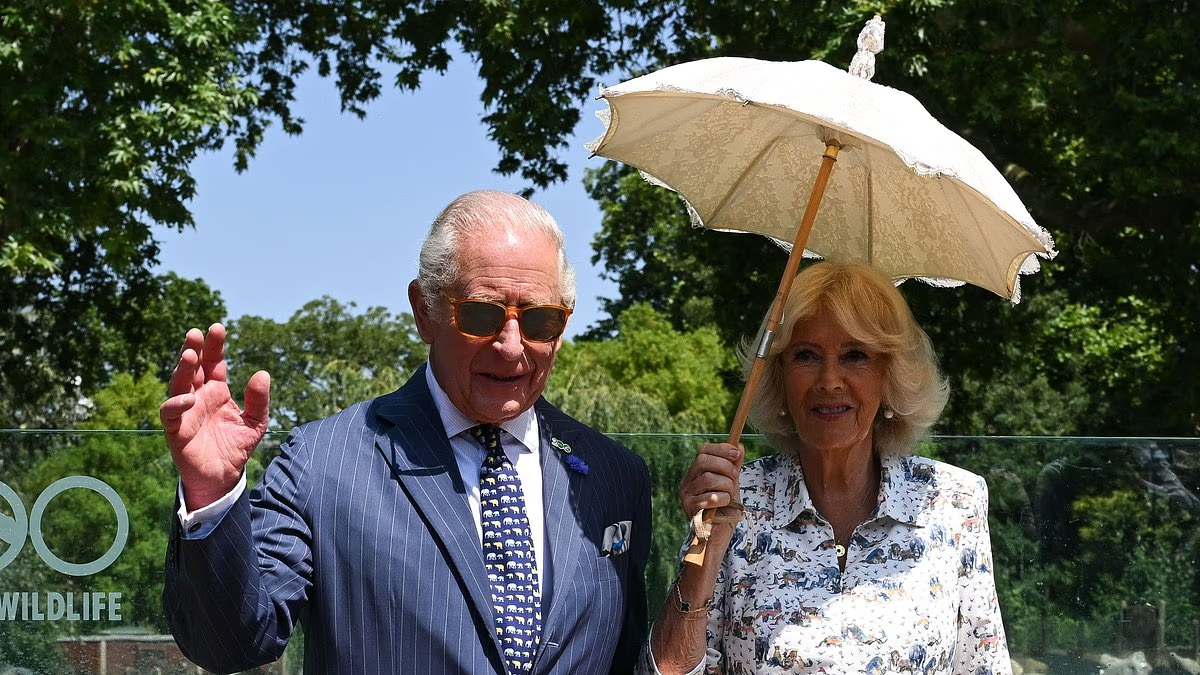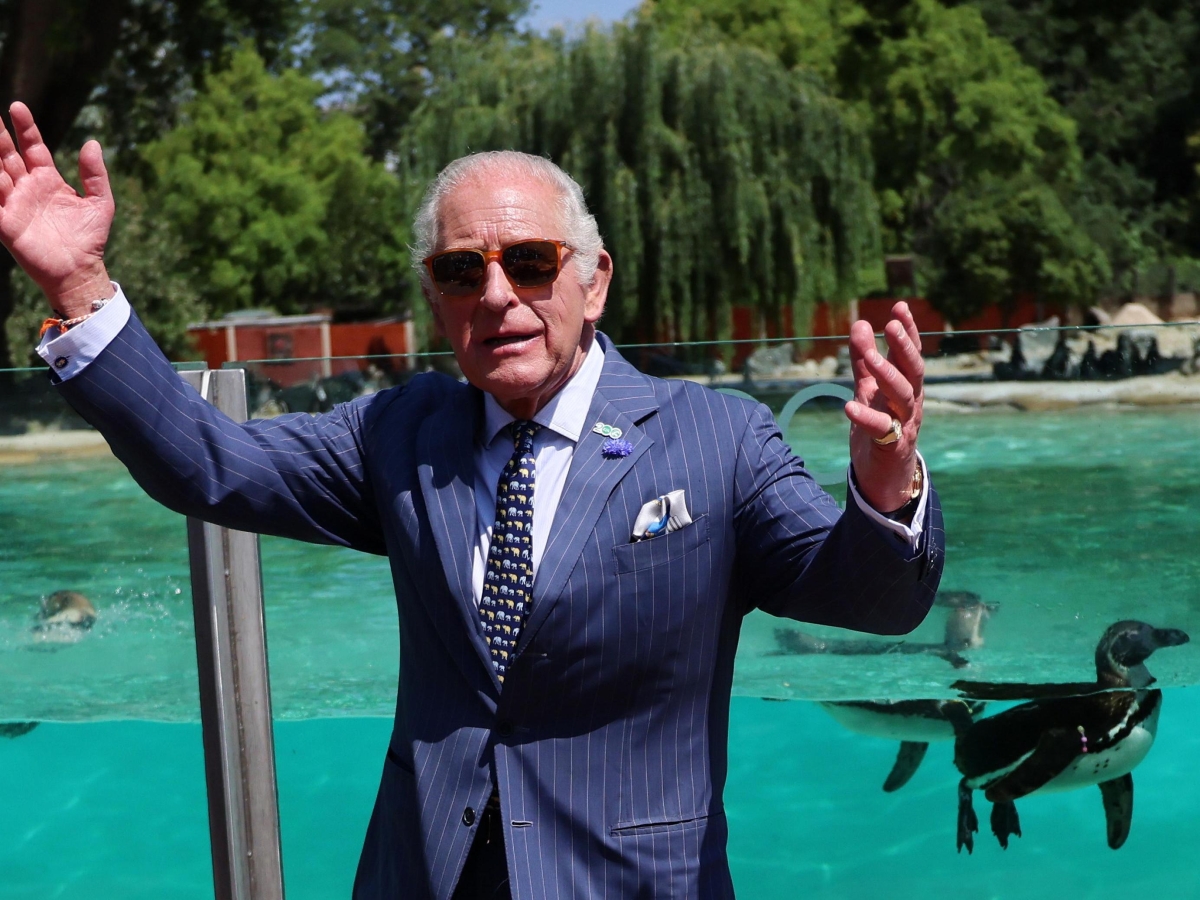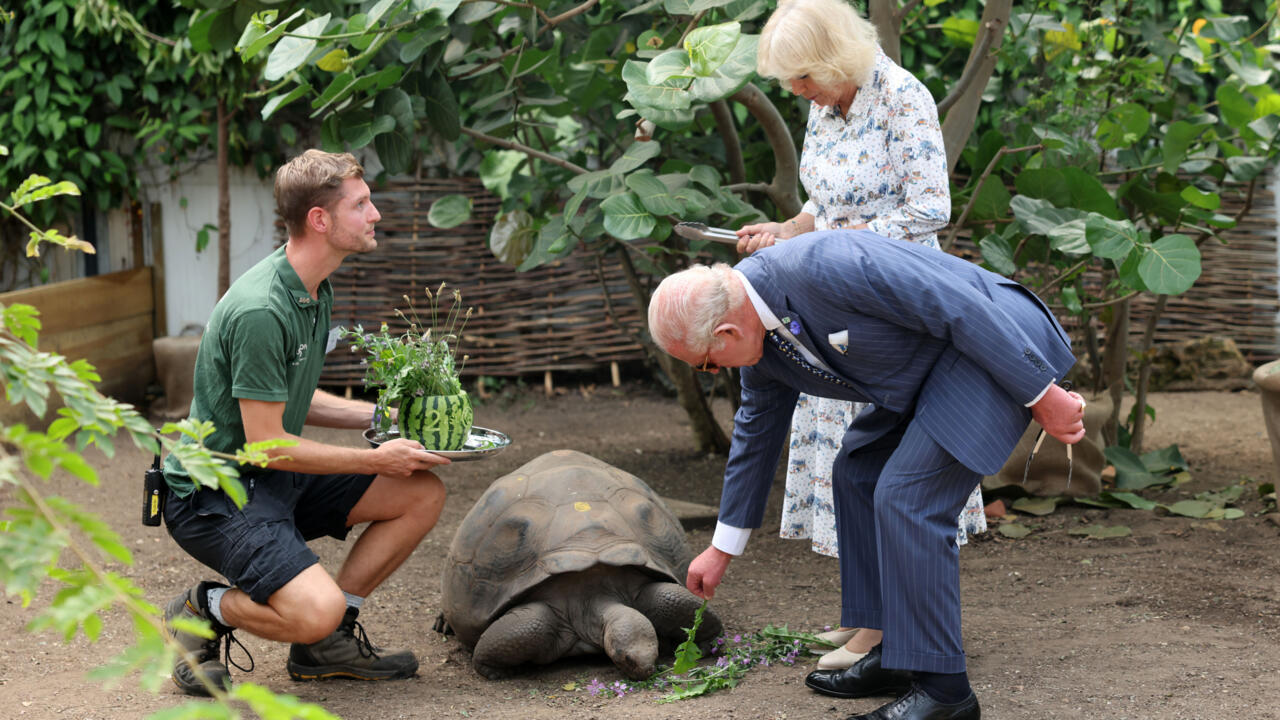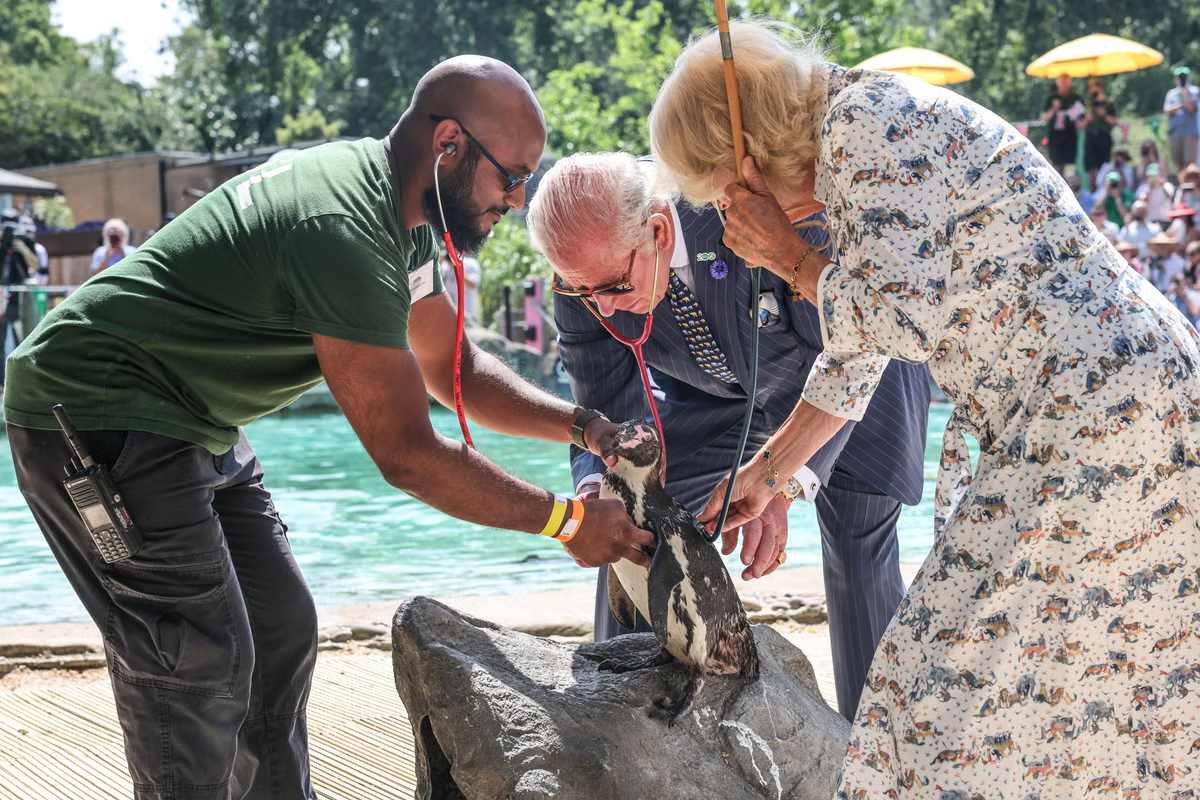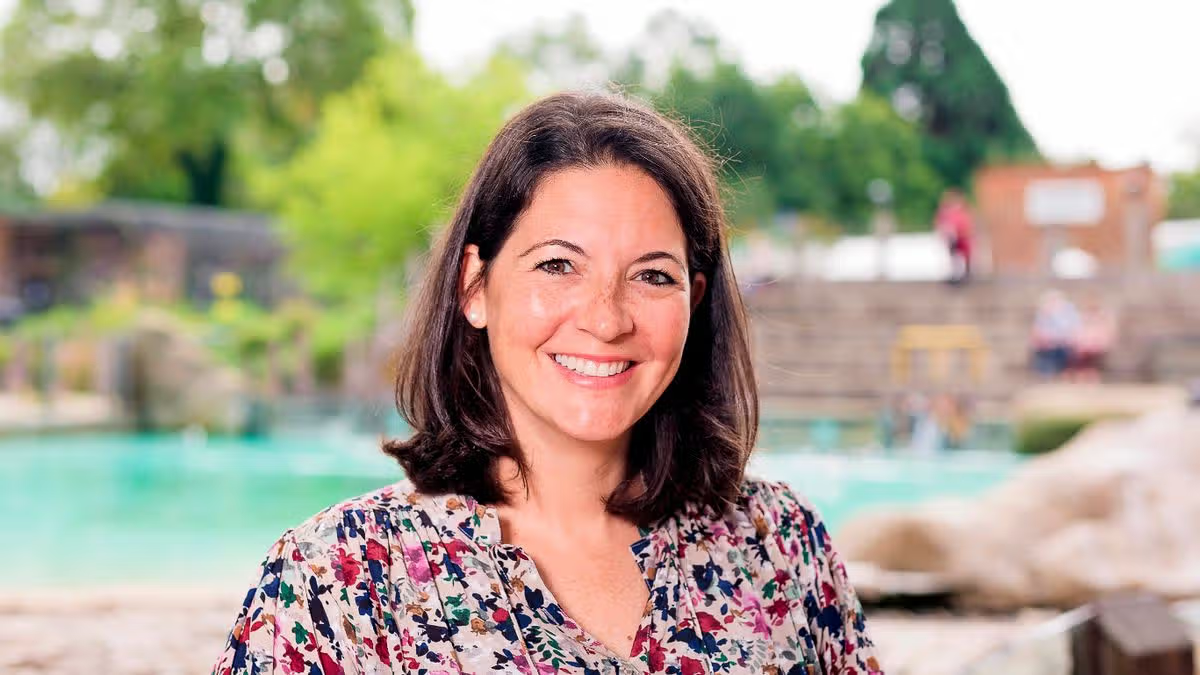
From Harry Styles to Harry Potter, Winnie the Pooh to David Attenborough and even James Bond, London Zoo has been part of Britain’s cultural life for decades. It’s also been at the heart of another great institution, the Royal Family, with Queen Victoria, her great-great-granddaughter Queen Elizabeth and now King Charles, all keen supporters of its conservation work.Now, to mark the bicentenary of the charity which manages the zoo, a year-long programme of events is underway to celebrate its role, connecting generations of animal lovers to all creatures great and small.At the helm of the Zoological Society of London’s landmark year is Kathryn England, the first female CEO in its history. Her love affair with nature started as a small child, so she is “proud and privileged” to be walking in the footsteps of Charles Darwin, who became a fellow at the Society in 1839.She explains: “London Zoo is iconic and very special. We’re woven into the fabric of society, whether that’s through people visiting and making memories at the zoo, our global conservation work, or our presence in the worlds of film, art and literature.“This is a dream job. My earliest memory is being under five and creating a hospital for the ladybirds I found in the garden. That was the start of my obsession for wildlife and it’s never stopped. ZSL have spent two centuries shaping the way we understand, care for, and protect our world, so it’s exciting to be here in our 200th year.”The Zoological Society of London was formed in 1826 and soon bought land on the edge of Regent’s Park to begin planning London Zoo, the world’s first scientific zoo. It opened two years later, originally only to society members and in 1831 King William IV became its first patron, moving the Royal Menagerie from the Tower of London and King Charles is now a patron.By 1847, the zoo had opened to the public and Queen Victoria became one of its most ardent fans. Her reign coincided with the arrival of some of the zoo's most celebrated animals, including Obaysch the hippopotamus in 1850 - the first hippo seen in Europe since Roman times.In 1865, legendary elephant Jumbo came to the zoo, then the largest animal anyone had ever seen in Britain. When he was moved on to P.T. Barnum's circus in 1882, the public outcry was huge, with appeals made to the Queen.But it is another of the zoo’s former inhabitants that inspired a much loved fictional bear, who has captured the hearts of generations of children. Winnie was an American black bear, deposited at London Zoo by a Canadian soldier at the start of WWI. She was visited by the author A.A. Milne and his son Christopher, becoming the spark which ignited the Winnie the Pooh stories.However, Kathryn points out that the impact of London Zoo, which houses almost 9,000 creatures and has unveiled ambitious plans for a new world-leading wildlife health centre, runs deeper than a simple day out. She explains: “Of course, we’re woven into the fabric of society, but there is another story going on as well.“People come to the zoo and have a great time, but I am hugely proud of our role in conservation and the work we do with species that are extinct in the wild. It’s not just about caring for those animals. It's about the work to ensure those animals can be reintroduced to their own habitats. We are not looking back, we are setting the agenda for the future.”Recent success stories include the Scimitar horned oryx, extinct in the wild after being hunted for their horns and meat, whose fate has been reversed thanks to ZSL experts. The tiny Partula snail has the society to thank, too, for its survival. Critical to ensuring the ecosystem of tropical forests remains healthy, specialists have bred them in their thousands and reintroduced them to their native French Polynesia.Kathryn says: ”And then there is Darwin’s frog. He’s so cute, found in Chile but was being decimated by a fungus. We went on a rescue mission, brought what we could back to London Zoo and they are now breeding. That's a real world impact and a full circle moment, as Charles Darwin was a Fellow of ZSL in 1837.”The Zoo has not been without its challenges. The government ordered its closure the day WWII broke out and some of the more valuable animals were transferred to sister zoo site, Whipsnade, in Bedfordshire, which had opened in 1931.All its venomous animals were euthanised to counter their possible escape if the zoo was bombed. But it reopened later in September 1939 and kept its gates open throughout the war. A public appeal was made to boost funds, with an invitation to adopt an animal - in 1940, when a dormouse cost a shilling a week to feed and a sea lion more than £1.Meanwhile, animals helped with the war effort. To save on petrol, camels and llamas were used to carry fodder around the zoo. Kathryn, 48, who started her career in veterinary nursing, is quick to counter any suggestion zoos are not relevant in 2026.She says: “There is definitely a role for good, active conservation zoos and it’s worth remembering that. As the world evolves, we become so much more digitised and more removed from the natural world. Yet, it’s never been more important to know the value and importance of wildlife. There is nothing more powerful.”After many ‘wow’ moments with animals, she says getting up close and personal with a gorilla is the one that stands out. It happened as she watched vets perform life saving surgery on the mighty beast. She says: “To see those incredible fingerprints, the fingernails, the chest going up and down and get a sense of the sheer power of the animal - it will stay with me forever.”Gorillas played a crucial role in the life of another name synonymous with the zoo, Sir David Attenborough, who started his career in front of the cameras there in 1954, filming Zoo Quest.A young young Daniel Radcliffe also came face-to-face with one of the snakes in the Reptile House in the 2001 movie Harry Potter and the Philosopher’s Stone, while Harry Styles filmed part of the video for his 2022 song As It Was at the zoo’s Lubetkin Penguin PoolAnd a Komodo dragon, Raja, was used as the model for the reptiles battled by James Bond in the film Skyfall. With such a busy role in a jam-packed year, Kathryn still loves nothing more than being among the zoo’s inhabitants. She says: “The best time is when I get it to myself first thing in the morning.“Visitors haven’t yet arrived and it gives me a chance to go and see my favourite animal, Jimmy the gibbon. He’s great, because he creates this amazing orchestra of noise. With the roar of the lions reverberating through you and Jimmy’s wonderful song, that’s a moment when you think, ‘ok, life’s not bad at all.’”London ZooThe word "zoo" originated from London Zoo, and was coined in the 19th century as an abbreviation for "zoological gardens.” The Zoo hosts the world’s first reptile house, public aquarium and insect house. Guy the Gorilla became one of its best loved characters. Weighing 240kg the gentle giant lived there for more than 30 years. To mark the 200th anniversary of ZSL, the Zoo has had its own Royal Mint coin released, it’s launched a podcast with Ben Fogle and unveiled a mosaic to honour pioneering reptile vet Joan Beauchamp Procter.*Book General Admission tickets online for a visit by 2 September 2026, and you’ll be able to claim a free return visit to either London Zoo or Whipsnade Zoo up to 16 October 2026, on a like-for-like ticket basis. Exclusions apply. See the offer HERE. For full T&Cs click here.
'I run London Zoo and have a special morning routine with our loudest animal'
To mark 200 years of ZSL, the charity which manages the zoo, a year-long programme of events is underway, connecting generations of animal lovers to all creatures great and small
1,306 words~6 min read