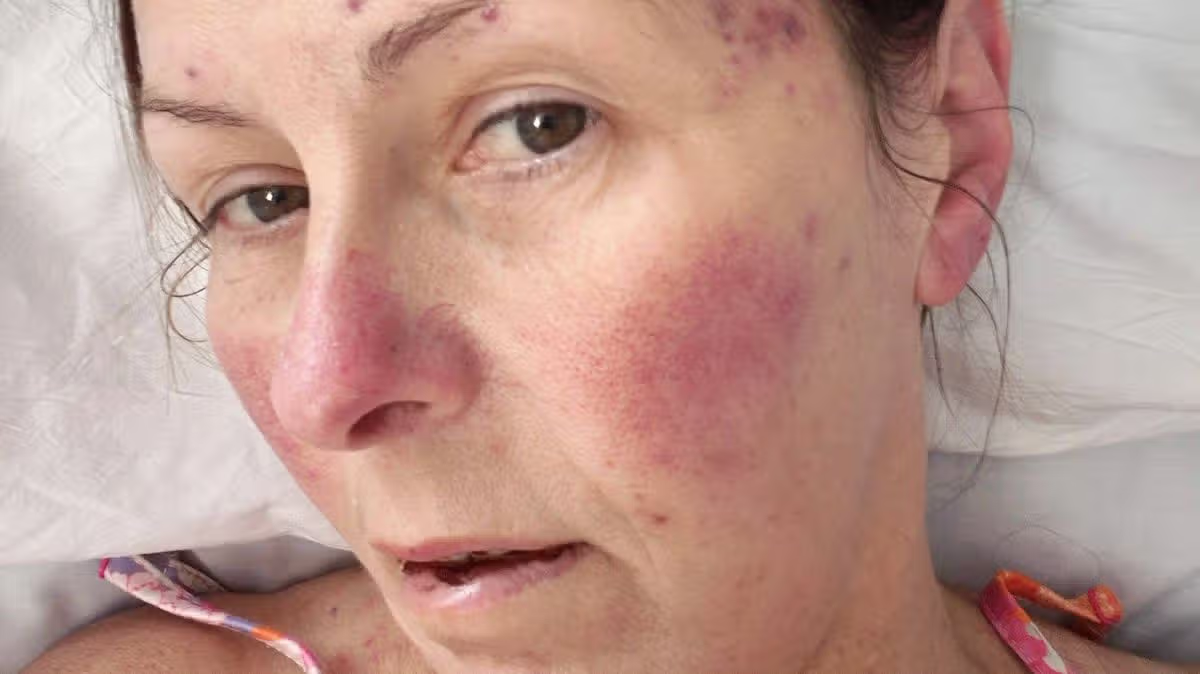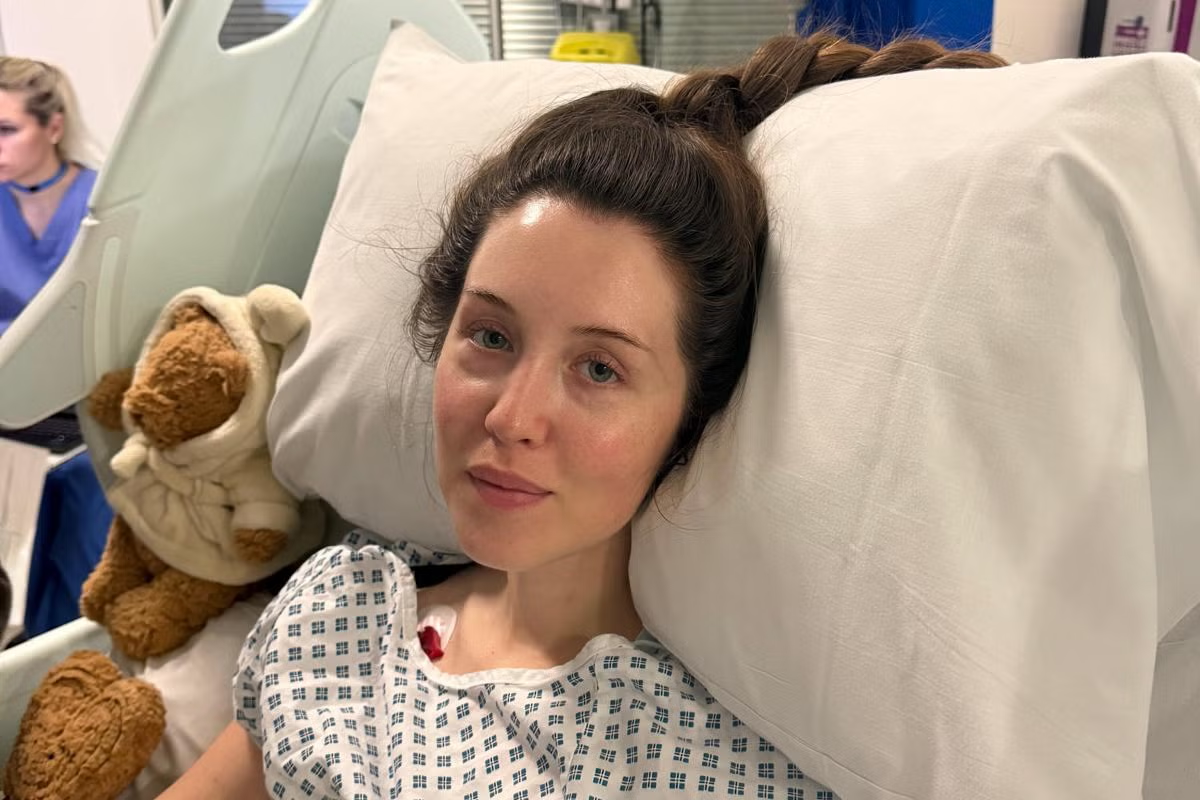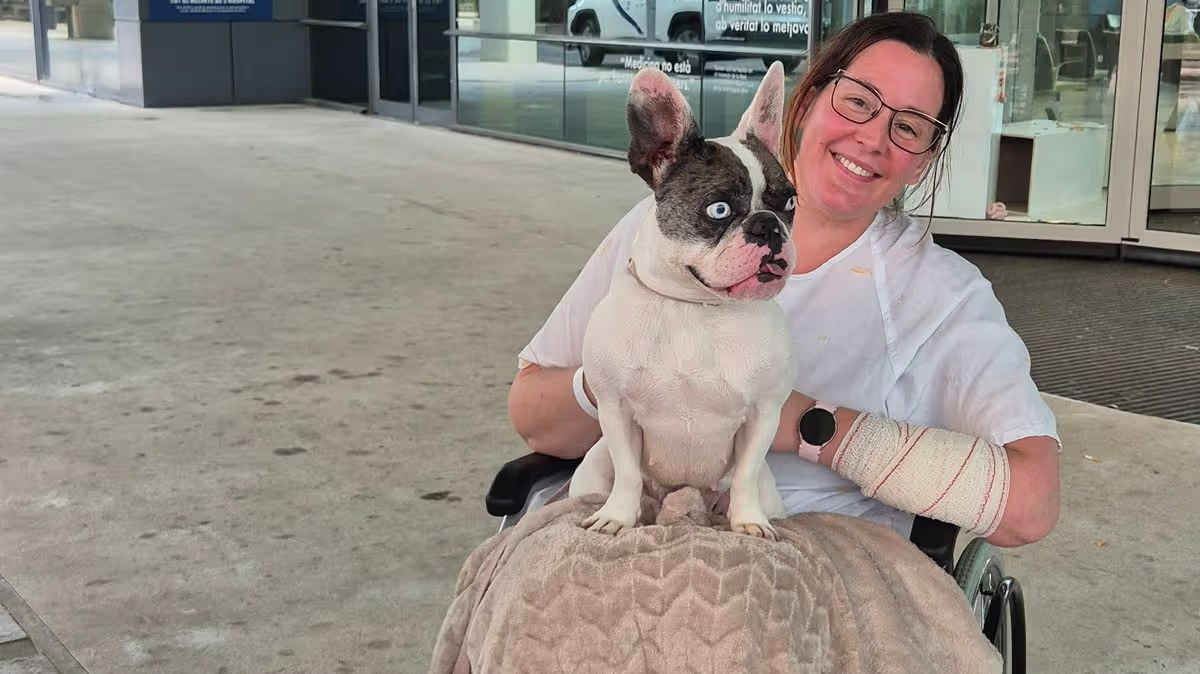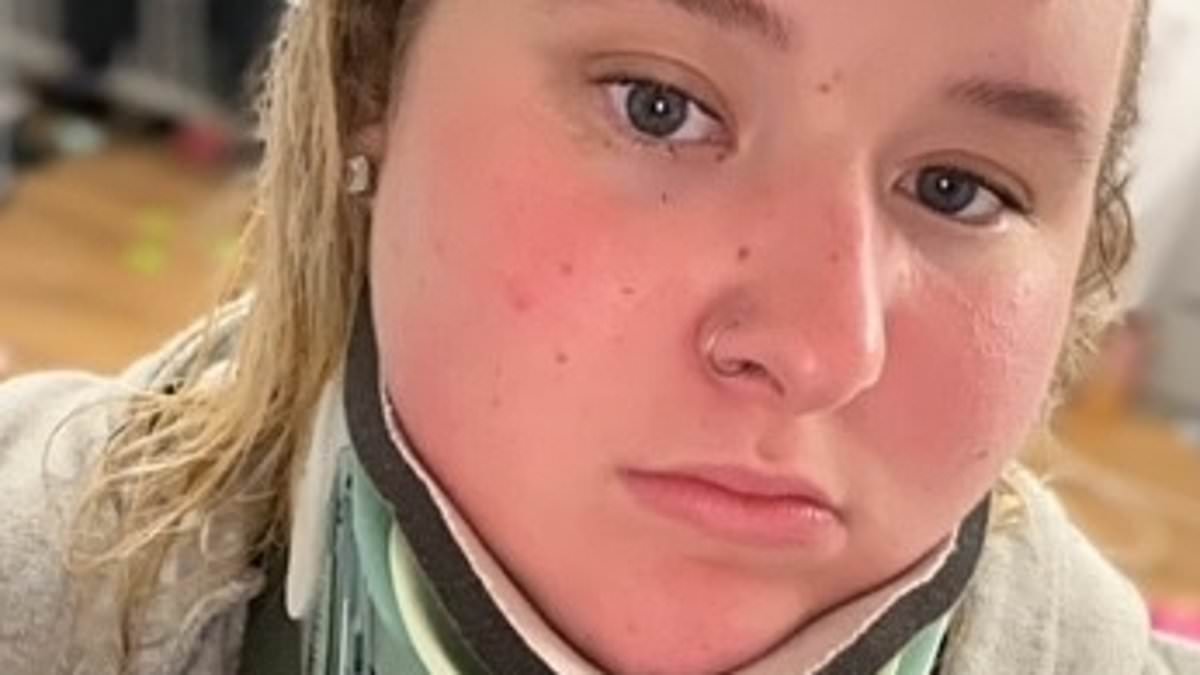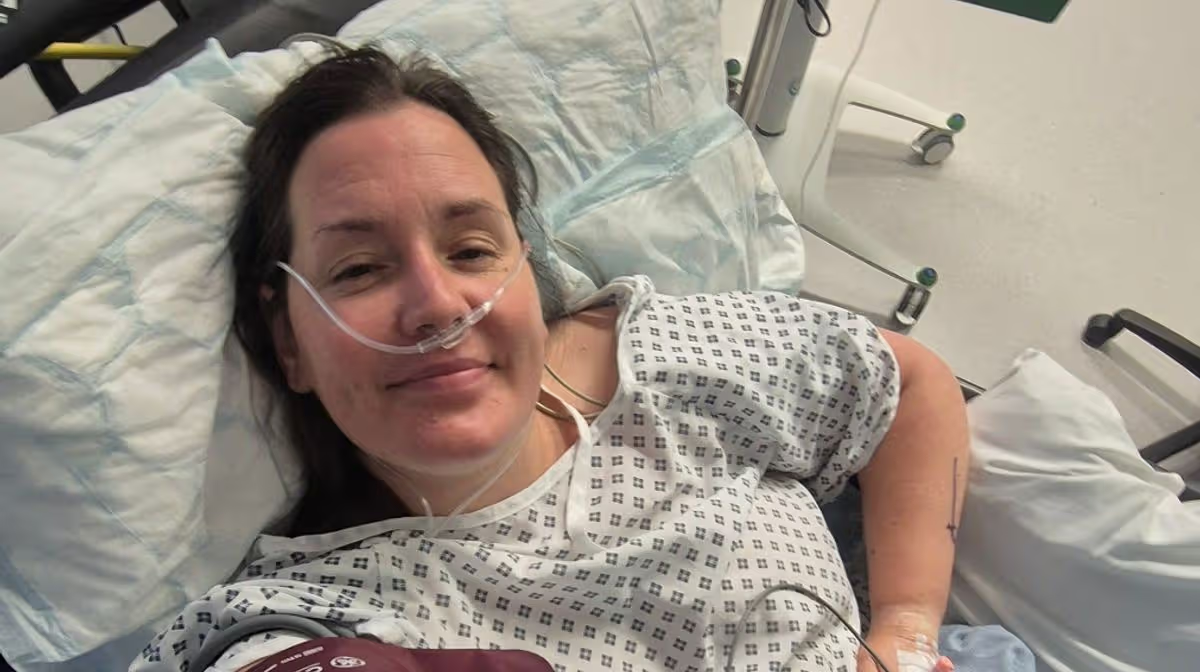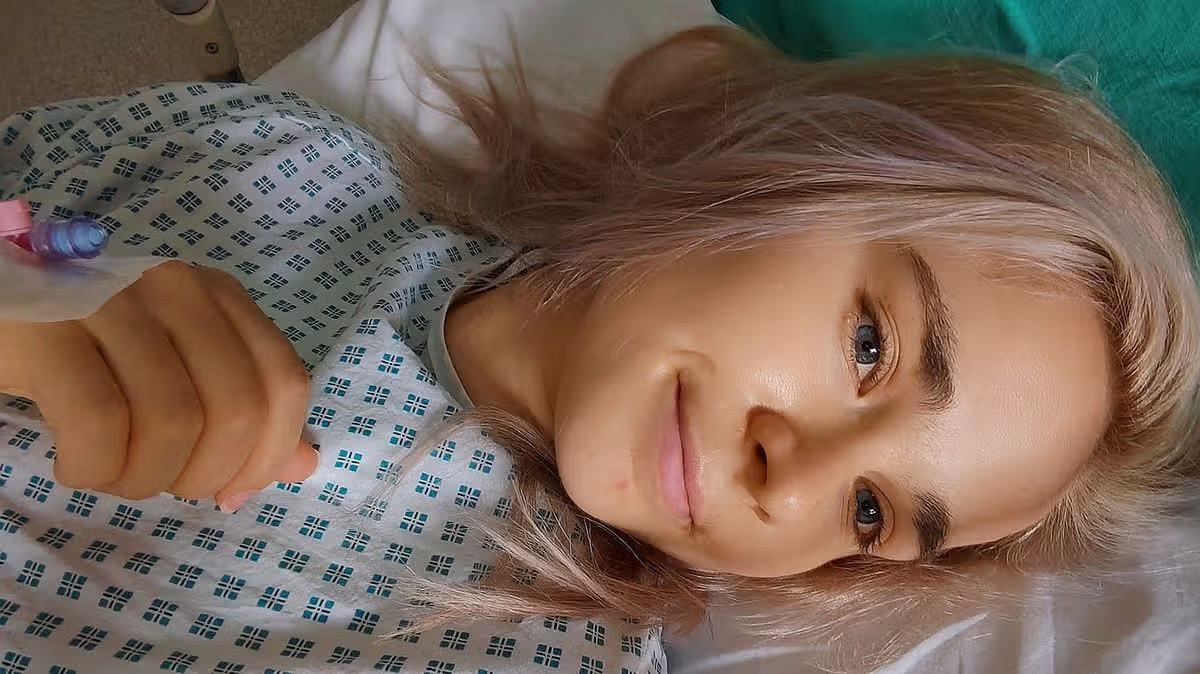
Pippa Barrett's symptoms range from migraines to feeling like her throat is closing and she can't breatheNeil Shaw Assistant Editor (Money and Lifestyle)07:28, 10 Jul 2026Updated 07:40, 10 Jul 2026A woman who feels like she is wearing “a straitjacket 24/7” due to a connective tissue disorder causing severe joint pain, has said she is “a shell of a person” and her dream of becoming a professional runner has been “destroyed”. Pippa Barrett, a 31-year-old freelance software developer, said as a teenager her voice would frequently crack and she had “crippling” anxiety with bouts of depression.Pippa, who lives in a van and is mainly based in Cumbria, said from the age of 18, she was in excruciating pain and was forced to drop out of her A-levels. Despite the setback, she later returned to education and studied biomedical science at university at the age of 20.As the years went on, her health continued to deteriorate – she began experiencing episodes where her throat felt as though it was closing, leaving her barely able to speak, as well as suffering severe migraines. At age 26 she was finally diagnosed with hypermobile Ehlers-Danlos syndrome (hEDS), a connective tissue disorder that she said doctors told her explained the years of debilitating symptoms.Over time, Pippa said she has tried a range of treatments to manage her condition and is now fundraising to pay for private nerve blocking treatment in the hope of easing her chronic pain. Pippa said: “Everyday is just a nightmare. It feels like my muscles have me in a straitjacket 24/7 and I have periodic trapped nerve pain, it feels like someone is stabbing a knife in my spine.“I also have pain in my neck, shoulders and the base of my skull. I have what feels like hard-boiled sweets all over my body – huge hard lumps.”Pippa’s ankles would “always” roll over as a child, but she said her loved ones would assume it was her clumsiness and tell her to “watch where (she) was going”. As she got older, she began experiencing a range of unexplained symptoms. As a teenager, her voice would frequently crack, as if she was “a boy going through puberty”.She also suffered from severe headaches, as well as “crippling” anxiety and bouts of depression due to the pain. However, when she was 18, her condition deteriorated.While on holiday with her family and then-partner, she was suddenly “struck” by an agonising, “stabbing” feeling through her body which has never gone away. She said she spent every day of the holiday crying because of the pain.The condition forced her to drop out of her A-levels, and her relationship ended soon afterwards. “It was incredibly isolating. I felt like a shell of a person,” she said. “It crushed everything in my life. I had to rebuild myself in this new normal and try to adapt to it.“I had to mask how bad the pain was constantly and I didn’t understand where it was coming from. I was forced to pretend from that point on.”She also retook her A-levels and, in 2015 at age 20, she began studying biomedical science at Leeds Beckett University. Although she struggled with her health, sport remained her “identity” and she took part in activities including kayaking and running, dreaming of becoming a professional runner.“I was sort of living this dual existence. If I sat too long around a table at the bar, I would be in crushing pain in my neck and back, and I just had to pretend,” she explained. At age 21, she developed severe acid reflux and began experiencing episodes where her throat felt as though it was closing, and she could barely talk.She was subsequently diagnosed with eosinophilic oesophagitis, a chronic immune-mediated disease in which white blood cells called eosinophils build up in the oesophagus. The condition can make swallowing difficult, cause chest pain and leave food stuck in the throat.As a result, she follows a “very restricted diet”, avoiding acidic and spicy foods including garlic, onion and black pepper, which she says trigger her symptoms. By the age of 23, Pippa had also developed severe migraines that caused vomiting and visual issues, including blind spots, zigzag lines and flashing lights.“I used to think this was normal – I used to get like this after a run, and I would have to start a race by covering myself in water to cool my body,” she said. The attacks were so severe they left her curled up in the foetal position and led to several trips to A&E.Finally, at the age of 26, after seeing a rheumatologist, Pippa was diagnosed with hypermobile Ehlers-Danlos syndrome (hEDS) – a type of connective tissue disorder. According to the NHS, people with hEDS often have joint hypermobility, joint pain, fatigue and digestive problems.Currently, there are no tests to confirm whether someone has hEDS – the diagnosis is made based on a person’s medical history and a physical examination. She said doctors told her the condition was responsible for all of her long-standing health problems.She said her voice issues as a teenager can also be explained by Ehlers-Danlos Syndrome (EDS) causing connective tissue laxity that affects the vocal folds, airway stability, and breathing muscles. “It felt great to get a diagnosis but I haven’t really had a tailored treatment plan since then, I feel like it’s been quite fragmented,” she explained.“I think, because I still exercise when I can, even though it makes my pain worse, I look really fit and healthy people struggle with it.”Around the same time, in 2020, she said that despite trying to push through her symptoms while running, and being approached by coaches for a national team, she realised a career in the sport was no longer feasible, leaving her feeling “lost”.Since giving up running and “losing fitness”, her migraines have gotten more severe. Instead, she has taken up climbing and has found this to be a form of “physiotherapy” for her joints. “It’s a hard line to walk, as being too sedentary is also a migraine and pain trigger, it’s a catch-22, if I hadn’t had done as much as exercise as I did, I might be in a worst position than I am now,” she said.Over time, she has tried supplements, pain management devices and medication to manage her condition, but has said her condition has not improved. Pippa continues to live with daily discomfort which affects her relationships, energy levels and ability to work.She recently had to give up her job as an online tutor because of her pain. She is now fundraising through GoFundMe to pay for private treatment, involving a nerve blocking treatment. “It feels like I put one fire out, and another starts – a treatment for one condition can make another worse,” she said. “It would mean the world to me, it would change my life.”Article continues belowTo donate to her fundraiser, visit: www.gofundme.com/f/help-pippa-access-urgent-medical-care.
'It feels like I'm being stabbed but it took 26 years to get a diagnosis'
Pippa Barrett's symptoms range from migraines to feeling like her throat is closing and she can't breathe
1,149 words~5 min read