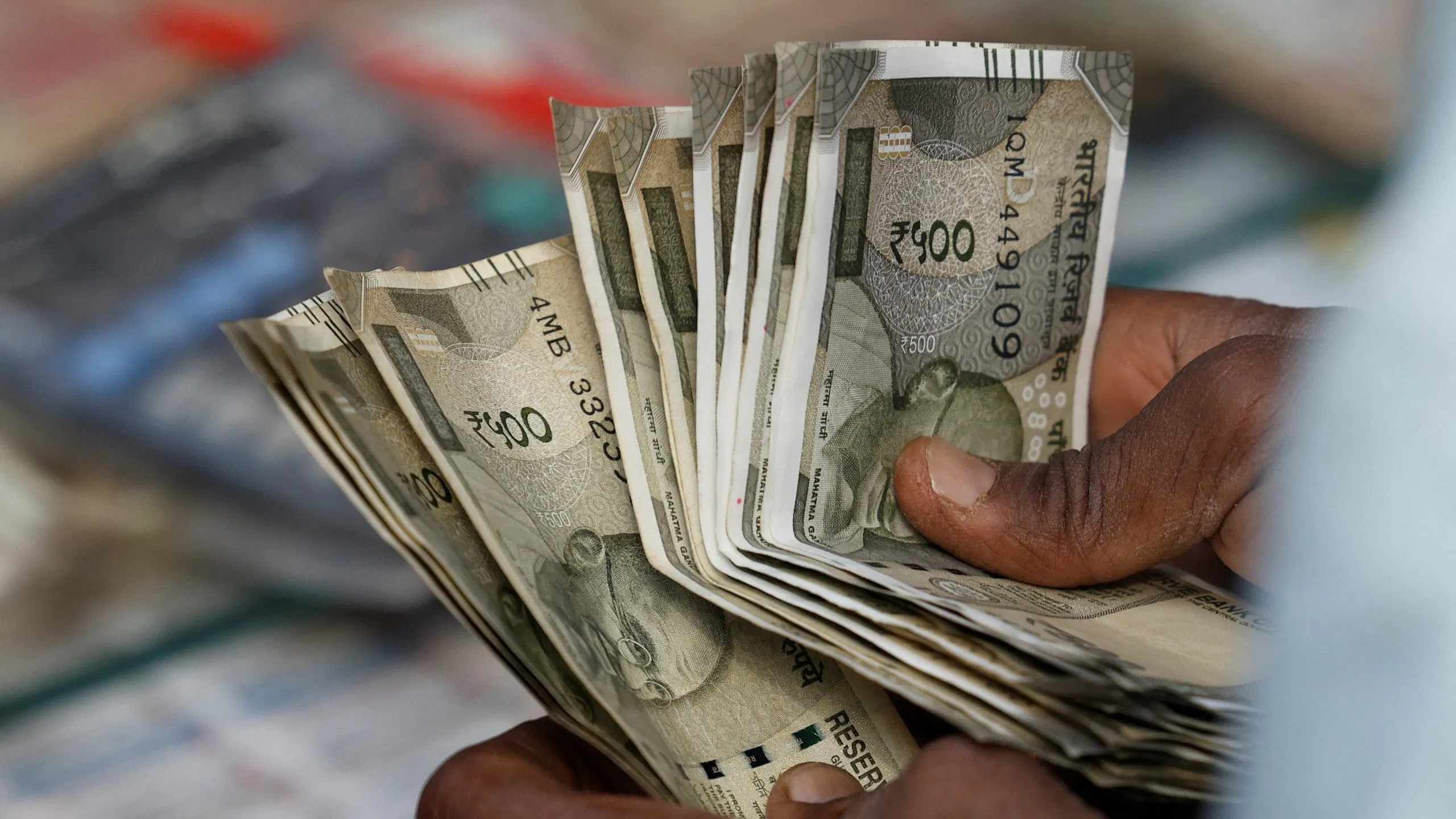
The Indian rupee drifted in a narrow range on Friday, on a broadly softer dollar and well-contained oil prices, though traders remained wary of taking a strong directional position due to lingering Middle East risk. The rupee was up 0.1% at 95.31 per dollar, from its close at 95.3875 in the previous session. Asian currencies rose, benefiting from softer pricing of U.S. Federal Reserve rate hikes that curbed the dollar. Regional stocks were stronger as well, with India's benchmark Nifty 50 stock index up 1%. The spotlight though remains on oil prices after renewed back-and-forth attacks between the U.S. and Iran eroded their three-week-old ceasefire. Brent crude oil prices last traded at $76.5 per barrel, on course for a 6% week-on-week gain. Iranian armed forces launched attacks on U.S. military infrastructure in Gulf states on Thursday following U.S. strikes on Iran's southern coastal and eastern provinces. "The longer it (USD/INR) holds above the 95 level, the easier it'll be for the market to turn the bias from 'sell on upticks' to 'buy on dips," a trader at a state-run bank said, as holding weaker than a psychologically important level could spur fresh rounds of dollar buying. Intermittent flare-ups in the Middle East, maturing non-deliverable forward contracts and merchant dollar demand have stifled the rupee's gains even after capital inflow measures announced last month buoyed sentiment. "We remain relatively constructive on INR, which is supported by recent Reserve Bank of India measures aimed at narrowing the balance-of-payments gap," analysts at ING said in a note. On the wider Asian region, the analysts said weak capital-account dynamics "could limit how quickly regional central banks are able to shift away from a tight policy stance." The RBI has kept benchmark policy rates unchanged since December last year while counterparts in Indonesia and Philippines have raised them to steady their currencies. India will report consumer price inflation data for June next week and markets are currently pricing in about 50 bps of rate increases over the next 12 months.
Rupee little changed as traders tread gingerly with eye on oil, dollar
The Indian rupee traded narrowly on Friday, supported by a softer dollar and stable oil prices. Asian currencies and regional stocks saw gains as Fed rate hike expectations eased. Renewed Middle East tensions kept traders cautious about directional positions in the currency. Analysts remain constructive on the rupee, citing Reserve Bank of India measures. India will report inflation data next week, with rate hikes anticipated.
335 words~2 min read