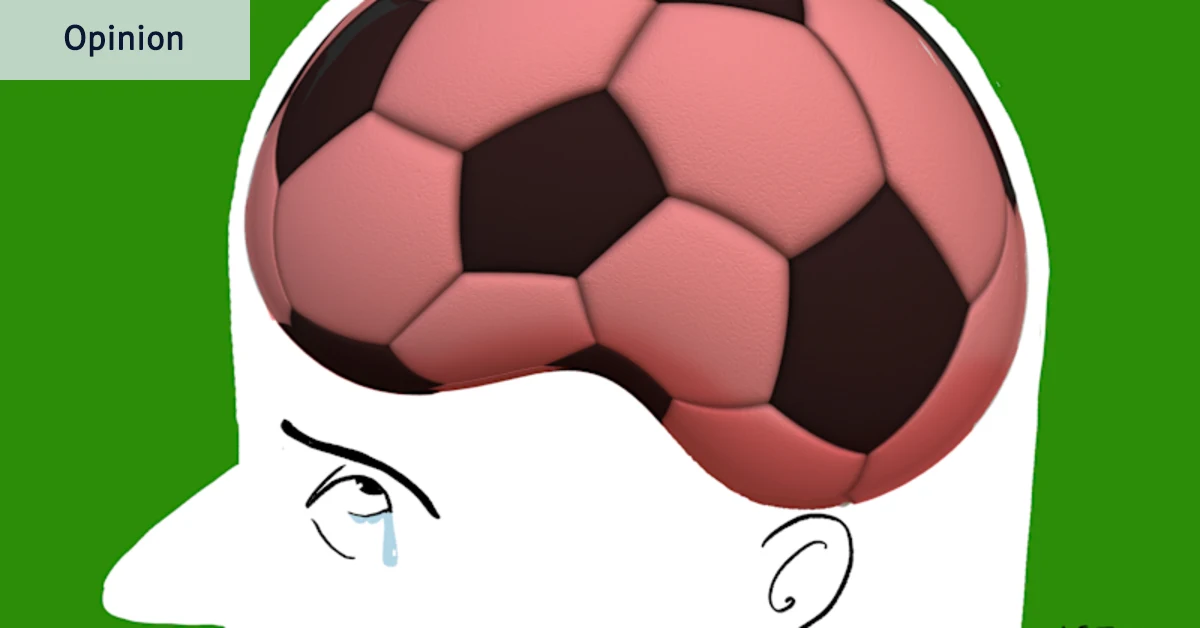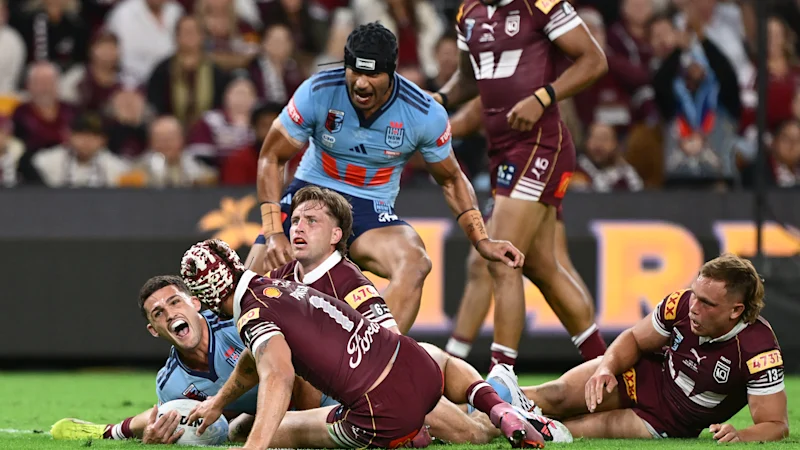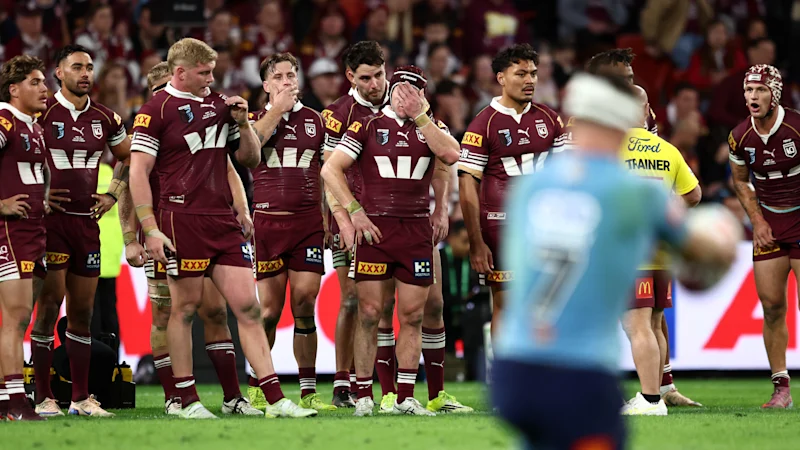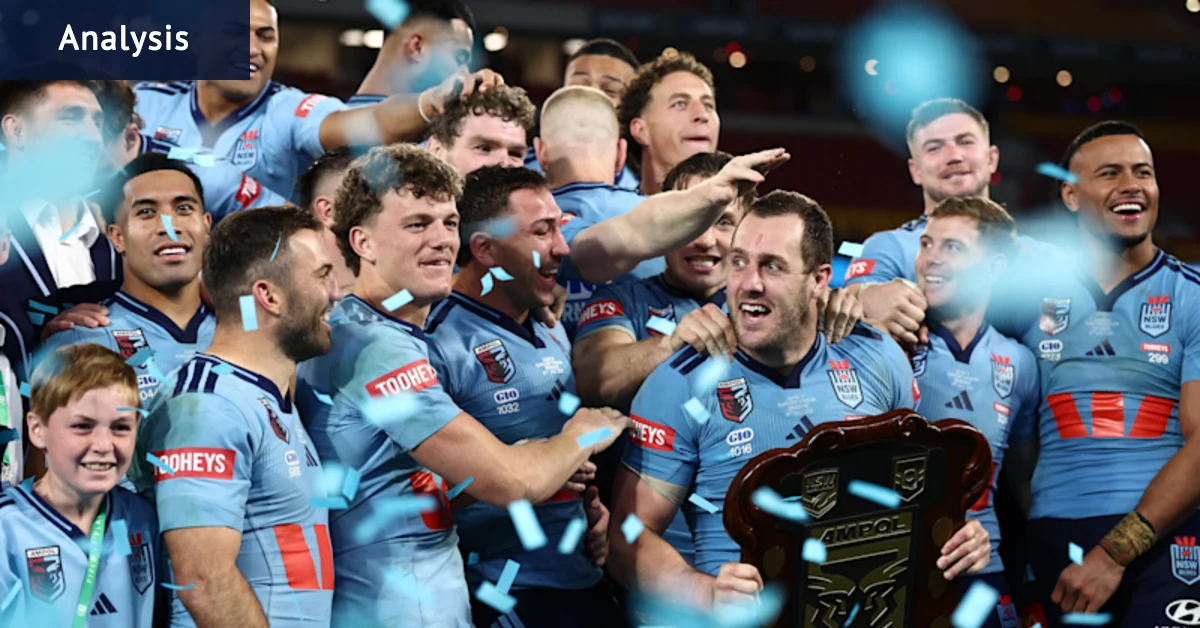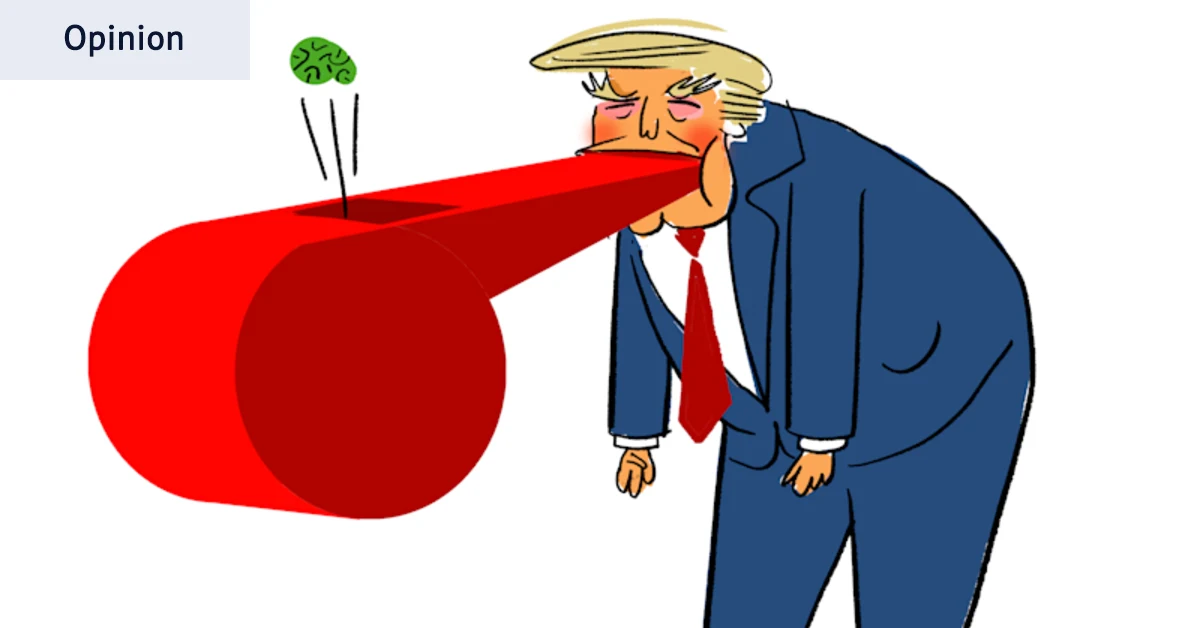
OpinionMalcolm KnoxJournalist, author and columnistJuly 10, 2026 — 3:30pmJuly 10, 2026 — 3:30pmWe wuz all robbed. From Queensland to Cairo to the court of the mad American king, there is a global pandemic of grievance. Is there anyone left who wuzn’t robbed?Since losing State of Origin, Queenslanders have directed their ire at bunker official Chris Butler for allowing Bradman Best’s game-breaking try.Complaint from Queensland is only to be expected, but the whole world is now Queensland. After being knocked out of the World Cup, Egypt joined the line-up of eliminated teams who blamed their losses on referees.The World Cup being the World Cup, there is a long-running conspiracy theory that FIFA wants to engineer a farewell win for the game’s most marketable face, Lionel Messi.The Egypt result is taken as further proof. But that is only an extreme case. Routinely, countries leaving the World Cup have done so under protest.FIFA boss Gianni Infantino already had his hands full dealing with referee Donald Trump, a man with great expertise in all sports (just ask him), who decided that America’s Folarin Balogun had not committed a foul against Bosnia and Herzegovina and therefore should be available for the US’s next match against Belgium.The intervention of Donald Trump, crying over a refereeing decision, could give the world a chance to stop and reflect.Illustration: Simon LetchThe big baby got his way but, as has been noted elsewhere, karma was the winner when the US lost to Belgium in the round of 16.“We was robbed” is the song the whole world sings.Complaint is fiercer than ever and has more outlets, attracts more eyeballs and is globally commodified. There is big money in exploiting and inflaming argumentation.Gambling, of course, exacerbates grievance. It is finding fault, not football, that truly unites the world. But, but, but … wasn’t video technology meant to fix this?Folarin Balogun (right) gets his marching orders in the US’s clash with Bosnia and Herzegovina. He still played against Belgium in their next game.APTo the contrary, video technology has brought respect for officials in sport to its lowest ebb.Having been given the tools to create a perfect world, officials across all sports are now punished for their failure to correctly use those tools.Can you think of one sport that has been improved by the technology? Tennis, maybe, where technology has replaced line judges.Outside that simplest of functions, has video officiating achieved the aim of reducing controversy and refocusing attention where it is meant to be, on a fairly judged contest where the better contestant was the winner?Referee Francois Letexier shows a red card to Egypt assistant coach Mohamed Abdel Wahed during their drama-charged World Cup round of 16 clash with Argentina.APIn sport, as in life, the fundamental problem with technology is that it sells a false idea of perfection, and where that falsity is exposed, the rage has no ceiling.Even where video is applied to simple disputes of geometry – the first international sport in which it was used was cricket, which adopted it in 1992 to adjudge line calls such as run outs and stumpings – the third umpire, as it was quaintly known, settled some arguments, but started more.That should have been a warning: technology doesn’t end controversy, it shifts it to a more poisonous intolerance.In 2026, we can safely say that increasing the number of “correct” and “accurate” decisions was not in itself the problem.Is FIFA trying to engineer a fairytale World Cup farewell for Argentina’s Lionel Messi?APVideo technology has achieved that aim. There is no doubt the quantity of errors, across all sports, has been reduced by technology.If you were an auditor, you might be satisfied that technological changes have improved decision-making. But this tech-worshipping measure is blind to the reality that, as the use of technology has expanded, so has the intolerance for error.Conspiracy theories have not been put to bed; they have expanded, to the point where the technology itself is accused of being doctored.Technology has not ended complaint; it has given complaint a new language.How do we get out of this dead end? Backwards is no way forwards. Buyer’s regret over video technology is universal.Ex-players in commentary long for the days when we could accuse human officials of cheating.Politicians in some countries are even running on anti-VAR platforms. Rugby, a code with a maximalist approach to video technology, empowering officials to trawl forensically through footage to find something to penalise, has made a complete wreck of itself, but even there, to turn back time and abandon the technology is no answer. We would only find ourselves where we began, with the technology exposing error after error and the pressure to use it overwhelming. So time travelling to the past is not the solution.This might be a naïve thing to say, but the intervention of Washington’s whinger-in-chief, crying over a refereeing decision, could give the world a chance to stop and reflect.Do we aspire to being spoilt brats who could change past decisions with a phone call if we were powerful enough? Is that our model for behaviour?Having got a second chance, the US’s Folarin Balogun argues with referee Adham Makhadmeh during the round of 16 match against Belgium.Getty ImagesThis will sound more naïve still, but the foundational principle for all organised sport is that the referee’s decision, right or wrong, is final. If you don’t accept that, you don’t have sport, you only have war.To accept this finality is hard, but accepting injustice is one of the essential character-building components of games. It’s what we learn as children. Without this pact of acceptance, games are not possible.You can’t stop argument among spectators, who don’t have stewardship of the sport concerned. But sporting authorities can stop it among players.The AFL has achieved it with a firm rule that any player who questions an umpire’s decision is penalised. It is Draconian, and it doesn’t stop off-field disputation, but it steers that code away from one of the ugliest sights of other codes, when players mob an official to apply pressure.It’s not inevitable, it’s cultural, and it can be changed.What all professional sports need is a unifying charter protecting officials. If all sports cracked down on disputing referees’ and umpires’ calls on the field – quite simply, only a team captain can talk to an official and anyone else who does so will be sanctioned – you would be taking a step to rebuilding peace.Get the players out of referees’ and umpires’ faces. Reinstill respect. It shouldn’t be that hard.Sport can set an example. With the FIFA-White House interaction, grievance reached its reductio ad absurdum.Sports participants have to be better than Trump, and accept tech is only as good as the humans using it, and humans make mistakes.The only way to eliminate error is to eliminate humans. The priority for sports is not to eradicate mistakes and achieve perfection, but to maintain the principles that make games possible in the first place.Sometimes you wuz robbed. Get over it.Malcolm Knox is a journalist, author and columnist for The Sydney Morning Herald.From our partners
‘We wuz robbed’ is the song the whole world sings. But being robbed is all part of the glory of sport
Complaint and grievance are fiercer than ever. But wasn’t video technology meant to fix this? To the contrary, it has brought respect for officials to its lowest ebb.
1,172 words~5 min read