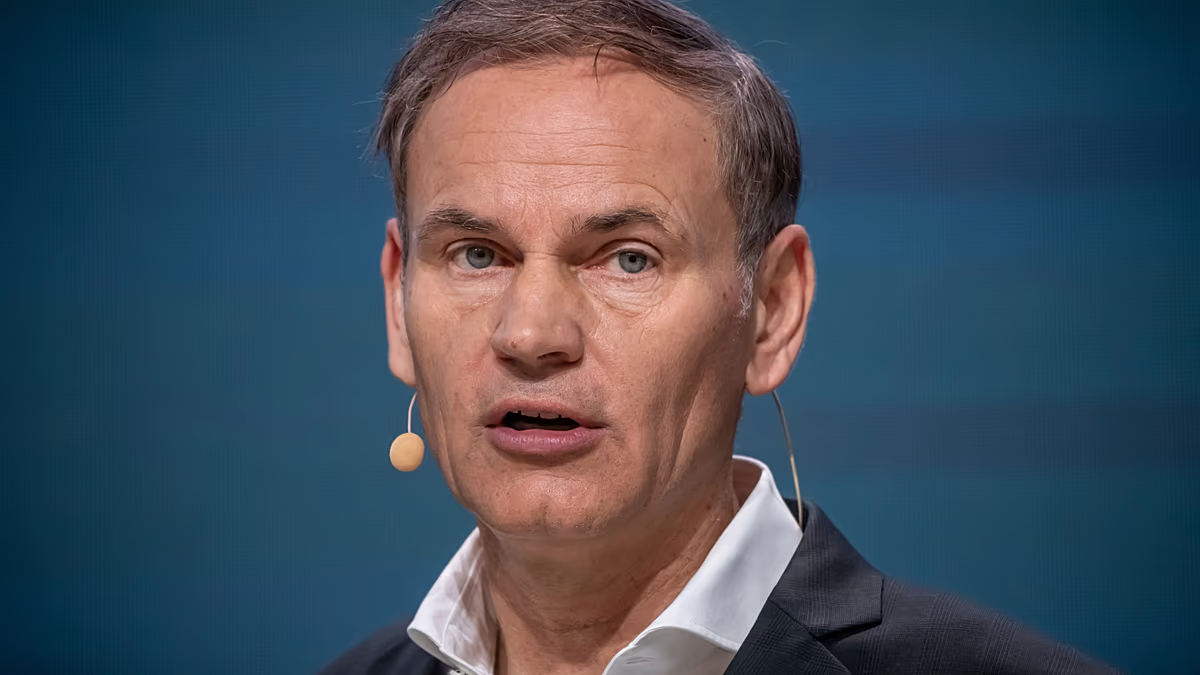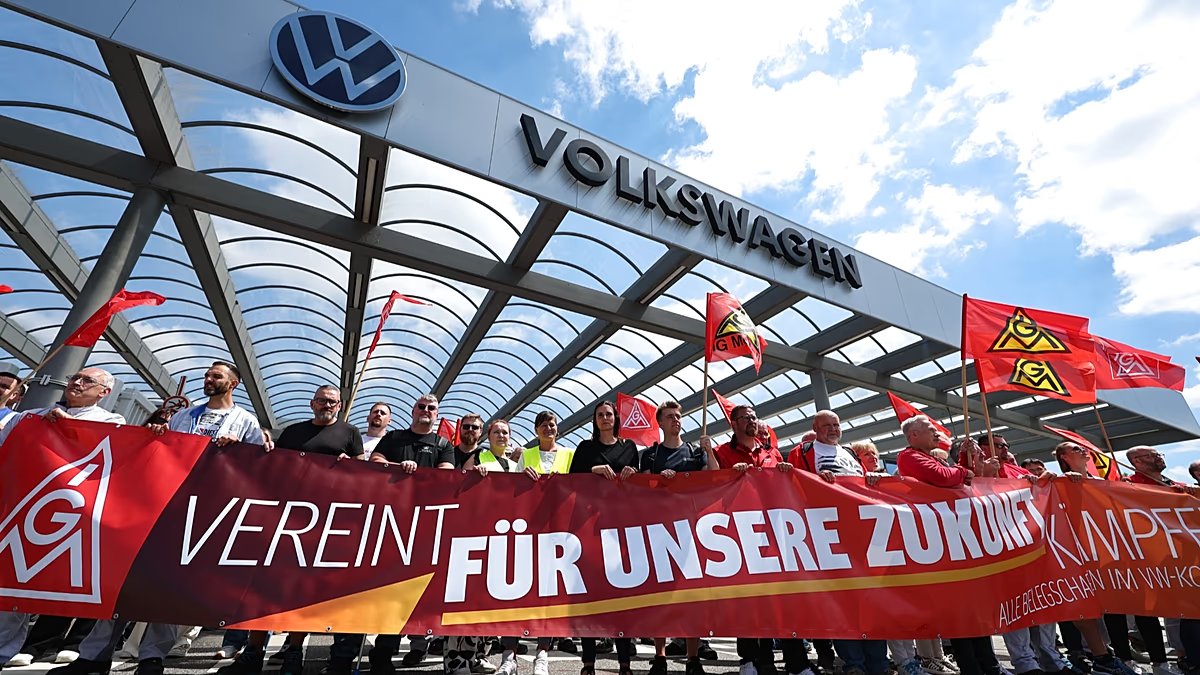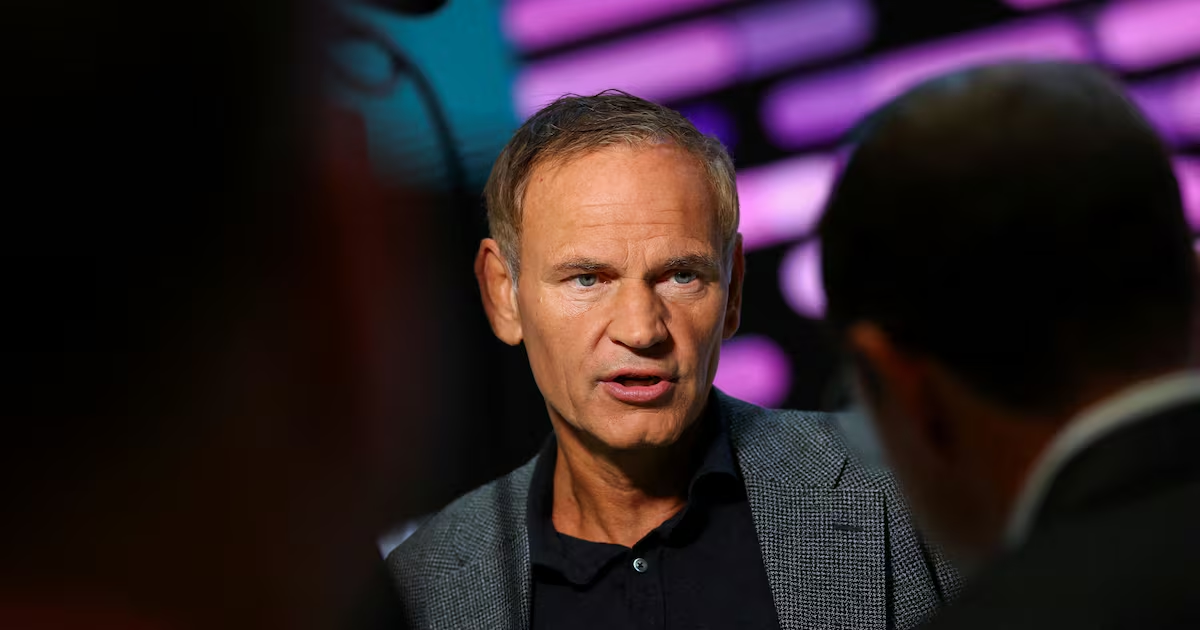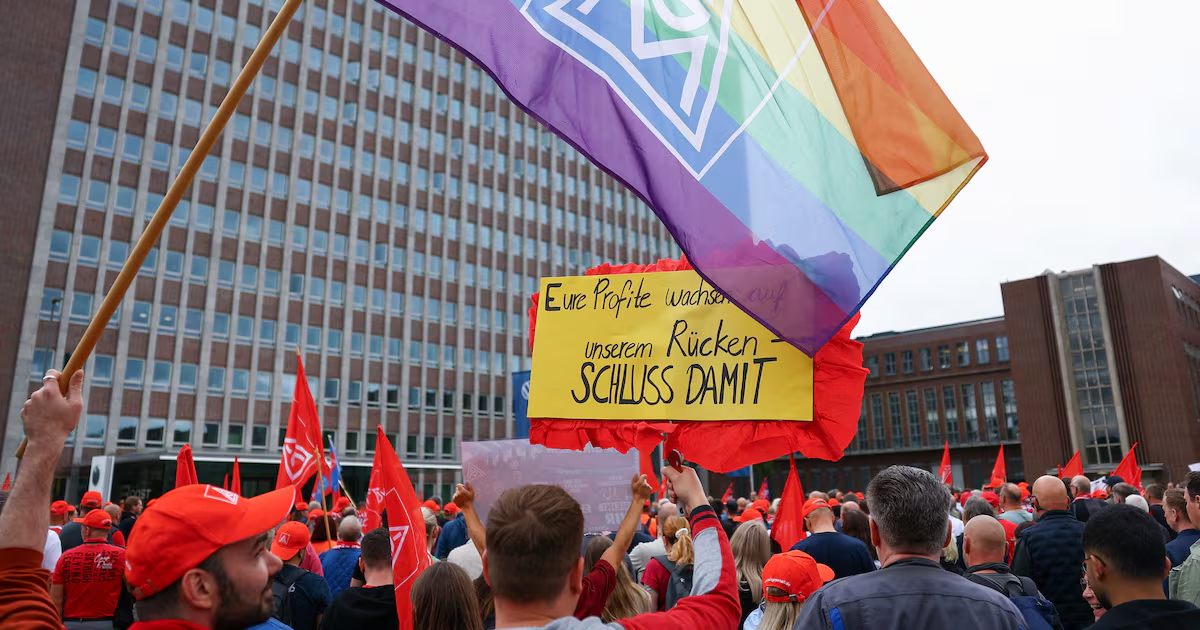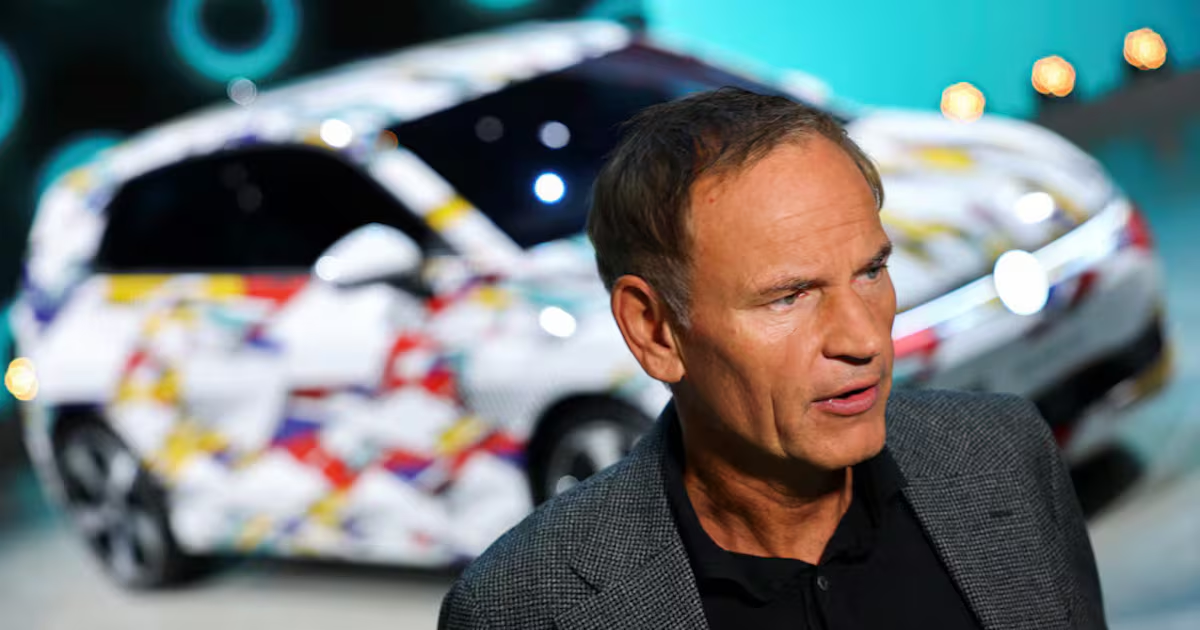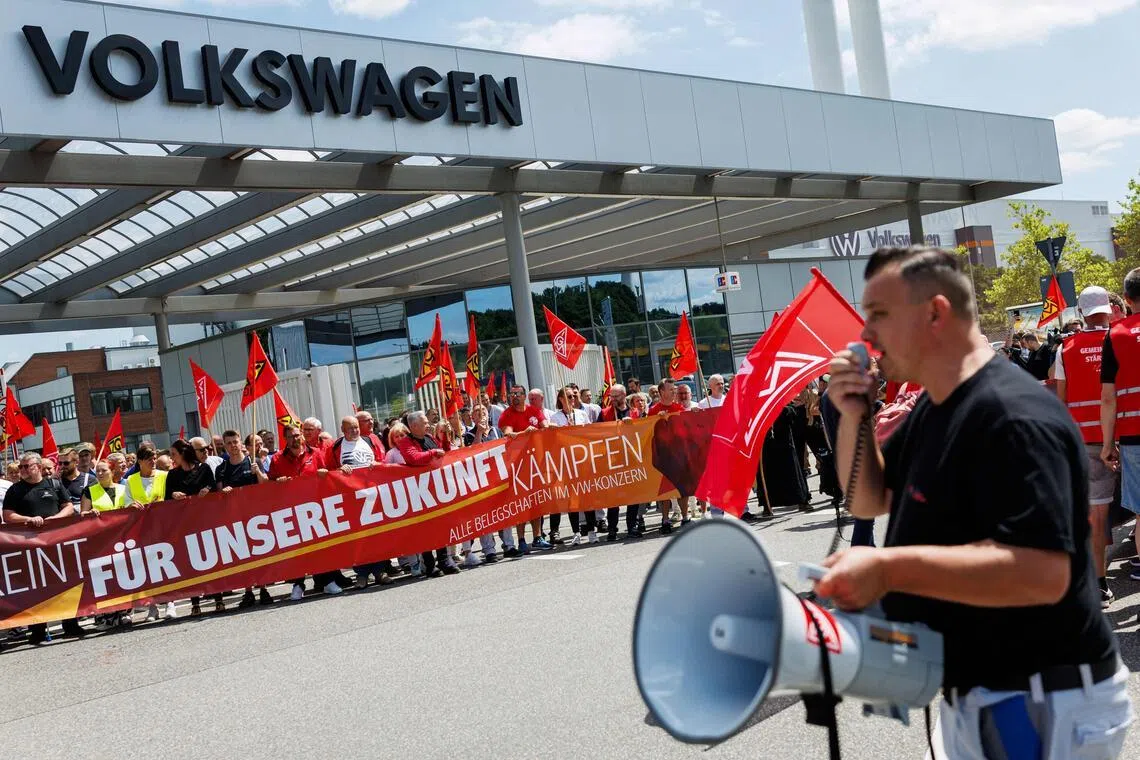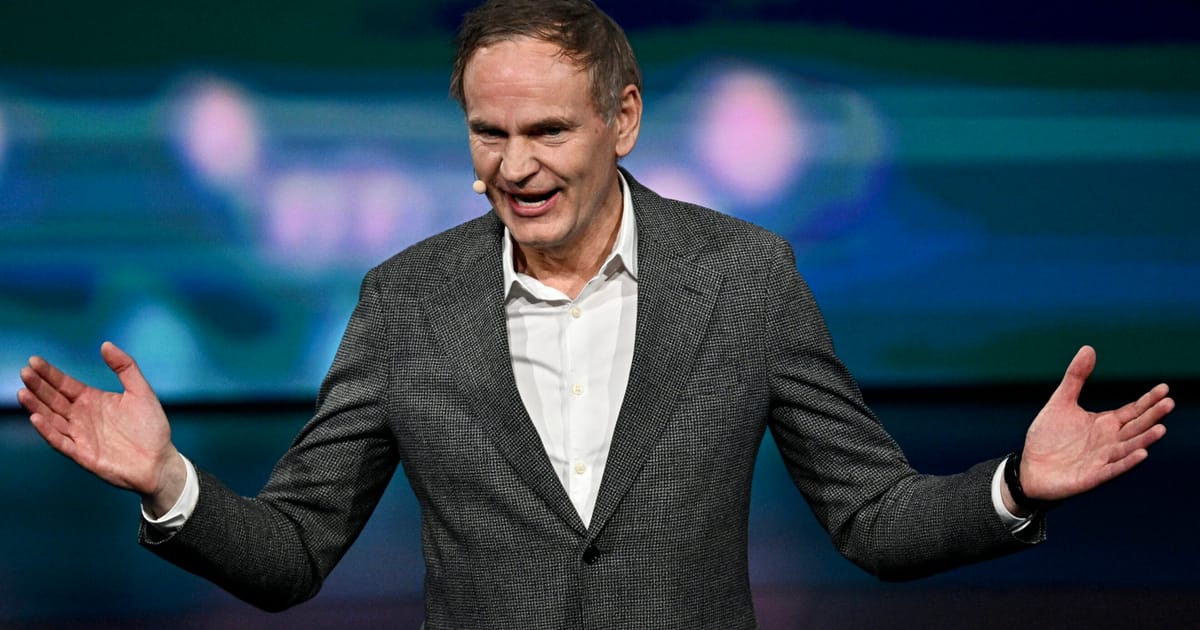
The metaphorical blood began seeping into Volkswagen’s corporate carpet just after 4.30pm on Thursday.With two hours’ delay, the supervisory board of Europe’s largest automotive company gathered to hear Volkswagen chief executive Oliver Blume’s plan to head off a looming existential threat: with plant closures, cost cuts and mass redundancies.Amid shrinking margins, a 20 per cent sales slide since 2019 and surging Chinese competition, the Blume plan is as radical as it is bleak.Up to 70,000 additional job losses are likely – on top of 50,000 agreed already in 2024 – along with the closure of up to four of its German plants in the next five years. Up to 15,000 jobs are likely to be hit in its technical development departments and 5,000 in production, along with one in four manager jobs.Even before the board meeting began, Germany’s powerful IG Metall union organised protest and solidarity gatherings outside all VW plants in the country. Holding banners reading “fighting, united, for our future”.[ Volkswagen to axe up to 100,000 jobs as cost-cutting drive speeds upOpens in new window ]IG Metall chairwoman Christiane Benner said the protests were “a clear signal to the board: not with us!”“We will not accept willingly these constant attacks on the rights of our colleagues,” she said, arguing that workers had already accepted significant cuts in 2024.As detailed leaked out all afternoon, German industry analysts called it the most radical – and ruthless – overhaul in the automotive giant’s 90-year history.With shares at a 16-year low, the board is mulling a €30 billion cost-cutting programme, around 12 per cent of its turnover in the group’s automobile sector. In addition it may cut €50 billion from its research budget by 2031, around a quarter of the total.How can tech offer solutions for obesity and weight management? Listen | 35:38Pushing through the reform plan marks a grave challenge for Blume and, in many cases, will require agreement – or at least no opposition – from key corporate players.Complicating matters is how a recent board departure means German unions such as IG Metall hold 10 of the supervisory board’s 19 seats, stripping chairman Hans Dieter Poetsch of his usual casting vote.Crucial, too, will be the stance of VW’s home state of Lower Saxony, a key minority shareholder, in particular to politically sensitive cost reductions through production transfer out of Germany.Slumping sales worldwide, particularly in China, have been matched by inward march of Chinese brands into Europe. Add the ongoing tariff challenges in the US and long-running, unresolved difficulties with VW’s Audi and Porsche subsidiaries.Topping it off: expensive, embarrassing and potentially fatal write-offs of VW in-car software and an autonomous driving partnership with Bosch.[ Chinese car makers surge in Europe, but how do we feel about them in Ireland?Opens in new window ]Already Volkswagen has calculated an estimated over-capacity of 500,000 vehicles and has announced plans to close its plant in the western city of Osnabrück by next year. Two more German plants are likely to follow, most probably in eastern German states not covered by a special “Volkswagen law”, which requires two-thirds board support for closures and other major corporate changes.“We have to reduce overcapacity,” a VW spokesman said on Thursday, “with the goal of making the Volkswagen group, including all brands and subsidiaries, more agile, robust and competitive.”Beyond the more standard cost-cutting measures, Germany’s Bild tabloid reported VW will halve the number of models it offers, while slashing by 75 per cent the number of variants for individual models.According to other reports, a corporate root-and-branch reform will see around a third of VW’s 2,000 individual firms – including Europcar, Ducati – wound up, merged or sold off. Spanish subsidiary Seat will no longer operate as individual brand, though the Cupra brand will continue.No longer taboo, either, is the idea of VW selling the firm silverware, including its shares in four leading German soccer teams including Bayern Munich and Stuttgart.[ Electric vehicle sales rise again in April and are now 73% ahead of same time last yearOpens in new window ]For now, the company is likely to seek voluntary job cuts through redundancies and reassignment, but Blume has warned that “we will turn over every stone” to save the company.For industry analyst Stefan Bratzel, VW is facing a “Darwinian” survival-of-the-fittest moment, where “those who fail to adapt will vanish from the market”.“Volkswagen has to implement a sustainable plan for the future – and now,” Bratzel, head of the Centre of Automotive Management, told news channel NTV, “otherwise it faces a sell-off and break-up in the 2030s.”As the board meeting dragged into Thursday evening, other industry observers offered even bleaker assessments.For Ferdinand Dudenhöffer, director of the Centre for Automotive Research, the cutbacks cannot make up for how VW – preoccupied with its diesel scandal a decade ago – missed key industry moments on software, emobility, batteries and autonomous driving. It could prove impossible, he suggested, for VW to make up ground lost to rivals in China where development time and costs are a quarter of that in Germany.“We have to work with China now,” he said. “It hurts to say it, but that is the future.”
Blood on the carpet as Volkswagen tries to head off existential threat
Up to 70,000 job losses likely as German carmaker considers €30bn cost-cutting programme
855 words~4 min read