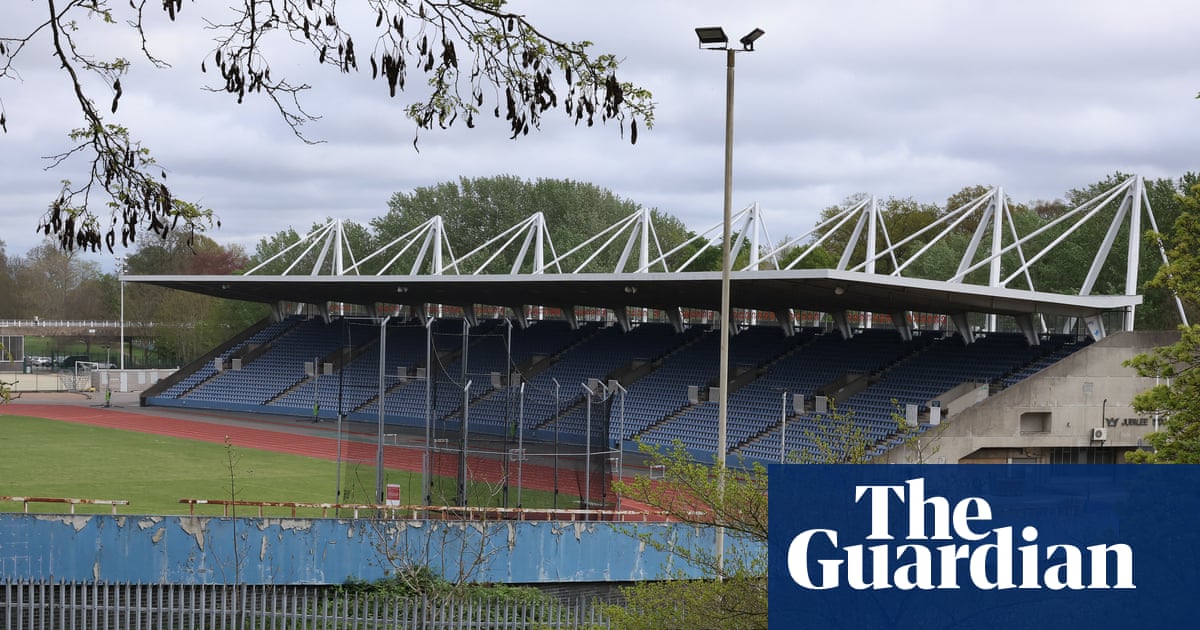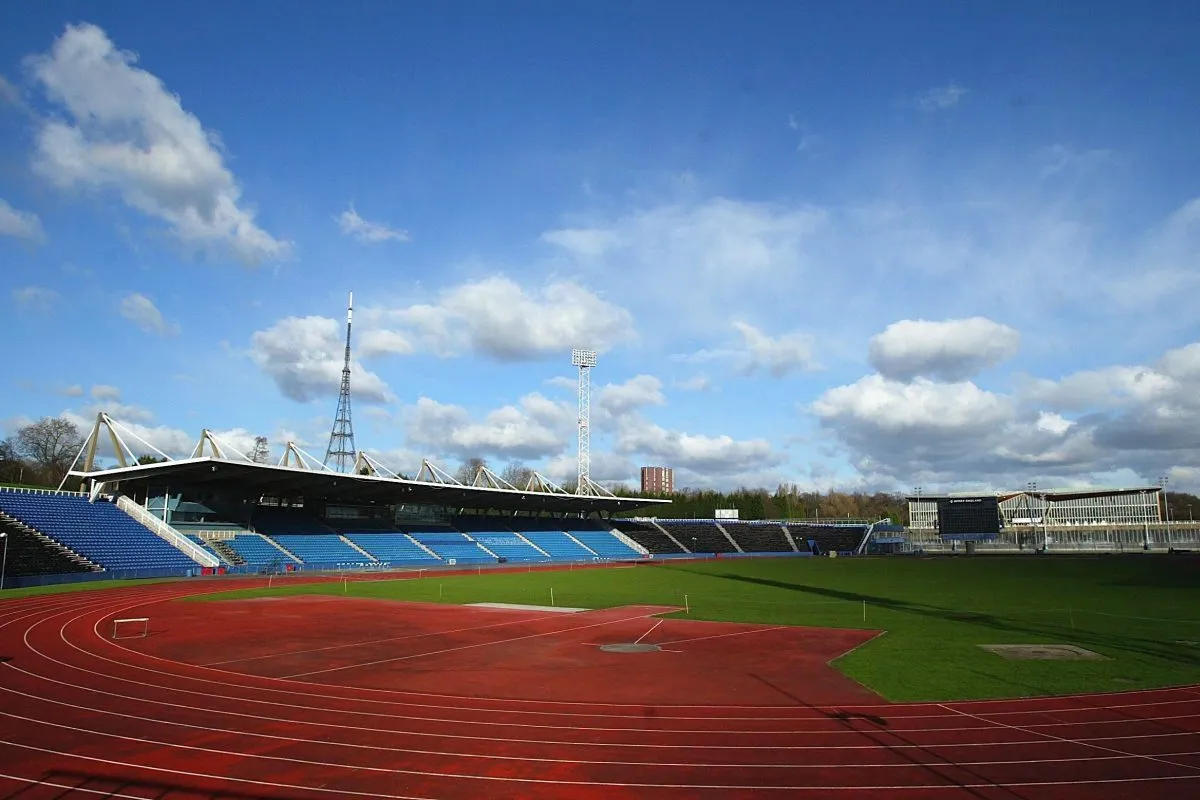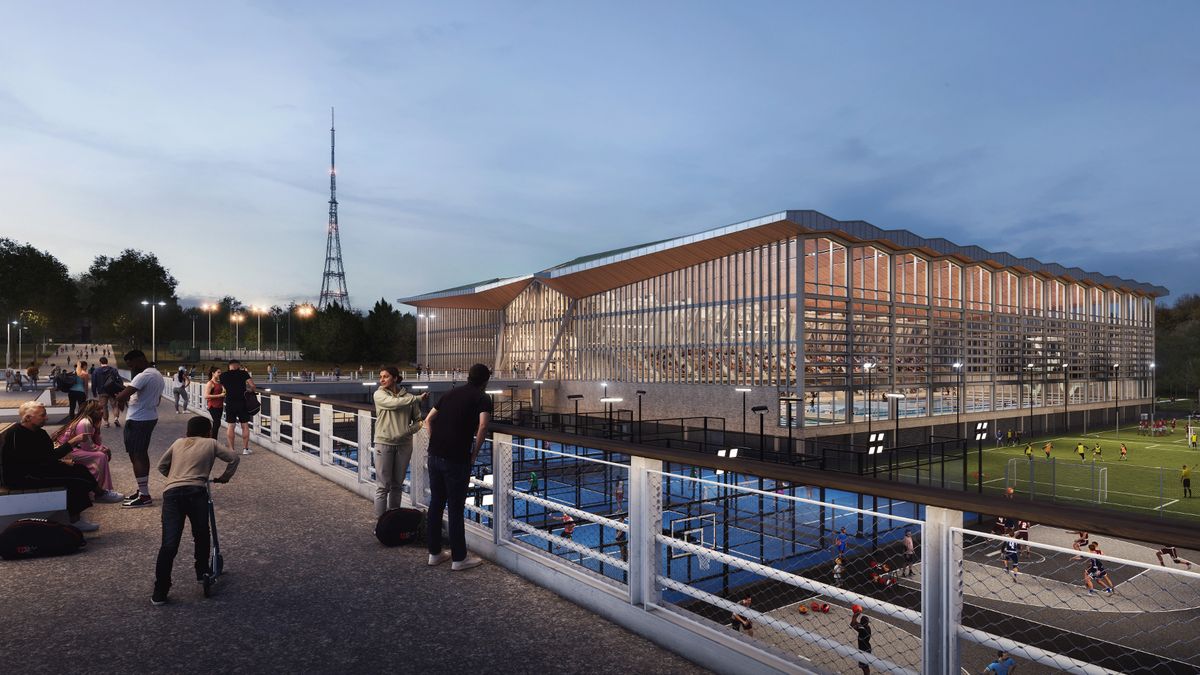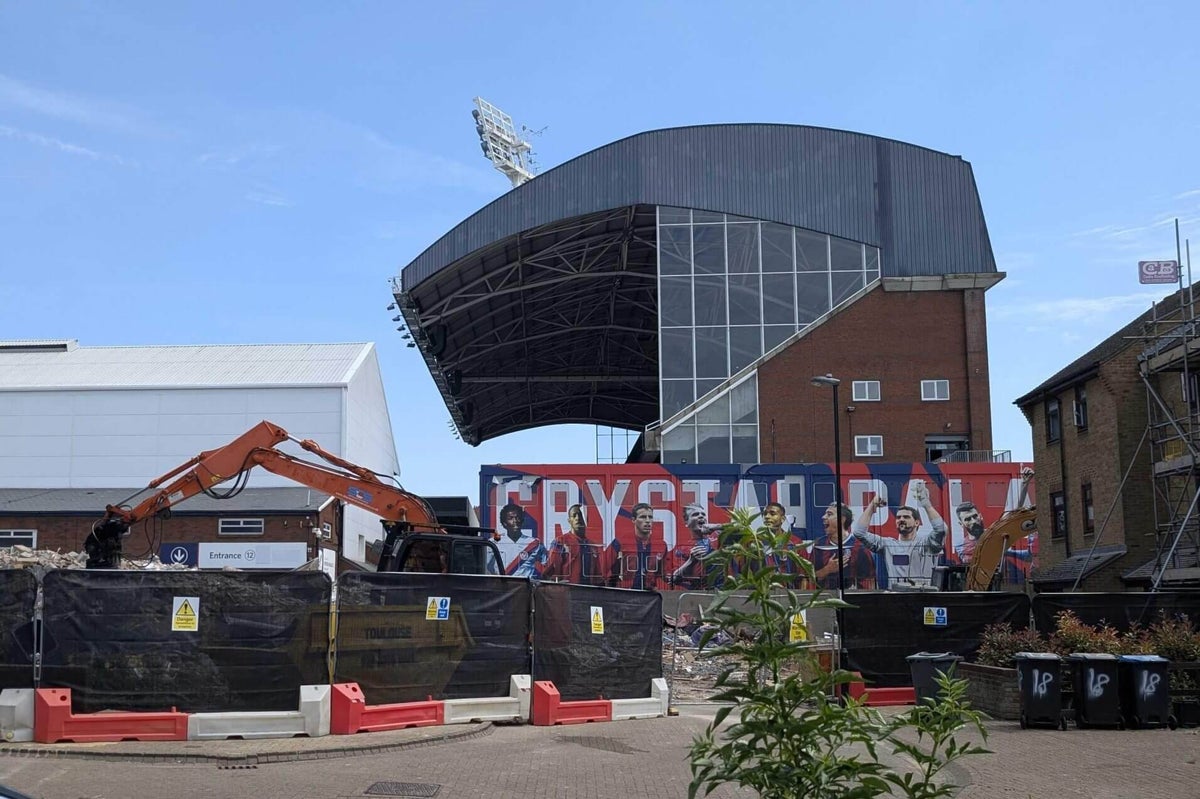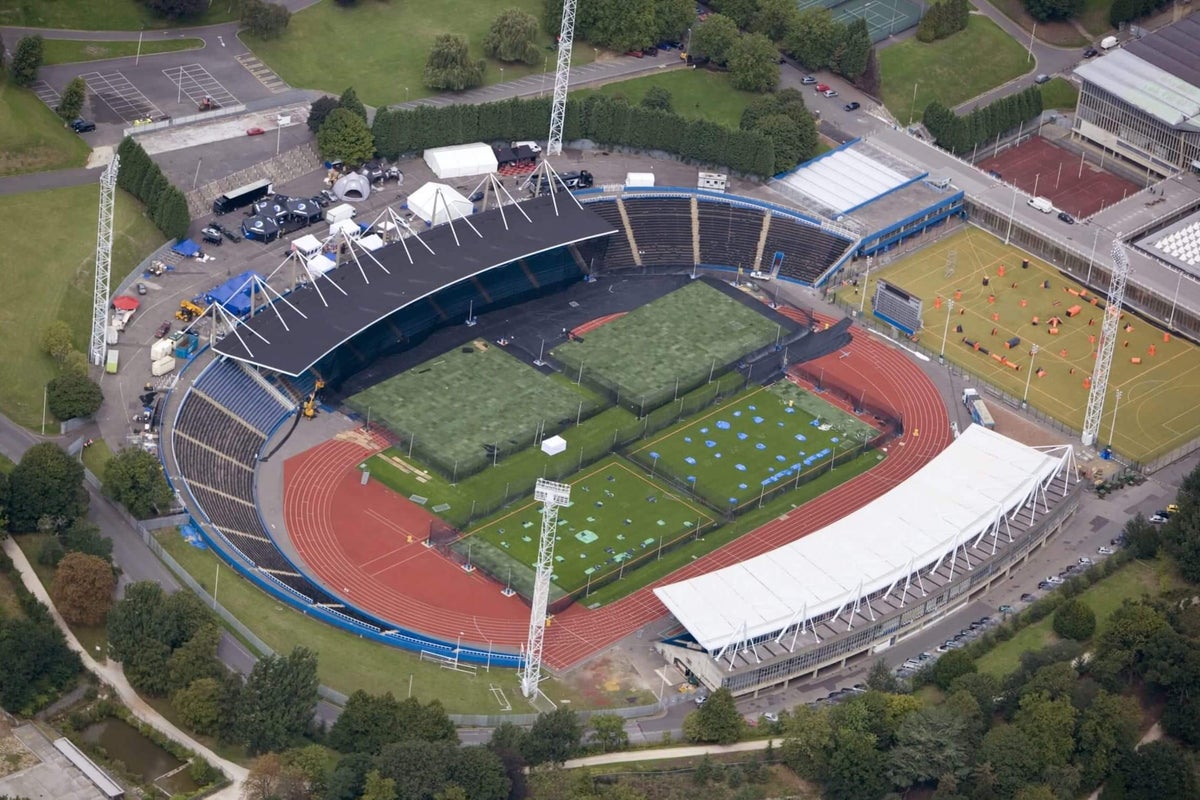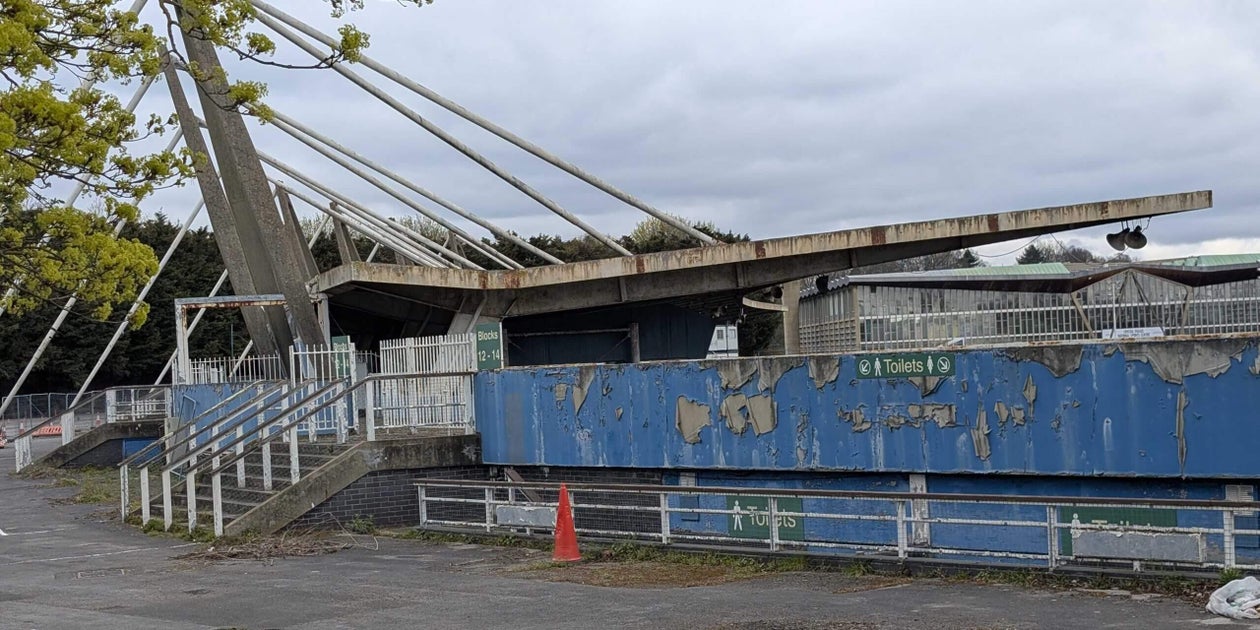
The scene is desolate. The Crystal Palace National Sports Centre is in a state of disrepair; unloved, underappreciated. The park that surrounds it may be full of life, thriving as a hub for its corner of south-east London, but decades of little to no use have left the arena run-down and ramshackle.The stands are weathered, the blue exterior paintwork blistered and peeling to leave the concrete beneath exposed. The seats in the Jubilee Stand, built in 1977 and the smaller of the two covered blocks, are sun-faded.Fabric attached to the roof has torn and now flaps in the breeze, while nature is reclaiming the surrounds. Weeds spring up through cracks in the tarmac. The steps that lead through blocks 12 to 14 are strewn with fallen branches. Moss has taken hold.This is the stadium time forgot.Except, there are some still finding a use for it.The athletics track remains intact, and a handful of runners are training there when The Athletic visits. They are actually following in the footsteps of giants — Sebastian Coe, Linford Christie and others from the cream of British athletics once graced this scene — though now their voices merely echo eerily around the empty bowl.Athletes train on the renovated track at Crystal Palace (Matt Woosnam/The Athletic)None of this sounds like much of an opportunity.Yet, following a May 2023 pledge from mayor of London Sadiq Khan, a planning application was submitted in March this year for the regeneration of this stadium, including the outside sports pitches and the Grade II-listed indoor centre, with its 50m Olympic-sized swimming pool.Millions of pounds will be invested to turn the site into something of which the UK’s capital can once again be proud, just as it was after opening in 1964 when it stood as one of the nation’s premier athletic venues.The sports centre was built just beside the terrace of the original Crystal Palace. The huge structure, flanked by imposing water towers, housed the spoils of the British Empire until it burned down in 1936 but, while it stood, top-level cricket and football, including the FA Cup final, were played here.The National Sports Centre, with the terrace of the original Crystal Palace above (Historic England Archive/Heritage Images via Getty Images)It was also the first home of the modern-day Crystal Palace Football Club, formed in 1905 but inspired by an amateur team who first played here back in 1861.Yet, while plans have often been mooted to move the club back to their original home, it will not be football which rescues this site from its dilapidated state. That ship has long since sailed. Palace, instead, will look to redevelop Selhurst Park, their home since 1924, even if some will always cast covetous glances up the hill.Crystal Palace FC and the National Sports Centre (NSC) will forever be a story of missed opportunities.The Crystal Palace and the NSC: A brief historyThis spot’s association with elite sport dates back far further than the 1960s.The original Crystal Palace, a vast iron and glass building first erected by Sir Joseph Paxton in central London’s Hyde Park for the Great Exhibition in 1851 before its relocation to Sydenham Hill, south London, stood just above where the sports centre now crumbles. The terracing is currently being restored.This is one of London’s highest vantage points, at 367ft (112m) above sea level. The night the palace burned down 90 years ago, the glow could be seen in northern France.The Crystal Palace at Sydenham in around 1855 (Hulton Archive/Getty Images)But while it stood, it was effectively the nation’s greatest pleasure park.The building hosted orchestral concerts and a circus, exhibitions, festivals and fetes. There were cat shows, dog shows, even pigeon shows. Visitors, including world leaders, came to marvel at artefacts from around the British Empire. Landscaped gardens housed the celebrated dinosaur sculptures, first unveiled in 1854 and, although inaccurate by modern scientific standards, still a draw to this day (albeit they, too, are currently being restored).It was also a home for all manner of sports: from cricket, baseball, rugby union, basketball and wrestling, to tennis and motor racing.Baseball at the Palace in 1895 (London Stereoscopic Company/Hulton Archive/Getty Images)Football was the main draw, though. The FA Cup final was played in the grounds of the Palace each year from 1895 to 1914, with the 1901 match drawing a crowd of 110,000.Its popularity and status made it a target as the Suffragettes ramped up their campaign to win the right for women to vote by targeting sporting events, and there was a plot in April 1913 to blow up the stadium grandstands on that year’s FA Cup final day. That scheme was foiled. The FA Cup final of 1914 at Crystal Palace, where Burnley beat Liverpool 1-0 (Hulton Archive/Getty Images)By 1937, with the main build having burned down, a motor-racing circuit was established in the park — and remained in use for the following 35 years — while the NSC opened in 1964, one of five such centres across the country run on behalf of Sport England. It occupied the same land on which the original stadium was built.Coe, the two-time Olympic gold medalist middle-distance runner and current president of World Athletics, and sprinter Christie were once regulars on its track. So, too, was another multiple gold-medalist middle-distance star, Kelly Holmes. Decorated decathlete, Daley Thompson, pulled up injured at the stadium when attempting to qualify for the 1992 Olympic Games. It was to be his final appearance before retirement.Yet its significance waned, particularly when resources were poured instead into developing the arena in Stratford, east London, which went on to host the 2012 Olympics. In May 1982, Pope John Paul II had arrived by helicopter to address around 24,000 members of the Polish community in the stadium on Pentecost Sunday as part of the papacy’s first visit to the UK.These days, while the park remains popular, the biggest crowds attracted to the area are generally for music concerts and festivals, with Crystal Palace having attracted artists including Bob Marley, Pink Floyd, the Rolling Stones, the Sex Pistols and Bruce Springsteen.A healthy crowd watches the men’s 800m at the Norwich Union Athletics Grand Prix at Crystal Palace in August 2002 (Ian Walton/Getty Images)What is Crystal Palace FC’s association with the park and sports centre?Crystal Palace FC — an amateur club from 1861, and a professional side from 1905 — were ousted from their home in the shadow of Paxton’s building by the outbreak of the First World War, when the site was requisitioned by the British Navy.They then played home matches at south London’s Herne Hill velodrome and then the Nest — a ground in the Selhurst area — before settling at Selhurst Park from 1924. But they have been tempted by a return to their spiritual home up the hill several times over the 102 years since. It has always felt like a possibility, even if it has never been realised.
Crystal Palace, the National Sports Centre and why a return home was an impossible dream
The football club began life playing in the shadow of Sir Joseph Paxton's steel and glass edifice, but attempts to return have been thwarted
3,019 words~14 min read