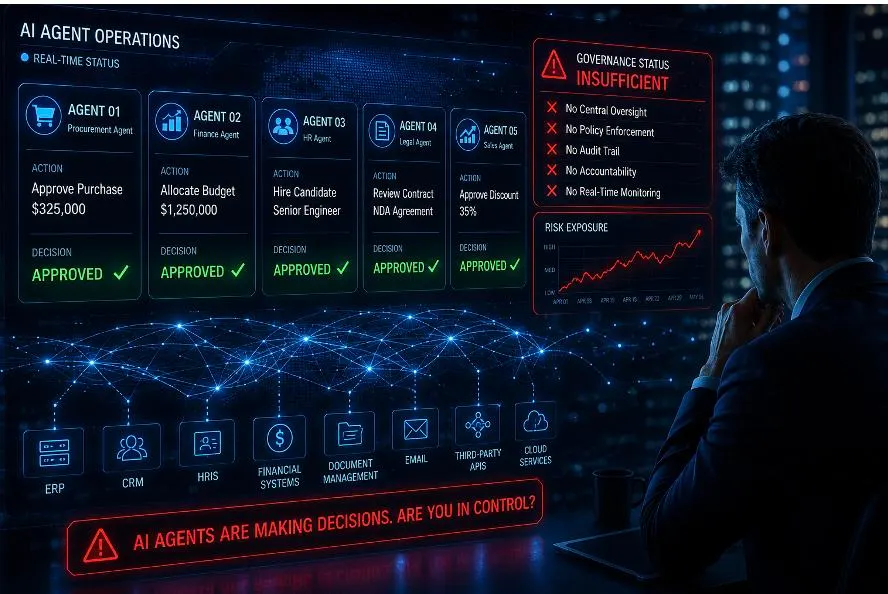
The best AI agent governance tool for a given team depends on which layer of the problem they need to control: agent identity, runtime action validation, model-level guardrails, observability, or platform posture. No single product covers all five well, and most bad purchases in this category come from buying a tool for one layer while the actual risk sits in another.
This guide lists the leading options by layer, states what each is genuinely good at and where it stops, and closes with how to choose. Cerone, our own product, appears in the runtime validation section, described by the same criteria as everything else.
What is AI agent governance, and why did it become its own category in 2026?
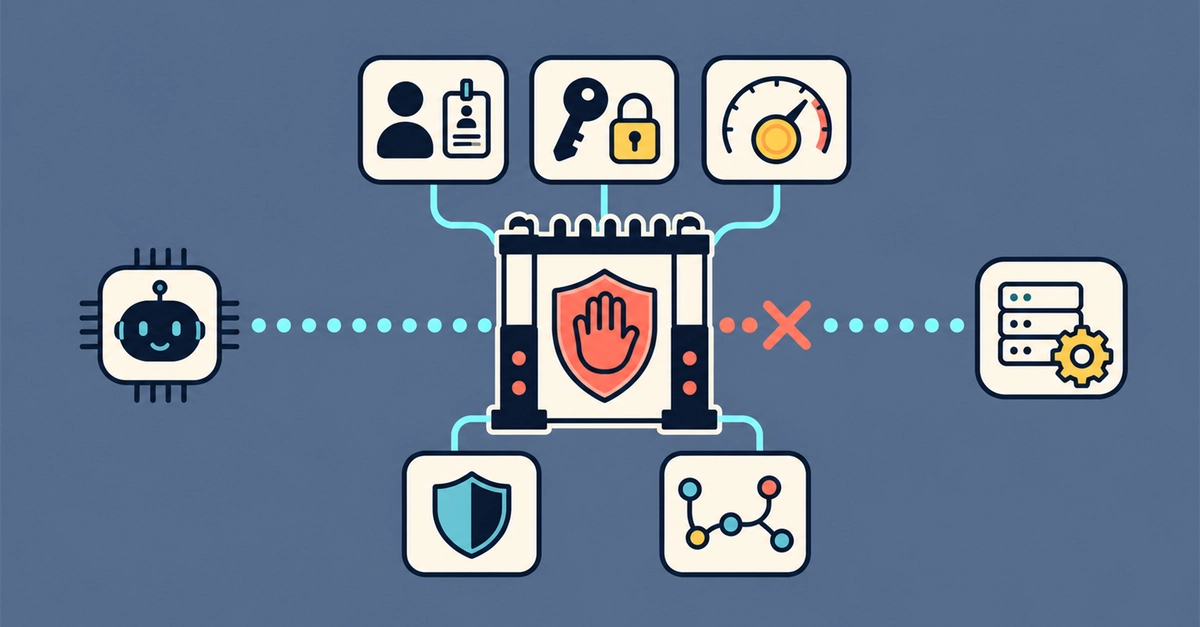
AI agent governance is the set of controls that constrain what autonomous AI systems can see, decide, and do at runtime, and that produce evidence those controls operated.
The category separated from general AI security for a concrete reason: agents act. In late 2025, OWASP published its Top 10 for Agentic Applications, the first formal taxonomy of agent-specific risks, covering goal hijacking, tool misuse, identity and privilege abuse, memory poisoning, insecure inter-agent communication, and rogue agents. Regulation followed the same curve, with the EU AI Act's high-risk obligations and US state-level AI laws taking effect through 2026. Policy documents and model evaluations, the tools of the previous era, address none of these at the moment of execution. Governance moved to runtime because that is where agents cause or prevent harm.