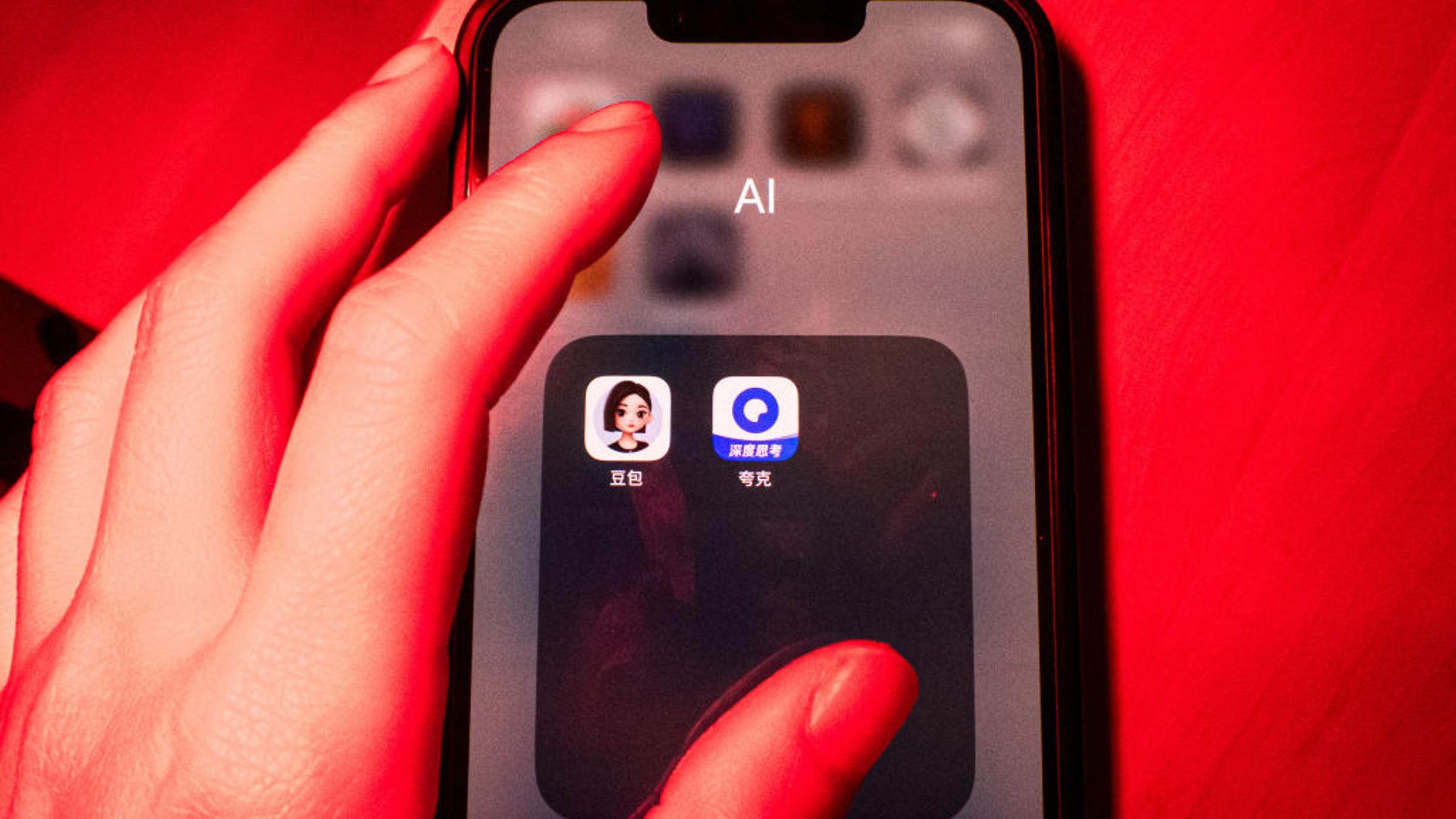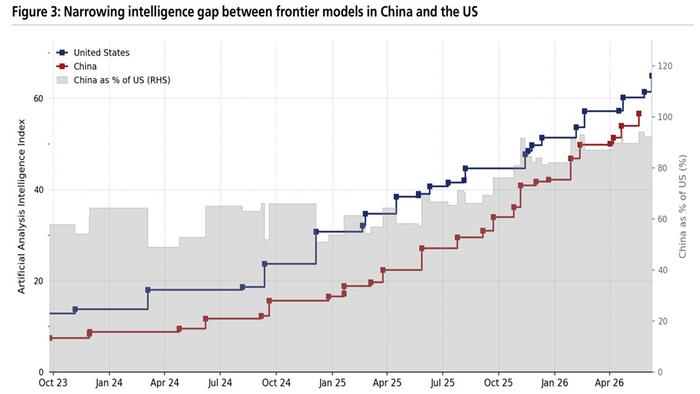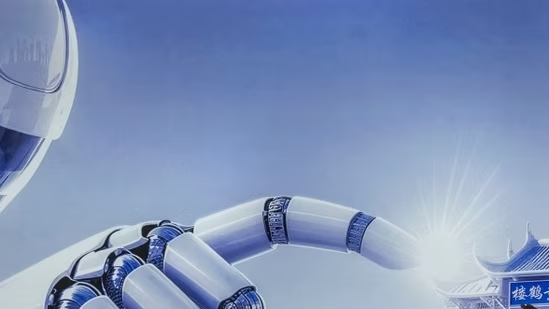
American companies have a new AI addiction: cheaper Chinese models. But as the race for artificial-intelligence supremacy heats up, Beijing is considering tightening its grip on homegrown technology.A visitor in front of a billboard showing a humanoid robot at an exposition in Beijing.Across Silicon Valley, models made by Chinese companies such as DeepSeek and Moonshot AI have become core to daily work at companies large and small, offering a less costly alternative and supplement to the products of OpenAI and Anthropic.Chinese officials have recently held discussions with domestic AI labs that produce the country’s most powerful models about how to safeguard their valuable proprietary technology, according to people familiar with the matter. Beijing is concerned that sharing some of this technology could help adversaries or other malicious actors and ultimately get weaponized against China, the people said.Beijing’s recent moves show it is revising its AI priorities in the race with the U.S.Until recently, Beijing wanted to encourage the rapid spread of Chinese AI models globally, believing this represented a form of Chinese soft power. Many leading Chinese models are open-source, meaning anyone around the globe can download them without charge and generally use them with few restrictions.The new thinking: Not all technology should be open to everyone.Sharing of technology, including through open-source releases and research papers, may expose technical secrets. Some Chinese innovations, such as techniques that allow AI models to use computing power more efficiently, have been adopted by Western AI labs.Beijing has been closely watching Washington’s moves to regulate Anthropic’s Mythos, which is capable of detecting cybersecurity flaws automatically. The White House banned foreign access to the model, prompting Anthropic to cut off access to all users. More recently, the White House moved to allow access for some users.To Beijing’s regulators, the back-and-forth in Washington has reinforced the idea that governments need to keep a tight grip on powerful AI technology to prevent misuse in areas such as cyberwarfare and bioweapons development.Industry officials on both sides of the Pacific generally agree that China’s top models trail the best the U.S. can offer. But Chinese models have gained traction in the U.S. by offering good-enough capabilities at a fraction of the cost.Andy Fang, co-founder of DoorDash, said in an X post Tuesday that his company routed the most complex tasks to Anthropic’s cutting-edge model Fable—a public version of Mythos—while delegating lower-level workloads to Kimi K2.6 from China’s Moonshot AI. DoorDash separately said the approach delivered better performance at a lower cost than using two Anthropic models.Staff at legal-services platform Harvey typically turn to top models from OpenAI, Anthropic and Google to complete high-stakes tasks, said Niko Grupen, head of applied research at Harvey. For simpler work, lower-cost alternatives from Chinese companies such as DeepSeek and Zhipu have become the go-to models.Startup Vercel said DeepSeek’s share of AI usage rose to 23% in June from 1% in April on the Vercel platform, while DeepSeek’s share of AI spending stayed in the low single digits.Among the Chinese measures under discussion is a more stringent regulatory review before labs can roll out their models, people familiar with the matter said. Companies seeking to introduce generative AI services currently must clear a vetting process by the government that focuses on safety and preventing abuse.Officials are considering requiring labs to defer public releases and restrict access by certain tiers of users, such as foreign entities, if a review determines their products contain sensitive technology, the people said.China is also looking at tighter restrictions on exporting some AI technologies and on Chinese AI companies’ accepting foreign investment, some of the people said. They said officials have consulted recently with Chinese companies and researchers to identify areas where China has developed a technology edge.Such discussions are still in the early stages, the people said. Reuters earlier reported some exchanges between Chinese officials and companies.Any moves by China to tighten its grip on domestic models could risk alienating foreign users and slow global adoption, industry participants said.Write to Raffaele Huang at raffaele.huang@wsj.com and Tina Li at tina.li@wsj.com
China Weighs Limits on the AI Models American Companies Love
As the race for artificial-intelligence supremacy heats up, Beijing is considering tightening its grip on homegrown technology. | Technology News
670 words~3 min read