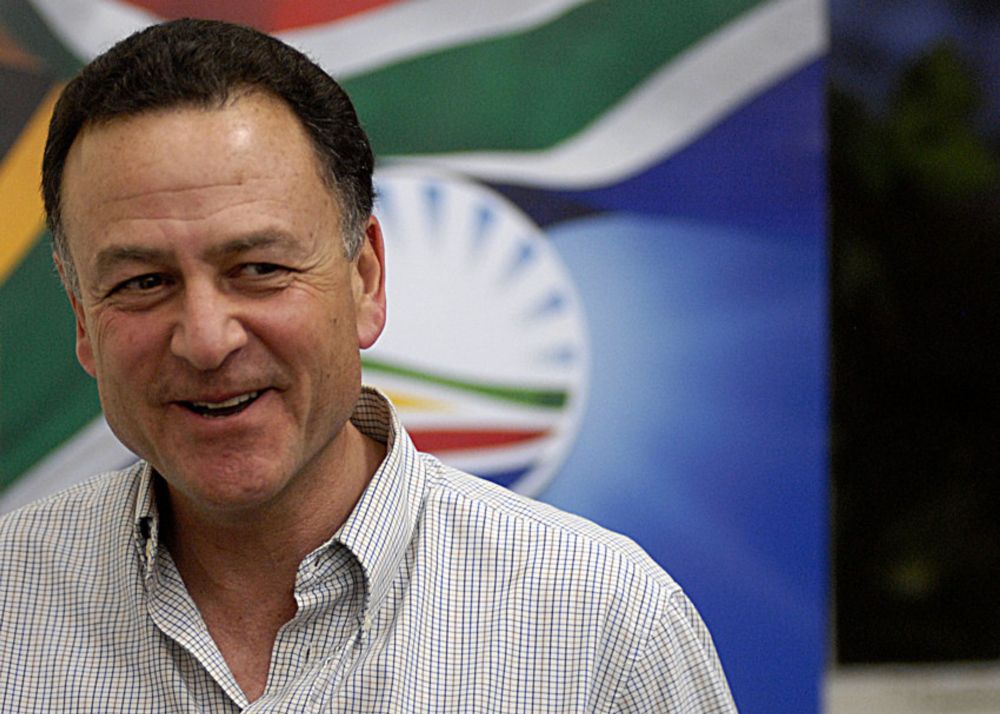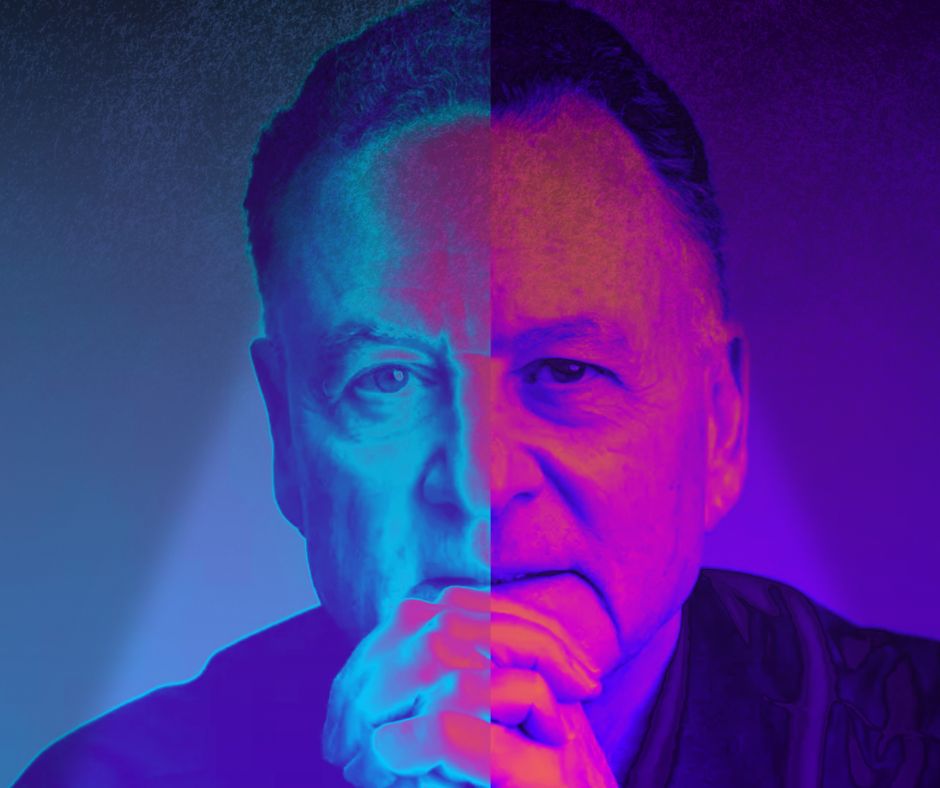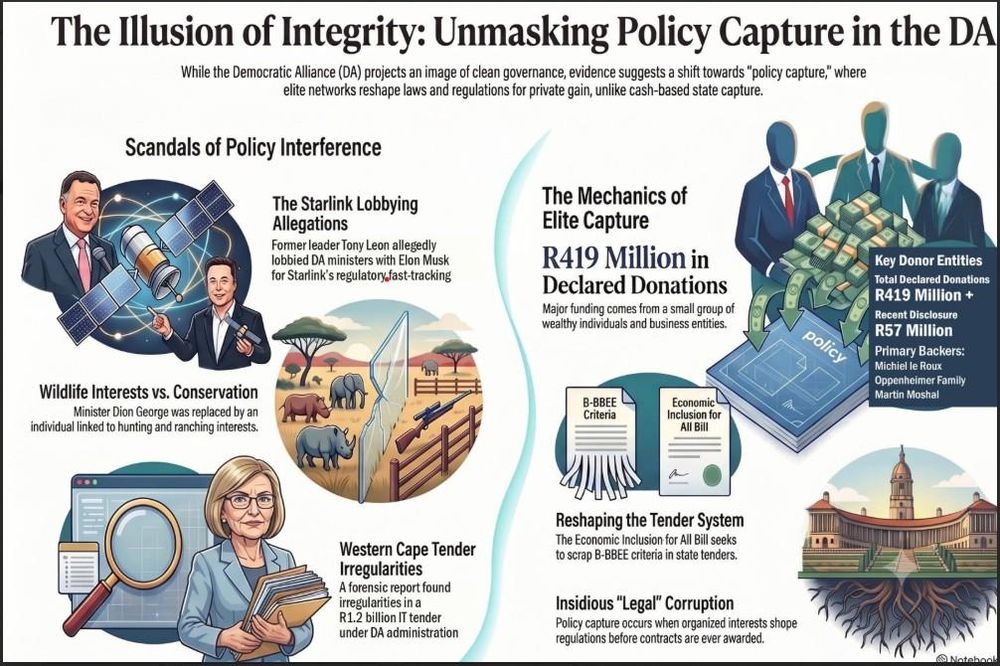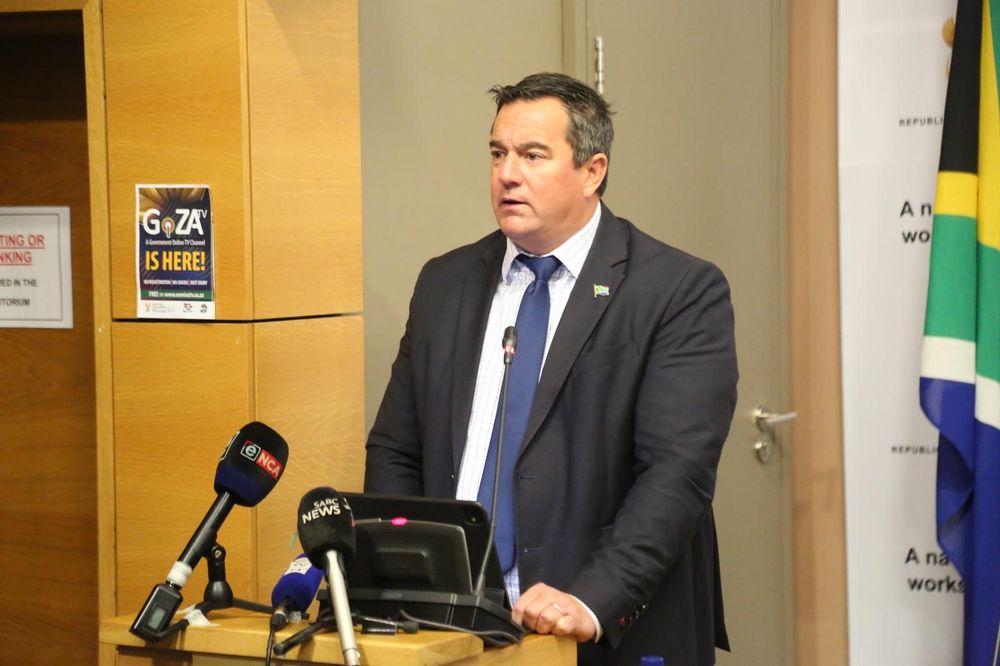
Former DA leader John Steenhuisen’s assorted allegations in a recent interview with News24’s Adriaan Basson have been making the headlines for good reason.Attention has focused on his claims that Tony Leon’s public affairs company, Resolve Communications, tried to pressure DA ministers and mayors to procure its services — and to listen to the entreaties of clients such as Elon Musk’s Starlink. Some have rightly questioned whether such activity is compatible with the Executive Members’ Ethics Act 82 of 1998.Some complacency is also on display. It was striking that when communications minister Solly Malatsi told the Cape Town Press Club in June 2025 that equity equivalents could allow Starlink to satisfy black empowerment obligations, he was accompanied by Leon and Resolve CEO Paul Boughey.Some observers discern a pattern in DA party management. Steenhuisen isn’t the only one to complain that public affairs companies have orchestrated campaigns in the party.In the May 2019 elections, the DA’s national vote dropped from 22% to 21%. Mmusi Maimane, who had been leader since 2015, initiated a review panel. The panel’s narrow composition ― former leader Leon, party donor and Capitec founder Michiel le Roux, and political strategist Ryan Coetzee ― provided fertile ground for conspiracy theories to spring up.The panel’s report was soon leaked and it described Maimane as indecisive, inconsistent and conflict-averse. Soon after, there was a flurry of resignations by senior figures such as Herman Mashaba, Athol Trollip and Maimane himself. Steenhuisen was elected the DA’s interim leader.This was a mess but probably not a conspiracy. After all, it was probably Maimane’s own fault the panel’s composition was so unbalanced and ultimately hostile. Given the opportunity to talk frankly to the committee, moreover, it turned out many DA activists wanted Maimane gone.Despite this, the last straw was the return of Helen Zille from “retirement” and her election to the key position of federal council chair. The rumour that Zille had been holed up in one of Le Roux’s luxury beach properties just north of Cape Town ― a probably scurrilous claim that journalists have not yet ruled out ― fuelled this regrettable rumour mill.Given that the DA’s biggest electoral challenge has been to break through distrust among black voters, the perception that the DA was run by a white cabal ― even as it boasted a black leader ― was deeply unfortunate.The same cast of characters were at the scene of the crime during the ouster of Steenhuisen. Le Roux’s companies are among the party’s biggest donors today. Leon was accused by Steenhuisen of orchestrating a campaign against him. And Coetzee has been appointed to an important new position “co-ordinating” DA ministers in the government of national unity.Former CEOs, strategists and chiefs of staff are meanwhile circulating between strategic communications agencies such as Resolve, Ockham Communications, SABI Strategy Group and Dubai-based Consulum.The one positive outcome has been that Steenhuisen may have been worked over and kicked out by party-linked communications strategists and big funders. This may help counter perceptions that DA leaders are mistreated only when, like Maimane, they are black.But the bigger perception problem remains: party donors and a small number of public affairs companies seem to be centrally involved in DA leadership elections, its negotiations with coalition partners and the management of its elected representatives, including ministers.Such a view creates the danger that the fresh and youthful leadership team of Geordin Hill-Lewis, Ashor Sarupen and Mark Burke starts to look like just another set of puppets whose strings are pulled by the old cabal. This poses a giant reputation management challenge for the party. Luckily they have many consultants on hand to take on this challenge.*Update, 10 July 2026An earlier version of this story incorrectly named DA strategist Jonathan Moakes instead of Resolve CEO Paul Boughey.• Butler teaches public policy at the University of Cape Town.
ANTHONY BUTLER | DA’s perception problem goes beyond John Steenhuisen
Allegations include pressure from public affairs companies to secure party contracts and involvement in party management, fuelling perceptions of a predominantly white cabal controlling the party
635 words~3 min read