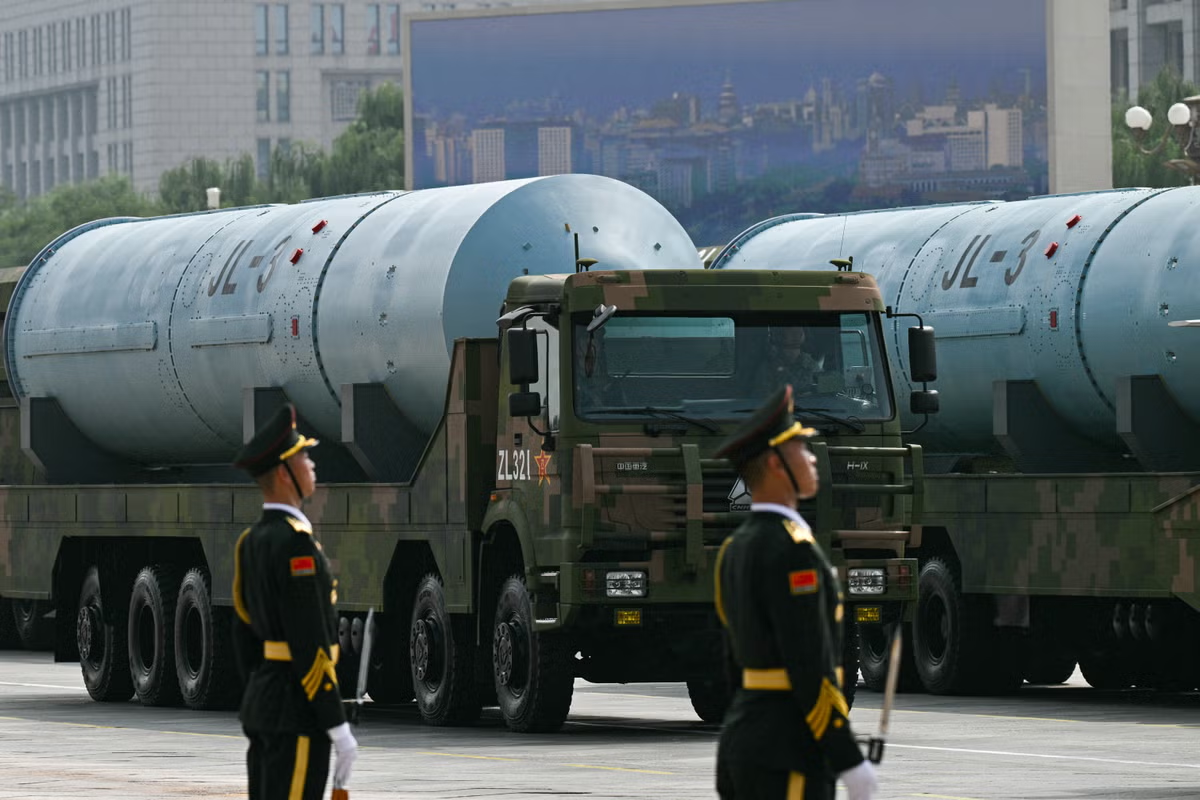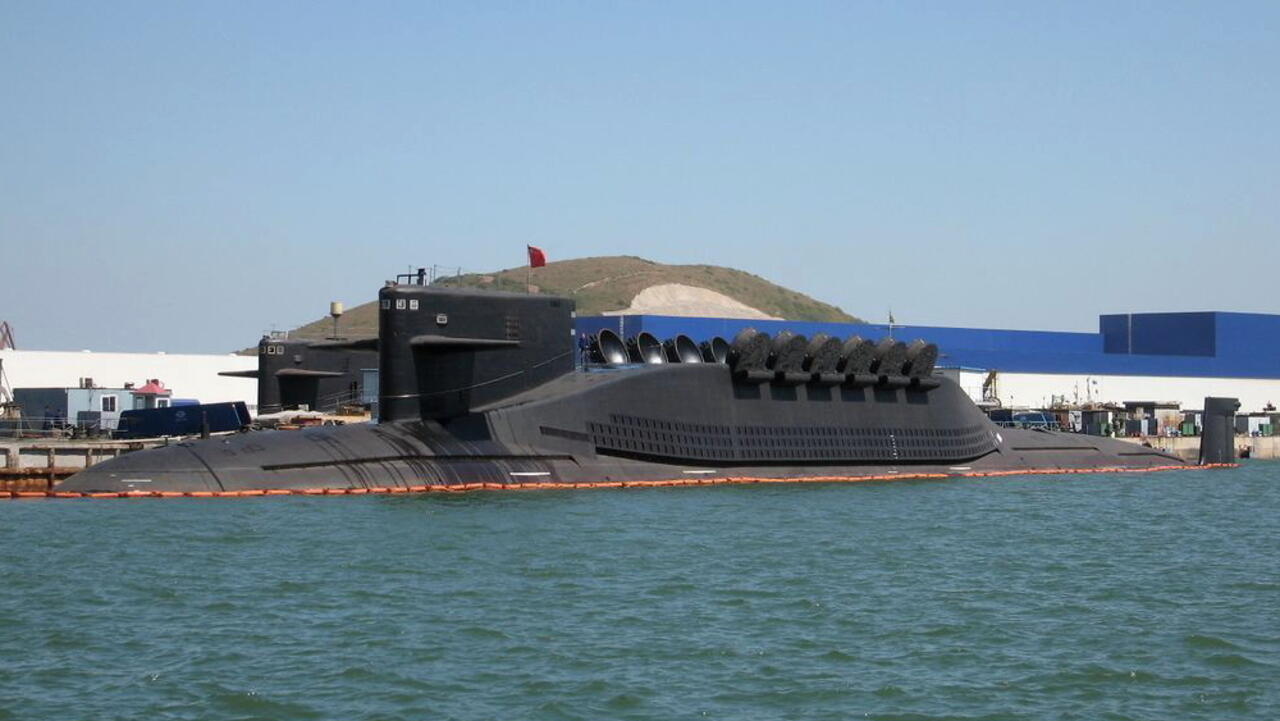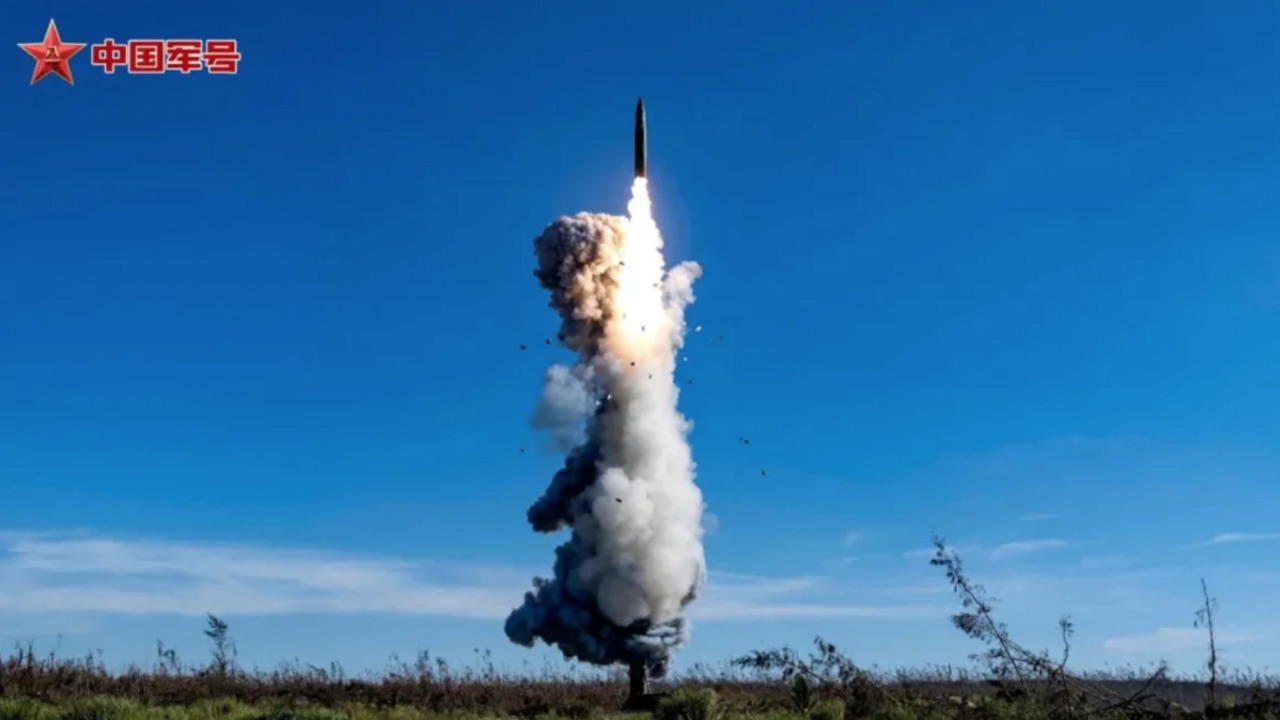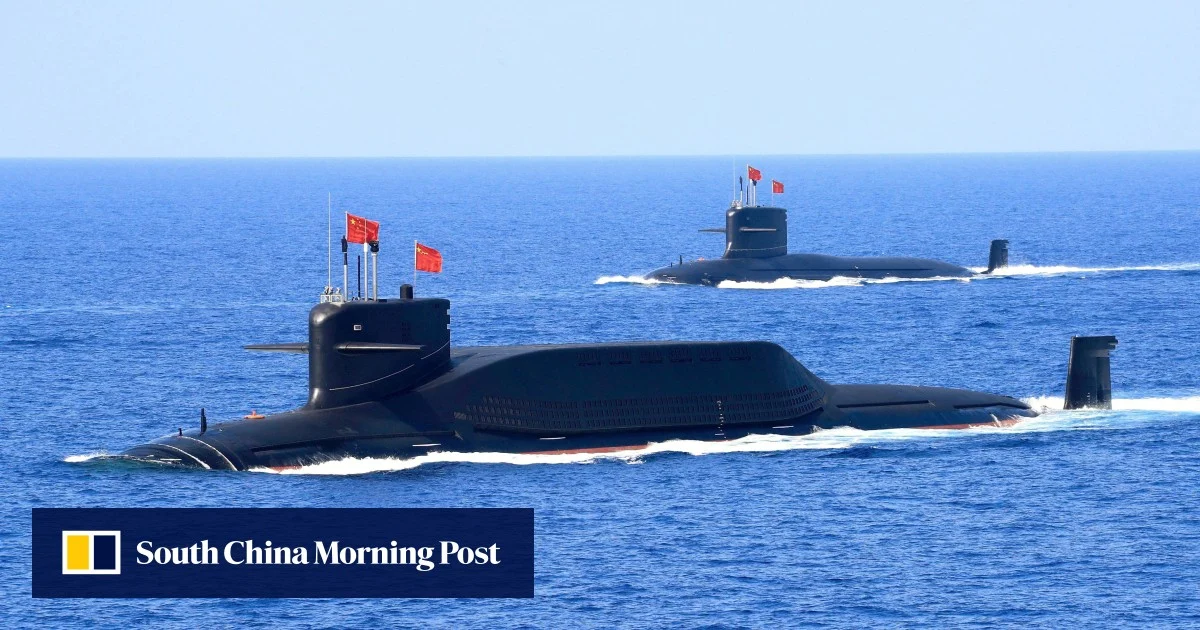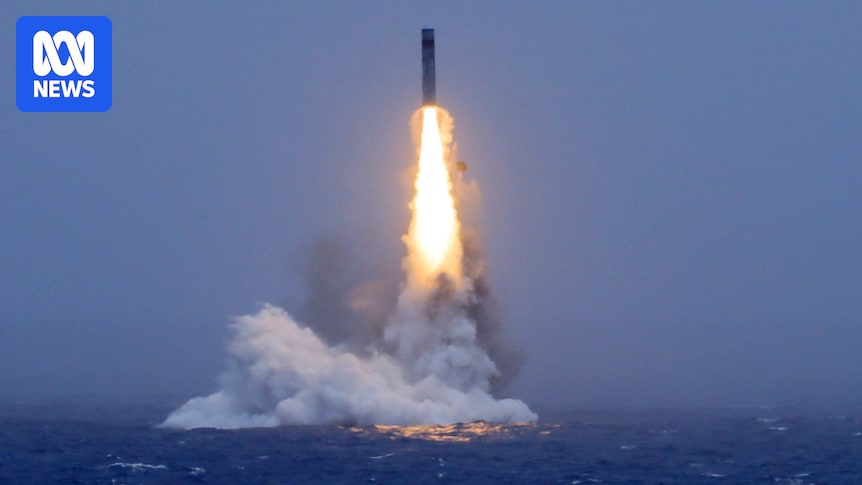
When China launched an intercontinental ballistic missile into the Pacific earlier this week, countries in the region and across the world were shocked and alarmed.The firing of the dummy warhead was the first time in two years Beijing had decided to test out its long-range missile arsenal — and the first time ever it had launched such a rocket from a nuclear-powered submarine.The exact type of missile has yet to be confirmed by Beijing, but experts quoted by Chinese state media — where nothing is published without being state-sanctioned — have concluded it was one of the country's newest pieces of military hardware.That is the JL-3 missile, which was first displayed publicly at a military parade in Beijing last year.China displayed the JL-3 intercontinental-range submarine-launched ballistic missiles during a military parade last year.
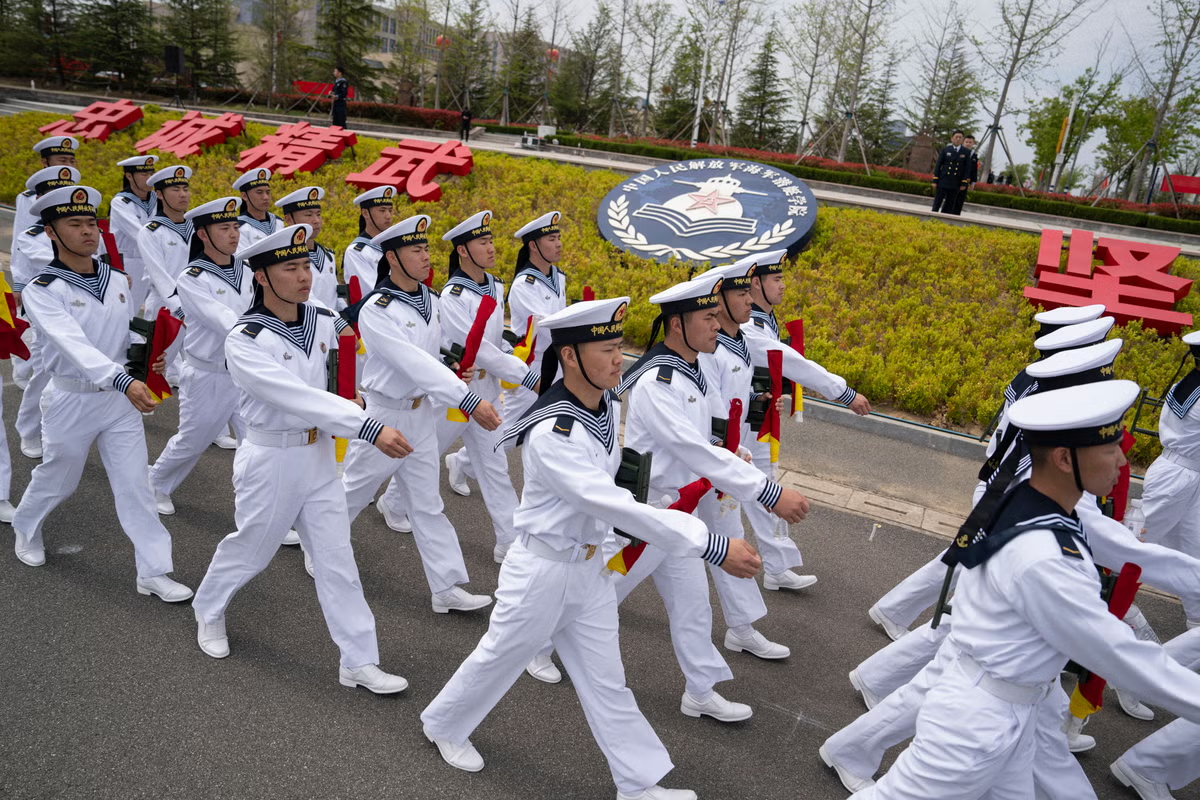
(Reuters: Tingshu Wang)The range of the mega-missile is estimated to be about 10,000 kilometres, putting countries like Australia easily within striking distance and heralding a new nuclear threat to millions of people across the Pacific.China said the test was a routine part of training and was not aimed at any country or target.But a security analyst said the test demonstrated the newest capabilities of China's rapidly developing weaponry arsenal.Beijing 'tripled the size of its nuclear arsenal'China has set itself a goal of transforming the People's Liberation Army (PLA) into a modern fighting force by 2027, and a "world-class" military by 2050.According to the US-based think-tank, the Centre for Strategic and International Studies (CSIS), China is undergoing "the largest qualitative and quantitative expansion of its nuclear arsenal ever".It said Beijing has "tripled the size of its nuclear arsenal" from "200 weapons to over 600" in the last six years. And the Pentagon estimates that number will climb to more than 1,000 nuclear missiles by 2030.CSIS studies also concluded the PLA's rocket force has built up the world's largest arsenal of "ground-based conventional and dual-use missiles".The PLA Navy has also surpassed the US Navy in the number of battle force ships.The staggering growth of the PLA has been underwritten by a sharp jump in defence spending, which has increased 13-fold in the last 30 years, according to CSIS.This rapid advancement of China's arsenal has been increasingly displayed across the Pacific throughout the last few years.It started in 2024, when China broke a four-decade rocket-testing freeze and launched a land-based ballistic missile into international waters.It was seen at the time as an extraordinary show of military force in the Pacific, an area where China had been trying to exert economic, geopolitical and security clout.Since then, China has engaged in a series of escalating military manoeuvres in the region that analysts say is designed to project power and dominance in the Pacific.They include:China's declaration of a 'nuclear triad'Jennifer Parker from the University of Western Australia's Defence and Security Institute said this week's test firing was a clear demonstration of the growth of China's military capability."If you go back over 10 years ago, before 2015, China's submarine-launched ballistic missile capability was only a JL-1 that was 2,000 to 3,000 kilometres [in range]," she said."Now, they have ballistic missiles that can be launched from submarines that can range over 10,000 kilometres."That's a dramatic change in capability in just over a decade."Professor Parker said the latest ballistic missile test was a public declaration that China had achieved "a nuclear triad"."[That's] the ability to launch nuclear weapons from air, surface, and sea. It has that second-strike capability, which is now long range," she said."We've learned in the last two years that China also has a continuous at-sea deterrent, so the ability to keep its nuclear arms, nuclear-powered submarines, at sea 24/7, 365 [days]."All of that is wrapped up in this demonstration of capability. And that is really significant in terms of how far China has come."A broader strategy in the PacificThis week, China's Defence Ministry claimed the nation consistently maintains its nuclear forces at the minimum level required for national security and pursues a defensive national defence policy.Military pressure is just one avenue China is using to assert its influence in the Pacific region.