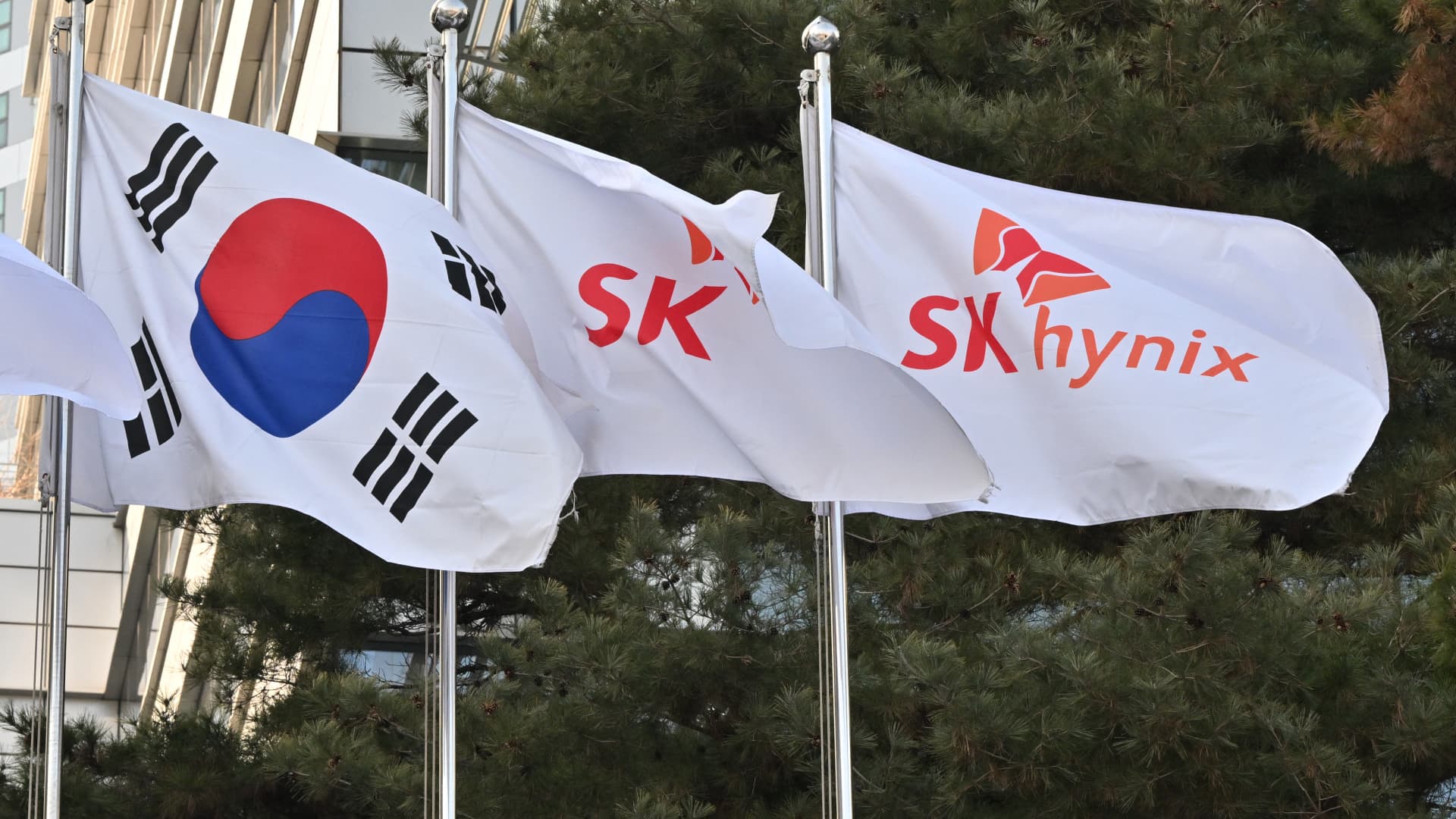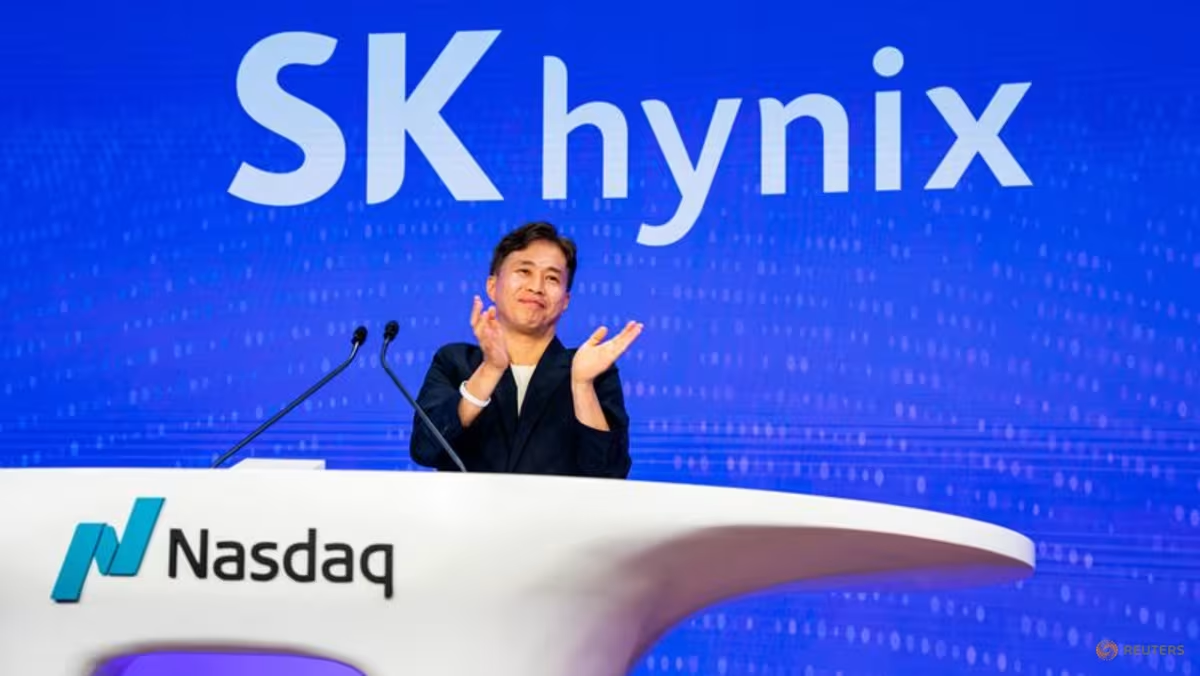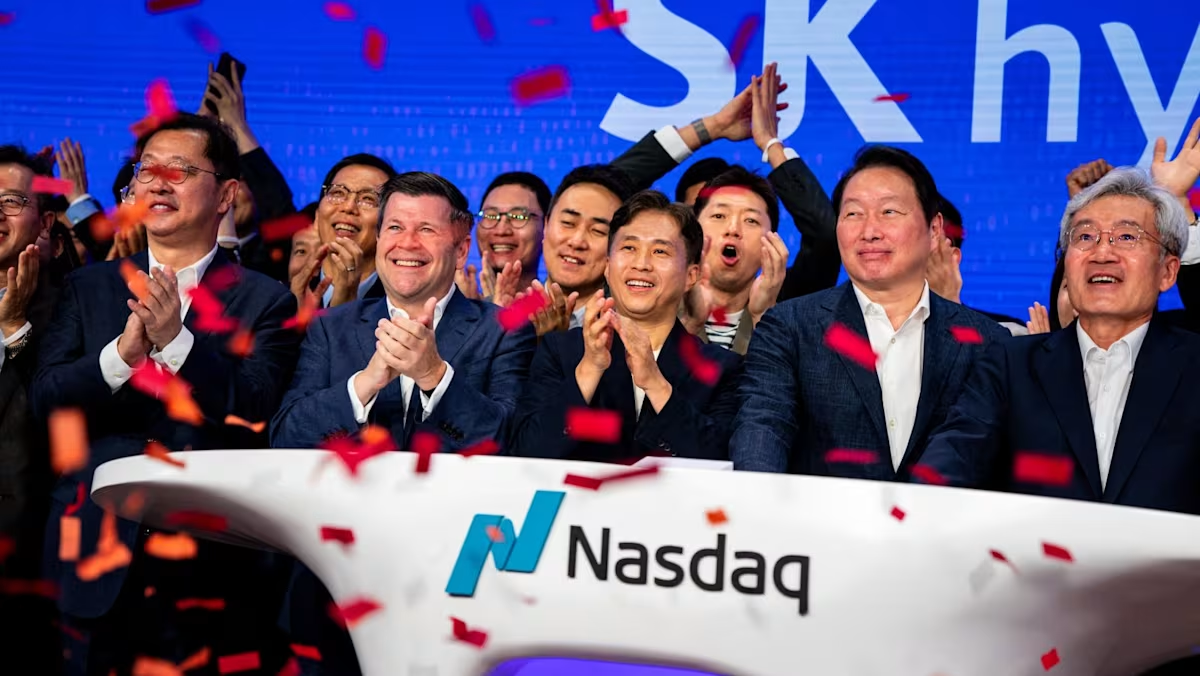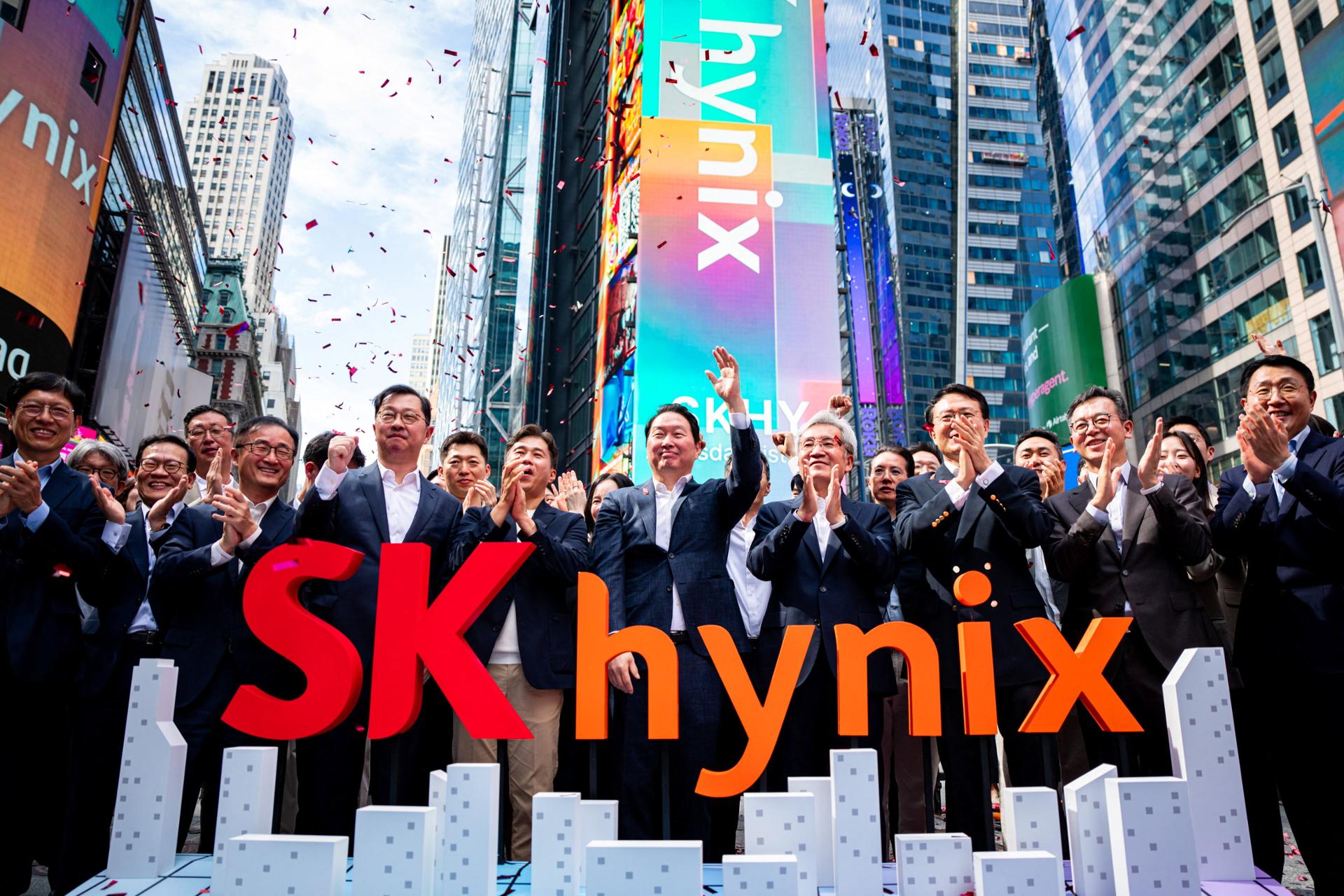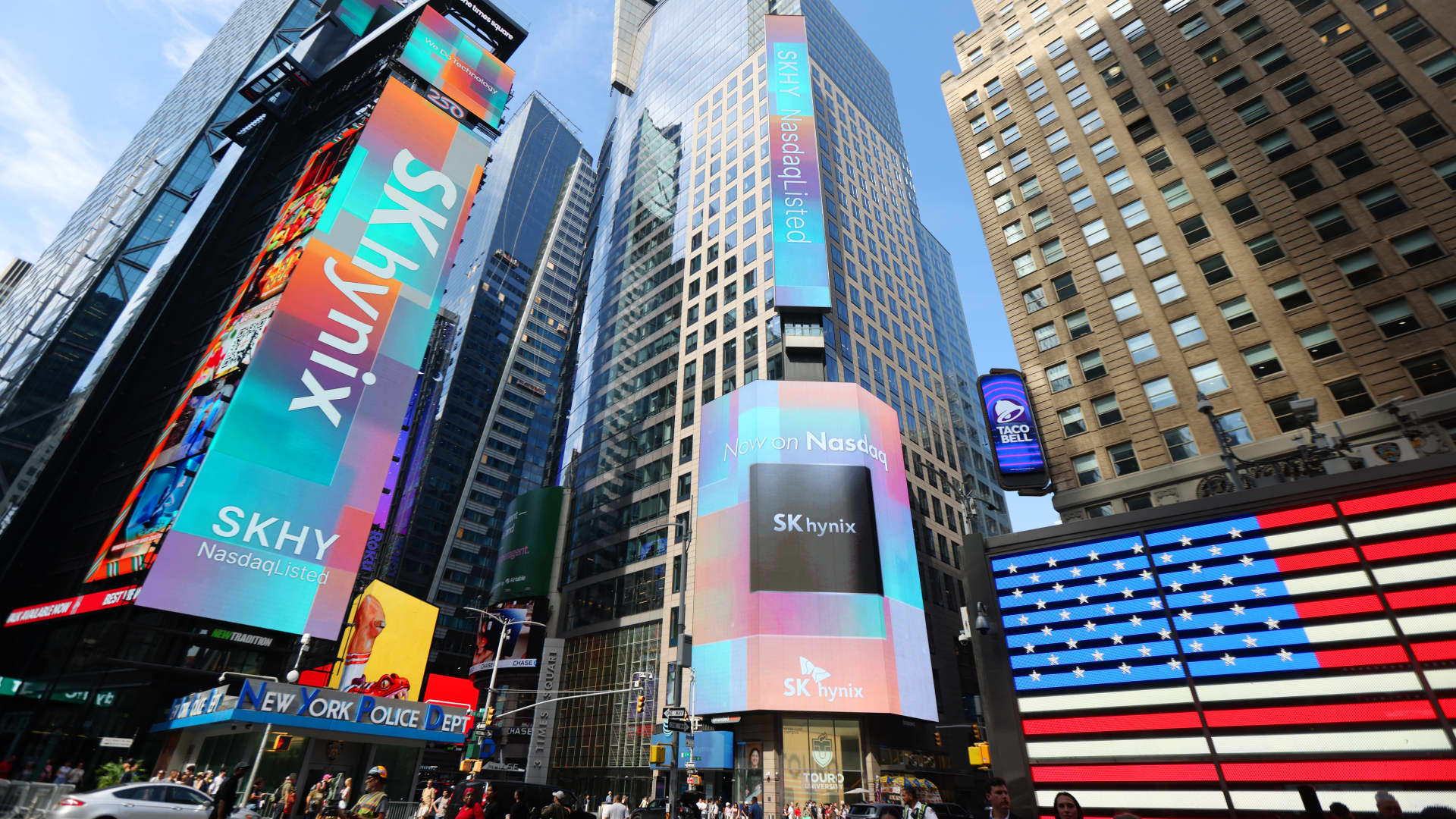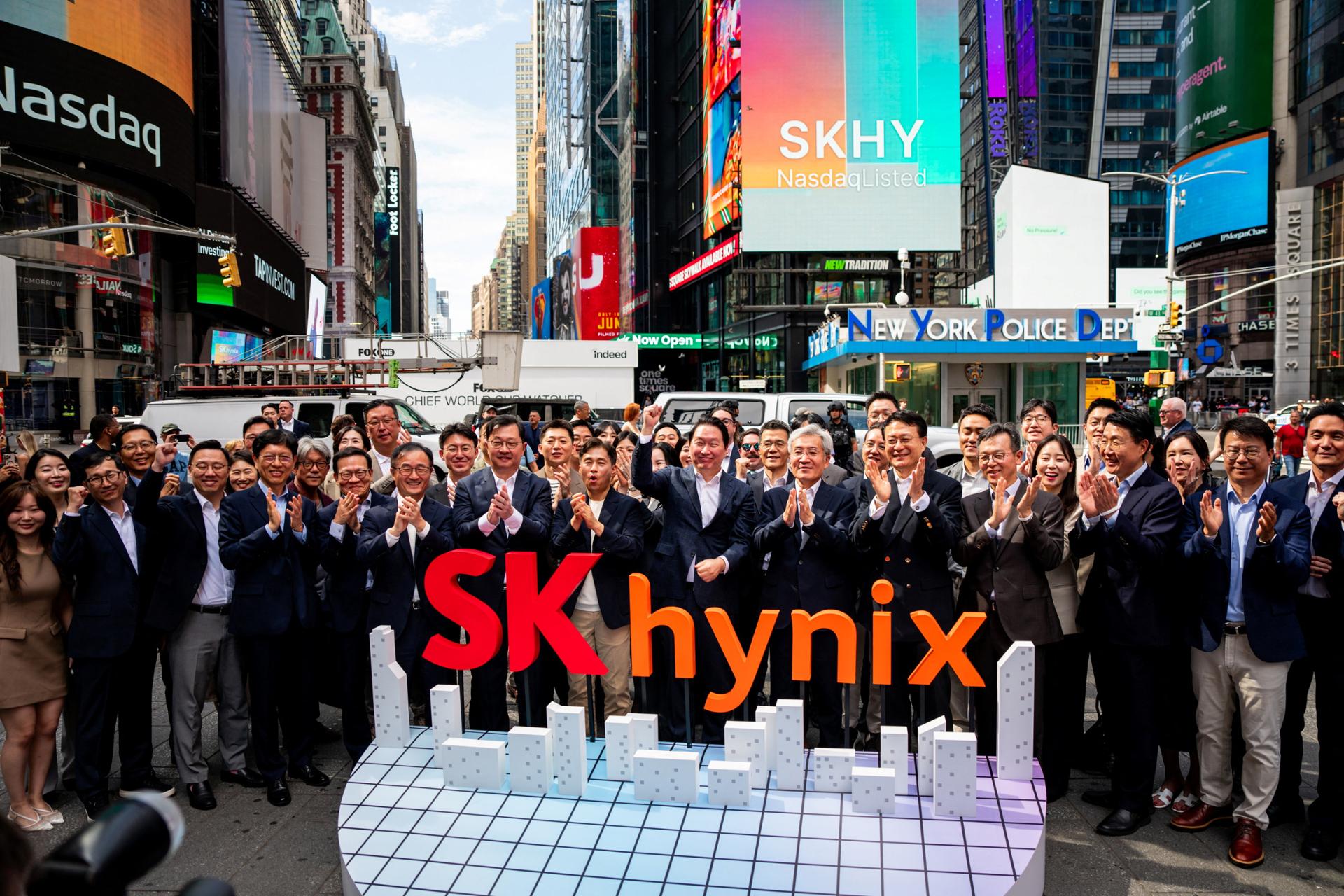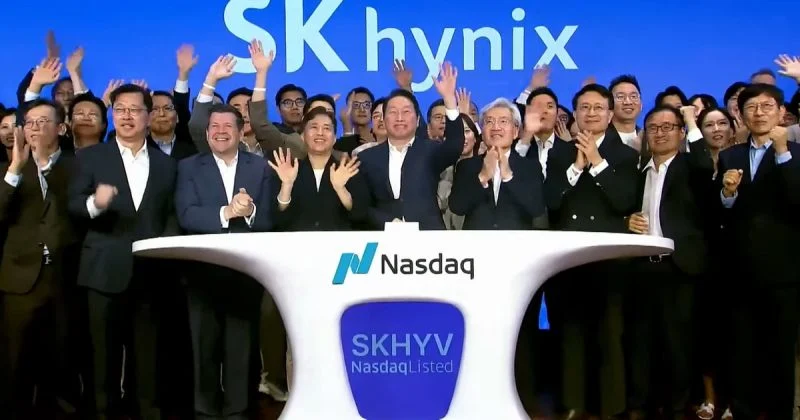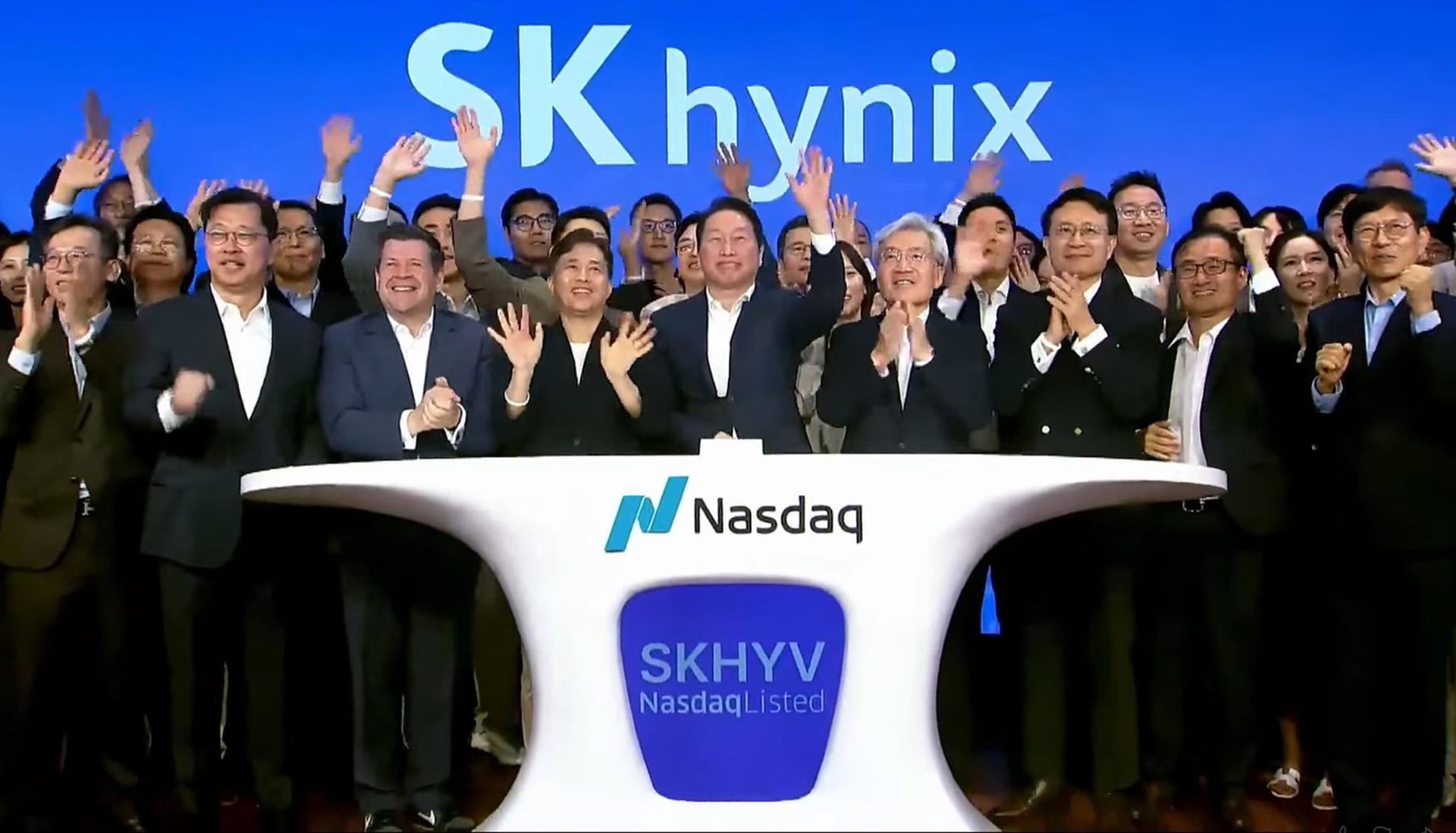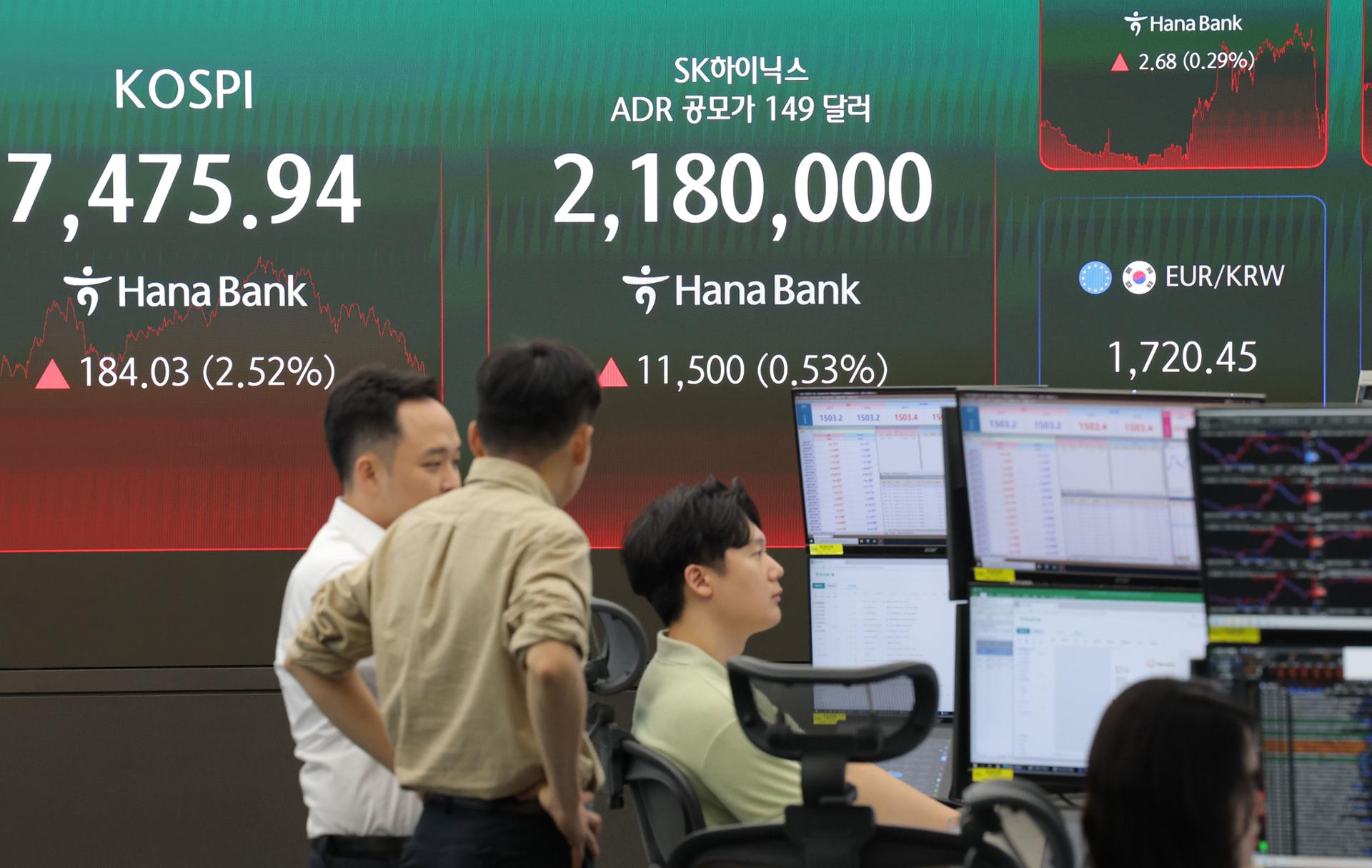
The SK hynix logo is seen at the chipmaker’s headquarters in Icheon, Gyeonggi Province, on May 26. The company’s market capitalization topped $1 trillion for the first time on May 27, making it the second Korean company after Samsung Electronics to reach the milestone. (Yonhap) Chairman Chey Tae-won will not swing a hammer or pull a rope in New York on Friday morning. He is expected to press a touchscreen.At 9:30 a.m. Eastern time, or 10:30 p.m. in Seoul, the gesture will mark the Nasdaq debut of SK hynix’s American depositary receipts, giving US investors a direct dollar-traded route into the South Korean memory chipmaker.SK hynix announced it has set the ADR price at $149 per share, with 177.9 million shares on offer. The offering is expected to generate about $26.5 billion in total, which would make it the biggest ever US listing by a non-US company, eclipsing Alibaba's $25 billion IPO in 2014.Demand was more than seven times the shares on offer, Bloomberg reported Thursday, citing people familiar with the matter.For a company whose Seoul-listed shares have more than tripled this year on the artificial intelligence boom, the number that matters most is not only the size of the raise. It is what the listing changes about who can own SK hynix and at what price.What exactly happens Friday?SK hynix is listing depositary shares on the Nasdaq Global Select Market. Each receipt represents one-tenth of a common share, so 10 ADRs equal one Seoul-listed share. They are priced and traded in dollars, allowing US investors to hold exposure to SK hynix without opening a Korean brokerage account or converting won.Trading is expected to open Friday under the ticker SKHYV on a when-issued basis. The ticker is set to switch to SKHY for regular trading on July 13. The company is issuing about 17.8 million new common shares through the offering, represented by 177.9 million ADRs.Why does a company that already trades in Seoul want a US listing?SK hynix posted a record 37.61 trillion won ($24.9 billion) in operating profit in the first quarter and says the proceeds will go entirely to facilities and equipment. Analysts say the listing also does something the Seoul listing alone could not: put the stock in front of US money that had struggled to own it easily.Dave Mazza, chief executive of New York-based Roundhill Investments, told Reuters that the listing removes an accessibility barrier, not a quality one. SK hynix, he said, is one of the world’s most important companies that many US institutions could not easily buy.Kim Dong-won, head of research at KB Securities, points to Taiwan Semiconductor Manufacturing Co. After TSMC listed ADRs in 1997, its US receipts drew a wider investor base, traded at a premium to the Taipei shares and helped support a broader revaluation. Kim expects SK hynix’s ADRs and Seoul shares to be re-rated together as global access improves.What is SK hynix building with the money?The proceeds are earmarked for facilities rather than general working capital: the first fab at the Yongin semiconductor cluster south of Seoul, the P&T7 advanced packaging and test plant in Cheongju, and extreme ultraviolet lithography scanners from ASML of the Netherlands.The list is a compact map of SK hynix’s AI memory priorities. Yongin adds front-end capacity for advanced DRAM, the base technology behind high-bandwidth memory. Cheongju addresses the packaging bottleneck, where DRAM chips are stacked and tested into HBM, a process increasingly central to yield and performance. EUV scanners, which can cost hundreds of billions of won apiece, are needed to print finer DRAM circuits. SK hynix held 58 percent of the HBM market by revenue in the first quarter of 2026, according to Counterpoint Research. The spending is meant to defend that lead.Kim Sun-woo of Meritz Securities said the memory market has not yet reached mid-cycle and that a supply shortage could deepen into 2027.Will the listing actually lift the stock?That is the bet, and it is not a settled one. For years SK hynix has been valued more cheaply than its US rival Micron, even in stretches when it earned more, a gap Meritz Securities' Kim Sun-woo notes has held for a decade. Trading on the same exchange as Micron, the argument runs, makes that discount harder to defend.Other views are cooler. Samsung Securities told clients an ADR does not by itself raise a company's worth; it improves access and lets a more favorable market set the price.The Korea Corporate Governance Forum went further, arguing that a New York ticker cannot re-rate a company that has not fixed its board. It faulted SK hynix over a 1,100 trillion won investment plan that Chey announced without board approval, though he chairs the company with no direct stake and no board seat. Without real board independence, the forum said, the re-rating case is "naive."What does it mean for Korea?For readers in Seoul, the first effect may show up in the currency. SK hynix plans to convert part of its dollar proceeds into won to pay for the domestic construction, with the money expected to land around July 15.Baek Seok-hyun, an economist at Shinhan Bank, said the roughly $28 billion conversion could support the won gradually as it is spread across several dates. The won has already moved on the prospect. It closed below 1,500 to the dollar on Wednesday for the first time in 37 sessions, partly on expectations of the conversion, before easing back to 1,506.1 on Thursday.For holders of the Seoul shares, the open question is fungibility — whether ADRs and ordinary shares can be swapped freely. If the conversion stays limited, as it did with TSMC, the ADRs could trade at a durable premium instead of pulling the two prices together.
SK hynix is set to ring the Nasdaq bell. What its record US listing means for Korea
Chairman Chey Tae-won will not swing a hammer or pull a rope in New York on Friday morning. He is expected to press a touchscreen. At 9:30 a.m. Eastern time, or
952 words~4 min read