If you’ve built AI applications in production recently, you’ve probably hit the "Agent Wall."
You build a ReAct agent, give it 10 granular tools (search, extract, route, format), a massive system prompt, and tell it to go to work. It feels like magic...until you look at your latency metrics and token bills.
Today’s agents act as interpreters. They re-derive the exact same routines from scratch on every single request. They embed massive tool schemas and reasoning histories into every loop. It's slow, it's incredibly token-hungry, and occasionally, they hallucinate tool calls, drop constraints, or get stuck in endless reasoning loops. In a production environment, even occasional errors can be critical failures that waste time and tokens.
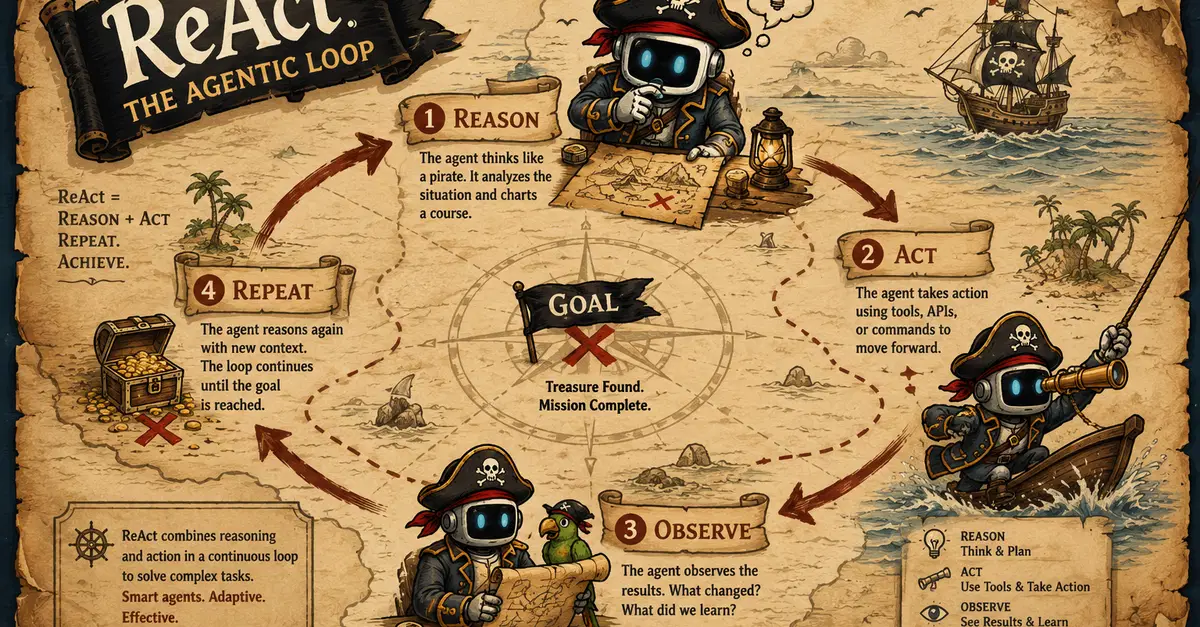
The problem isn't the ReAct pattern itself. The problem is that we are forcing the LLM to orchestrate low-level, predictable logic that should be deterministic code.
We got tired of paying the "reasoning tax" for sub-routines that don't need it. So, we built Sparsi—a framework for shifting complex logic out of your ReAct agent's prompt and into deterministic "Macro-Tools" built as DAGs (Directed Acyclic Graphs).