Do YOU have a story? Email elizabeth.haigh@dailymail.co.uk See more Daily Mail on Google - save us as a Preferred SourceBy ELIZABETH HAIGH, SENIOR NEWS REPORTER Published: 16:38 BST, 9 July 2026 | Updated: 21:58 BST, 9 July 2026
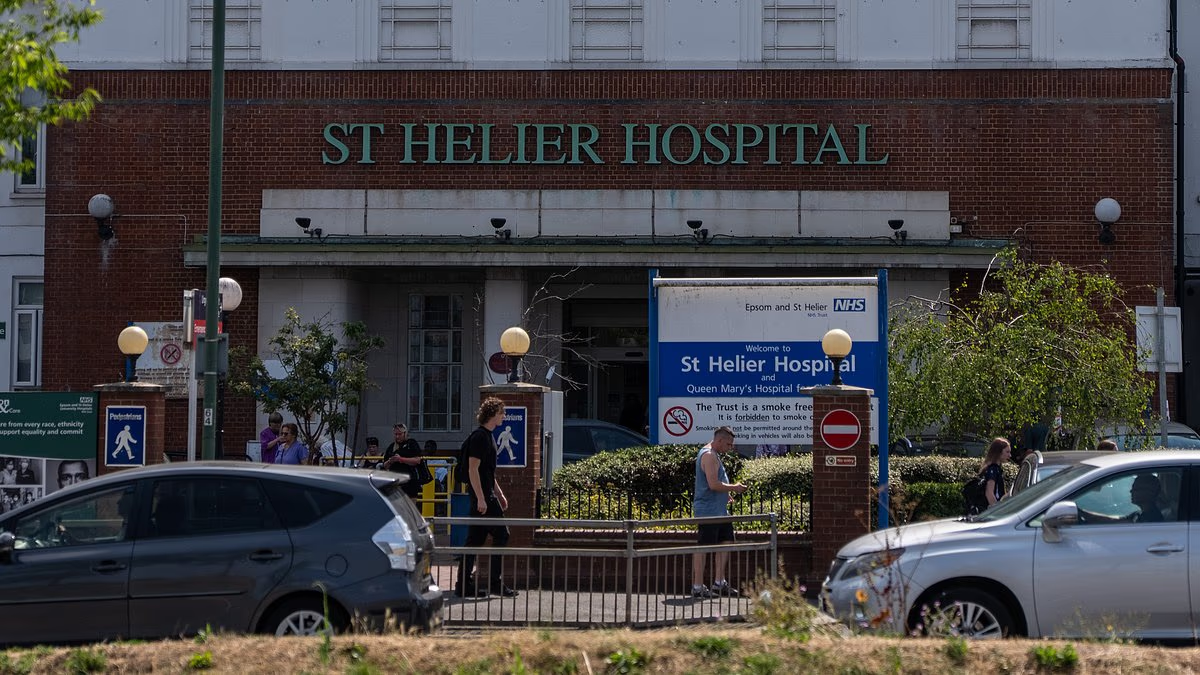
Three people died and others suffered permanent harm while under the care of a consultant who was giving outdated and incorrect medical advice such as to not get vaccinated against flu, a review has found.Dr Veronica Varney, who worked as a respiratory consultant at St Helier Hospital in south London, gave her patients bogus non-evidenced advice including not to be vaccinated for flu or Covid-19 and to avoid rapeseed oil.Varney wrongly dismissed one patient by telling them their symptoms were a result of a lack of fitness, while others were not referred to specialist teams or had unnecessary delays in treatment.She was let go by St George's, Epsom and St Helier University Hospitals and Health Group [Gesh] in 2023 and referred to the General Medical Council.The following year the trust commissioned a review into Dr Varney's treatment of patients with interstitial lung disease (ILD), a term for more than 200 conditions which cause progressive inflammation and scarring in the lung tissue.The Royal College of Physicians (RCP) investigation looked at 28 cases between 2019 and 2022.Treating ILD requires a personalised plan by a multidisciplinary team, which the review found Dr Varney did not engage with.It was previously revealed how of 216 patients Varney treated for ILD, 30 per cent received no care at all. A further 42 per cent were not referred to specialists, and 20 per cent were not properly diagnostically investigated. Dr Veronica Varney, who worked as a respiratory consultant at St Helier Hospital (pictured) in south London , gave her patients bogus non-evidenced advice including not to be vaccinated for flu or Covid-19 and to avoid rapeseed oilThe report said she 'frequently' recommended off-label and outdated treatments and gave non-evidence-based advice for patients such as telling them not to get vaccinated against flu or Covid-19, and to avoid rapeseed oil.Three people died as they did not have access to treatments which may have extended their life, according to the investigation.In one case, there was a two-year delay in the patient being given immunosuppression treatment, and despite their declining health, the appropriate therapy was not started until complications had developed.One patient was told their symptoms were down to poor fitness and was given dietary advice rather than treatment.Another patient was not referred to a specialist ILD multidisciplinary team meeting for a year, which the report said led to 'missed opportunities for earlier intervention'.A further 12 people suffered permanent or long-term harm, the review found, while seven cases were not given treatments that could have improved their quality of life or required further procedures.The report stated there were 'delays to or deviations from guidelines-based care [that] potentially contributed to the patients' irreversible lung damage, poor quality of life or premature death'.It added Varney showed 'poor interpretation of lung function tests' and 'inaccuracies in the reporting of diagnostic results'.The authors also criticised the hospital trust after concerns were first raised about Varney in 2019 but these were not sufficiently addressed. 'A historical lack of integration between the St Helier and Epsom sites and tensions within the clinical leadership created a challenging environment for staff to raise and respond to concerns,' it said. Dr Richard Jennings, group chief medical officer at Gesh, said: 'I offer my sincere apologies to our patients and their families for the harm this has caused – the care they received fell far below what should have been given.'While the Royal College of Physicians' report makes it clear that patients were significantly harmed, it also expresses confidence in the changes we had already made to make the service safe, and we have accepted and acted on all of their recommendations.'We have contacted patients or their families to share the findings, apologise, and offer further support.'Gesh will now review the care given to all ILD patients treated by Dr Varney from 2019.This investigation is expected to take 12 months to two years.