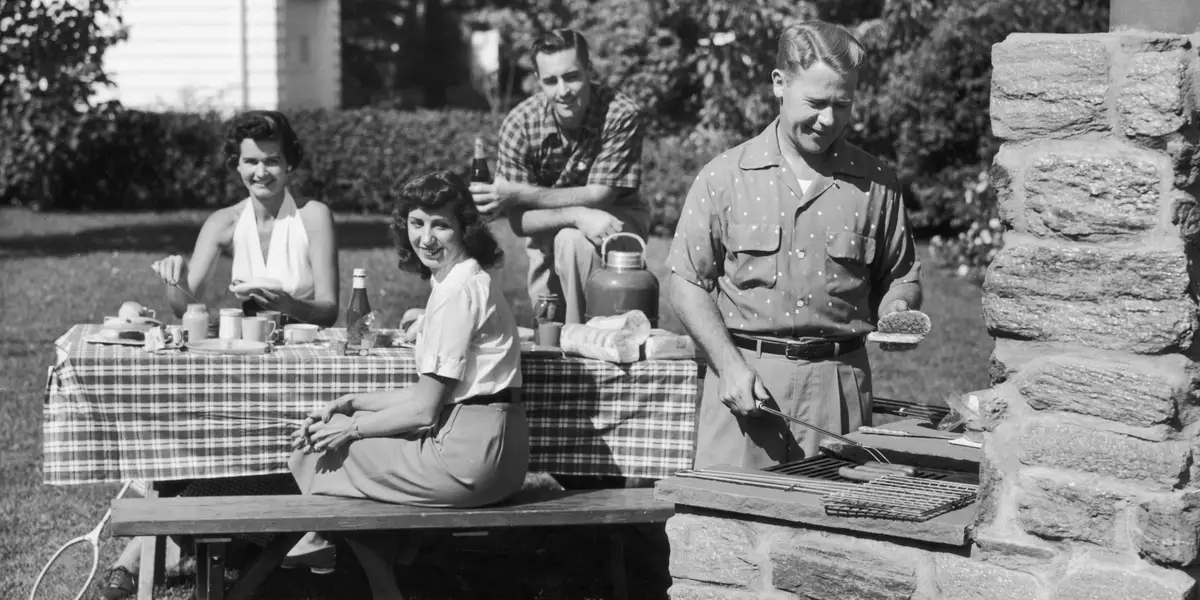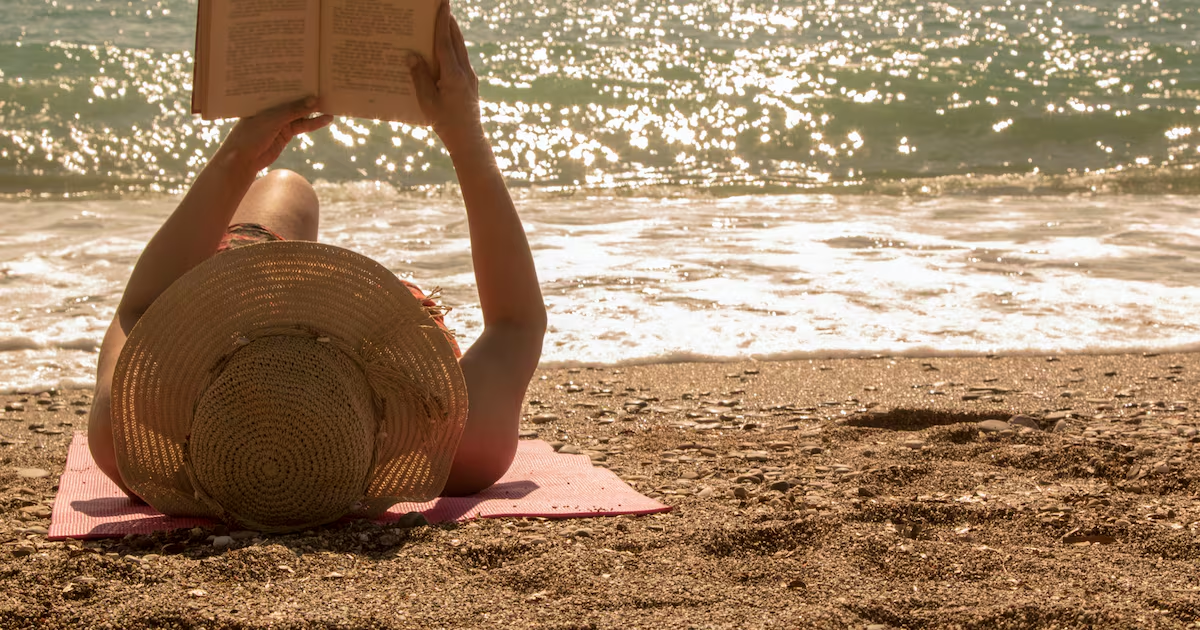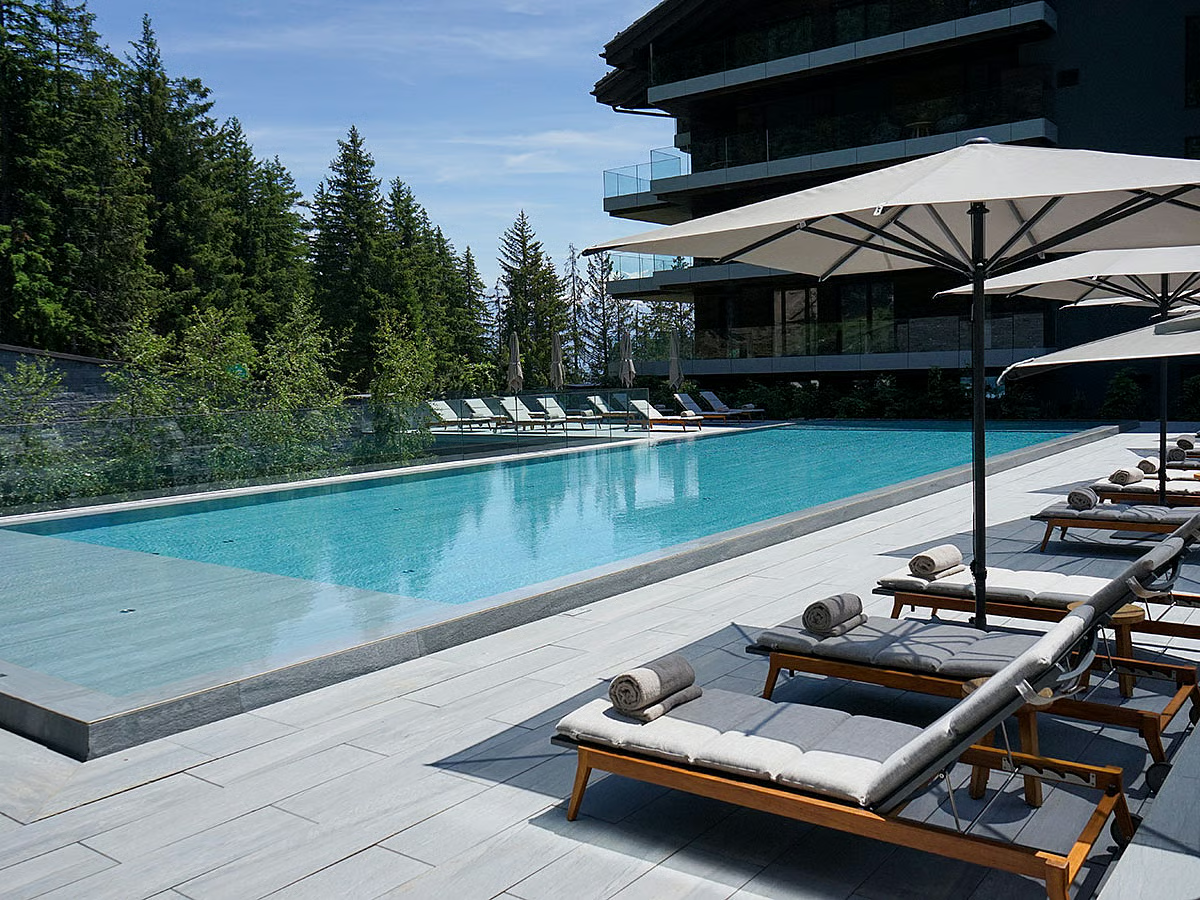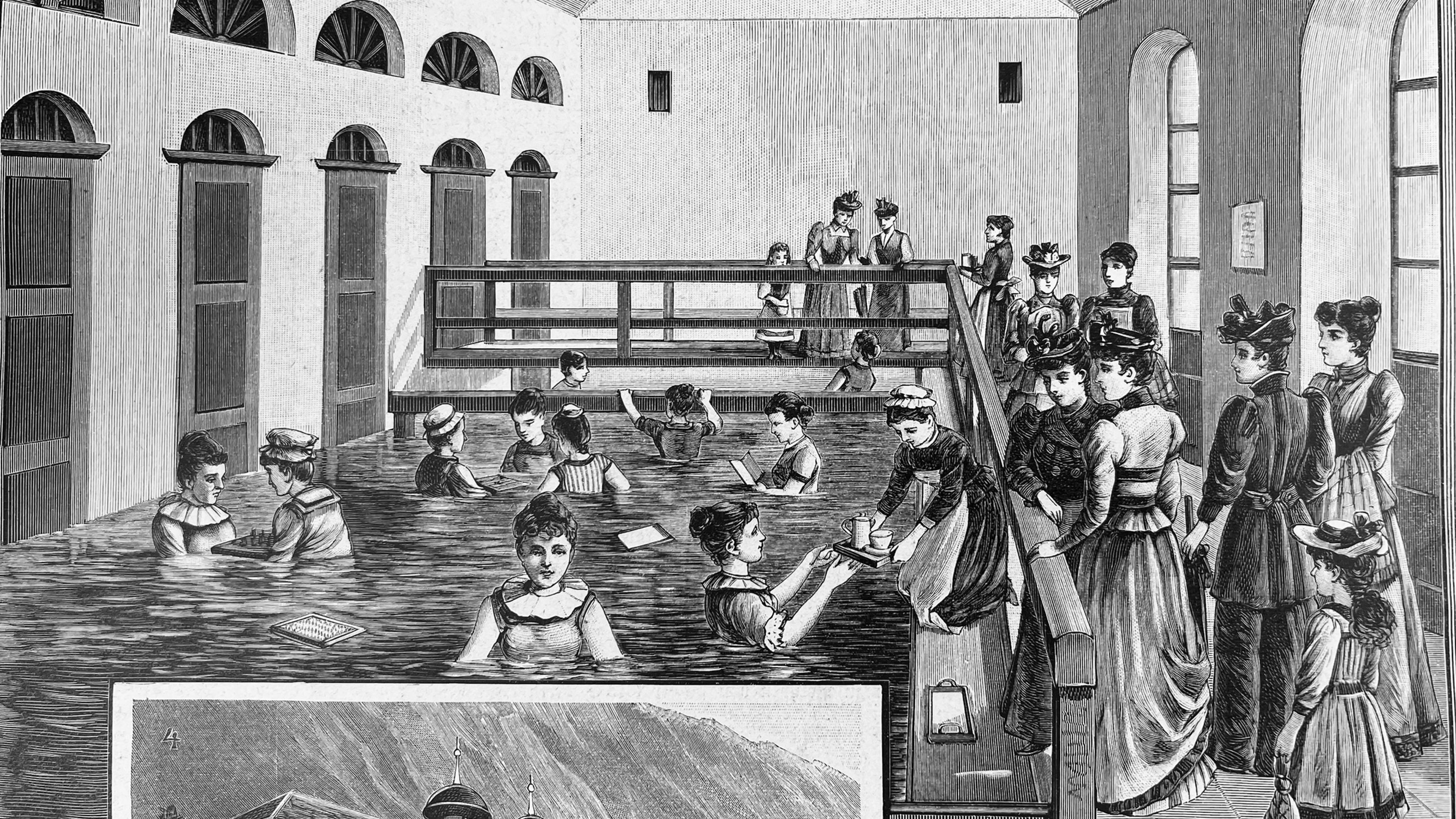
Summer, for many of us, has its own comforting set of rituals. People pull out the barbecue, open fire hydrants, throw block parties. Maybe there are road trips, visits to grandparents, pool days, beach days. Maybe there’s a lake or an island and a ramshackle old house where the breeze comes through the windows at dusk every evening, the same as it always has, every summer you can remember.
But in the 18th and 19th centuries, for many people, there was a summer ritual with a very different form. It was the season for “taking the waters,” which meant traveling to a countryside spa town like Harrogate in England or Karlsbad in Germany and spending the next few weeks or months under the care of a doctor, who would prescribe personalized treatments. These might be mineral water showers or baths, cold-water enemas, or just drinking 3 glasses of stinky, sulfurous spring water daily before breakfast, while strolling and engaging in pleasant conversation on a landscaped promenade.
You didn’t have to be ill to take the waters. Especially for the well-off bourgeois of Europe, it was a required social ritual and time for recharging, says Astrid Köhler, a spa scholar and co-author of The Health Resort in Modern European Literature, so universally observed that in these months, at least in Germany, theaters and salons in the cities closed down: “Everyone is busy, going to the spas.”