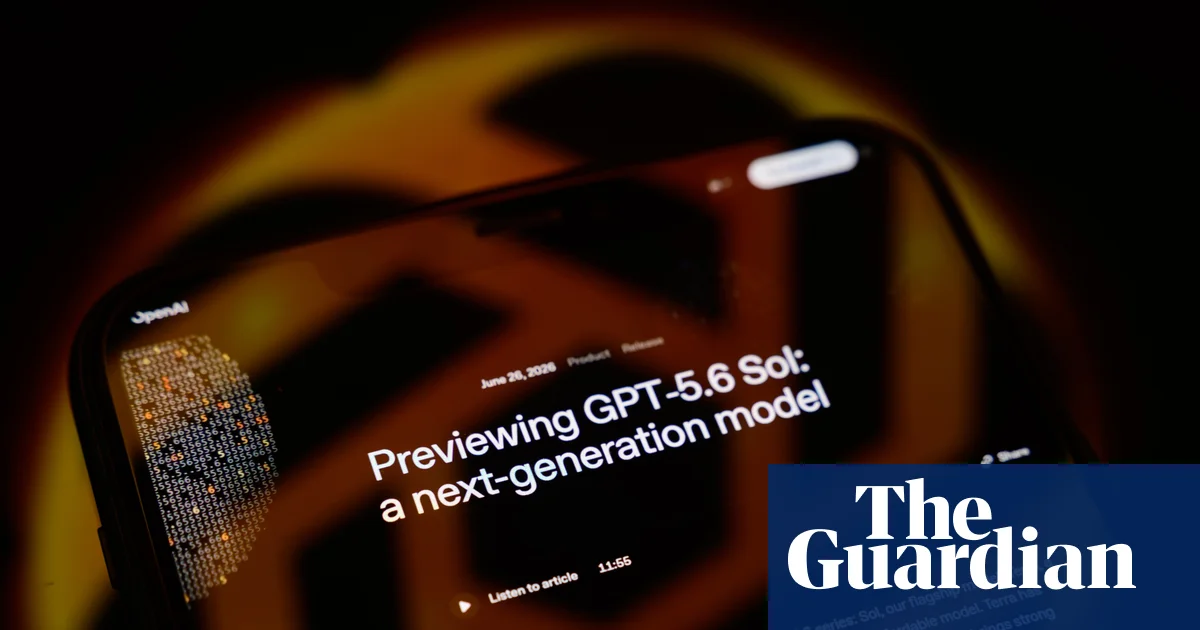
About two weeks after OpenAI’s GPT-5.6 was caught up in regulatory drama — rolled out only to government-approved organizations during a “limited preview” period — the company has received the Trump administration’s green light for a public rollout of the model. OpenAI CEO Sam Altman called it “the best model we have ever produced.”To celebrate, OpenAI also unveiled a new AI agent on the same day: ChatGPT Work. It’s billed as a combination of ChatGPT and Codex, allowing the everyday non-technical user to take advantage of Codex’s capabilities for non-coding tasks, and it’s powered by the GPT-5.6 model suite (Sol, Terra, and Luna). “It can gather context from the apps, files, and workflows you choose and create finished materials such as documents, spreadsheets, presentations, and web apps,” OpenAI wrote in a blog post, adding that a “unified plugins directory” allows ChatGPT to connect to tools like Slack, Gmail, Google Drive, calendars, and CRMs.Mac and Windows users worldwide, including free ChatGPT users, should have immediate access to ChatGPT Work and GPT-5.6 via the ChatGPT desktop app. On mobile and the web, Pro, Enterprise, and Edu users will first get access, while Plus and Business users will receive access “over the next few days,” OpenAI wrote, adding that the “rollout is starting globally and will continue gradually toward full availability over the next 24 hours.”Companies like OpenAI and Anthropic, as well as tech giants like Google (and even, recently, Apple), have been vying to clear new ground in the race to make AI agents actually useful for the average person, especially in the wake of the viral open-source AI agent OpenClaw. They’ve had varying results, and for now, the theoretical right-hand AI agent for the everyday consumer remains out of reach.OpenAI is hoping that its new product, which is a direct competitor to Anthropic’s Claude Cowork (combining its own Claude and Claude Code), will push it ahead in the race.OpenAI is especially banking on Sol, the most powerful of the GPT-5.6 model suite, to set “a new standard for intelligence and efficiency,” particularly when it comes to coding, cybersecurity, and science, as well as computer use capabilities. The company is also marketing the model as a lower-cost alternative to competitors’ most powerful models, amid complaints of an industry-wide money squeeze and AI lab costs being passed onto customers.Follow topics and authors from this story to see more like this in your personalized homepage feed and to receive email updates.Hayden Field
OpenAI rolls out GPT-5.6 after government green light — and announces ‘ChatGPT Work’
GPT-5.6 is officially greenlit for a public rollout — and OpenAI also unveiled a new AI agent, ChatGPT Work.
408 words~2 min read