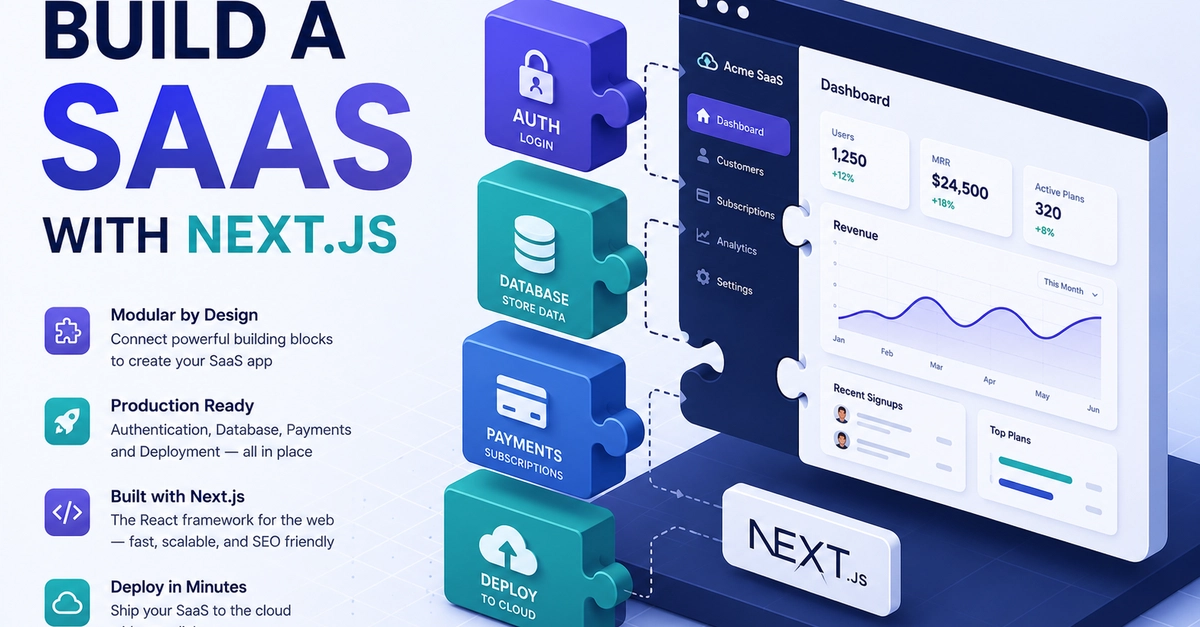
How to Build a SaaS Product with Next.js in 2026 (Step-by-Step)
There are two kinds of "build a SaaS" tutorials, and both fail you. The first waves its hands at the hard parts — "add authentication here" — and leaves you stranded. The second buries you in a hundred setup choices before you write a single line of product code. This guide is the middle path: a clear, opinionated stack that lets you ship a real Next.js SaaS in 2026 without over-engineering.
We will not build every feature line by line — that is a course, not an article. Instead you will get the map: the decisions that matter, the tools that fit together cleanly, and the order to build in so you actually finish. (If you are still deciding whether Next.js is right for this, start with React vs Next.js.)
Why Next.js is a strong SaaS foundation
A SaaS needs a marketing site, an authenticated app, a backend, and billing — often in one project. Next.js handles this unusually well. The current line, Next.js 16, gives you server-rendered marketing pages for SEO, an app directory for your authenticated dashboard, Server Actions and API routes for backend logic, and one deploy target for the whole thing. You are not stitching a frontend and a separate backend together; it is one coherent codebase.