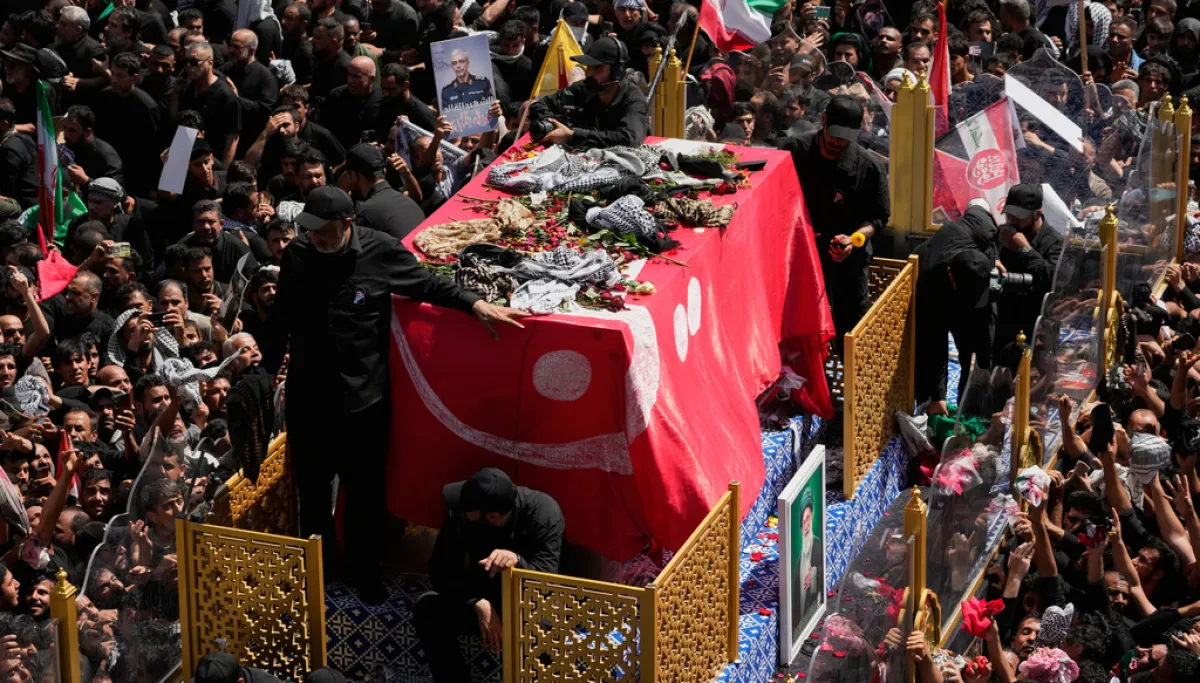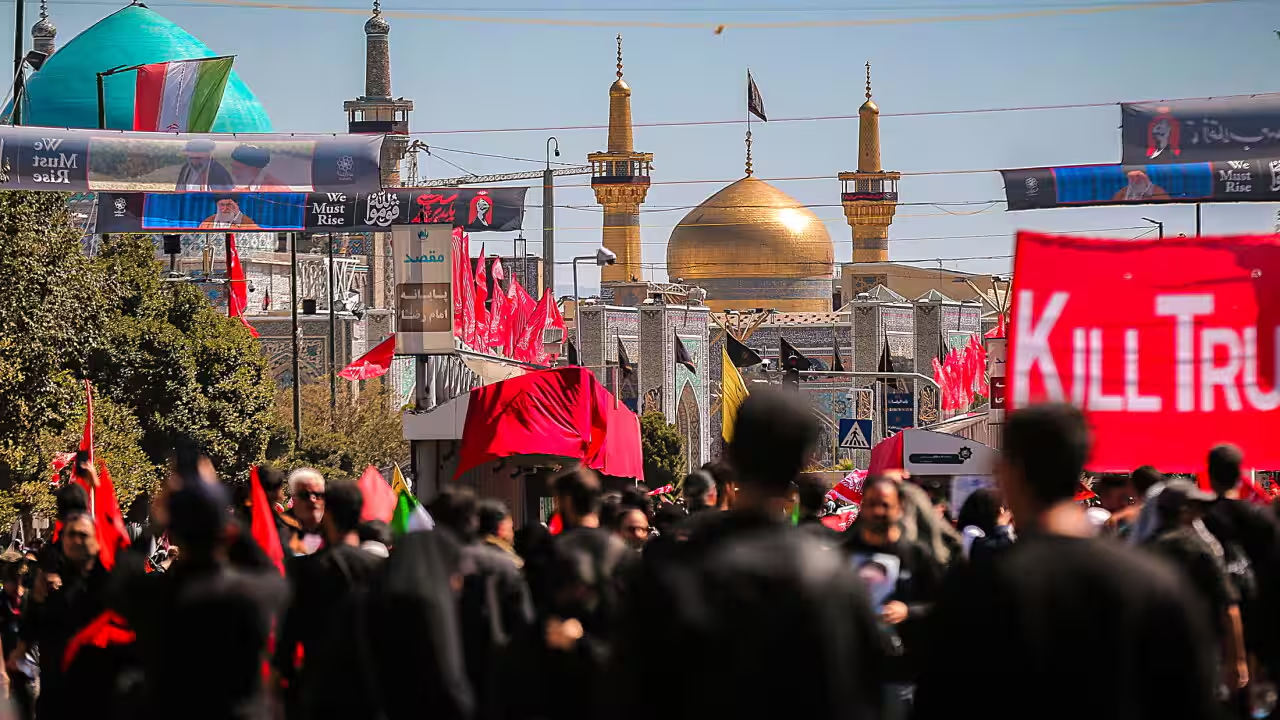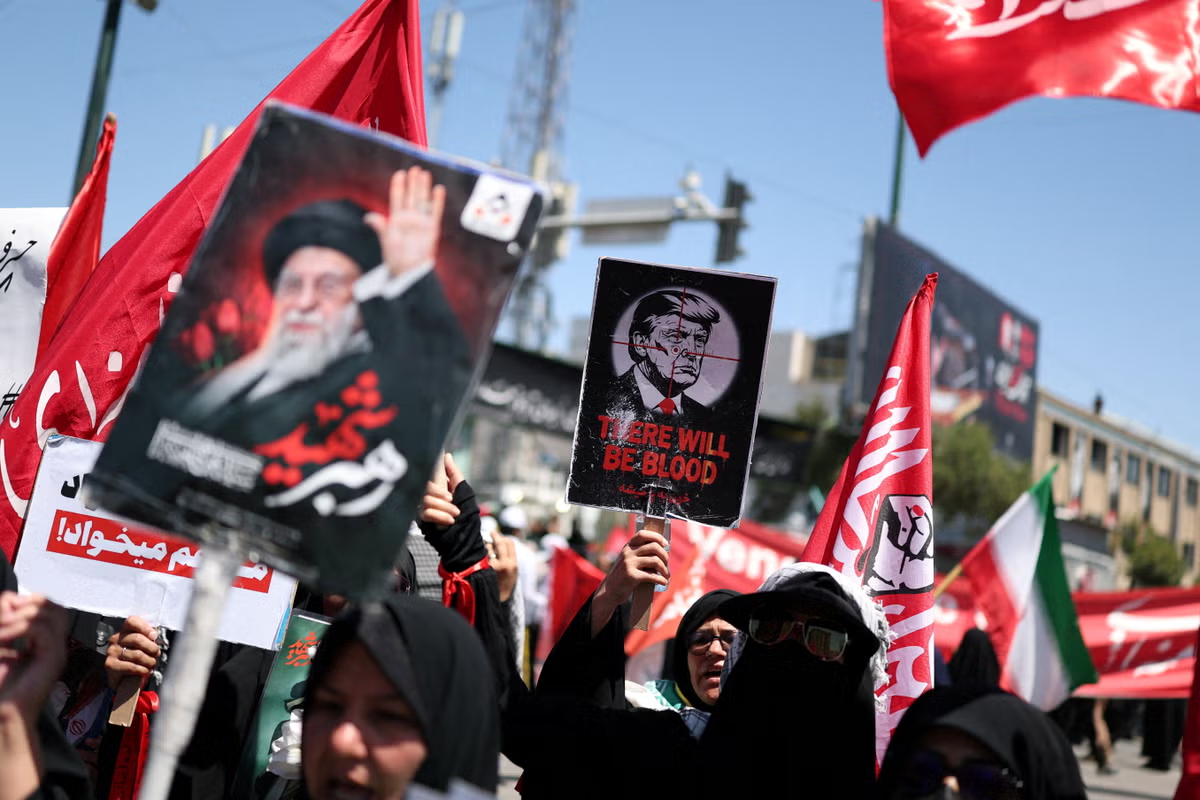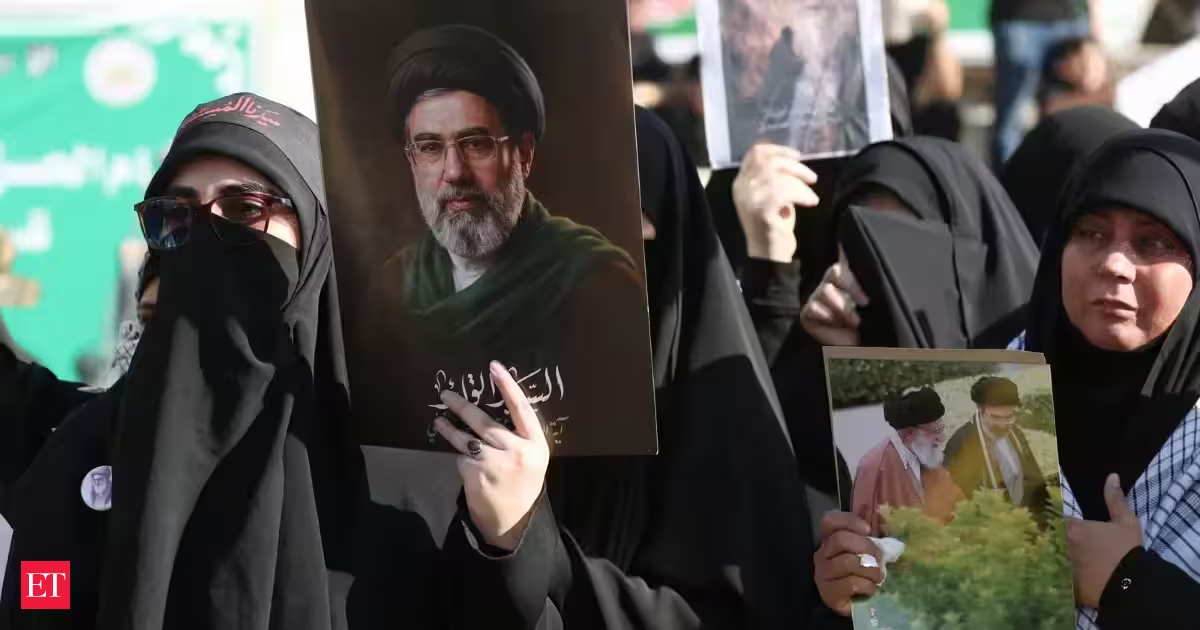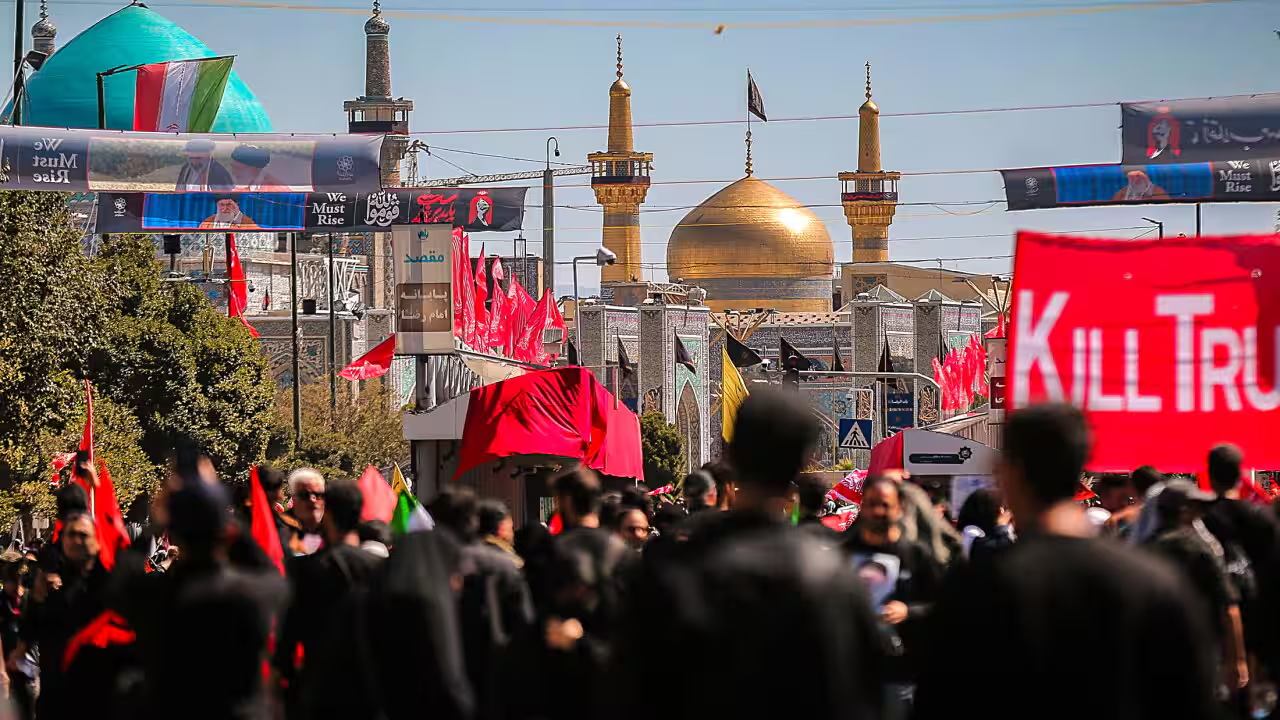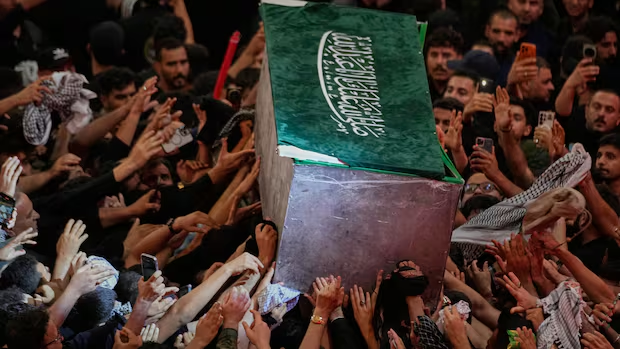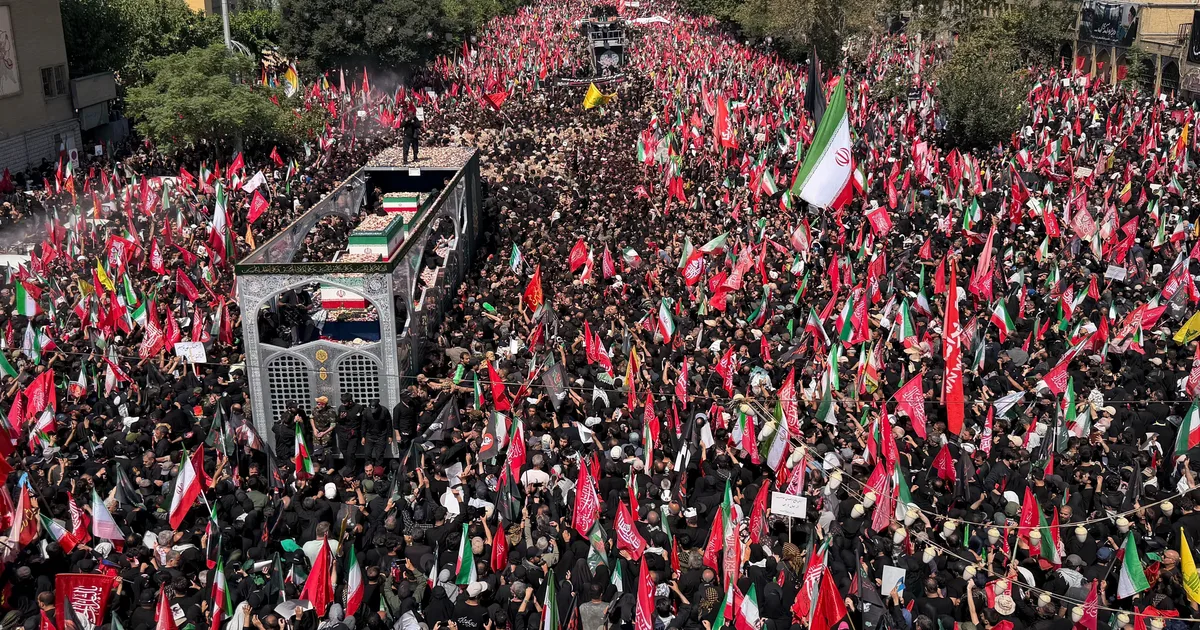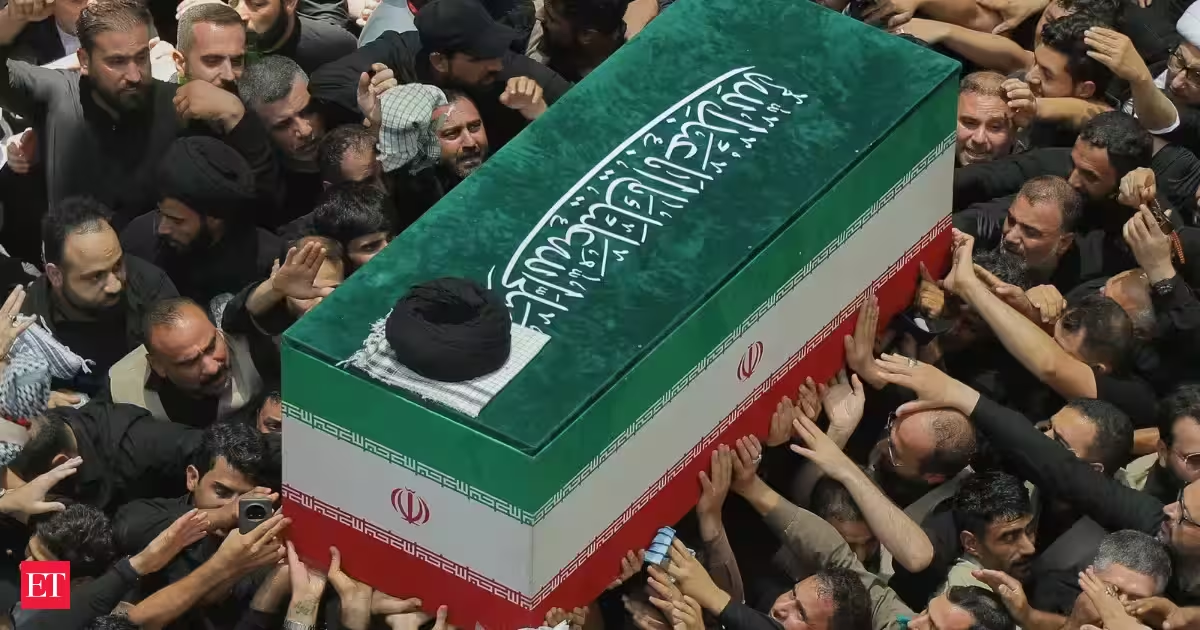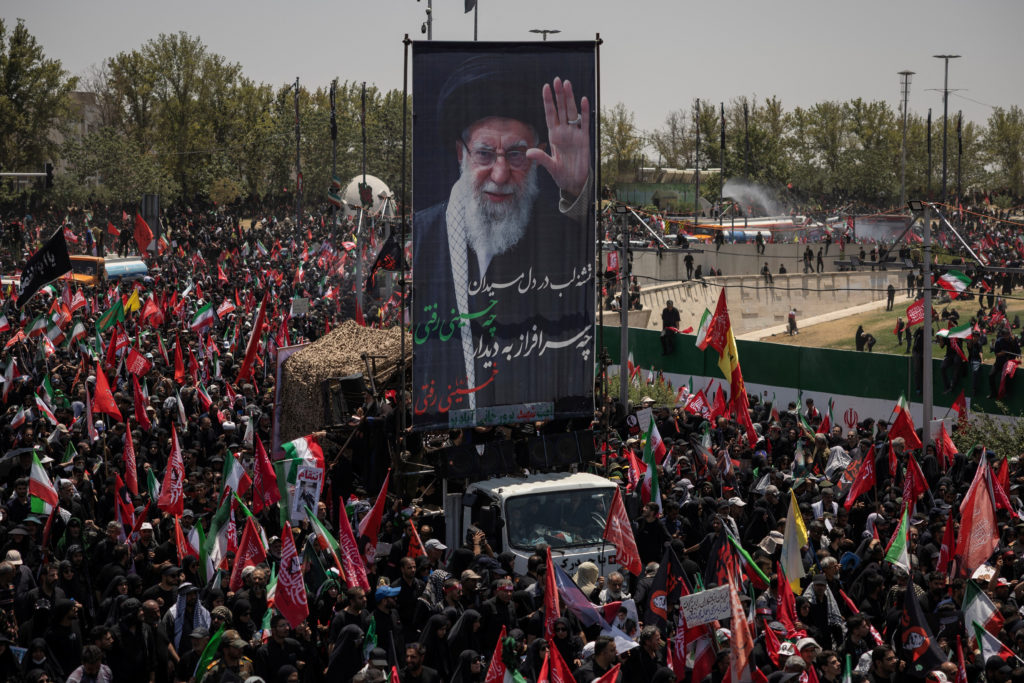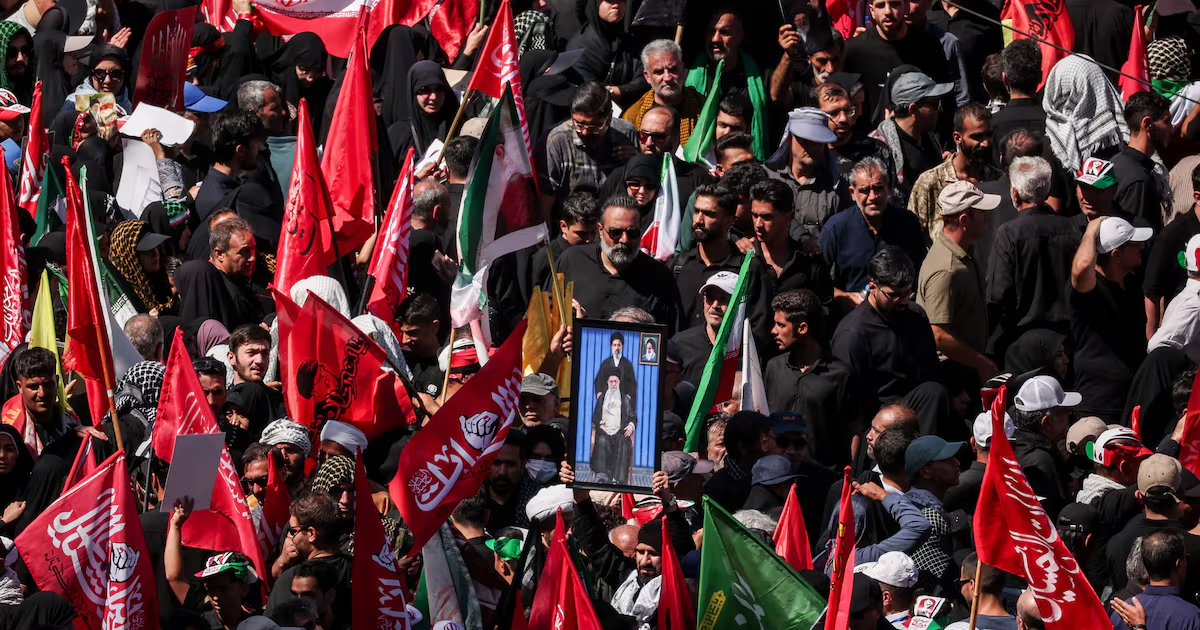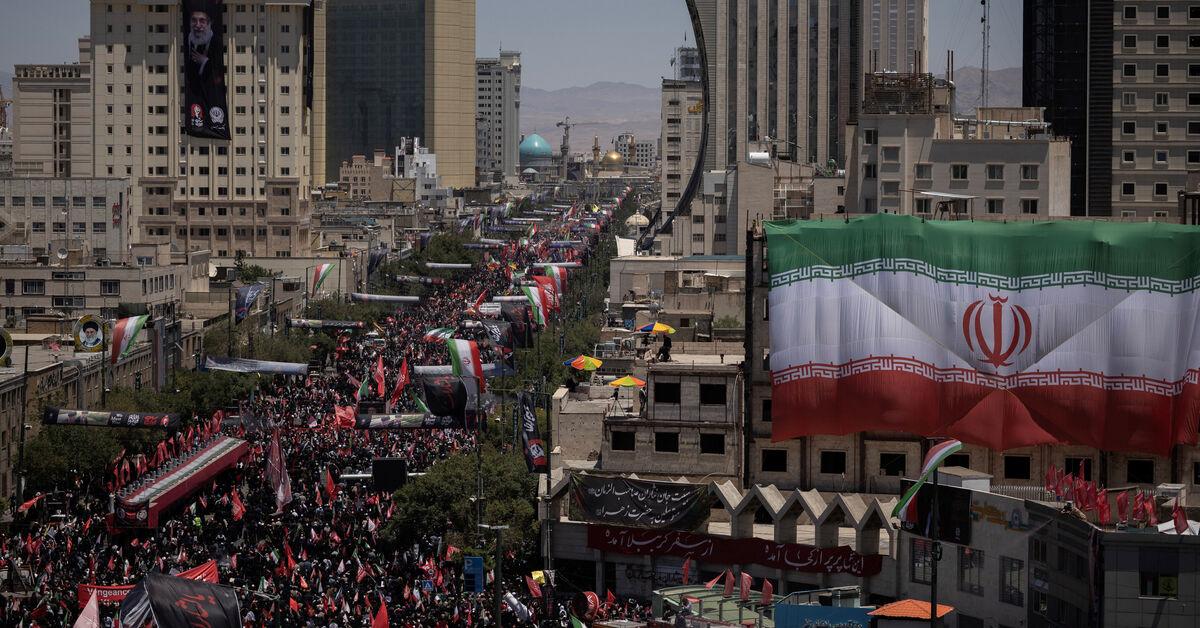
By Parisa Hafezi and Angus McDowallDUBAI, July 9 (Reuters) - The funeral procession of Iran's slain Supreme Leader Ayatollah Ali Khamenei approached the country's holiest shrine for his burial on Thursday with a massive banner reading 'We Will Kill Trump' pulled alongside in the enormous crowd.As a week of funeral events reaches its culmination, Khamenei's son and successor Mojtaba Khamenei is still hidden from public view after being disfigured in the strike that killed his father, a sign of the unease still gripping Iran.Khamenei's body was carried by truck slowly through the crammed Mashhad streets towards the gilt dome and minarets of the Shrine of Imam Reza, flanked by white-turbaned clerics. Black-clad mourners pressed in close behind, waving Iranian flags, photographs of the late Khamenei and red placards with revolutionary slogans.Hostilities with the United States burst out again this week despite a truce, with Iran still controlling the vital Strait of Hormuz waterway and proclaiming its victory in having survived a months-long assault by its most powerful enemies.Iranian authorities are presenting Khamenei's burial and the huge crowds attending his funeral as evidence of the popularity of their theocratic state and its lasting ideological fire nearly half a century after the 1979 Islamic revolution.But beneath the surface Iran faces huge internal challenges and the legacy of Khamenei's 37-year rule is bitterly disputed in a country where large numbers have repeatedly risen up to protest poverty and repression in recent years.'KILL TRUMP' PLACARDS APPEAR AT BURIAL CEREMONYThe whereabouts of Mojtaba Khamenei, proclaimed Supreme Leader by a clerical assembly a week after his father's death, has remained a mystery to Iranians.He has not appeared in public since the war began with the strike that killed Ali Khamenei on February 28, and while he has issued written statements, no image or video or voice recording of him has been issued.He suffered debilitating injuries in that same strike, his face disfigured and limbs badly wounded.Senior sources in Tehran have said he is recovering but that he has not yet been well enough to manage public appearances and state security services are also trying to limit his exposure in case of more U.S. attacks.As crowds jostled in Mashhad awaiting Khamenei's funeral cortege, the crowd chanted slogans demanding revenge on U.S. President Donald Trump for his killing.“I swear by the blood of the Supreme Leader, Trump, we will kill you!” they shouted, with women holding up placards reading "Kill Trump".The roads leading to the shrine were a sea of black-clad mourners on Thursday, some responding to shouted chants in praise of Khamenei and against Iran's enemies, including the old revolutionary slogan of "Death to America".As the crowds awaited the coffins of Khamenei and his family in the sweltering July heat, hoses pumped water high into the air to spray across the mourners and keep them cool.Khamenei's remains, along with those of four family members killed alongside him, have already been paraded through Tehran, the Shi'ite Muslim clerical centre of Qom, and the Iraqi shrine cities of Najaf and Karbala.At each event, huge crowds have thronged the streets to the mournful accompaniment of sung Shi'ite laments and chanted revolutionary slogans.Martyrdom holds a central place in Shi'ite theology, and Khamenei's death at the hands of foreign enemies has played into a religious and political tradition that runs deep through the Islamic Republic.KHAMENEI'S LONG RULE AND DISPUTED LEGACYThe funeral comes at a critical moment for Iran, turning the page of nearly four decades of Khamenei's rule and months after the latest round of mass nationwide protests against the Islamic Republic.Security forces put down that unrest, sparked by anger over the sanctions-throttled economy, by killing thousands of demonstrators in a wave of repression that echoed other bouts of violence over recent years.While analysts see Iran as having emerged from the war strategically strengthened, with its grip over the vital Strait of Hormuz intact, it has suffered widespread damage that has added to internal economic woes.The late Khamenei was appointed supreme leader in 1989, a decade after the Islamic revolution, and over the decades he consolidated political, economic and military power in his office.That effort, which increasingly marginalised the elected president and parliament, was conducted in concert with the Islamic Revolutionary Guard Corps that grew in influence throughout Khamenei's rule.Mojtaba Khamenei was appointed with the backing of the Guards, who are now seen as the dominant force in Iranian political and strategic thinking.(Writing by Angus McDowall; Editing by Alexandra Hudson)
Body of slain Iranian Supreme Leader approaches Shi'ite shrine for burial
By Parisa Hafezi and Angus McDowallDUBAI, July 9 (Reuters) - The funeral procession of Iran's slain Supreme Leader Ayatollah Ali Khamenei approached the country's holiest shrine for his burial on Thursday with a massive banner reading 'We Will Kill Trump' pulled alongside in the enormous crowd.As a week of funeral events reaches its culmination, Khamenei's son and successor Mojtaba Khamenei is still hidden from public view after being disfigured in the strike that killed his father, a sign of the unease still gripping Iran.
738 words~3 min read