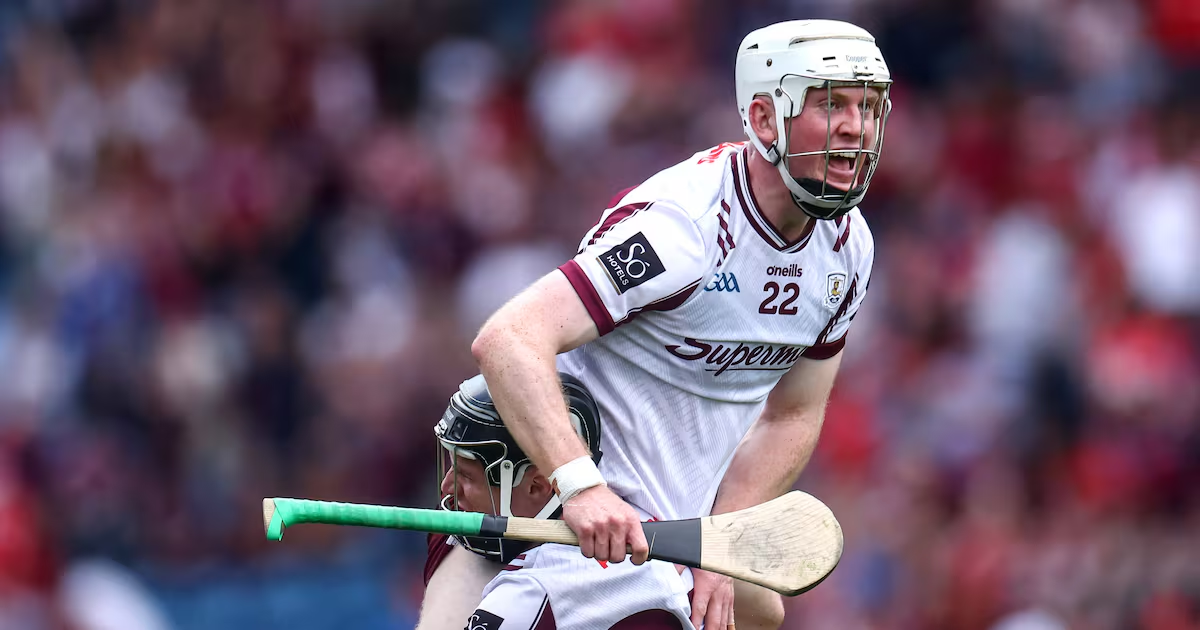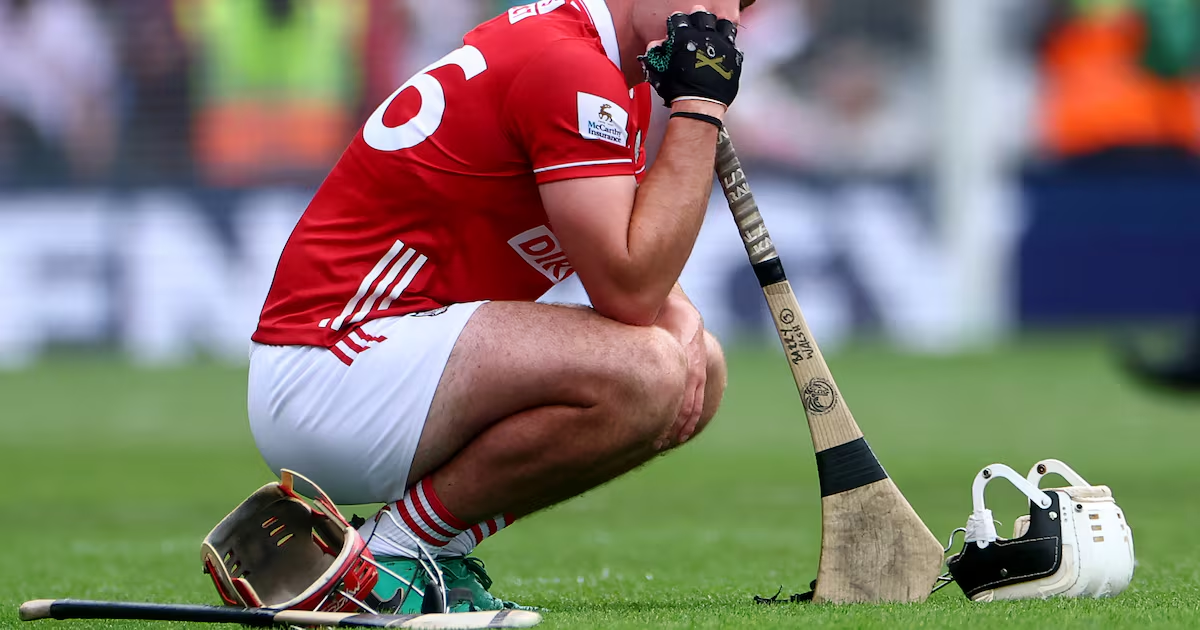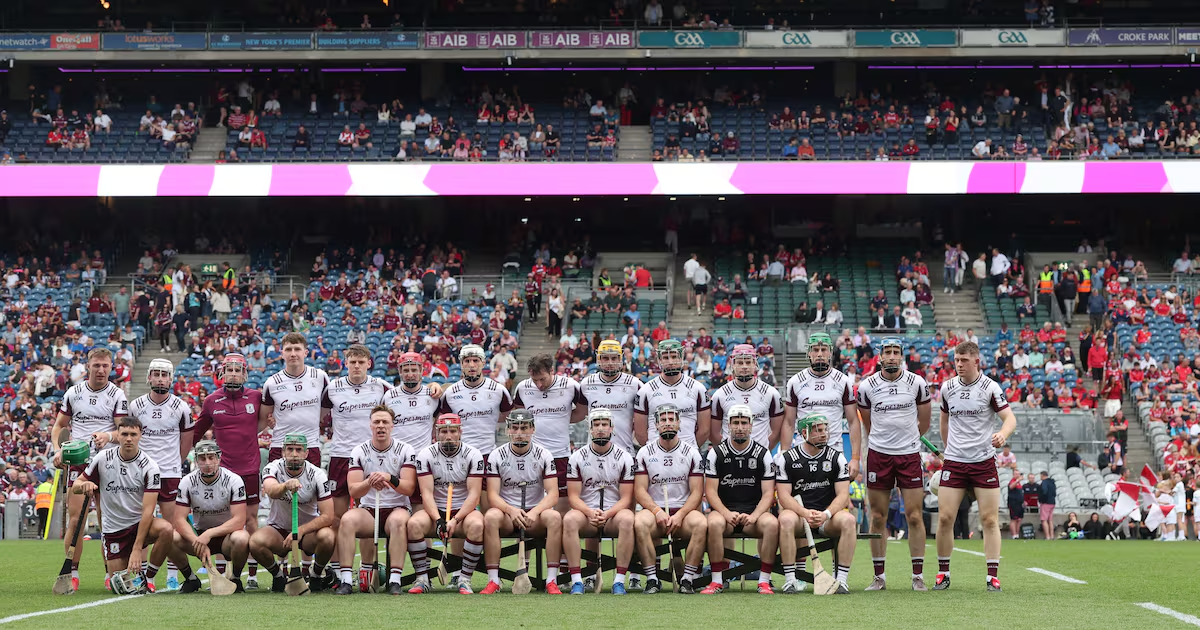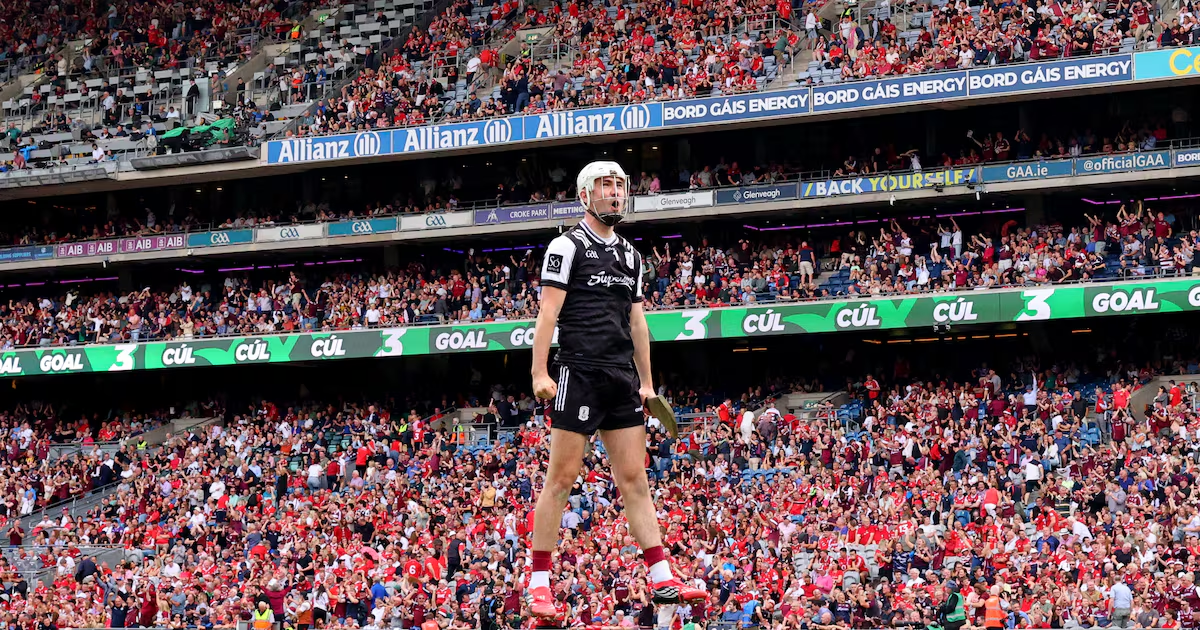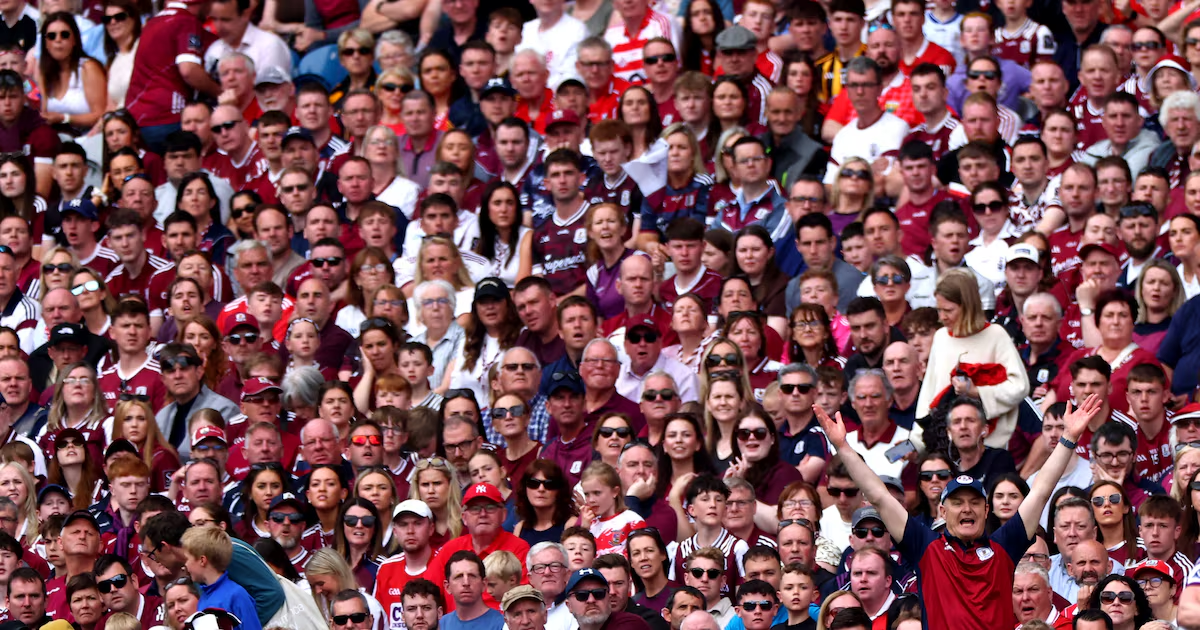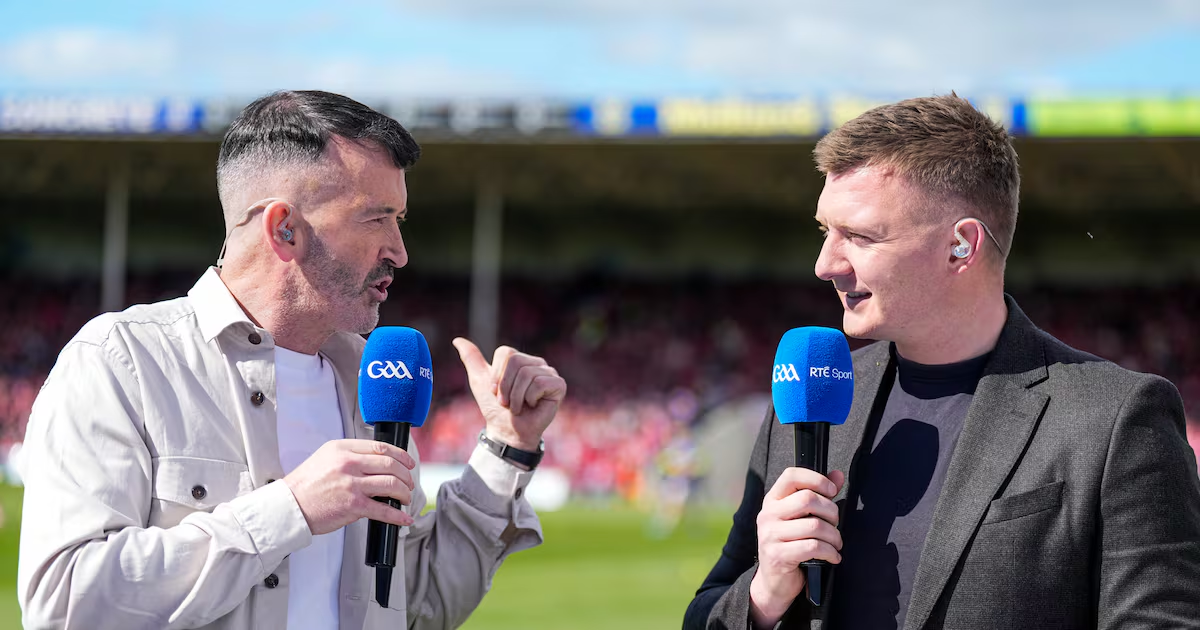
Myself and Donal Óg go back a long way. In 2008, my first season as a Galway player, we played Cork in a qualifier match in Thurles. Donal Óg was sent off before half-time and Cork beat us with 14 men. You can imagine what was said about us that night and in the days and weeks afterwards.I have a fair idea what the Cork players are going through, because for a lot of my Galway career we fell down on big days in Croke Park. We weren’t always favourites, and if we were playing against Kilkenny nobody expected us to win, but there were plenty of days when we were beaten badly and our supporters lost faith in us. Commentators and former players used to have a cut. In some years, we made ourselves a soft target. What do you do? You can’t give up. After what happened to them in the second half of the All-Ireland final last year and the second half against Galway last Saturday those Cork players will be going through hell this week. But you can’t stop. They must get to the root of it. They must figure out why this stuff happens.Last Saturday, on the live RTÉ broadcast, Donal Óg didn’t accept my point about the hype getting through to the Cork players. As these things do in the modern world, our exchange went viral on social media. He asked me how many All-Ireland medals I have. The answer is one, which is two less than him. We’ve been on The Sunday Game a lot together over the last couple of years and we have a very good relationship. Nothing about that changed on Saturday. As soon as we went off air, a whole load of young Galway supporters came down to the front of the Hogan Stand looking for selfies with the two of us and we both went over. There wasn’t another word between us about our exchange on live TV.But my medal collection or his medal collection had nothing to do with the match, or my point about the mentality of the Cork players. I have no doubt that Cork’s problem is in their minds. They have as many good hurlers as anybody else and more than most. Over the last three years they’ve probably won more games than any other county, in league and championship, but in each of those years they lost the games that ultimately defined their season. The kind of hype that Cork players must deal with is different from everywhere else because no other county has their level of support: 20,000 or more for every home league game, full-houses for every championship match. They probably brought 55 or 60 thousand supporters to Croke Park on Saturday, the same as they did for the semi-final last year. If you’re a Cork player, there is no way of avoiding that in your everyday life. You must go to work, you must go to the petrol station, you must go to the shop, you must walk down the street. Everywhere you go you’re going to meet people who want to talk about hurling. They hear about the trains being booked out for weeks in advance. Last week the players would have heard about Ringmahon Rangers pulling out of their FAI Cup match against Bohemians because it clashed with the All-Ireland hurling final. Of course they heard it. All of that adds to the hype. It’s really hard to handle that.Cork’s Alan Connolly celebrates the final whistle of their round-robin game against Limerick in this year's Munster Championship. Photograph: Morgan Treacy/Inpho But the Cork players contributed to it too. When Alan Connolly was interviewed after Cork played Kilkenny in the National League he said that it was Cork’s goal to win every competition. “That’s what we’re going to do,” he said. In another interview later in the year he repeated the same sentiment in slightly different words. Something like that would be said in team meetings up and down the country every year, but nobody says it in public because all you’re doing is drawing pressure on yourself. If you can’t back it up it’s always going to be thrown back at you, so why say it at all. The Cork players can’t control what their supporters are going to say or think, but they can control their own messaging in public. They let that get out of hand this year. Gerry Hussey was Cork’s sports psychologist this year and he worked with us in Galway years ago. I wouldn’t be surprised if he had told the Cork players to look in the mirror every morning and tell themselves they were going to win everything. That’s fine in private, but don’t tell the whole country.During my time with Galway we had eight or nine different sports psychologists. It never did anything for me. I never thought that a PowerPoint presentation in a meeting room was going to have any impact on my performance on the pitch. We were told once to flick an armband on your wrist after you made a mistake or missed a shot, as a re-set. I had no interest in that stuff. Cork's Darragh Fitzgibbon leaves the field after being sent off during the second half of the All-Ireland semi-final against Galway. Photograph: Ryan Byrne/Inpho As far as I was concerned the best sports psychologists I ever had were the people who trained us the hardest. That’s where you really found out about yourself. Your tongue is hanging out, doing running you don’t want to do, and you’re digging deep inside yourself to find out whether you have the bottle or not. In fairness, Cork probably did that as well over the winter. Most of the teams that don’t end up winning the All-Ireland train like dogs too. There is no way around it.When a team loses, everything is on the table. It wasn’t the hype that beat Cork last Saturday, but it might have been a factor. It also looked to me like Cork’s attitude was: we’ll do our thing and that’ll be good enough. They didn’t do enough to counter what Galway were going to bring. It wasn’t any secret. Galway have been playing the same way all year. But Cork were also blown away on puck-outs in the second half, they were beaten on breaking ball and in rucks, they didn’t have enough shots, they allowed Galway to get a run on them, they had a man sent off, they were killed in the third quarter, just like in the All-Ireland final last year. All of those factors influenced the outcome.When you lose it’s never just one thing. Cork will have to look at everything.
Joe Canning: Donal Óg didn’t accept my point live on RTÉ, but I’ve no doubt about Cork’s problem
I have no doubt that Cork’s problem is in their minds
1,123 words~5 min read