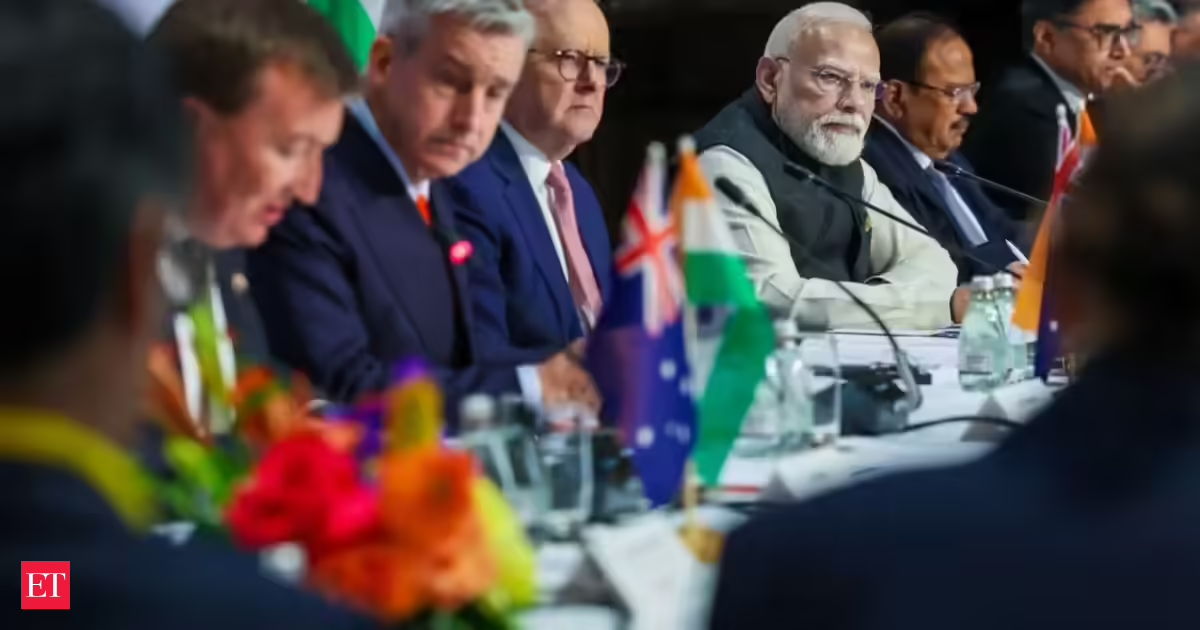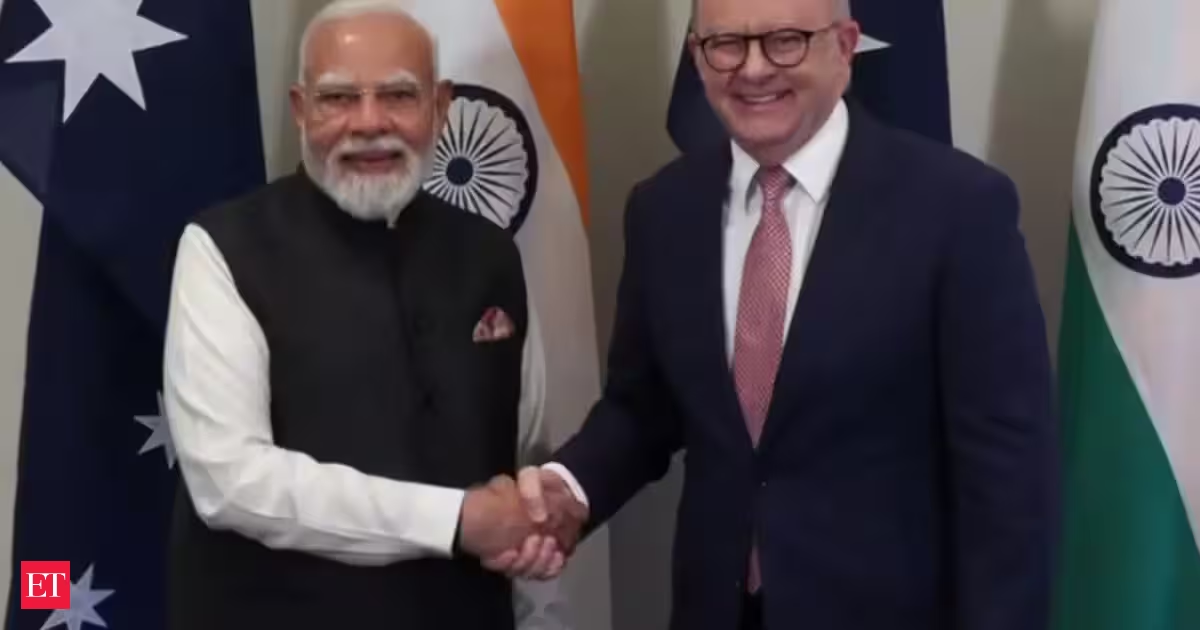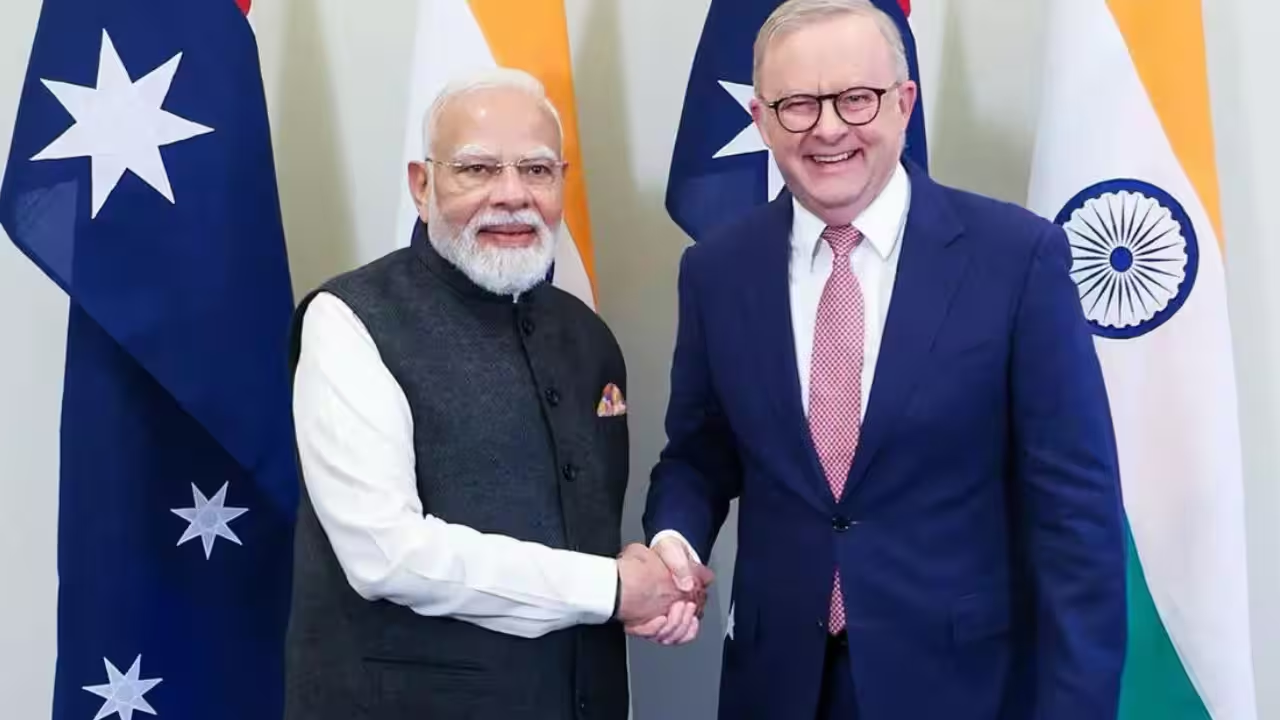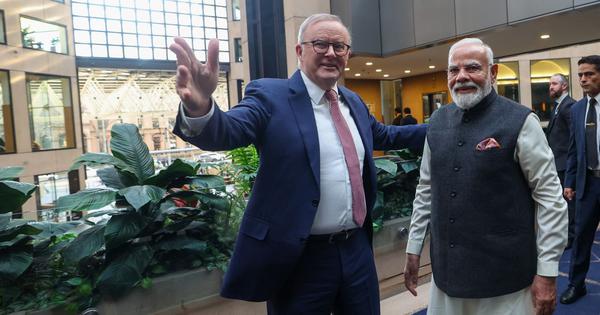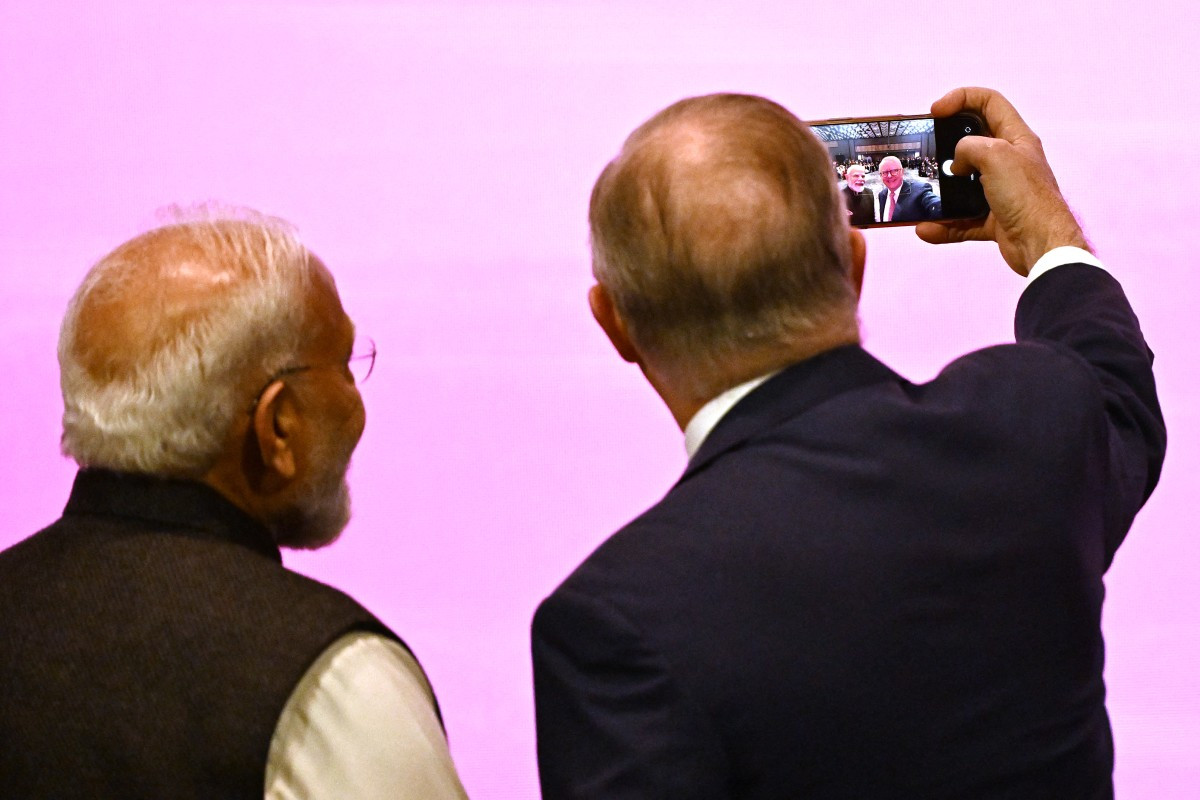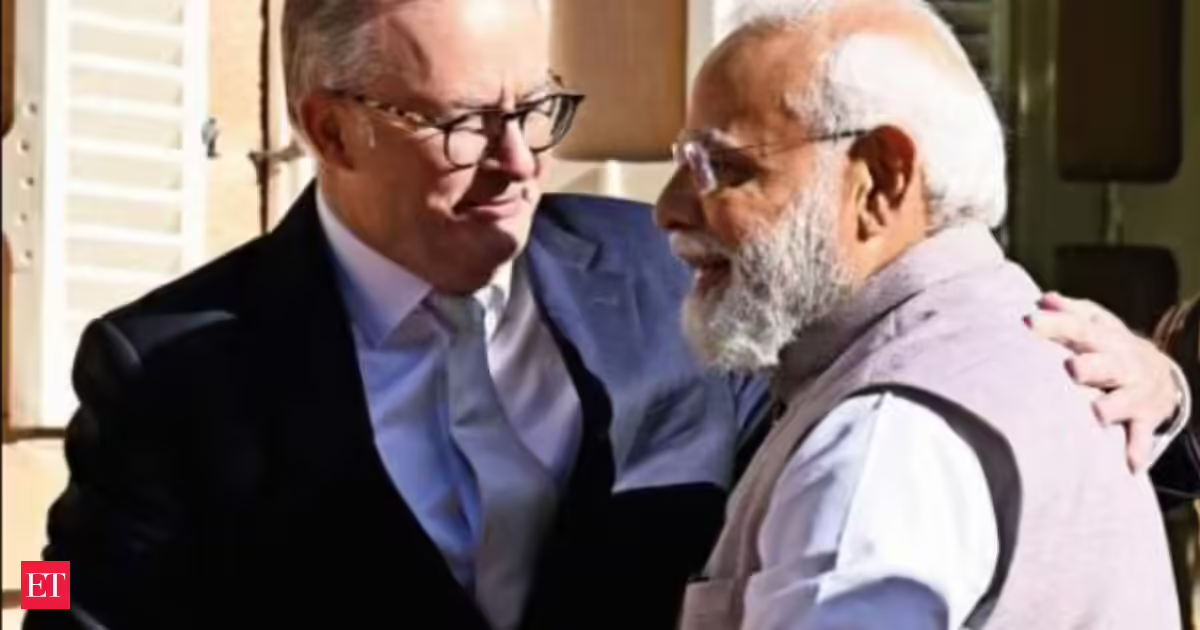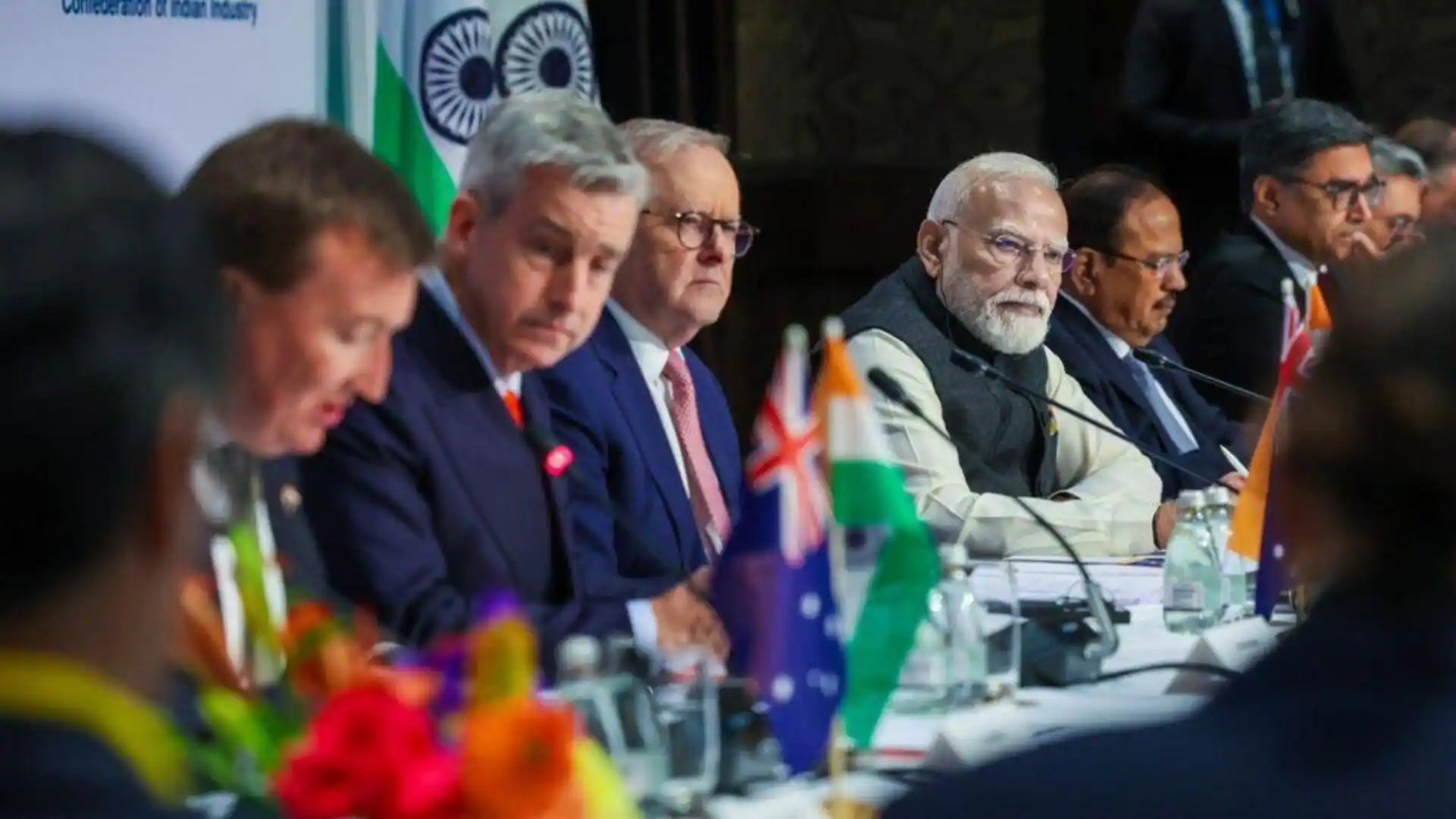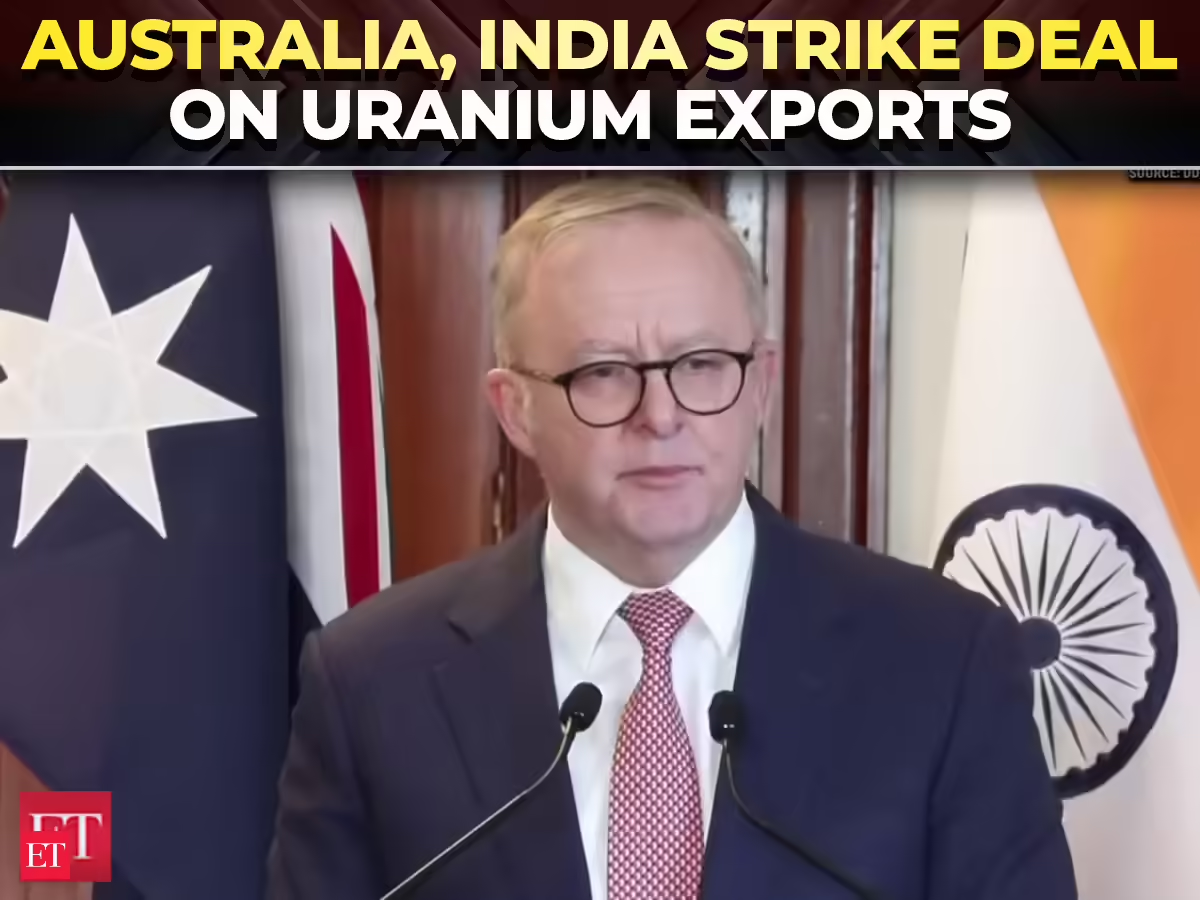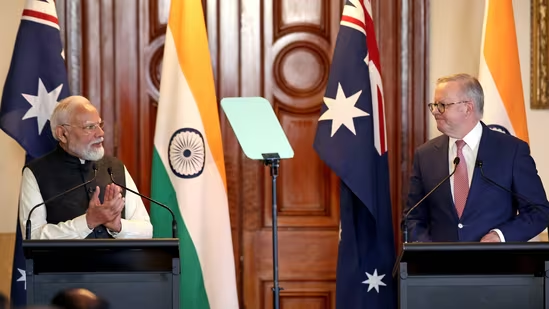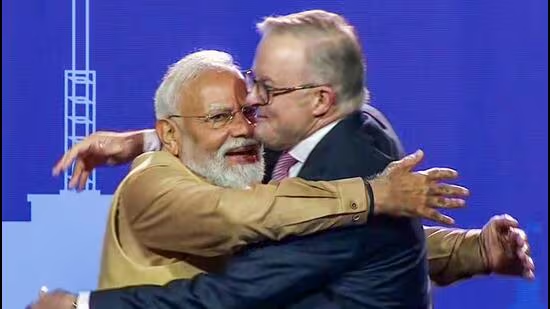
India and Australia concluded a landmark deal on Thursday for the supply of uranium to boost New Delhi’s nuclear power programme and agreed to deepen cooperation in defence, maritime security, critical minerals and energy as Prime Minister Narendra Modi and his counterpart Anthony Albanese pledged to strengthen stability and a rules-based order in the Indo-Pacific region.Modi and Albanese met in Melbourne on the second leg of the Indian PM’s three-nation tour (ANI)Modi and Albanese met in Melbourne on the second leg of the Indian PM’s three-nation tour and unveiled an expansive agenda for bolstering strategic cooperation and coordination between the two Quad member states. Modi’s visit is aimed at deepening economic and security cooperation with key Indo-Pacific countries against the backdrop of China’s assertive actions in the region and geopolitical churn on the global stage.Following their talks, Modi and Albanese announced the arrangement that will facilitate the long-term supply of Australian uranium to India’s nuclear energy industry, a new joint declaration on defence and security, a maritime security collaboration roadmap, joint measures to strengthen energy security, and a partnership for cyber, critical technologies and supply chains.The two sides also agreed to speed up negotiations on a Comprehensive Economic Cooperation Agreement (CECA) to build on the Economic Cooperation and Trade Agreement, or interim trade deal, signed in 2022, and to move forward on a bilateral investment treaty.Modi noted at a joint media interaction that India and Australia are important ocean powers with a common worldview and said: “Together, we will further strengthen peace, stability, freedom of navigation and a rules-based order throughout the Indo-Pacific region.”The important agreement in nuclear energy “will open the way for uranium supplies from Australia” and give new impetus to India’s clean energy objectives, Modi said.“Australia and India are close partners and even closer friends,” Albanese said.“With new landmark agreements, we are expanding our relationship across defence and security, education, science and technology, energy security and critical minerals.”Albanese said the administrative arrangement under the bilateral Nuclear Cooperation Agreement that came into force in 2015 will enable uranium exports for peaceful purposes. “The arrangement facilitates Australian uranium exports to India to help increase the share of non-fossil fuel power capacity, providing an additional market for the Australian resources sector,” he said.The leaders didn’t provide a timeframe for the exports or details of how much uranium would be supplied. Australia has the world’s largest uranium reserves — almost a third of the global total — but has made only one shipment of uranium to India, in 2017. Exports were held up because of concerns about the diversion of uranium to the weapons programme and Australia’s fragmented regulatory landscape — the federal government doesn’t prohibit uranium mining, while several states don’t allow full-scale mining.Modi and Albanese said the new joint declaration on defence and security cooperation, which renews an existing framework finalised in 2009, will enhance collaboration and deepen the practical partnership. “Australia values India as a top-tier security partner and the declaration reflects our shared commitment to a peaceful, stable and prosperous Indo-Pacific region,” Albanese said.“We will boost strategic coordination, increase the complexity of our defence exercises and further build interoperability between our defence forces. We undertake to consult on defence-related developments in the Indo-Pacific that affect our shared interests,” he added.“Through the India-Australia defence innovation corridor, we will work to connect defence startups and industries,” Modi said. “Our maritime security collaboration roadmap will give new impetus to our shared efforts in the Indo-Pacific. We will also move forward together in shipbuilding, ship repair and maintenance.”The strengthening of defence ties came just two days after China tested a nuclear-capable ballistic missile from a nuclear submarine in the Pacific, a move that was described by Albanese as a “provocative act”.The joint declaration on defence and security identifies counter-terrorism, maritime domain awareness, cyber-security, humanitarian assistance and disaster relief, and a unified approach on UNCLOS, ASEAN and the Indian Ocean Rim Association as other areas of cooperation.The two sides will also accelerate information-sharing between their armed forces, expand aircraft deployments from each other’s territories, and explore opportunities to cooperate in “recruiting for skilled defence workforces”, the joint declaration stated.The maritime security collaboration roadmap will enhance cooperation in the field by promoting information-sharing, capability development and operational coordination.The two sides also finalised a memorandum of understanding (MoU) between India’s Coast Guard and Australia’s Maritime Border Command on cooperation in maritime law enforcement, domain awareness and maritime border protection, and announced that an Indian military instructor will be deployed at the Australian Defence College for 2028-29.Under the joint statement on energy security, the two sides will work to overcome the impact of the West Asia conflict, including disruptions in the supply of energy and other important commodities, by reinforcing open markets and rules-based trade. Given Australia’s role as an important supplier of LNG and India’s role as a supplier of liquid fuels and downstream products, the two sides will focus on enhancing energy trade.The Partnership for Cyber, Critical Technologies and Supply Chains (PACTS) will build on a 2020 framework arrangement to support national and regional security, promote collaboration on making critical supply chains more resilient, and strengthen collaboration in critical technologies, cyber-security and digital resilience.Modi said Australia’s technology, capital and resources could assist India’s energy transition and signalled possible cooperation in low-carbon aluminium projects.“We have historic opportunities to cooperate in this field,” Modi said, urging Australian businesses to invest long term in India’s road, port, rail and urban infrastructure projects. “India provides a safe, stable and sustainable growth option for your funds,” he said.Australia’s largest pension fund, AustralianSuper, said on Thursday it will invest a further $347 million in India’s National Investment and Infrastructure Fund.Modi turned to cricketing terminology to describe India-Australia relations, saying the bilateral agenda is focused like one-day games, decision-making is as fast as T20 games and the partnership is “as long and deep as a Test match”.Albanese announced that, as part of expanded cooperation in science and technology, Australia will commission a temporary space-tracking terminal in the Cocos (Keeling) Islands to support India’s Gaganyaan manned spaceflight programme. Another MoU for the Australia-Canada-India Technology and Innovation Partnership will advance trilateral cooperation in emerging technologies and innovation.The two sides also agreed to repatriate important artefacts and antiquities held in each other’s museums. India will repatriate the remains of an Australian First Nations ancestor held in the Government Museum in Chennai, while Australia will return a 12th-century granite statue of the sacred bull Nandi, the vehicle of Shiva, an 11th-century bronze trident, and a 12th-century six-headed Skanda that were previously held in the collections of the National Gallery of Australia and the Art Gallery of New South Wales.
India and Australia seal major uranium deal, elevate Indo-Pacific defence
PM Narendra Modi and Anthony Albanese sealed a landmark uranium supply deal as India and Australia expanded cooperation in defence, maritime security and energy. | India News
1,105 words~5 min read