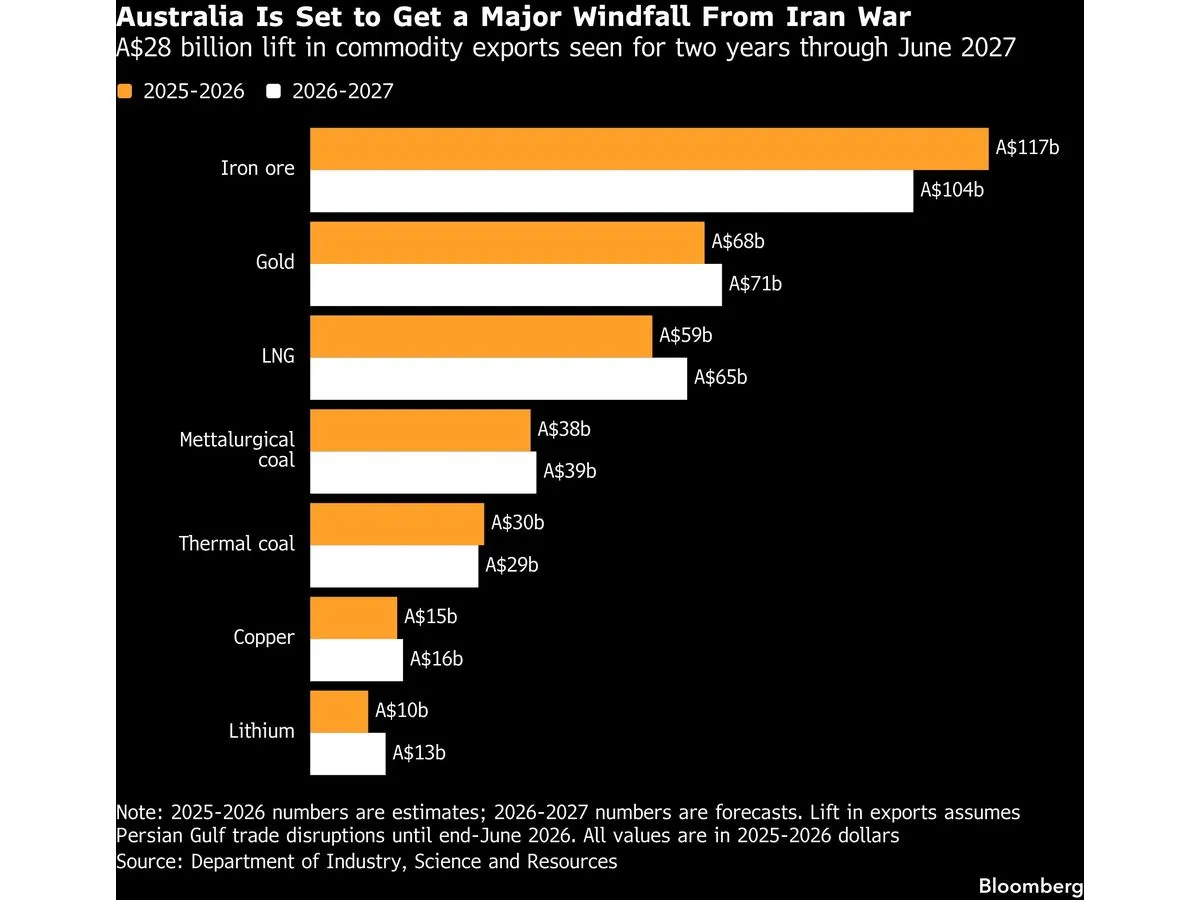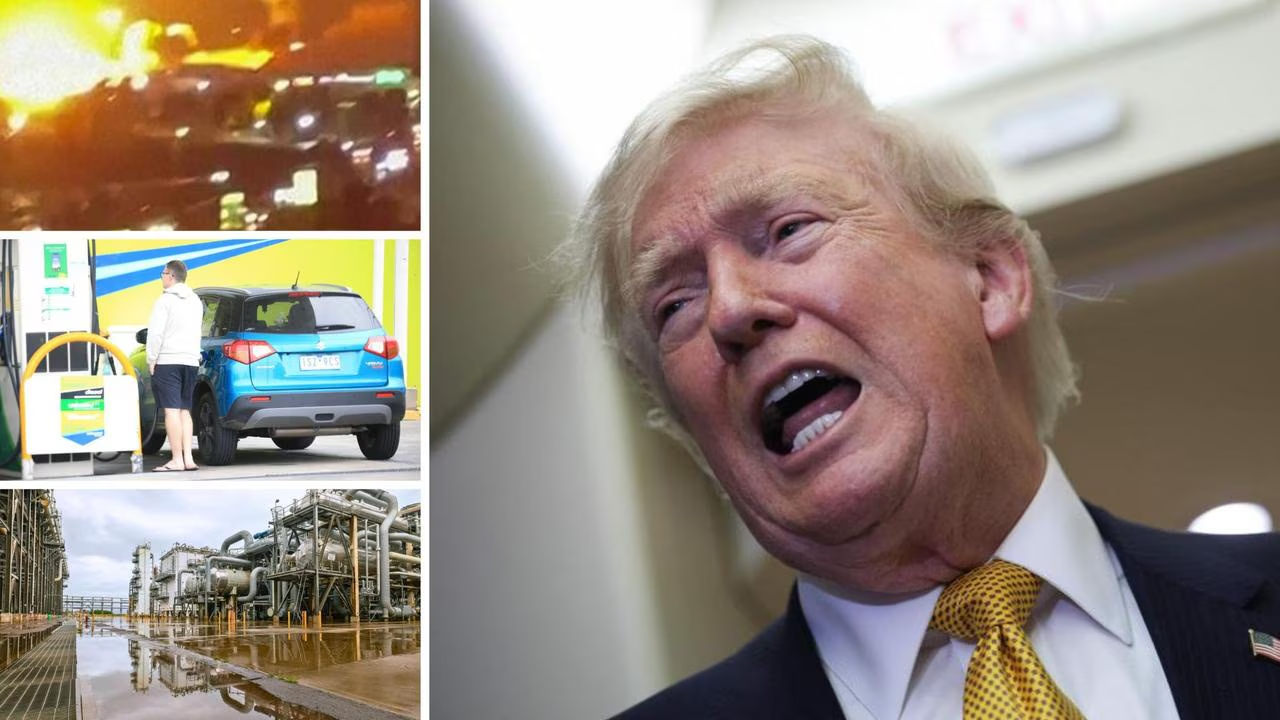
Australians will feel the pinch of rising oil prices “in a few weeks’ time,” but there is one upside, a retired diplomat said.Jane Hardy, a former diplomat whose postings include time in the US, said the recent spike in crude oil prices and fertilisers caused by a restarting of hostilities in the Strait of Hormuz “will come back and affect oil prices in Australia,” but not before natural gas companies reap massive profits.“The Iranian strikes on neighbouring countries [in the Middle East], including LNG terminals, has spiked the price of LNG and we’re net exporters, mainly to our region. This is all interlinked, even if the source of the LNG and oil is different. It’s a global impact,” she told news.com.au.She suggested the conflict made Australia into an even more attractive and valuable source of raw energy.“I am not an expert in energy, but having witnessed, in North Asia during my posting, the enormous impact of our LNG exports to Japan, Korea and China, and others, we are in a very good position to be an alternative supplier. “Apparently the energy markets are shifting and changing very rapidly, as people look for other sources of both crude oil, refined oil and LNG, and we are one of those sources, definitely.”Recent tit-for-tat strikes in the Strait saw the price of Brent Crude oil back to a two-week high of $US76.58 ($110) a barrel.The price of Liquid Natural Gas (LNG) jumped 2.4 per cent in 24 hours and is sitting at $26.58 MMBtu (million British thermal units), according to LNGPrice.com.The spot price for LNG cargoes in northeast Asia - Australia’s main trading region - peaked at $30.10/GJ (gigalule) in March before dropping 19pc to $24.39/GJ at the end of May. It was previously sitting between $14 and $16/GJ, according to Australian Energy Producers.Though Australia’s sharemarket traded in the red on Wednesday, energy stock were up thanks to rising oil prices.Stocks in Aussie petrol behemoth Woodside jumped 3.22 per cent to $28.87, Santos rallied 5.78 per cent to $7.50 and Ampol closed 1.37 per cent higher to $34.78.Australia should exert its influence Ms Hardy said regardless of this, Australia should use its influence in Washington, to call for calm in the Strait.“We should be calling for calm on both sides and to go back to that MoU (Memorandum of Understanding) and to get both sides back to the table to look at all those things they’re negotiating,” she said.“We have a very well-positioned ambassador in Washington DC who has got a lot of clout with the US administration.”Greg Moriaty, Australia’s ambassador to the US, helped negotiate the AUKUS treaty with the US and UK, Ms Hardy said. It is a pact she believes the Trump administration views favourably.“We have a lot of clout there. We have put in a lot of money and equity into our relationship with the US, including on the most fundamental strategic issues, which are valuable to the US. So, I think we have a lot to offer.”Australia’s leverage over Tehran remains extremely limited because it has no embassy in the country, Ms Hardy added.But that doesn’t mean Canberra couldn’t at least try to influence both countries.“The Australian government is being careful to not say much to inflame the situation, but I think the foreign minister and other ministers should be out there, commenting and adding weight to the signalling coming out of NATO that the allies are actually united on Iran.”‘Messy negotiation’Shadow defence minister James Paterson said he didn’t believe the US and Iran are “back in full conflict,” and nor was it closer to peace, he told Sky News Australia.“I think this is a complicated, messy negotiation and the President is trying to use the leverage he has to force Iran to accept a reasonable settlement that ensures that things like the Strait of Hormuz are open and shipping is no longer threatened as it passes through that strait. That’s a critically important objective which Australia shares and we hope these negotiations are successful and that we can have a durable and lasting ceasefire.”Yesterday, NATO chief, Mark Rutte, said the new attack by the US on Iran was “absolutely necessary”. NATO allies have come under significant heat from the US president for their decision to stay out of the conflict with Iran.The US and Iran traded strikes on Thursday for the second day running as Washington and Tehran battled over the strategic Strait of Hormuz.The vital oil and gas corridor is a key point of contention in the Middle East war, with Tehran insisting on control of the strait despite it being open to free passage before US-Israeli attacks sparked the conflict in February.After the foes traded attacks on Wednesday, US President Donald Trump said the ceasefire with Iran was “over”, but left the door open to more talks and added any strikes would end quickly.US forces said the latest attacks against Iran were aimed at “their ability to threaten the freedom of navigation in the Strait of Hormuz”, citing recent strikes against commercial ships in the waterway.The US Central Command said they had struck approximately 90 military targets, including missile and drone storage as well as military logistics sites along Iran’s coastline.The strikes killed three people and wounded several others on the outskirts of Ahvaz in Iran’s southwest, the country’s official news agency IRNA reported, quoting an official.
Australians to feel the pinch of rising oil prices ‘in a few weeks,’ ex diplomat warns
Australians will feel the pinch of rising oil prices “in a few weeks’ time,” but there is one upside, a retired diplomat said.
892 words~4 min read