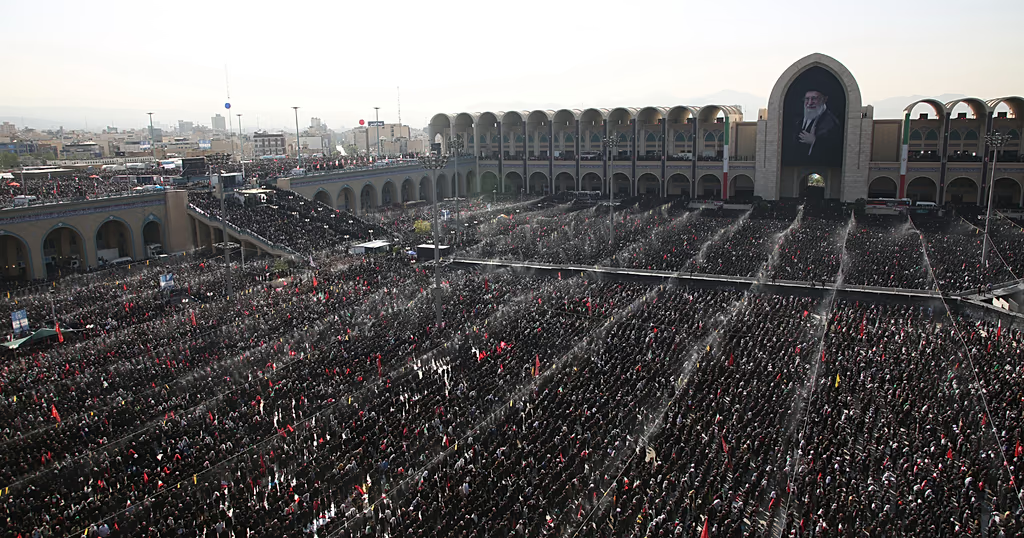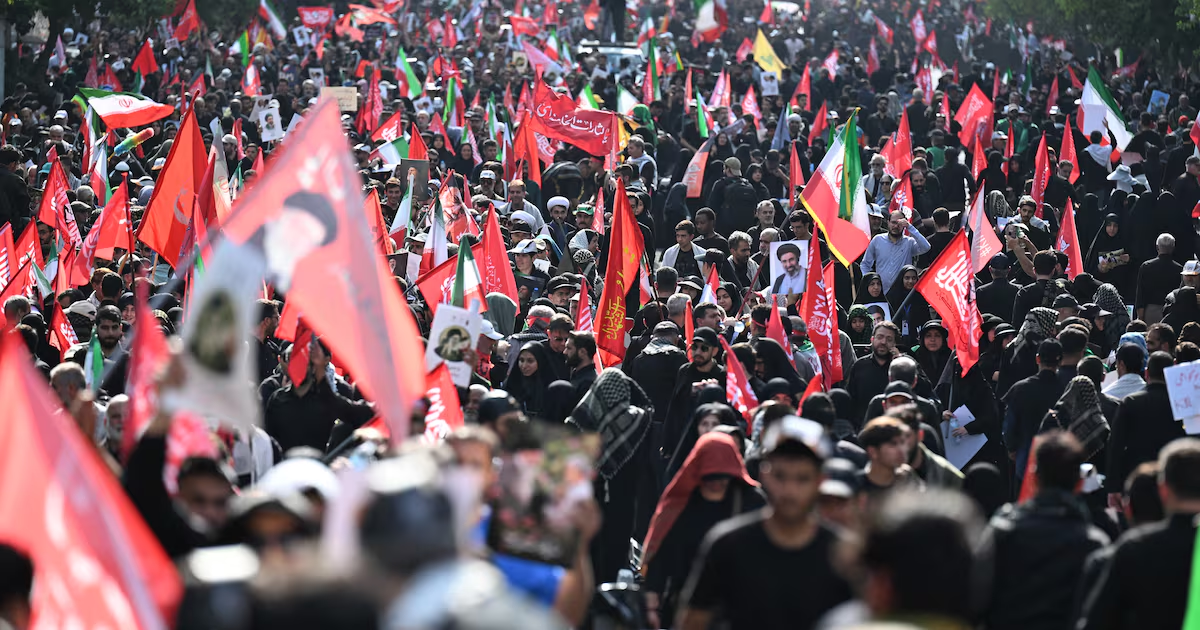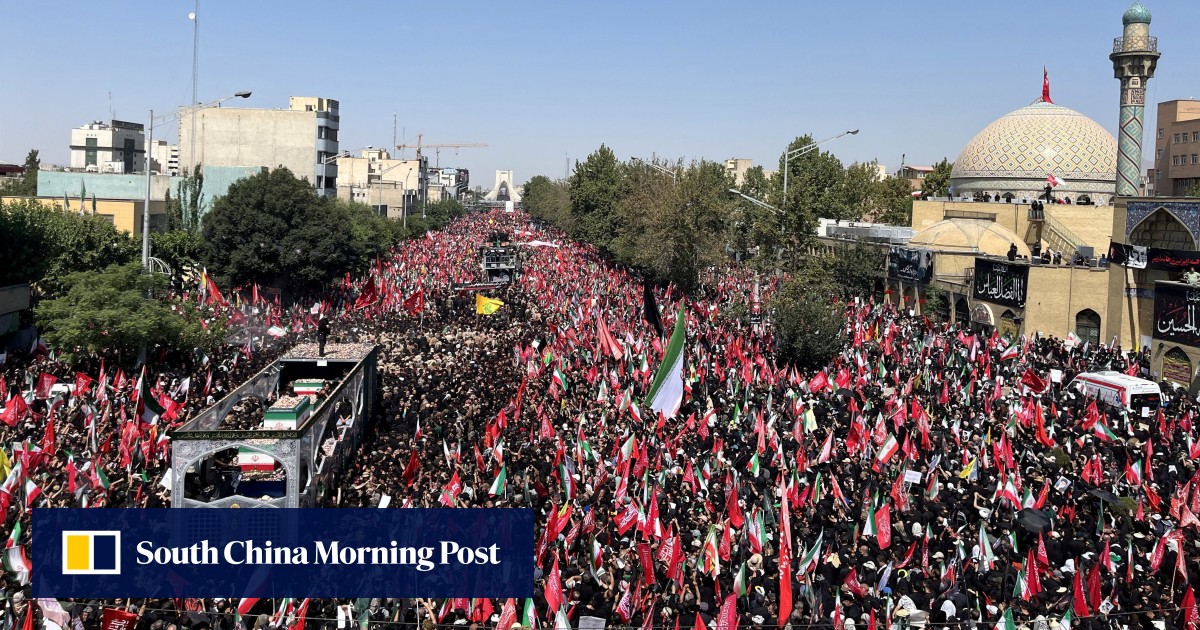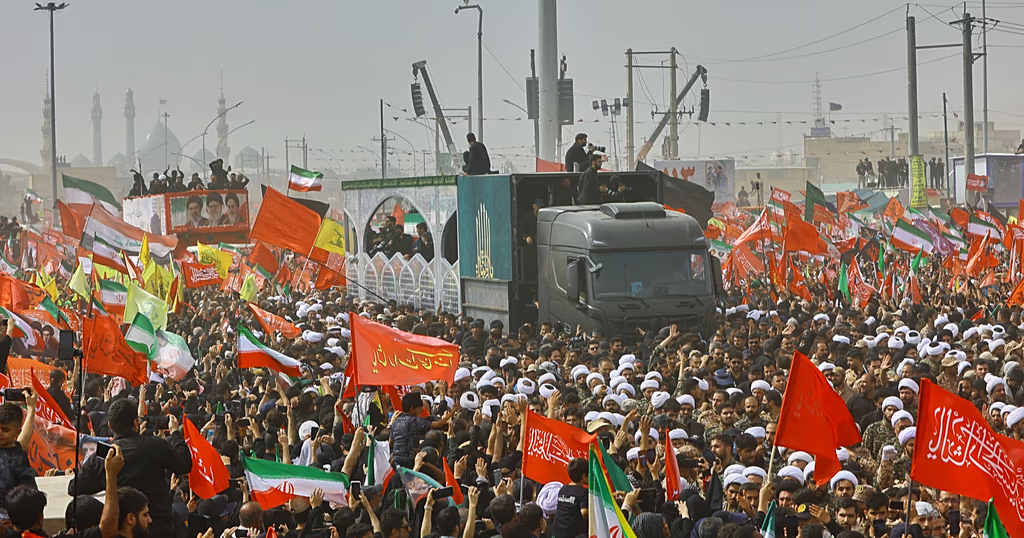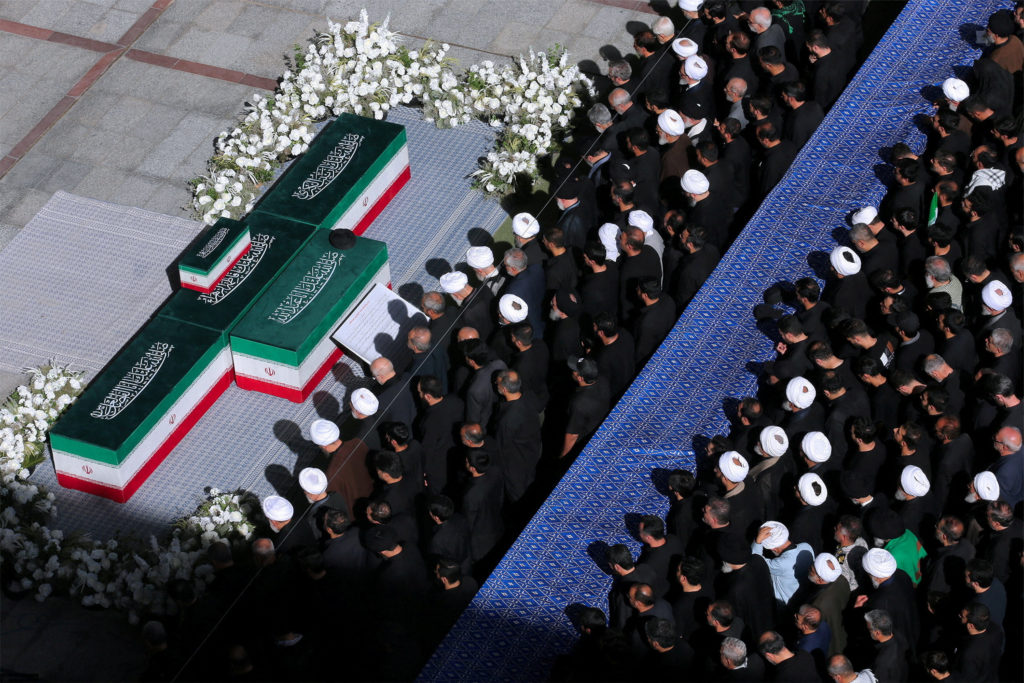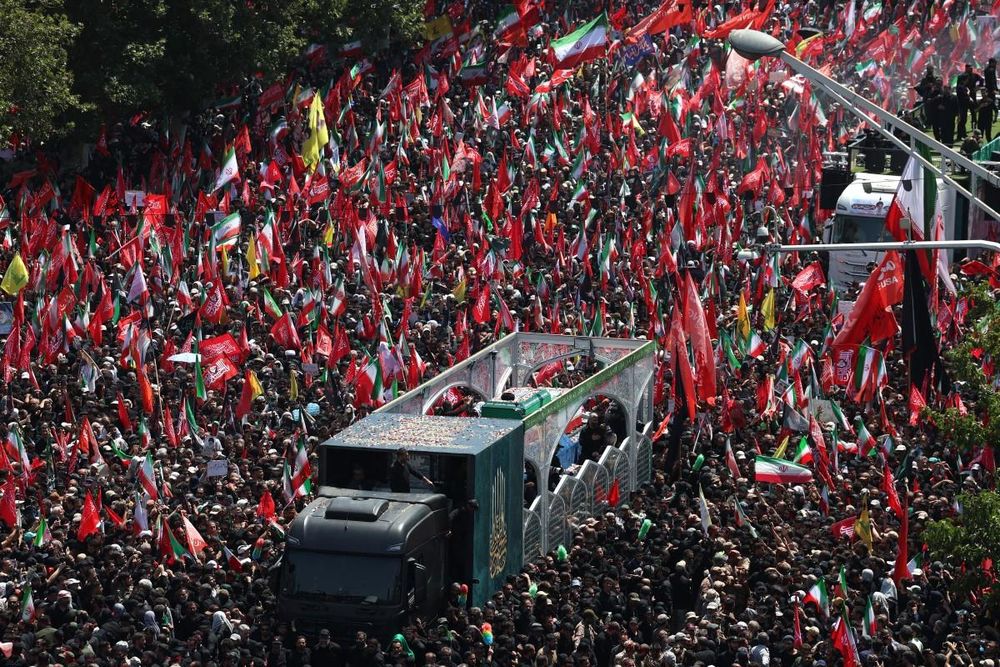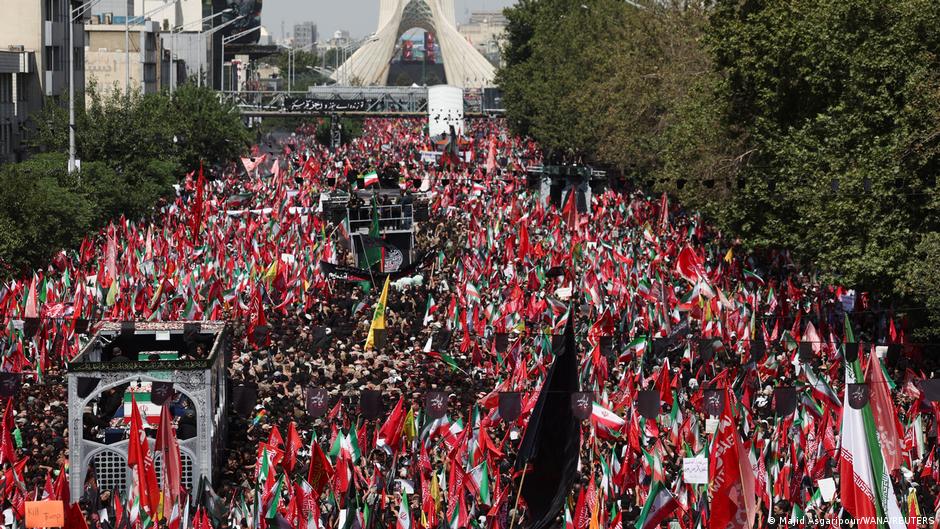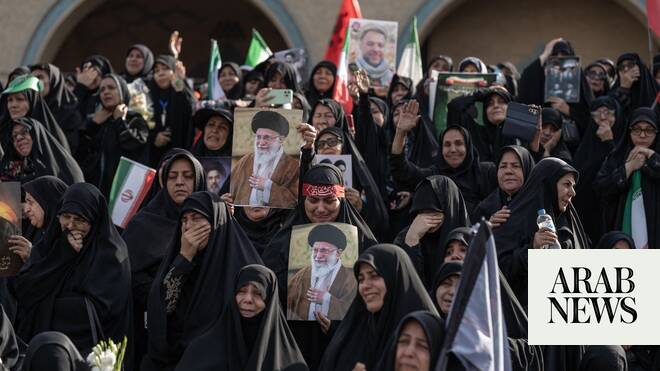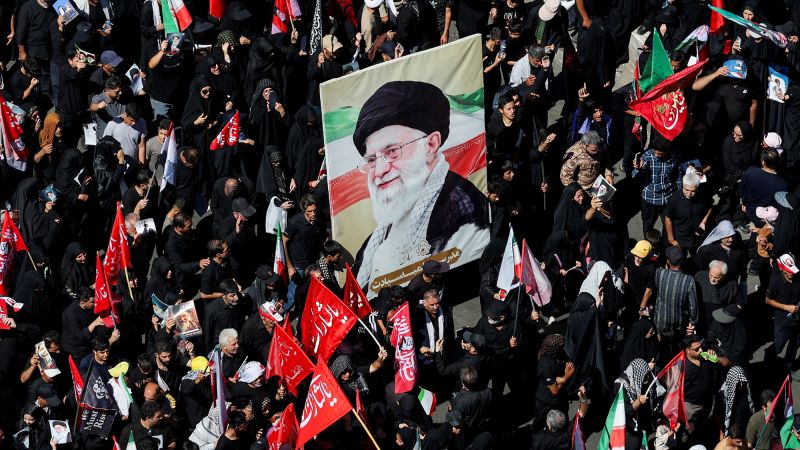
As funeral prayers took place before the coffin of Iran’s slain Supreme Leader Ali Khamenei on Sunday, many top officials and three of the ayatollah’s sons were present. Among the noticeably missing, however, were some former presidents at odds with the current regime.
Their absence cast doubt on Tehran’s “unity” mantra, which has dominated rhetoric throughout Khamenei’s week-long funeral proceedings. This messaging was intended to signal to the United States and Israel that military action has not – and will not – bring down the Islamic Republic or foment dissent against the regime, experts said.
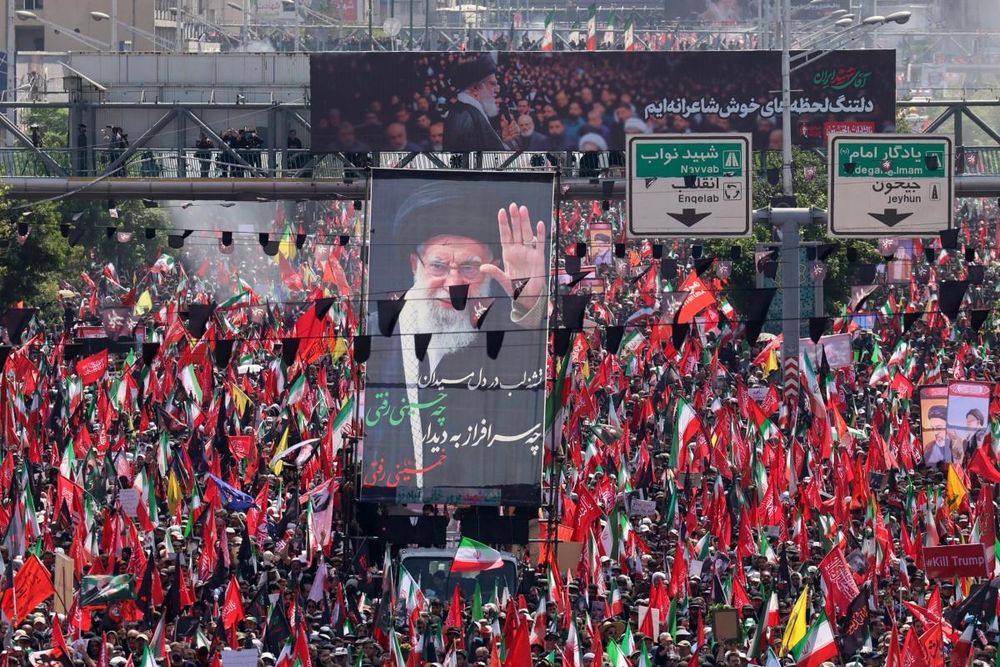
Khamenei’s funeral events, culminating Thursday with his burial in the northeastern city of Mashhad, have been crowded with millions of mourners who genuinely believe in the Islamic Republic’s cause.
But that’s not the full story; with a population of 90 million, Iran is a tale of two peoples: those who mourn, and those who don’t.
Many Iranians are angry at the spectacle, associating Khamenei with an oppressive regime that has only silenced dissent over the years. Others feel apathy, with some even treating the funeral days as an opportunity to head out of congested cities. The absence of former public figures also shows the tight grip imposed by organizers of the event, as the current regime support base feels more galvanized than ever.