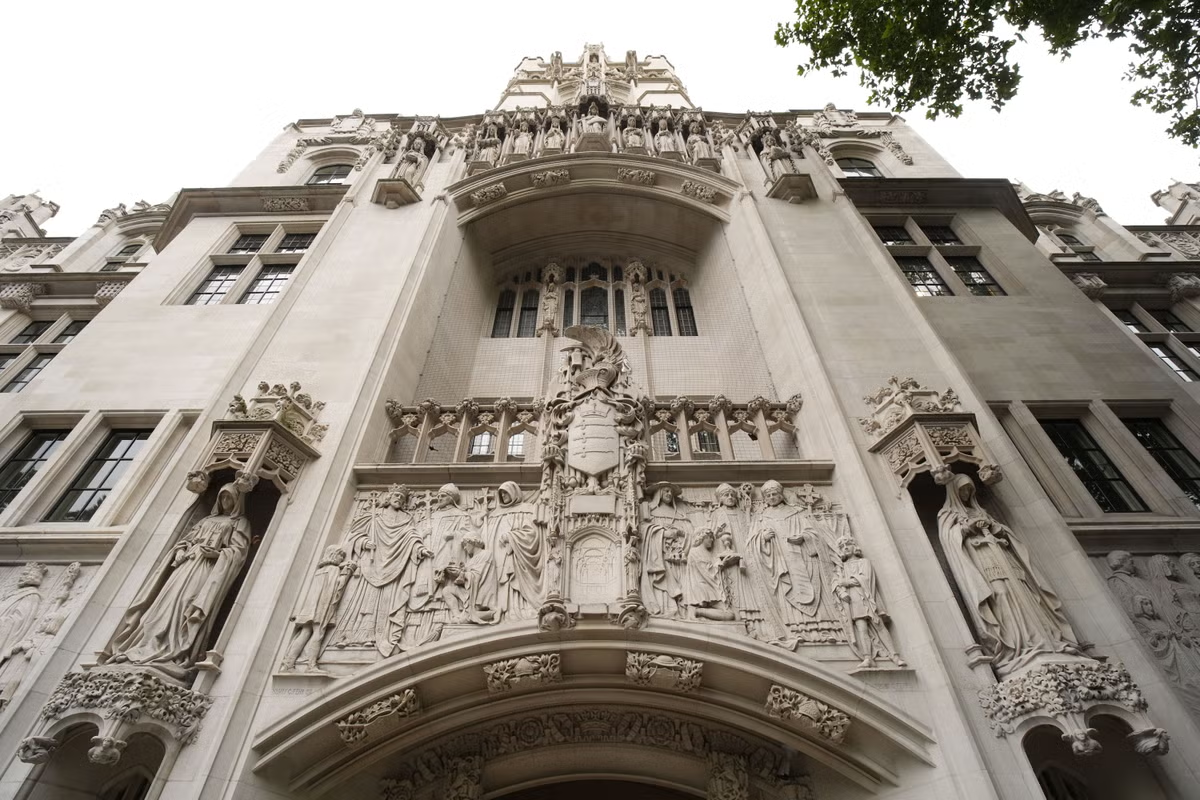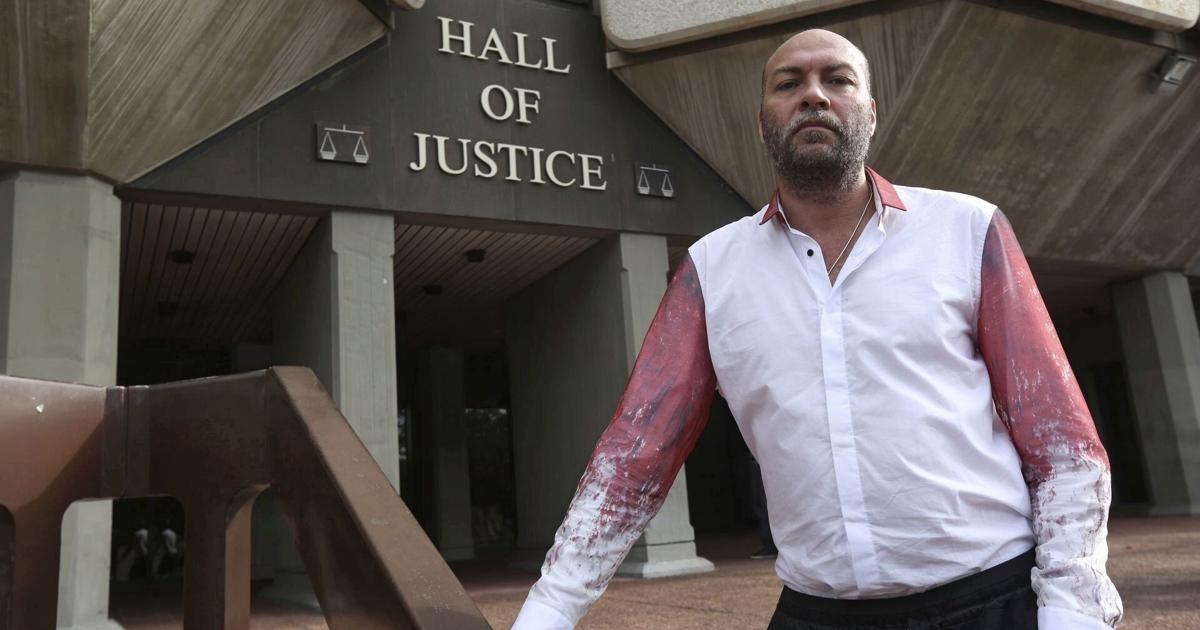
THE Judicial Committee of the Privy Council has reserved judgment in a constitutional challenge brought by Trinidad-born gay rights activist Jason Jones against provisions of this country’s Sexual Offences Act that criminalise consensual sexual activity between adults of the same sex.The decision, which will be delivered at a later date, will determine whether Sections 13 and 16 of the Act, which create the offences of buggery and serious indecency, remain constitutionally protected under the Constitution’s savings law clause.A five-member panel comprising Lords Reed, Briggs, Sales and Lloyd-Jones, together with Lady Rose, heard submissions yesterday from attorneys representing Jones and the Office of the Attorney General.Jones is asking the apex court for Trinidad and Tobago to restore a 2018 High Court ruling that declared the provisions unconstitutional on the basis that they infringed the rights to privacy, liberty and equality guaranteed by the Constitution.That judgment, delivered by Justice Devindra Rampersad, was overturned by the Court of Appeal, which ruled that although the provisions conflicted with constitutional rights, they were preserved by the savings law clause because they substantially re-enacted offences that existed before Independence.The appellate court, however, reduced the penalties to those contained in the earlier colonial legislation.Appearing for Jones, Senior Counsel Anand Ramlogan argued that the savings law clause should not apply because the legislation had been substantially altered by amendments made through the Sexual Offences (Amendment) Act 2000 and the Children Act 2012.He submitted that those amendments fundamentally changed the statutory framework, stripping the Act of any constitutional immunity it may once have enjoyed and making it open to constitutional challenge.Ramlogan told the Board that constitutional rights exist to protect minorities from discrimination and should not be interpreted in a manner that perpetuates historical prejudice.“There is simply no justification in a democratic society with respect for fundamental rights for this to happen,” he submitted.Drawing comparisons with other forms of historical discrimination, Ramlogan argued that the law must evolve to protect vulnerable groups rather than preserve outdated prejudices.“Constitutional rights exist precisely because the majority is not always right,” he said, adding that Jones was seeking no special treatment but only the same constitutional protection afforded to every citizen.He also argued that history had shown that practices once regarded as lawful, including slavery and discrimination against women and interracial couples, were later recognised as unjust.“Ultimately, we need to ask ourselves the hard legal conscience question of ‘who are we to volunteer that gay people should starve because we don’t like the meat that they eat’?”Parliament-enacted Act Representing the AG’s Office, King’s Counsel Peter Knox defended the Court of Appeal’s decision, maintaining that Parliament validly enacted the Sexual Offences Act in 1986 with the required three-fifths special majority.Knox submitted that the legislation largely re-enacted long-standing criminal offences and should be viewed within the social and historical circumstances in which it was enacted, including concerns surrounding the global HIV/AIDS epidemic during the 1980s, rather than by present-day standards.Jones, who now lives in the United Kingdom but regularly returns to Trinidad and Tobago, has maintained that the legislation has subjected him and other members of the LGBT community to stigma, discrimination and abuse.He has argued that the law effectively forces consenting adults to choose between expressing their intimate relationships and being treated as criminals.The AG’s Office is the principal respondent in the appeal, while the Equal Opportunity Commission and the T&T Council of Evangelical Churches are also parties to the proceedings.Colours Caribbean, the Silver Lining Foundation, OutBermuda, the United Belize Advocacy Movement and ILGA-NAC were granted permission to intervene.
Privy Council reserves judgment in same-sex
THE Judicial Committee of the Privy Council has reserved judgment in a constitutional challenge brought by Trinidad-born gay rights activist Jason Jones against provisions of this country’s Sexual Offences Act
585 words~3 min read