Databricks benchmarked GLM 5.2 on its own multi-million-line codebase and found the Chinese open-source model statistically tied with Anthropic's Opus 4.8 at lower cost. The company now plans to make it a daily workhorse for its developers.
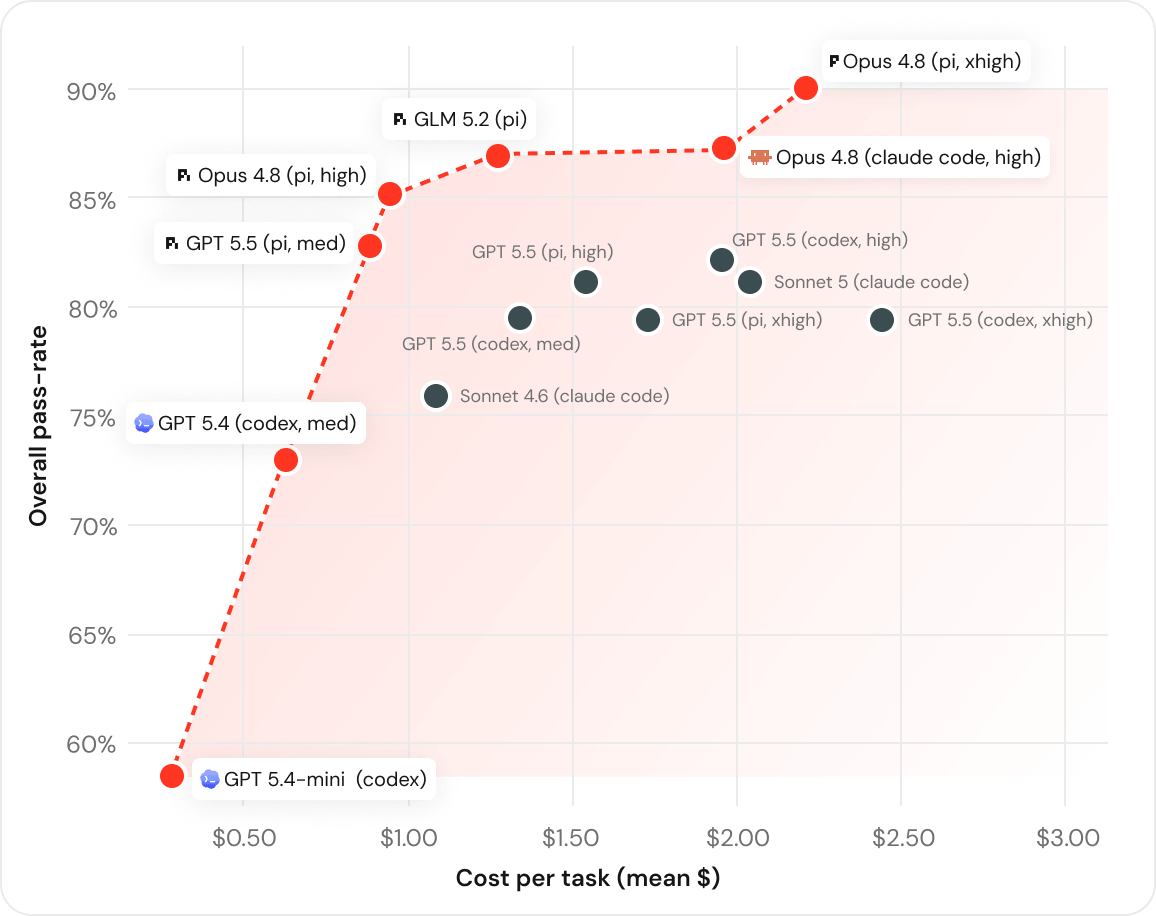
GLM 5.2 hit the top performance cluster at $1.28 per task versus $1.94 for Opus. "The evidence shows it's time to start deploying these as daily drivers for coding," write the authors of the blog post, including Databricks co-founder Matei Zaharia. Developer feedback from internal pilots backed up the results, and the company says it's already working on running GLM at peak performance.
Databricks isn't alone. Coinbase moved to Chinese models including GLM-5.2 and Kimi 2.7, cutting AI spending in half while token usage kept climbing. Lindy ditched Claude entirely for Deepseek v4 and saved millions. Snowflake tested GLM-5.2 against Opus 4.7 and found them nearly tied at a fraction of the cost. On OpenRouter, Chinese models have topped 30 percent of weekly traffic since February 2026, up from 11 percent last year, at 60 to 90 percent lower cost than Western alternatives.
No single lab dominates across three performance tiers
Overall, the tested models and configs fell into three clusters, according to Databricks. The top group, with an 82 to 90 percent pass rate, includes Opus 4.8, GLM 5.2, and GPT 5.5 in certain configs. A middle group at 71 to 82 percent includes Sonnet 4.6, Sonnet 5, and GPT 5.4, among others. The bottom tier at 51 to 60 percent holds GPT 5.4-mini and Haiku 4.5.