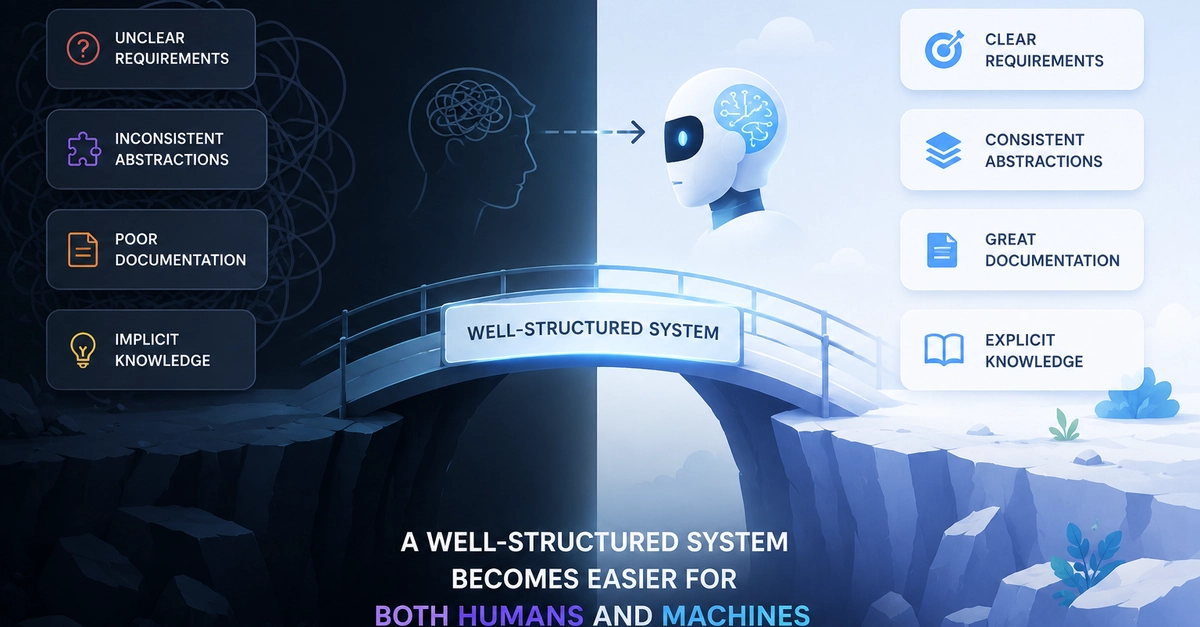
AI’s most persistent failures aren’t caused by algorithms, datasets, or even governance. They come from something far more fundamental: a missing architectural layer that should sit beneath every system we build. We talk endlessly about ethics, safety, and regulation, but almost never about the structural scaffolding that makes any of those possible. This unbuilt layer — the connective tissue between intent, execution, and assurance — is the quiet reason AI keeps breaking in predictable ways.
Most AI conversations orbit around two poles: the aspirational (what we want AI to do) and the operational (what AI currently does). But between those poles lies a structural void. It’s the layer that should translate intent into execution, and execution into something that can be assured, monitored, and trusted. Without it, every AI challenge becomes a recurring symptom of the same underlying architectural absence.
The Three Layers of AI Legitimacy
Every AI system, whether trivial or planetary, rests on three layers:
- Intent — what the system is meant to achieve