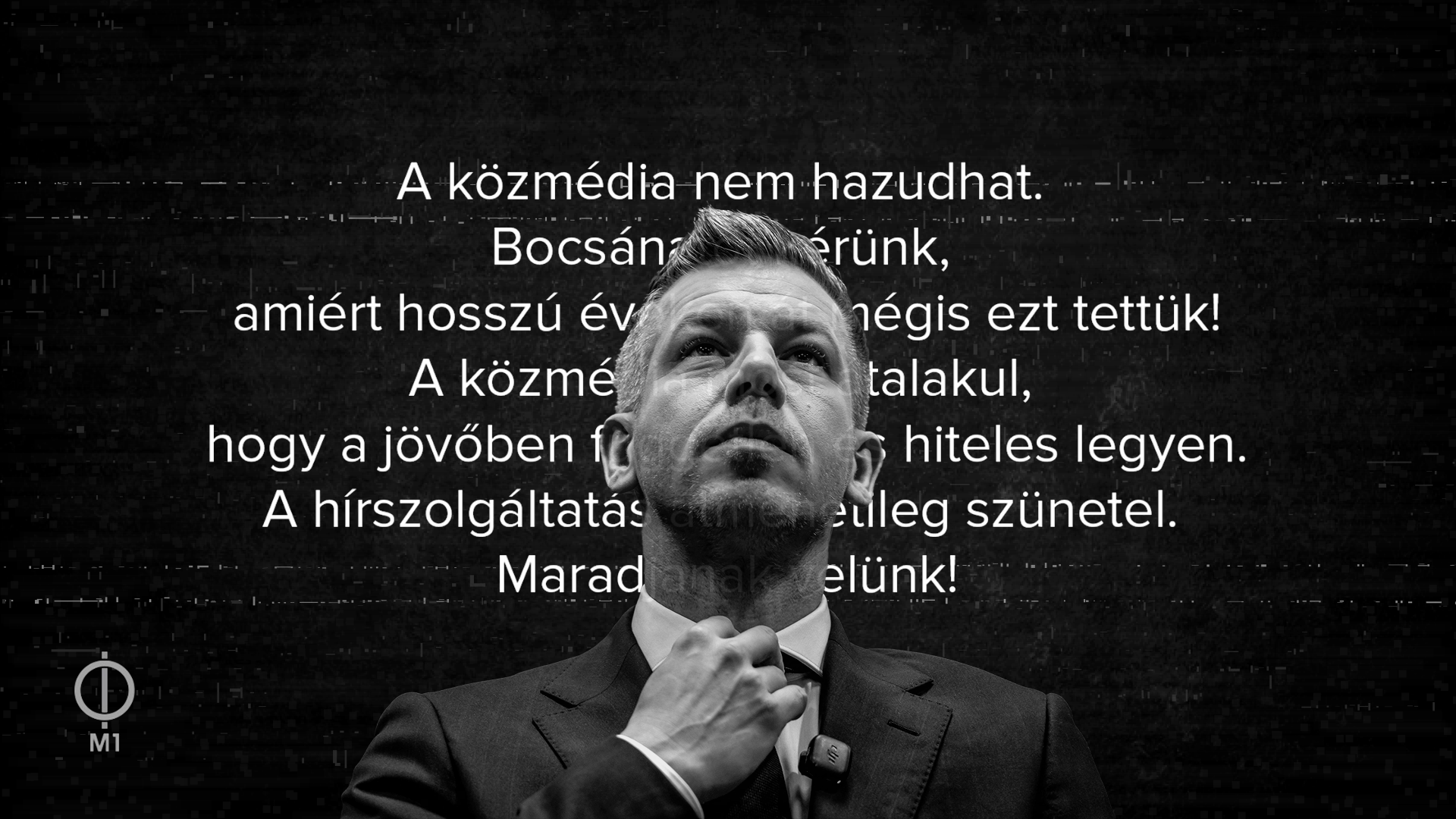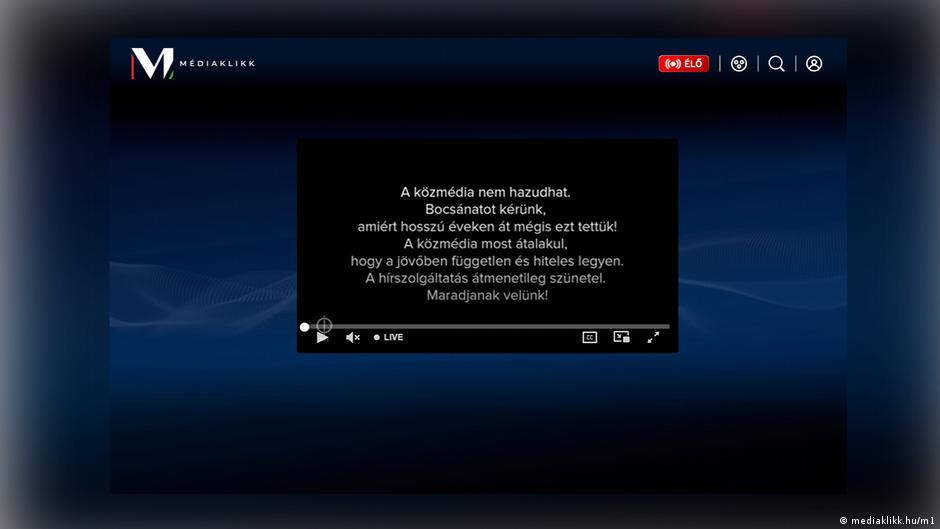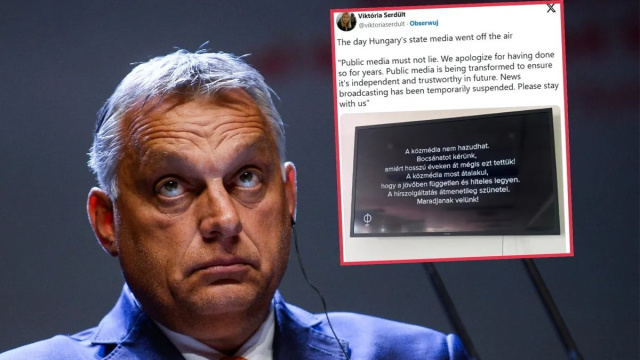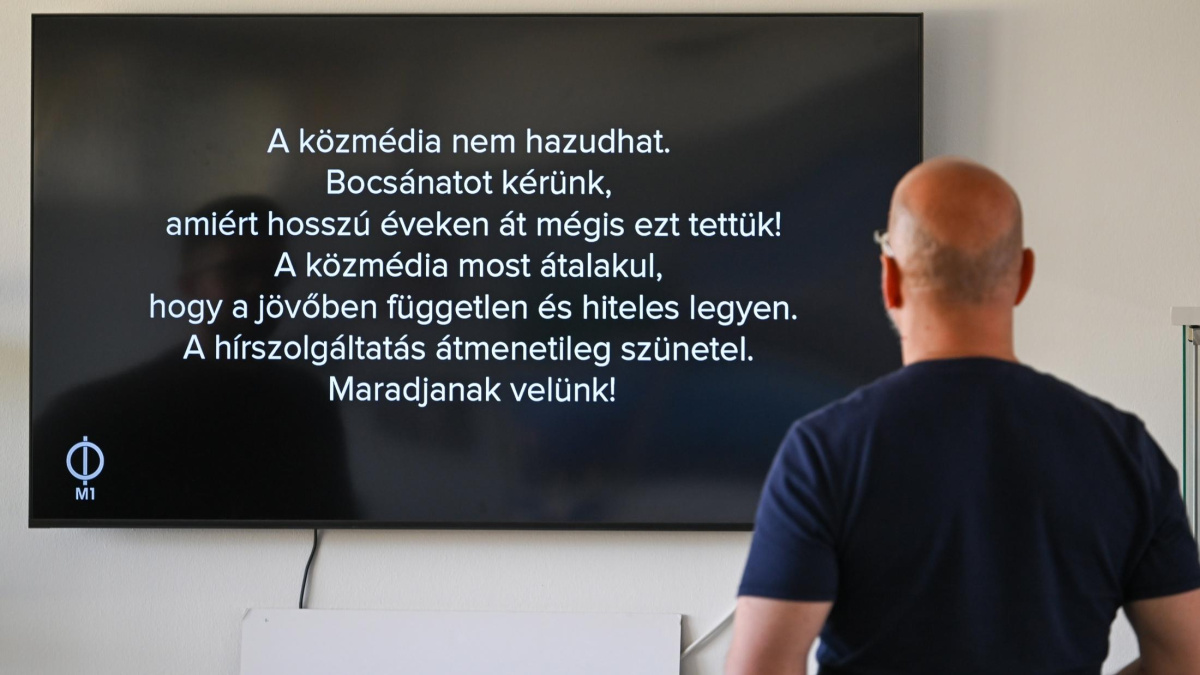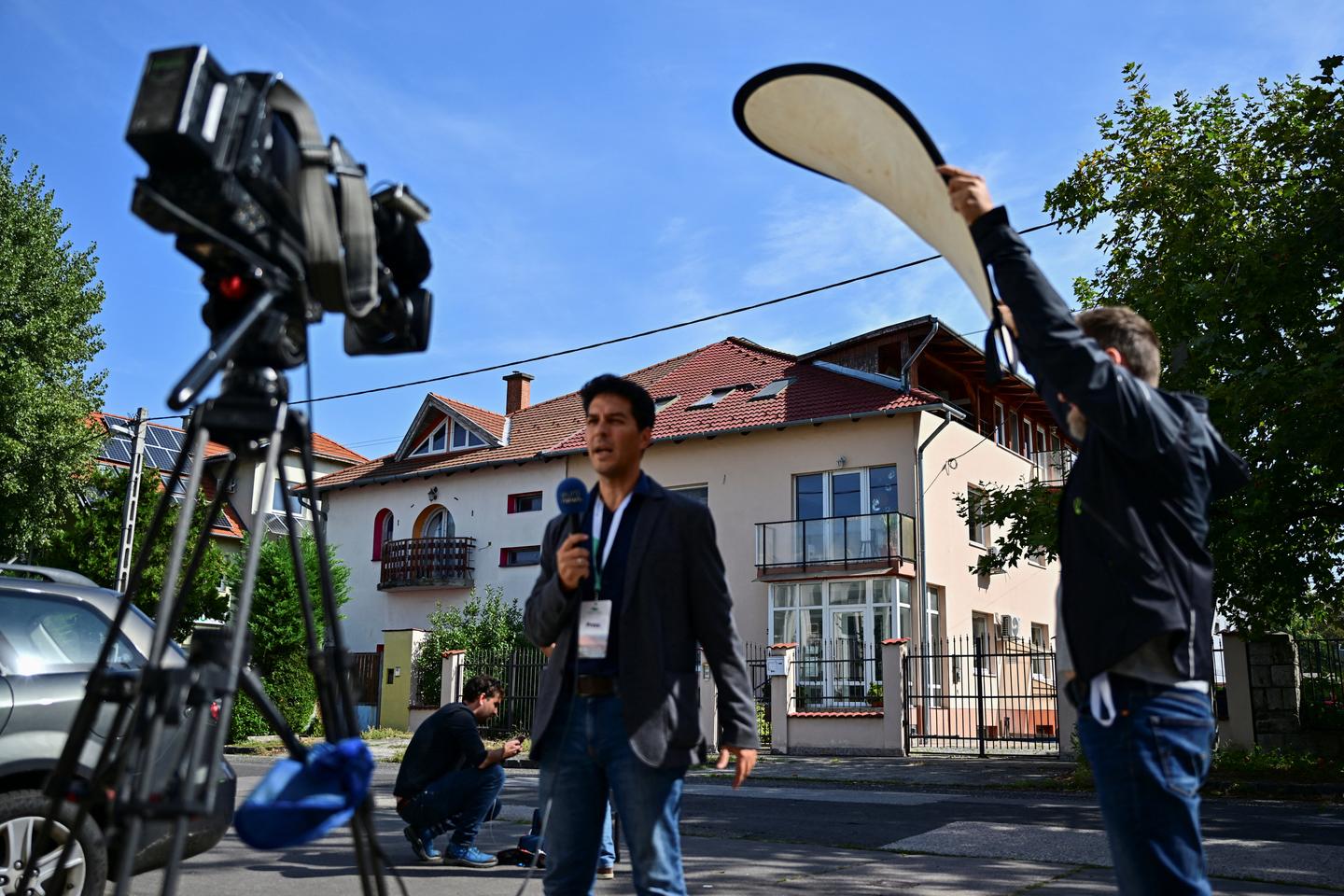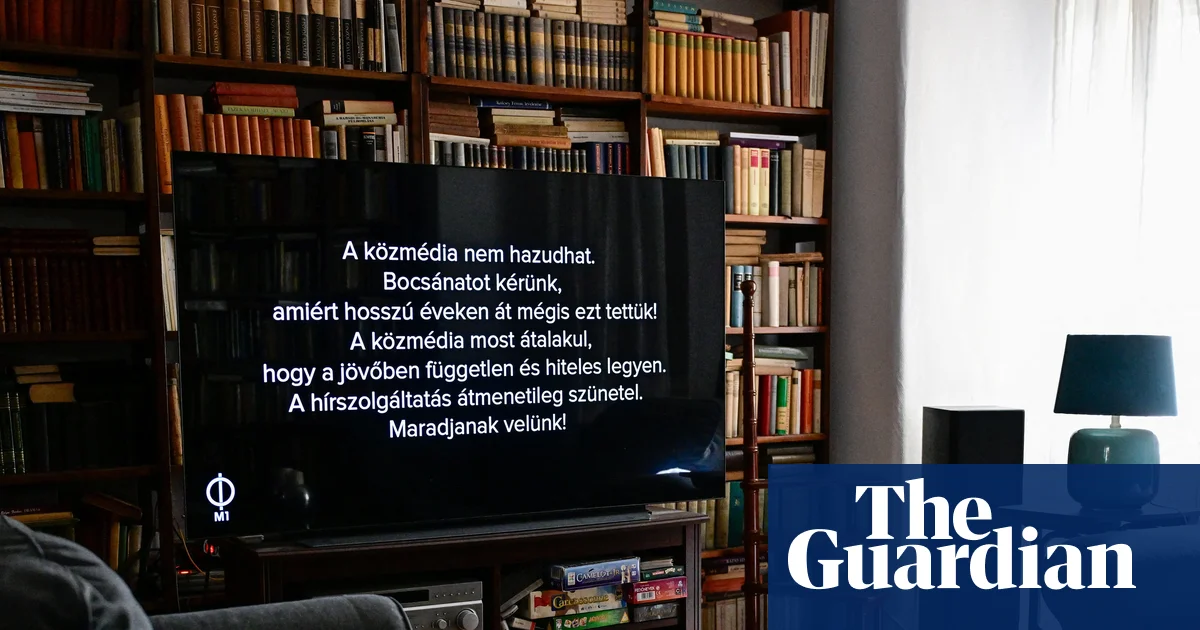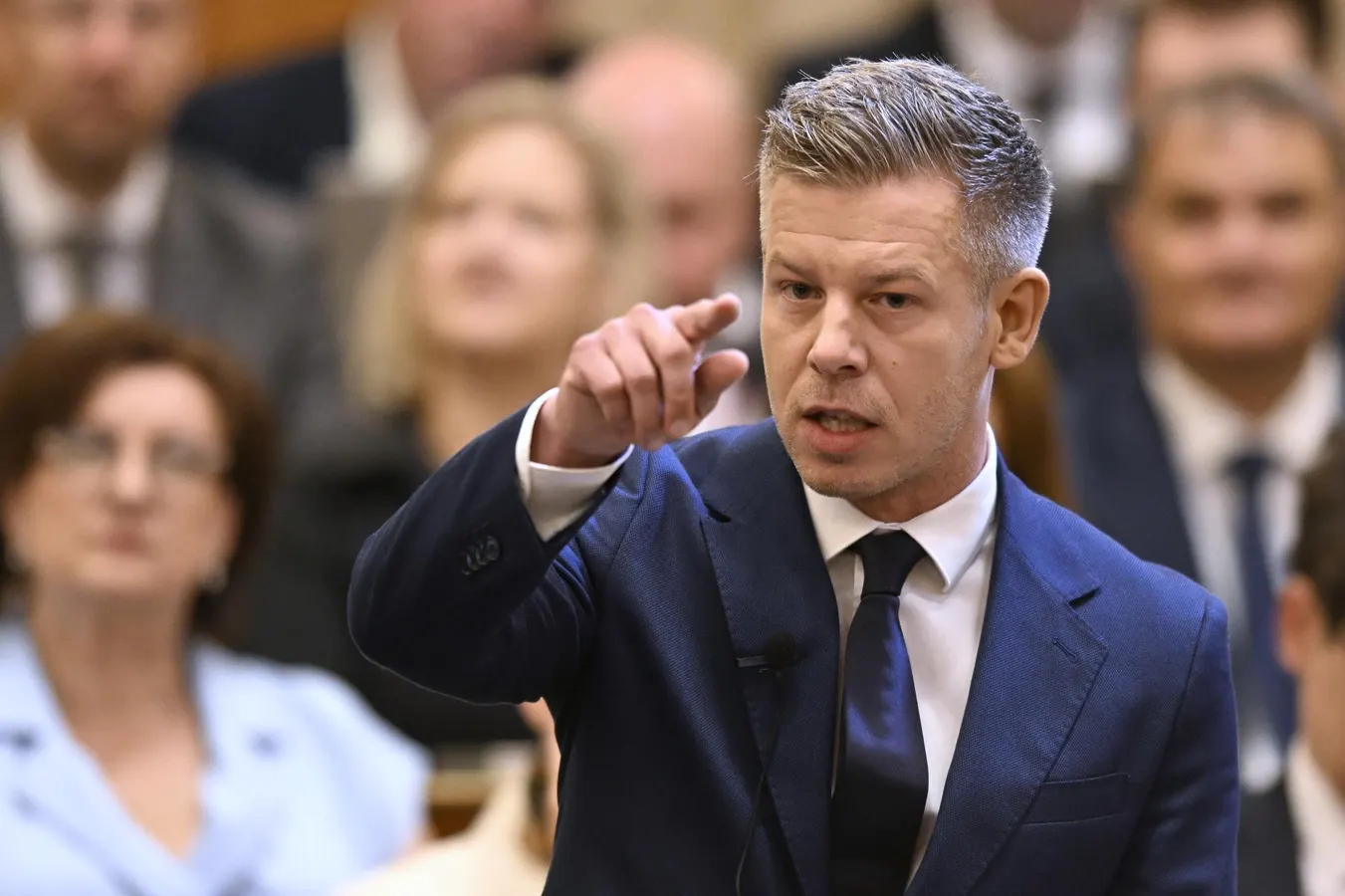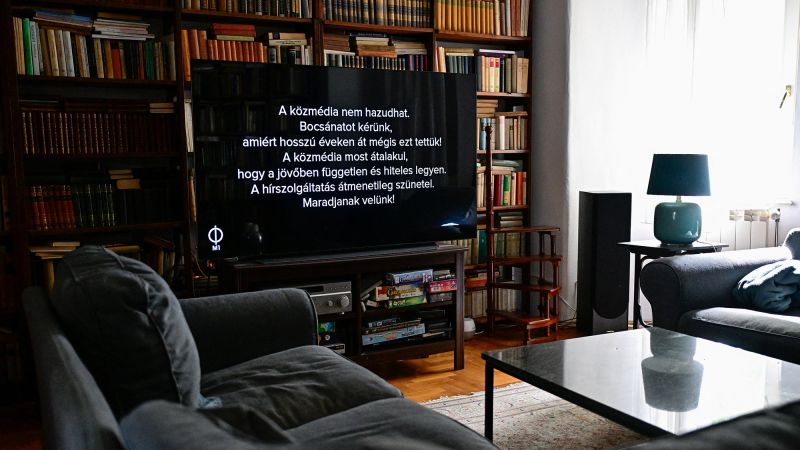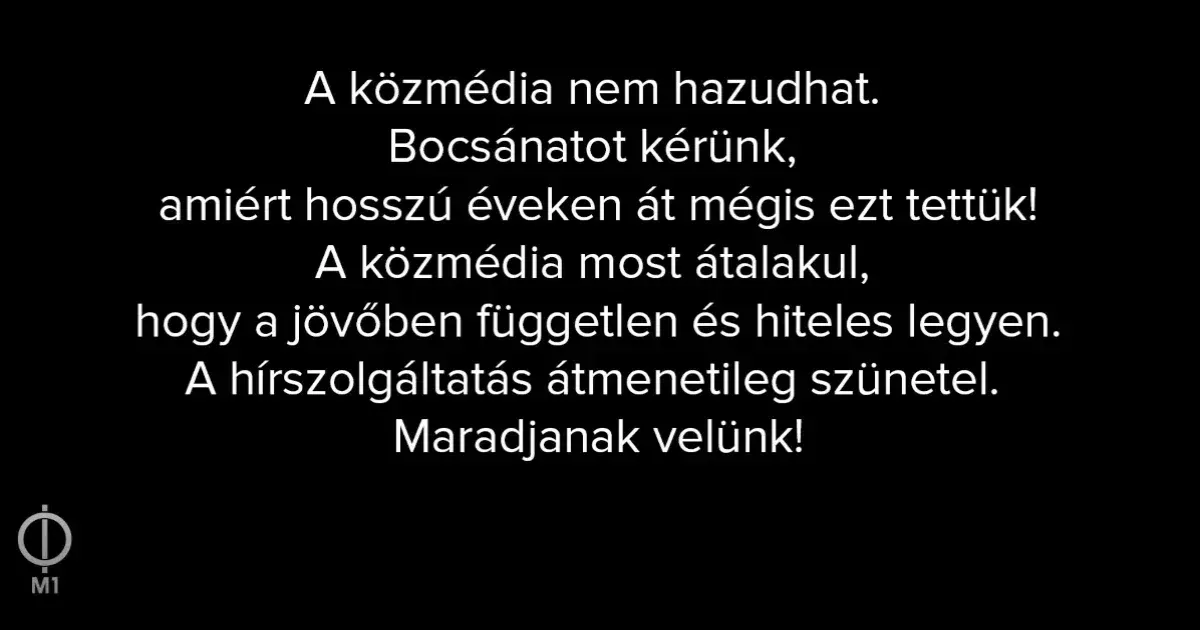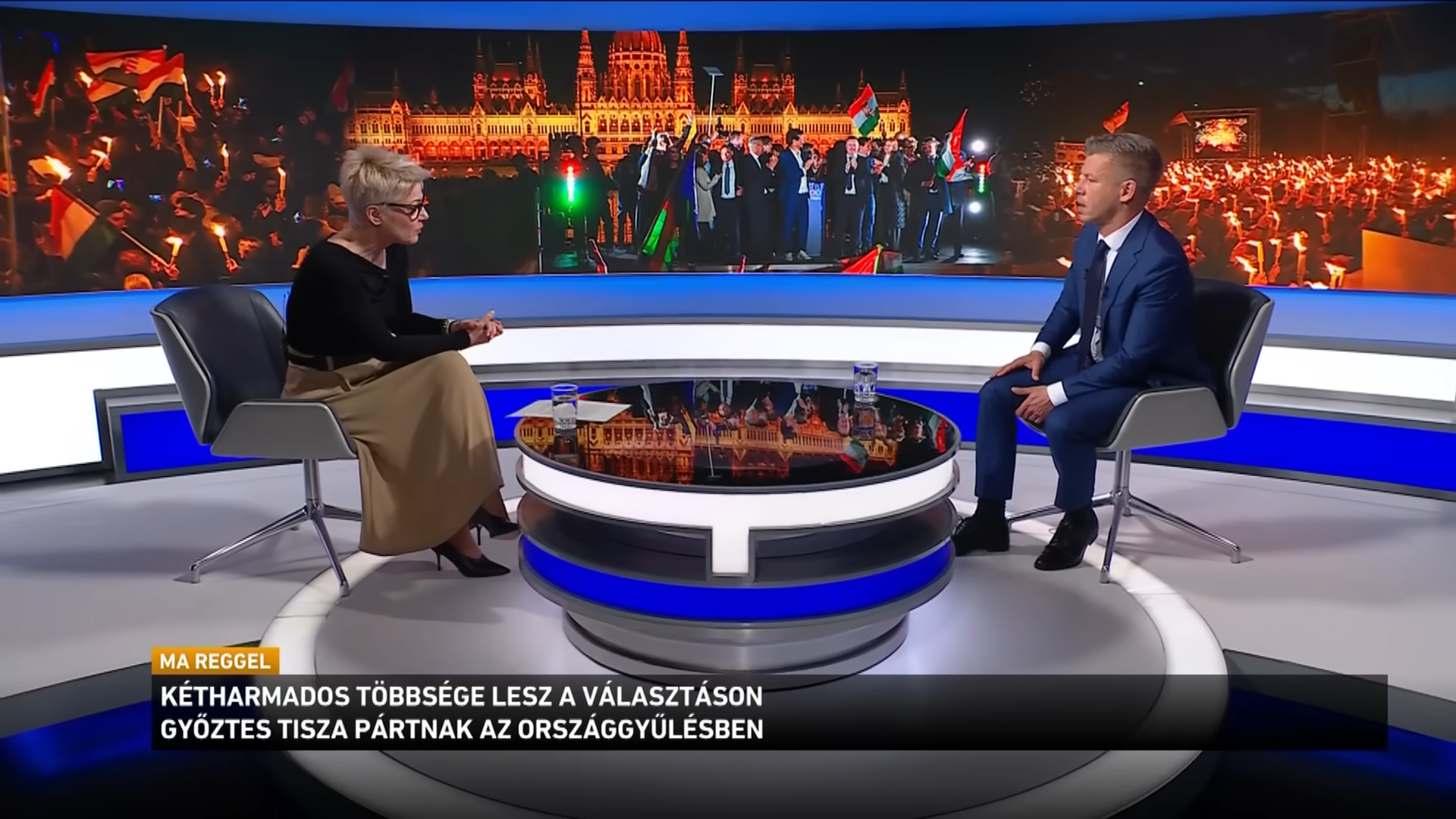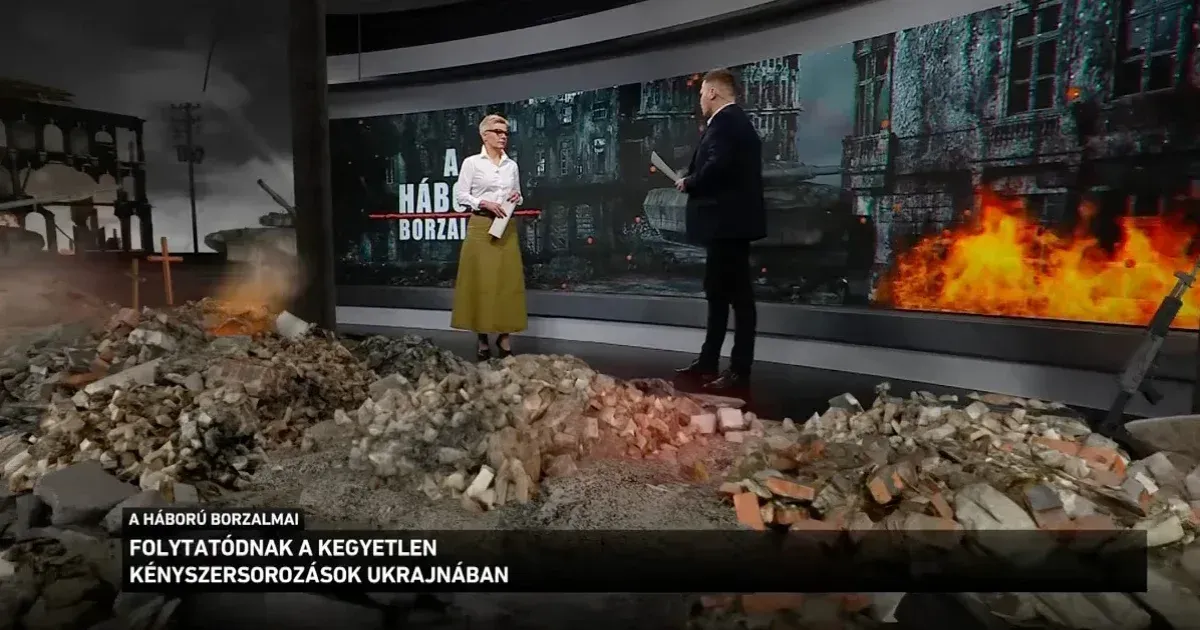
The program entitled The Horrors of War on Hungarian public television – Source: M1 – Híradó / YoutubeAt 4 p.m. on Tuesday, channel M1 of the Hungarian public media went dark; when viewers turned on their TVs, they were greeted by a message declaring that public media should not lie, and an apology for having done just that for years. This marked the end of perhaps the most disgraceful era in the history of Hungarian public television, after which broadcasting resumed at 19:56 p.m. with the Hungarian classic film, The witness.After March 15 2015, when M1 was transformed into a news channel, it became the most reliable instrument of the government’s propaganda machine, showering even those living in the country’s smallest settlements with false information and manipulated political messages day after day. In the years since, the professional and ethical standards of journalism were repeatedly trampled underfoot by the country’s public broadcaster. Below we have compiled a few examples of the most outrageous examples of this from the past 16 years of M1 and MTVA.Creating fake newsIt speaks volumes in itself that there was a court ruling stating that Dániel Papp, MTVA’s CEO who stepped down in early June, can be called a creator of fake news. Back in 2011, while still a reporter, Papp produced a manipulated news segment for the public media's news program, which suggested that Daniel Cohn-Bendit, a Green Party member of the European Parliament did not want to answer a question about his stance on pedophilia, which is why he walked out of his press conference in Budapest. However, the unedited footage clearly showed that Cohn-Bendit gave the reporter a lengthy answer and the only reason he left after a while was because he had a flight to catch. An interesting twist in the story is that in 2024, Papp—by then serving as CEO—presented the “Reporter of the Year” award at the public broadcaster to a colleague who had also manipulated a news report. In her report on the V4 summit in Prague, Renáta Kucsov neglected to mention that a few dozen counter-protesters had booed Viktor Orbán and Robert Fico.Blurring out blacklisted peopleAlso in 2011, the face of Zoltán Lomnici, a lawyer and former president of the Supreme Court was blurred out in footage from a press conference shown on the news programs of both Duna TV and MTV. This technique is generally used to conceal the identities of people suspected of crimes; in this case, however, the image of a public figure was removed from the footage while László Tőkés was speaking.The version uploaded to the video library—without the logo and without any blurring—and the original Duna TV footage with the logo blurred out – Source: MTVAThe case was made even more serious by the fact that when the news segment was later uploaded to MTV’s video archive, it featured a different clip without the blurring—meaning the original broadcast was altered after it had aired. According to anonymous sources in the public media, Lomnici was on an informal blacklist at the time, which is why they tried to avoid showing him on the news programs.But things were still different back then: MTVA acknowledged that a serious ethical violation had been committed, apologized to Lomnici, and launched disciplinary proceedings against those responsible. Gábor Élő, the head of the state news agency's (MTI) news center was fired from the public media. The court later ruled that the termination was unlawful because he bore neither direct nor indirect responsibility for the blurring. In 2017, Élő became the strategic director at (the pro-Fidesz media conglomerate) Mediaworks, a company with close ties to the government, and then rejoined MTI in 2024.They couldn't find the protestersA large crowd gathered in front of the Opera House in Budapest on January 2, 2012, to protest the Orbán government’s new Fundamental Law. The reporter of M1 was also there to report for the evening news, but only the cordoned off, nearly empty section of Andrássy Avenue was visible behind him—the thousands of people protesting were not.The incident caused a great deal of public outrage at the time, so MTI Nonprofit Zrt. felt it owed the public an explanation. They issued a statement acknowledging that a professional error had occurred. According to the explanation, their mobile unit, which was needed for the live broadcast did not arrive at the scene in time, and the crew on site did not have enough time to choose a location from which the crowd would have been visible-but the morning and noon news programs shown later, however, included footage showing the protesters. The public media’s lengthy statement at the time suggests that back then, they were still sensitive to criticism questioning their objectivity. Later on, however, it became more common for them either not to report on opposition protests at all or to show footage in which only a few people were visible.The horrors of warFor the 2026 election campaign, the public media—which was entirely subordinated to the Fidesz-KDNP government's communication goals and was used to serve them—launched a new program in February titled The Horrors of War, which aired twice daily on weekdays. The program conveyed a strong political message even with its visual presentation: the host spoke amid virtual ruins and flames about the Hungarian government’s position that Hungary must stay out of the war. The program focused primarily on the situation in Ukraine, the frequent power outages, the suffering of civilians, and the conscription in Ukraine, making only sporadic references to Russian attacks.Special emphasis was placed on footage of the military conscription going on in Ukraine, much of which was sourced from unverified Telegram channels. The program aligned well with Fidesz’s campaign rhetoric about the war, which suggested that a change in government would result in Hungary being dragged into the war.Péter Magyar would start World War IIIAlthough the pro-government news site Origo practically announced every week that World War III had already begun, it took a while before this narrative found its way onto public television in such a direct, raw form. In a news segment last December, however, a Reuters article was presented as saying that “World War III could break out, and Péter Magyar could play a key role in it.”The piece in question, incidentally, is not a news report but a prediction—in other words, it outlines a possible scenario. In this scenario, it was assumed that there would be a change of government in Hungary, and that Péter Magyar would advocate for support of Ukraine and closer cooperation with the European Union. According to the author, this would make it easier to deepen European defense cooperation. It was this detail which M1 presented as suggesting that World War III could break out because of Péter Magyar.Virtual barbed wireIn December 2021, during a report on illegal immigration on the M1 news, virtual barbed wire and a watchtower were projected into the studio. The graphic appeared on the screen as if the anchor were standing behind a border fence while talking about the European Union’s immigration policy.This unusual visual element sparked a major backlash because it was a clear indication that public media was not only reinforcing the government’s messages on immigration through the content of the news, but also through the imagery used.Hungarian POWs from Transcarpathia reciting the Russian narrativeIn its program The Horrors of War, the public media aired several clips in which Hungarian soldiers from Transcarpathia said that they owed their lives to Russian soldiers-while being held as prisoners of war by Russia. The program reposted these videos from social media without any alterations. According to international lawyer Tamás Hoffmann, who spoke to Telex, this could even constitute a violation of the Geneva Convention, since that prisoners of war are in a vulnerable position, so it cannot be known for certain whether their statements were made of their own free will.The Russian model: total controlAfter the elections, four former employees of the public media spoke to Partizán about how political directives regularly influenced editing the news at MTVA. According to their accounts, there were periods when coverage of the press critical of the government was prohibited; MTI staff were only allowed to ask pre-approved questions at government events, and they were often required to produce content based on Russian sources. Several of them claimed that instructions on content came from the top management, and that Zsolt Németh, who became known under the nickname “Pitbull,” and who was the channel director of M1 at the time, oversaw the editing of political news.Direkt36 previously reported that certain news stories were dictated to MTI directly from the Prime Minister’s Office, while leaked audio recordings suggest that Hirado.hu’s management also made sure that political opinions unfavorable to the government were not prominent featured in their stories.The man in the street, created by AIIn one of the news programs on M1 this spring, the public broadcaster used a propaganda video from the National Resistance Movement (Nemzeti Ellenállás Mozgalom-NEM) to illustrate the potential consequences of the Tisza Party’s alleged tax increase plans. The video also featured characters created using artificial intelligence, making it unclear to viewers where the public broadcaster’s own report ended and where the political organization’s campaign material began—nor was it ever made clear that the people they were seeing were not real.The owner of NEM is Bence Apáti of Megafon (an organization of pro-Fidesz social media influencers), and his organization spent large sums on political advertisements. The claims presented in the news report in question were based on an anonymous article published by the pro-Fidesz outlet Index about the Tisza Party’s alleged tax increase plans. Although Péter Magyar immediately refuted the claims, and the article’s assertions could not be substantiated, the pro-government media began treating them as fact, and M1 reinforced this narrative by using a political campaign video in its news report.The court ultimately ruled that the Tisza Party’s alleged tax increase plan was a hoax. In a retrial at the court of first instance, the court ruled in favor of the party in its defamation lawsuit against Index. According to the ruling, Index falsely claimed that the document it had obtained was prepared by the Tisza Party’s economic committee for the party’s leadership, thereby creating the false impression that the Tisza Party was preparing a drastic increase in personal income tax. The ruling was upheld, and Index published a clarification in May.Bud Spencer and the gold convoyThe edited images and memes posted on M1’s Facebook page about the case of the Ukrainian cash and gold shipment looked more like political campaign materials than public service information. The posts centered around the so-called “Ukrainian gold convoy” and they all began with the same question: “What kind of money was the Ukrainian gold convoy transporting, and who was it for?” while providing little substantive information about the actual details of the case.The images featured, among others, Volodymyr Zelensky alongside Bud Spencer, or included captions such as “Slava money?” and “How much does friendship cost?”. Other posts featured Péter Magyar, Ursula von der Leyen and Manfred Weber standing next to the seized bundles of cash, with the images reinforcing the government’s political messages about Ukraine.The public media’s posts, however, did not include the Ukrainian side’s position, which claimed that the seizure of the cash and gold shipment was unlawful. The posts only covered the actions of the Hungarian authorities and the government’s narrative, thus failing to present the story from all sides and serving up a one-sided political message instead.The credibility of the whole thing is well illustrated by the fact that the confiscated valuables were eventually returned by the Orbán government itself after they lost the election. At the end of June, János Hajdu, the former director general of the Counter-Terrorism Center, (which carried out the raid) was questioned as a suspect. Telex was the first to report that it was Viktor Orbán himself who had decided on the raid against the cash couriers, and that even the timing of the operation had been determined at the highest level of government.Incitement in one minuteOne of the most disturbing formats on Hungarian public television during this time was the one-minute newscast, which condensed the topics listed above into a mere sixty seconds between programs. The “One-Minute News,” as it was officially called, launched in March 2015 as part of M1’s makeover, with an average of 40–50 segments airing every day on M1 and 5 on M4 Sport. Viewers were also regularly bombarded during the commercial breaks of magazine shows, agricultural programs, and sports broadcasts with claims that the opposition would sell out the country, that the Ukrainians do not want to make peace, and that migrants could break through the border fence at any moment and they would not stop until they reached the viewers homes.For more quick, accurate and impartial news from and about Hungary, subscribe to the Telex English newsletter!
The lowest points of the propaganda on Hungary's public television
The basic professional and ethical standards of journalism were repeatedly violated in recent years on Hungarian public television. This is Telex's compilation of the most outrageous examples.
2,148 words~10 min read