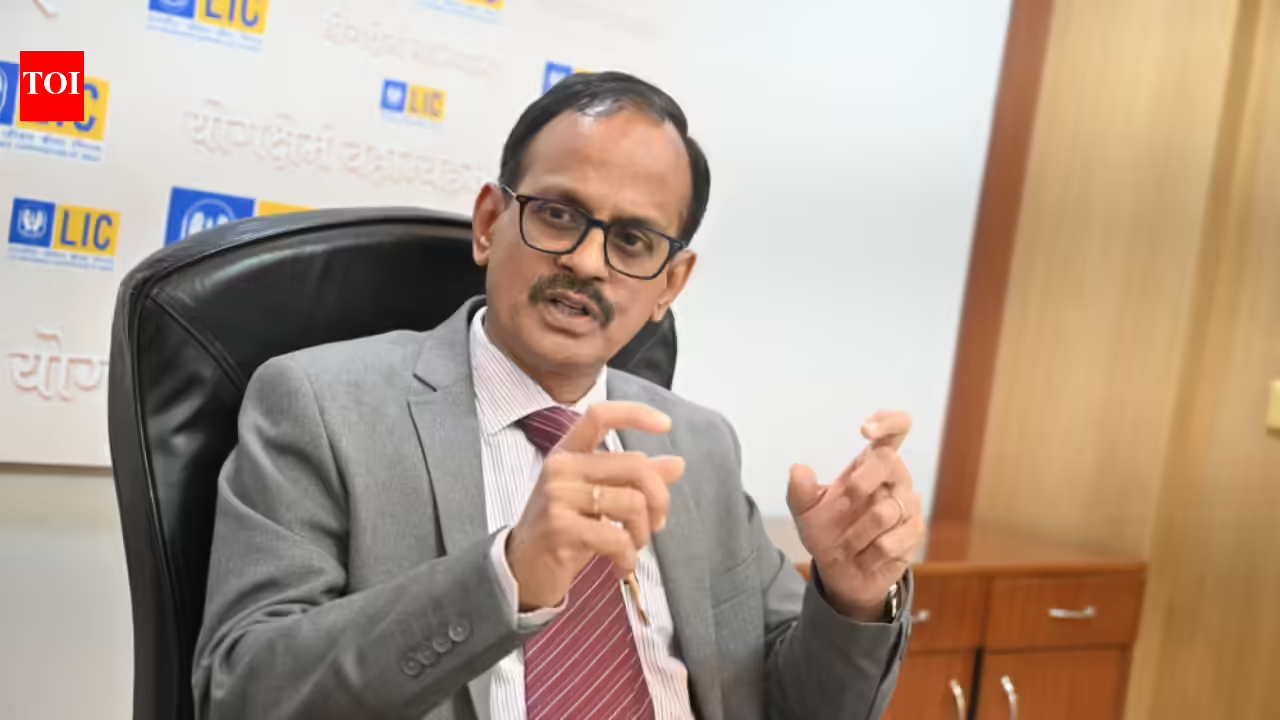
India’s middle class is increasingly demanding simpler and more transparent insurance products said LIC MD and CEO R DoraiswamyMUMBAI: India’s middle class is increasingly demanding simpler and more transparent insurance products, signalling a decisive shift in how the industry must design and deliver policies in the years ahead LIC MD and CEO R Doraiswamy said.“India’s middle class is larger, more informed, and more digitally connected than before, and it expects insurance to be simple, transparent, and useful in real life,” Doraiswamy said, adding that this would mean “less complexity in products, fewer hidden exclusions, and faster settlement when families need money most.”Speaking at the Foundation Day event of the Insurance Institute of India last wek, the LIC chief framed the changing expectations of customers as part of a broader transformation underway in the insurance sector.He pointed out that while the industry has achieved significant scale with premium income of Rs 11.93 lakh crore, assets under management of Rs 74.44 lakh crore, and over 41 crore policies issued in FY25, penetration remains at just 3.7%. “These are impressive numbers, but they also tell us something deeper. Insurance is now central to India’s economic resilience, household security, and business continuity,” he said, while cautioning that the low penetration “shows how large the protection gap is.”Doraiswamy emphasised that the key challenge is not growth, but relevance. “The real question is not whether insurance will grow. The real question is how insurance must change to remain relevant, trusted, and inclusive in the years ahead,” he said.“Insurance is moving from being a product purchase to being a resilience decision,” Doraiswamy said. “That change is fundamental, as it shifts the focus from selling a policy to solving a risk.”He also highlighted the role of technology in reshaping the industry, noting that digital onboarding, AI-led underwriting, and automated claims processing are becoming essential. “These are no longer experimental ideas; they are becoming operational necessities,” he said, as customers increasingly expect speed and a frictionless experience.On the policy front, Doraiswamy referred to the government’s push for “Insurance for All” by 2047 and the recent increase in foreign direct investment limits to 100% as key developments that could drive capital inflows and innovation.At the same time, affordability remains a major barrier. “Many families and small businesses remain underinsured because premiums, distribution costs, and limited awareness continue to act as barriers,” he said.
Insurance products must be simpler, more transparent: LIC chief
MUMBAI: India’s middle class is increasingly demanding simpler and more transparent insurance products, signalling a decisive shift in how the industry must design and deliver policies in the years ahead LIC MD and CEO R Doraiswamy said.
393 words~2 min read