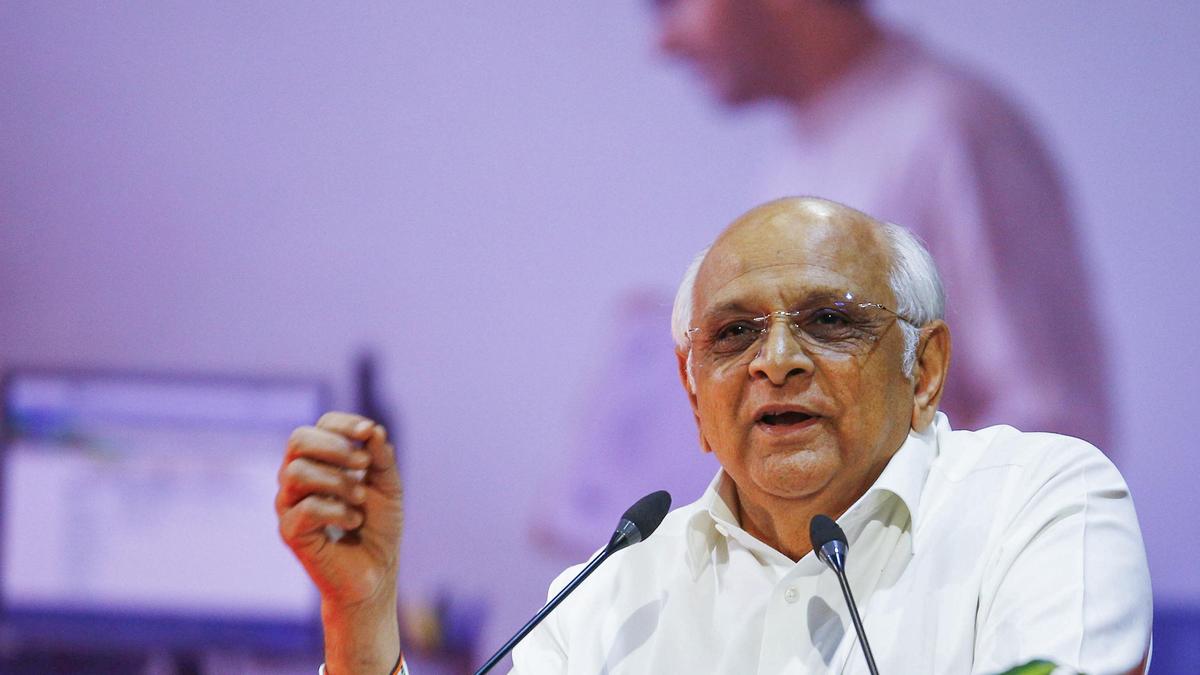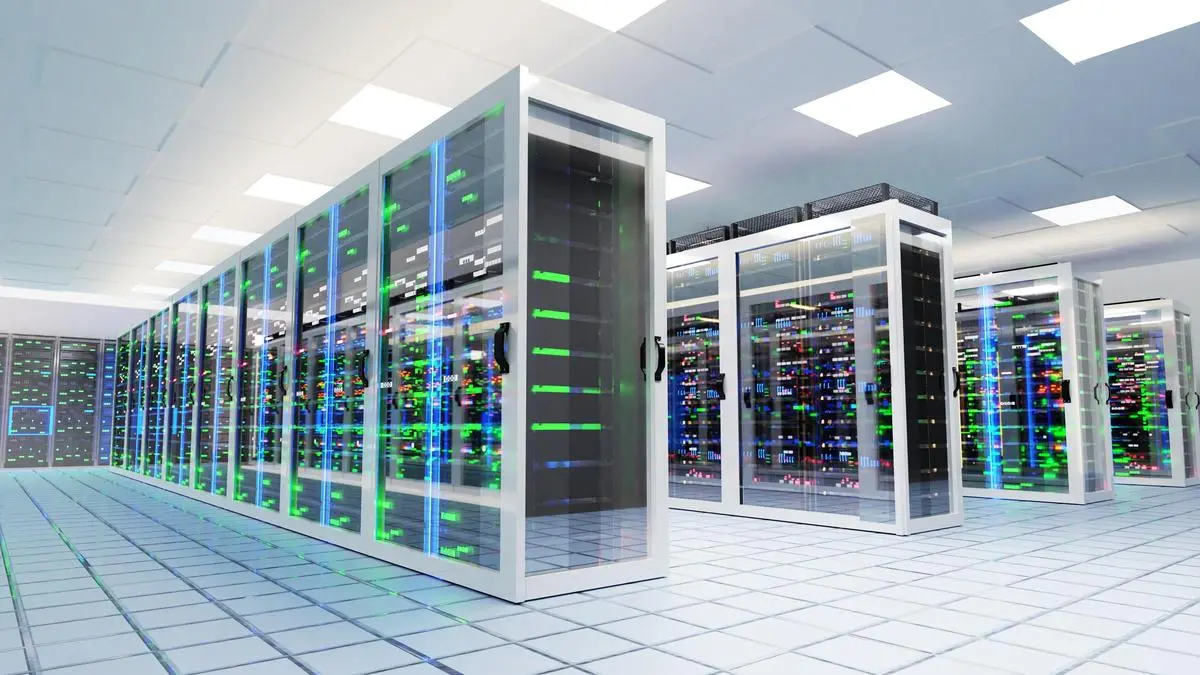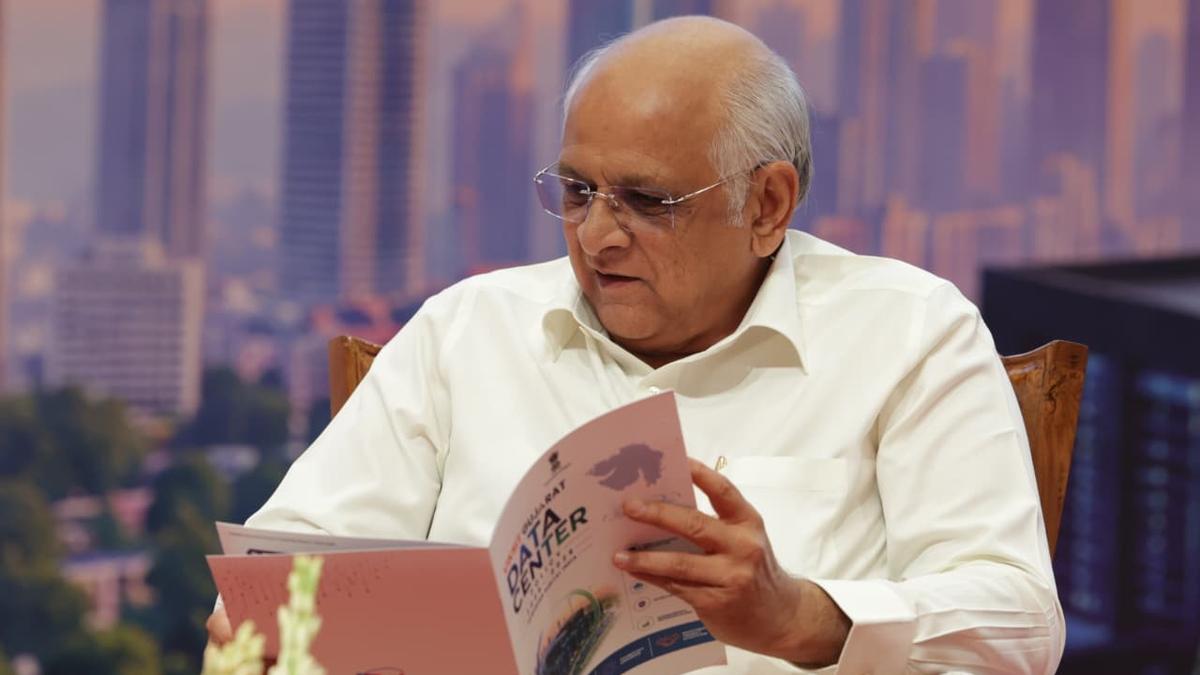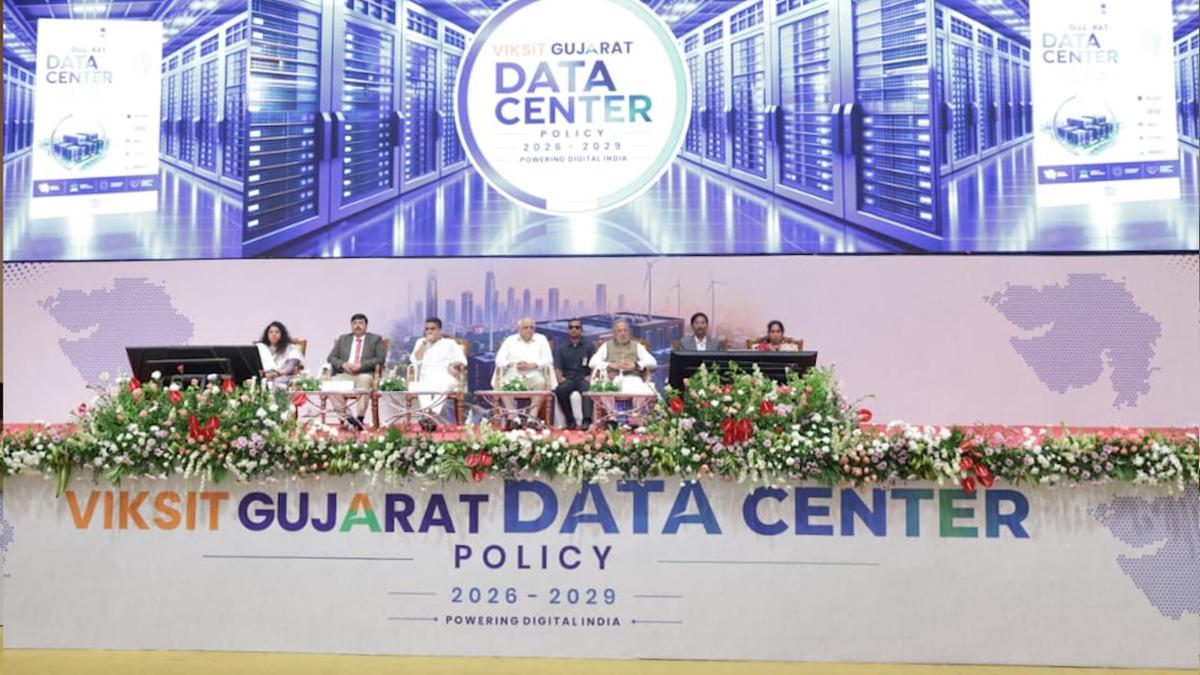
Seeking to position itself as India’s preferred destination for hyperscale data centres, cloud computing and artificial intelligence (AI)-driven digital infrastructure, the Gujarat government on Thursday (July 9, 2026) unveiled its first-ever Data Centre Policy (2026-29), targeting investments of ₹6 lakh crore and the creation of 7.5 GW of data centre capacity over the policy period.The policy, launched by Chief Minister Bhupendra Patel in Gandhinagar, offers a wide range of fiscal and non-fiscal incentives, including capital subsidy, interest subsidy, power tariff support, reimbursement of State GST (SGST), exemption from stamp duty and registration charges, and financial assistance for captive desalination plants to meet the sector’s high water requirements.The new policy aims to make Gujarat a preferred destination for data centre investments and help it compete with established hubs such as Telangana, Maharashtra and Tamil Nadu.“Gujarat is the first state to bring this policy. We are confident it will attract investments of ₹6 lakh crore, create 7.5 GW of data centre capacity and generate significant employment,” Chief Secretary M.K. Das said.The government said the policy has been designed to capitalise on the rapid growth of AI, cloud computing, digital payments, e-commerce, electronics manufacturing and other data-intensive sectors, while strengthening Gujarat’s position in India’s digital economy.Addressing the gathering, Mr. Patel said India was emerging as one of the world’s largest producers and consumers of data under the leadership of Prime Minister Narendra Modi, making digital infrastructure a key pillar of the country’s economic growth.“In the digital era, data has become a vital asset and is emerging as a new foundation for the economic growth of Viksit Bharat,” he said, adding that emerging sectors such as AI, cloud computing, digital economy and electronics manufacturing have created unprecedented demand for world-class digital infrastructure.He said the Centre’s recent initiatives to establish India as a global hub for cloud and AI infrastructure, coupled with a 20-year tax holiday for global data centre infrastructure providers, would further accelerate investments in the sector.According to Mr. Patel, the new policy would strengthen services such as cloud computing, artificial intelligence, digital transactions, e-commerce, smart manufacturing and digital governance while reinforcing Gujarat’s long-term commitment to sustainable digital infrastructure.Highlighting the opportunity before India, Science and Technology Secretary P. Bharati said that while India generates nearly 20% of the world’s data, it accounts for only about 3% of global data centre capacity.“Globally there are around 12,000 data centres, with the United States and China accounting for nearly 70% of the world’s capacity. India, despite generating nearly 20% of the world’s data, has only about 3% of global data centre capacity. This represents a tremendous opportunity,” he said.To strengthen international connectivity, Gujarat is also expanding its digital backbone. Dr. Bharati said the State would soon have two operational cable landing stations, with another project expected to be announced shortly, significantly enhancing international connectivity for global cloud and hyperscale operators.Science and Technology Minister Arjun Modhwadia said the State had already received proposals for data centres with a combined capacity of 10 GW, with the government planning to facilitate the development of around 8 GW.He noted that India currently has only around 200 data centres with a capacity of 2-3 GW, compared with nearly 5,500 data centres in the United States and more than 500 in the United Kingdom.“This is the era of artificial intelligence and quantum computing. Gujarat has taken a historic decision to become a prime mover in this new revolution,” he said.Dholera in focusDeputy Chief Minister Harsh Sanghavi said the government’s credibility had already generated overwhelming investor interest, with requests from domestic and international companies seeking capacities nearly double the policy’s planned 7.5 GW.He said Dholera had emerged as the centrepiece of Gujarat’s ambitions, with demand in the region already exceeding twice the capacity envisaged under the policy. “Dholera has the potential to become the world’s largest Data Center City,” he said, adding that the government was simultaneously working to develop it as a hub for Global Capability Centres (GCCs).He said infrastructure projects, including the upcoming Dholera airport and the proposed semi-high-speed rail link between Ahmedabad and Dholera, would further strengthen the region’s attractiveness for investors.Mr. Sanghavi also underlined the policy’s sustainability provisions, stating that at least 51% of the electricity consumed by data centres must come from green energy sources. Water requirements would be met through desalination plants instead of drawing from resources meant for agriculture or industry.To facilitate investments, the government will organise stakeholder consultations, identify land parcels for prospective investors and appoint senior nodal officers to provide handholding support and expedite approvals.IncentivesThe policy provides an extensive package of incentives for eligible projects.These include a 2.5% capital subsidy on eligible fixed capital investment for projects in the Dholera region, interest subsidy of up to 4% for 10 years subject to an annual cap of ₹25 crore, ₹1 per unit power tariff subsidy for 20 years, 100% reimbursement of electricity duty for 20 years, complete exemption from stamp duty and registration charges, and reimbursement of SGST on eligible plant and machinery, buildings, infrastructure and operational services for specified periods.The government will also provide financial assistance for captive desalination plants, offering support of 20% of eligible capital expenditure or ₹2 crore per MLD, subject to prescribed limits.Describing the policy as a “game changer” for digital infrastructure, Mr. Das said Gujarat’s long coastline and abundant renewable energy resources made it well-positioned to meet the high power and water requirements of data centres while attracting large-scale investments and employment.
Gujarat launches first Data Centre Policy, targets ₹6 lakh crore investments and 7.5 GW capacity
Gujarat's new Data Centre Policy aims for ₹6 lakh crore investments and 7.5 GW capacity, enhancing digital infrastructure and sustainability.
903 words~4 min read