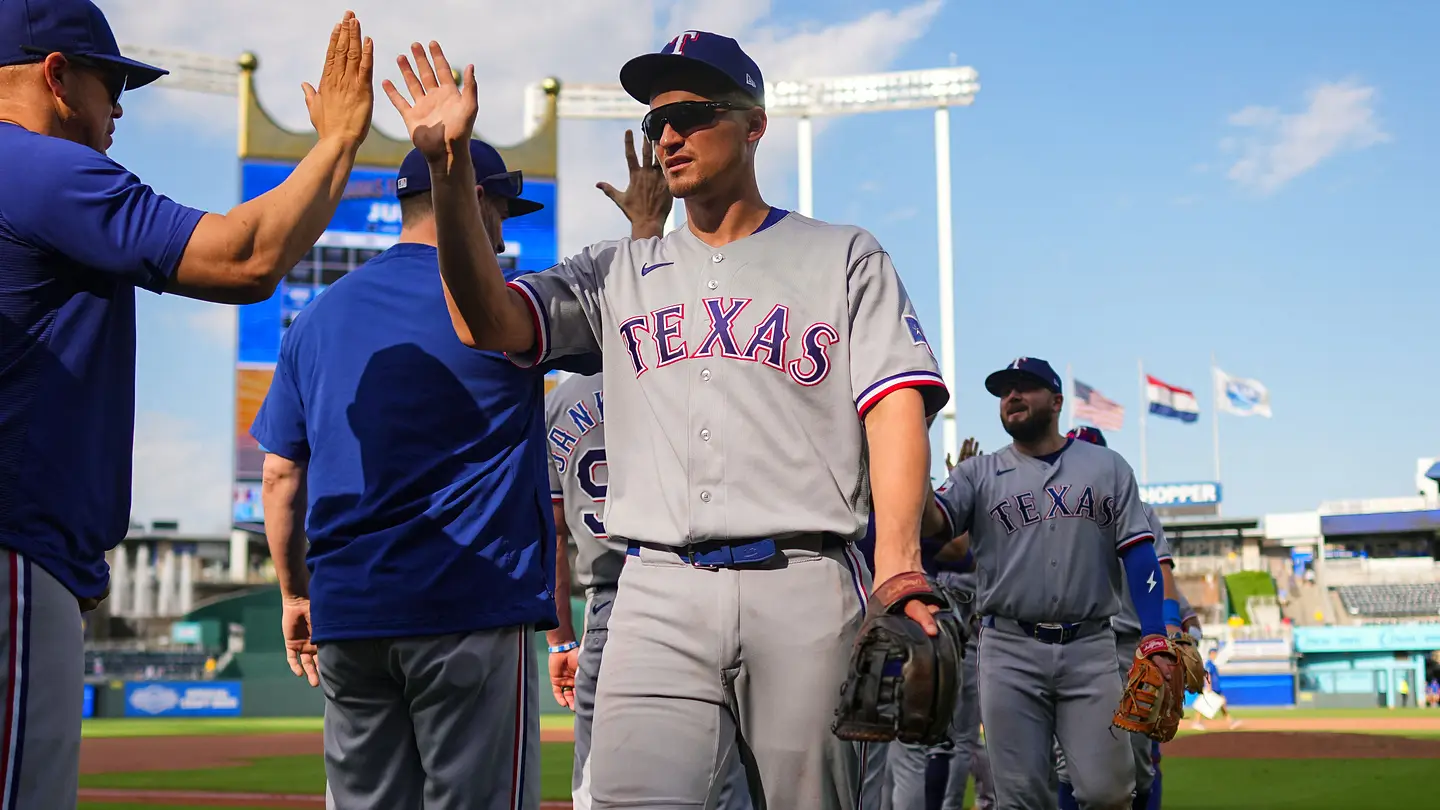
When it comes to the possibility of the Texas Rangers trading shortstop Corey Seager, the deadline represents something of a last call.The Rangers don’t want to part with Seager, mind you. They want to get him healthy and make a legitimate run at the postseason. But if they sputter over the next three-plus weeks, the idea of moving Seager will at least warrant internal discussion.Once the season ends, Seager will gain the right to veto any deal as a player with 10 years of major-league service, five consecutive with the same club.As it stands, Seager’s contract enables him to block deals to eight clubs. For one reason or another, the vast majority of those likely would have no interest in acquiring him, according to people briefed on the provision but unable to comment publicly.Even without restriction, Seager, 32, would be difficult to move. He has made six trips to the injured list in the past two seasons, including twice this campaign for lower back inflammation. He is also owed the balance of his $31 million salary for 2026, plus $155 million over the next five years.The Rangers almost certainly would need to pay a chunk of that down, particularly when the next collective-bargaining agreement is likely to include greater payroll restrictions in some form.The flip side: When healthy, Seager is a difference-maker at a premium position.A number of clubs, including the Boston Red Sox, asked the Rangers about Seager last offseason, sources with knowledge of the conversations said. The curiosity of those teams grew after the Rangers traded second baseman Marcus Semien, their other major signing prior to the 2021-22 lockout. The Rangers’ response on Seager was clear: We would need to be overwhelmed.Obviously, that did not happen. But the Rangers wound up cutting payroll by $37 million, the fifth-largest percentage decrease in the sport, behind St. Louis, Minnesota, Washington and Cleveland. With the league on the verge of a lockout, Rangers owner Ray Davis — a member of the league’s labor policy committee — might be inclined to make additional cuts if the team falls out of contention.The Rangers, holding the third American League wild-card spot and a half-game behind in the AL West, are not nearly at that point. If anything, they might get stronger over the next three weeks as they expect the returns not only of Seager and left fielder Wyatt Langford, but also pitchers Jack Leiter, Cody Bradford and Jordan Montgomery.The schedule, too, looks favorable. The Rangers are five games into a 19-game stretch in which they will play all but three games at home. The combined winning percentage of their remaining opponents is the lowest of the AL West clubs, and tied for the fourth lowest in the AL.In other words, the Rangers should be in a strong position, particularly in a division in which the Seattle Mariners are less imposing than expected and the Houston Astros are struggling to patch together a rotation. But in part due to their injuries, the Rangers are only a .500 club.Right-handers Jacob deGrom and Nathan Eovaldi also could become the topic of trade discussions if the team collapses before the deadline. But both already possess full no-trade clauses, and deGrom, in particular, might be disinclined to leave Texas unless the team intended to rebuild. That seems unlikely.As for Seager, the Rangers would not necessarily be locked in to him once he gains 10-and-5 protection. Players can always waive their no-trade rights, just as right fielder Brandon Nimmo did when the Rangers acquired him from the New York Mets for Semien.In any case, the coming weeks will be critical for any number of clubs seemingly riding the buy-sell seesaw, from the Red Sox to the Twins to the Detroit Tigers, the Baltimore Orioles to the Arizona Diamondbacks to the San Diego Padres.Since winning the 2023 World Series, the Rangers are six games under .500, with a bottom-five farm system.To avoid confronting some hard questions, they will need to pick it up. And soon.Gray to Atlanta? Maybe — if Red Sox sellThe Atlanta Braves are one of several rotation-needy teams expressing interest in Boston Red Sox starter Sonny Gray, according to people familiar with the situation who were not authorized to speak freely on the topic.For a few reasons, the Braves stand out as an intriguing match for him.They lead their division even with essentially a full rotation on the injured list. They are fit to cover both the prospect and financial cost (the St. Louis Cardinals are paying about half of Gray’s remaining commitment, and either the Red Sox or a new team would owe the right-hander slightly more than $6 million after the trade deadline). And while Gray, 36, holds a full no-trade clause, he lives in Nashville and presumably would embrace playing in Atlanta, about a four-hour drive away.A case for the Cubs to pursue Tarik SkubalEno Sarris and Derek VanRiperUnless Braves president of baseball operations Alex Anthopoulos makes a run at Tarik Skubal, Gray, who owns a 2.61 ERA over 89 2/3 innings and 16 starts, profiles as the best option.
What we’re hearing about the MLB trade market: Latest on Corey Seager, Sonny Gray and more
Plus more on two Royals' veteran starters, the Guardians' needs and the Mariners' crowded rotation.
2,233 words~10 min read