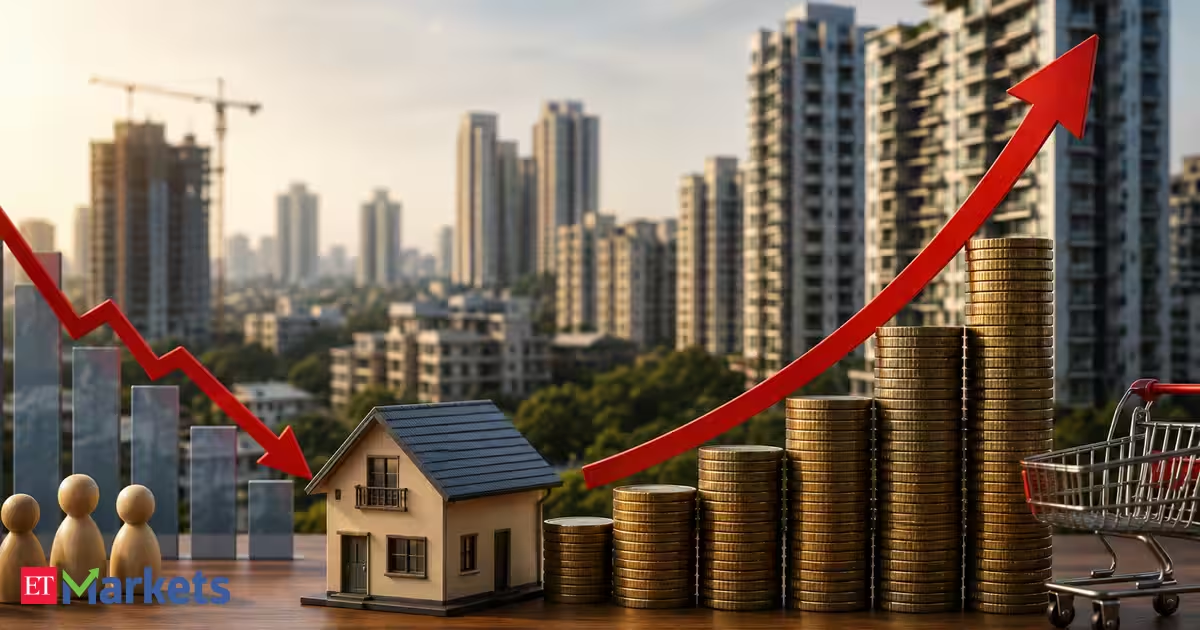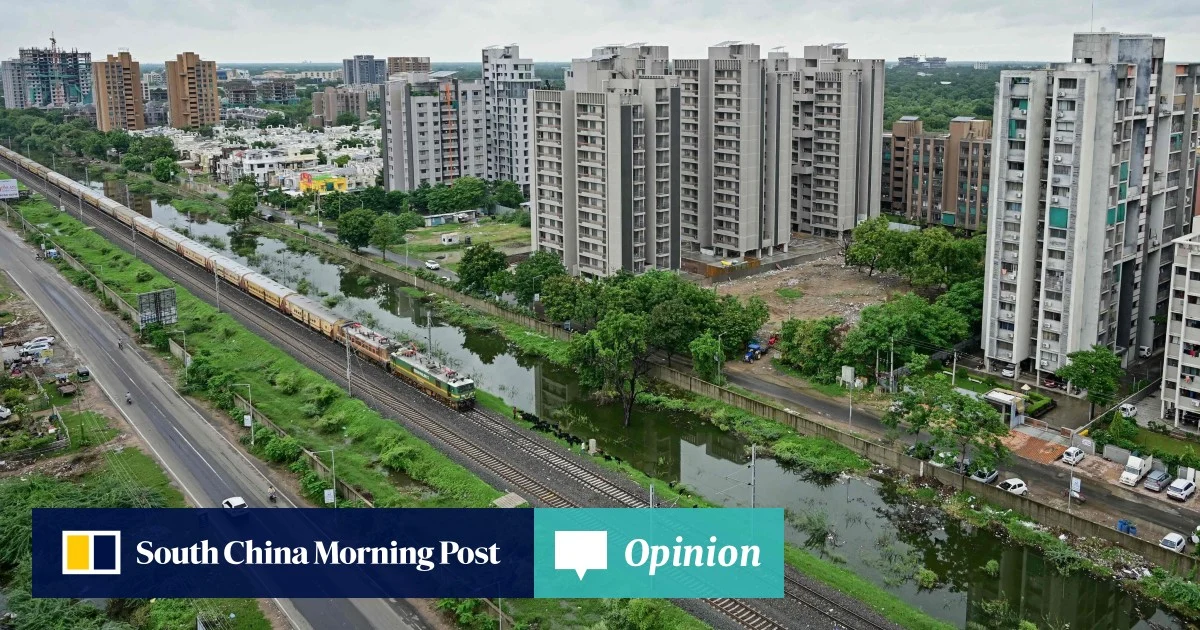
For nearly four years after the pandemic, India's housing market surprised almost everyone. Low interest rates, rising household incomes, lifestyle changes and a renewed preference for home ownership combined to produce one of the strongest residential real estate cycles in recent history. Prices rose sharply, inventories declined and developers regained pricing power.Housing (Mehul R Thakkar)That broad-based upcycle, however, is beginning to evolve into something more nuanced.The latest data suggest that the housing market remains fundamentally healthy, but the next phase of growth will be increasingly city-specific. Affordability, employment generation and local economic fundamentals, not just abundant liquidity, are likely to determine which markets continue to outperform.The divergence is already becoming visible.Bengaluru has emerged as the standout performer. Home prices rose 13.4% in FY26, while sales volumes expanded 12.7%, making it the only major metro where both prices and transactions recorded strong double-digit growth. The city's technology-driven economy, continued migration of skilled professionals and relatively disciplined supply have created one of the healthiest demand-supply balances among India's major residential markets.Hyderabad presents a different picture. After several years of exceptional growth, the market appears to be entering a phase of consolidation. Prices appreciated only 4.6%, while sales growth slowed sharply to 1.9%, signalling that demand is normalising after an extraordinary expansion. This moderation should be viewed as a healthy cooling rather than a reversal.Mumbai Metropolitan Region (MMR) tells perhaps the most important story for policymakers and developers alike. Prices continued to rise by 6.3%, yet sales volumes declined 4.4%, highlighting how affordability constraints are beginning to weigh on buyer sentiment in India's most expensive residential market. The divergence between price appreciation and transaction volumes is an early signal that housing affordability is once again becoming the key determinant of demand.The longer-term picture reinforces these trends.Over the past decade, Bengaluru and Hyderabad have witnessed exceptional price appreciation, with residential prices rising approximately 116% and 102%, respectively. In comparison, MMR prices increased only 45%, reflecting its higher base and already stretched affordability levels.The divergence is even more striking when one looks at sales volumes. Hyderabad recorded an extraordinary 200%+ increase in housing sales over the last decade, far outpacing MMR (73%) and Bengaluru (44%). Much of this expansion was driven by relatively affordable entry prices, rapid job creation and significant migration into the city.The compound annual growth rates tell the same story.Hyderabad has recorded the strongest long-term sales growth at 11.7% CAGR, underscoring the structural deepening of housing demand. Bengaluru, meanwhile, leads in price appreciation with an 8.0% annualised increase, reflecting sustained demand amid relatively tighter supply conditions. MMR, in contrast, has delivered only 3.8% annual price growth, characteristic of a mature market where affordability increasingly constrains further appreciation.The changing revenue shares across India's largest residential markets also point to a gradual reshaping of India's urban hierarchy.MMR continues to be India's largest housing market, but its share of total residential revenues has declined from 30% in FY22 to 24% in FY25, indicating that growth has become relatively stronger elsewhere.Hyderabad's revenue share increased rapidly to around 20% during FY23-FY24 before moderating to 15% in FY25, reflecting a cyclical slowdown after a period of exceptional expansion.Bengaluru, meanwhile, has maintained a remarkably stable 14-15% market share, suggesting that its housing market continues to be supported by consistent end-user demand rather than speculative activity.These shifts indicate that India's housing market is gradually decentralising. Economic opportunities are increasingly spreading beyond traditional metropolitan centres, with employment-rich and relatively affordable cities attracting both homebuyers and developers.Several structural factors continue to underpin the current housing cycle.Unlike previous real estate booms, today's market is overwhelmingly driven by end-user demand rather than speculative investors. Employment creation in technology and services continues to generate fresh housing demand, particularly in Bengaluru and Hyderabad. Rising household incomes, rapid urbanisation and the emergence of nuclear families continue to expand the base of aspiring homeowners.At the same time, developers have demonstrated far greater capital discipline following RERA. New launches have been more calibrated, inventory levels remain healthier, and excessive speculative supply -which characterised previous cycles--has largely been avoided. These structural improvements have contributed significantly to the resilience of housing prices despite rising interest rates over the past few years.However, affordability pressures are gradually resurfacing.Residential prices have appreciated considerably faster than household incomes in several markets. Higher property prices, elevated stamp duties and registration costs, and larger down-payment requirements are making it increasingly difficult for first-time buyers to enter premium housing markets. This explains why transaction volumes are beginning to soften in cities where affordability has deteriorated the most.This is where policy support and housing finance will become increasingly important. Improving access to affordable mortgage finance, expanding infrastructure connectivity to peripheral markets, accelerating urban transport projects and sustaining employment creation can significantly broaden the next phase of housing demand.The outlook therefore remains constructive but increasingly differentiated.Bengaluru appears well positioned to continue outperforming, supported by robust job creation and relatively tight supply. Hyderabad is likely to experience a period of consolidation after several years of exceptional growth, but its long-term structural fundamentals remain intact. MMR is expected to remain resilient on prices, although sustained recovery in transaction volumes will depend on improvements in affordability.India's housing market is not losing momentum--it is becoming more selective.The post-pandemic recovery was broad-based. The next phase will increasingly reward cities that combine strong employment generation, infrastructure development and housing affordability. In other words, the future of India's residential market will be driven less by cyclical optimism and more by structural economic fundamentals.(The views expressed are personal)This article is authored by Debopam Chaudhuri, chief economist, Piramal Group.
India's housing market is entering a new phase
This article is authored by Debopam Chaudhuri, chief economist, Piramal Group.
920 words~4 min read