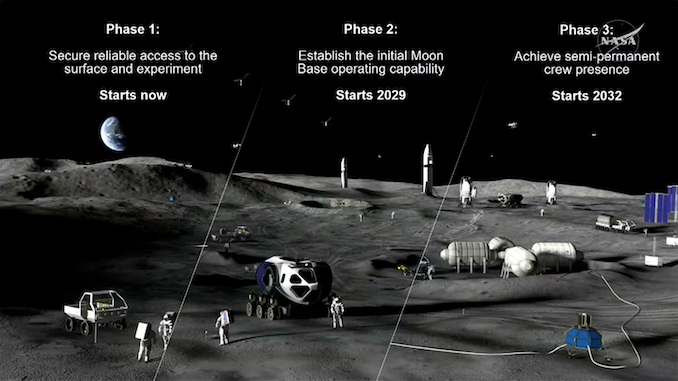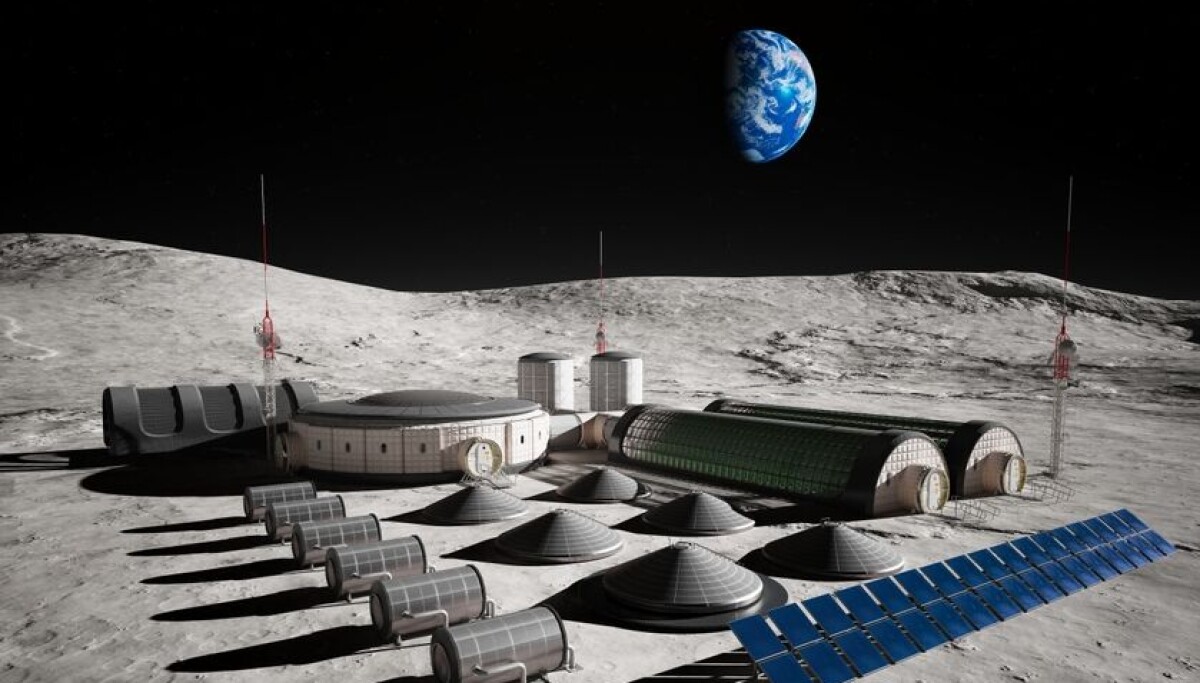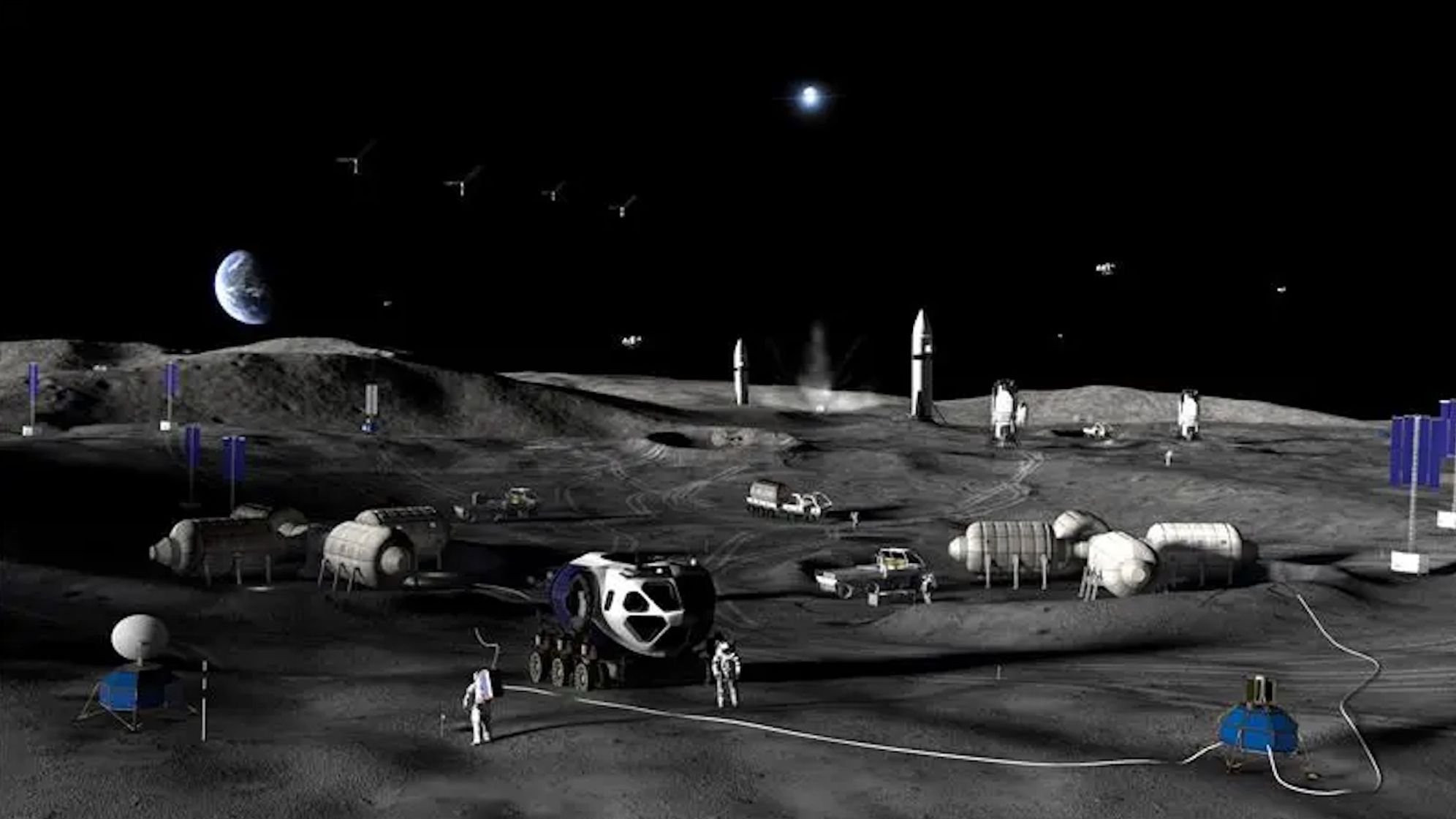
NASA plans a to build a permanent base near the moon's south pole via its Artemis program.
(Image credit: NASA)
The success of NASA's future moon base depends in large part on mission design, which should allow astronauts to work together well in a way independent from psychological training, a new study asserts.The goal of the study was to identify "specific conditions" for mission success and to look for any "red flags" that may stand in the way, lead investigator Anamaria Berea, a computational social scientist at George Mason University (GMU), told Space.com via email. (The first author of the PLOS ONE study, which was published in May, was GMU's Raymond Vera.)The team conducted the research using agent-based models, which are tools for computational simulations in fields ranging from the study of bird flocks to the spread of disease, Berea said. While a lot of modern-day AI "trains" or "learns" to extrapolate from information provided in a data set, agent-based modeling instead uses a data set to "understand emergent phenomena that don't have one single cause or direct cause," she said.The study team considered scenarios for how many astronauts would be on the moon base and how often resupply missions would occur. In an "initial case," for example, the assumed mission duration was three months, with a single resupply run at Month 2 with food, water, air and a fresh group of astronauts.Using a complex probability analysis known as a Monte Carlo simulation, the model astronauts in this scenario showed a productivity rate of about 20% against their expected tasks, "which is acceptable for a typical manufacturing process," the authors noted.This productivity rate doesn't take into account anything unexpected that may crop up during the mission, the authors added. "The low task completion rate suggests that, on average, teams are having challenges to overcoming psychological stressors and environmental disruptions," they wrote.Lessons from the International Space StationNASA tracks productivity a little differently on the International Space Station (ISS). The agency uses a metric called "utilization," which largely refers to the amount of crew time and number of scientific investigations that are performed on the space station during an increment or expedition. As of 2014, the ISS program suggested that ideal utilization should be 35 hours per crew per week when there are three people working on the U.S. part of the space station, and 68.5 hours if there are four or more. (The Russian side of the ISS works largely independently in this respect.)"NASA has generally met or exceeded this goal and set a high of 120 average hours per week devoted to research from October 2019 to April 2020," NASA's Office of the Inspector General (OIG), which has been tracking all of these productivity figures, stated in a report published in September 2024."Starting March 2022 through March 2023, the latest published data, we have seen utilization near 90 hours per week," the OIG noted. "In addition to the hours spent per week on research, the number of scientific investigations performed on-orbit has increased."Figure 1 of the OIG report also shows both crew time and scientific investigations increasing, as a trend, between 2000 and 2023, suggesting that utilization of the space station is continuing to grow. And this is despite periodic and documented disruptions that required astronauts to take a step back from being productive, such as emergency ammonia leaks requiring spacewalks, the 9/11 disaster, or sheltering in place during brief contingencies such as space debris passing within a few miles of the station.Not all crew time can be used for utilization even if all goes well, however, as the station requires normal maintenance like cleaning, and astronauts also need daily time for sleep, meals and a little relaxation. Additionally, utilization tends to increase with larger crews on the space station compared with smaller ones, as maintenance becomes less of a burden with more hands to take on these tasks.But "lack of redundancy" in key supply items to the space station does pose a risk to utilization, the OIG has noted. As just one example, SpaceX Crew Dragon capsules and Roscosmos Soyuz spacecraft are the only two vehicles that bring astronauts to the station right now. "The lack of redundancy and limited capabilities of both cargo and crew transportation increase the risk to NASA's current and future ability to bring critical supplies, science, and crew to and from the station to maintain safe operations and full utilization of the ISS," the OIG wrote in the report.