in Film, History, Literature | July 9th, 2026 Leave a Comment
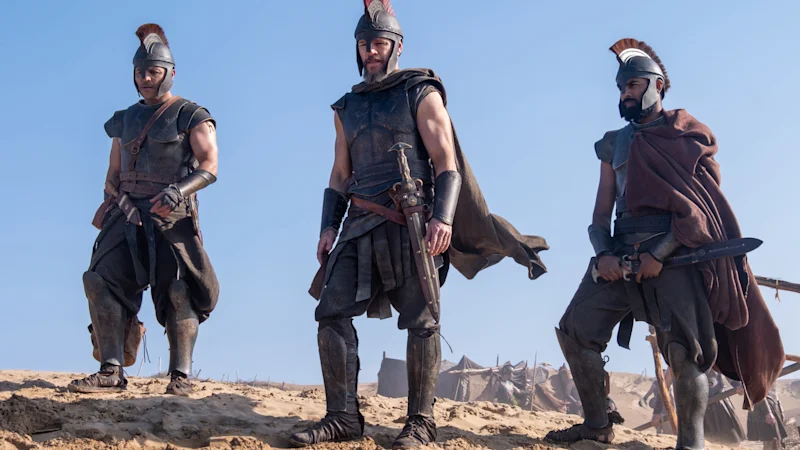
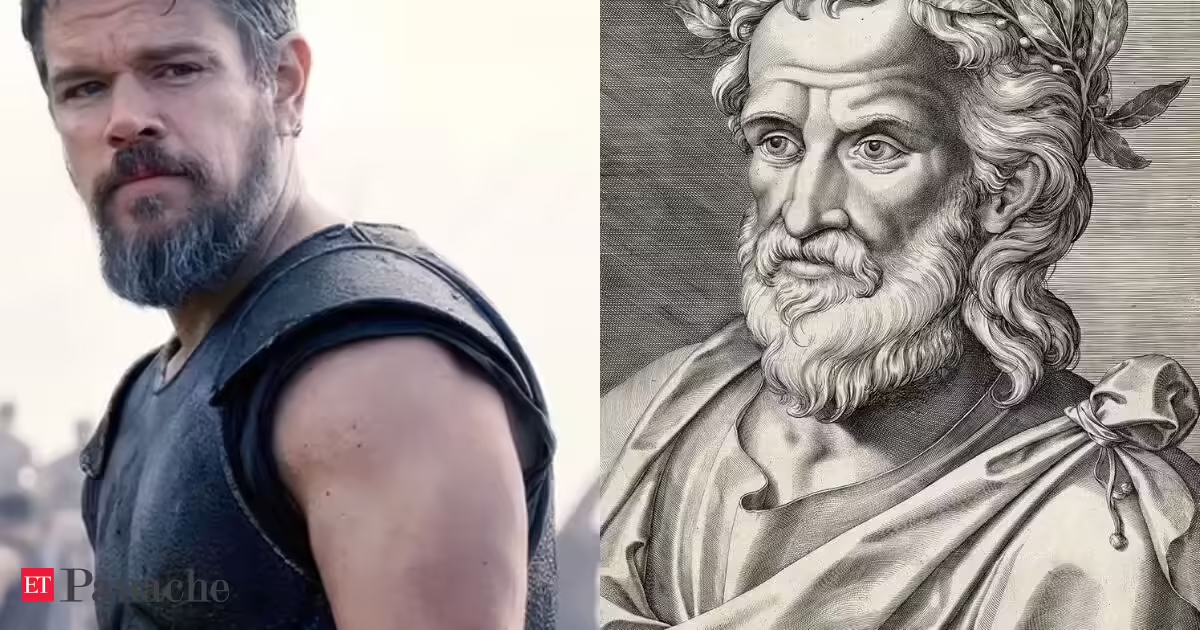
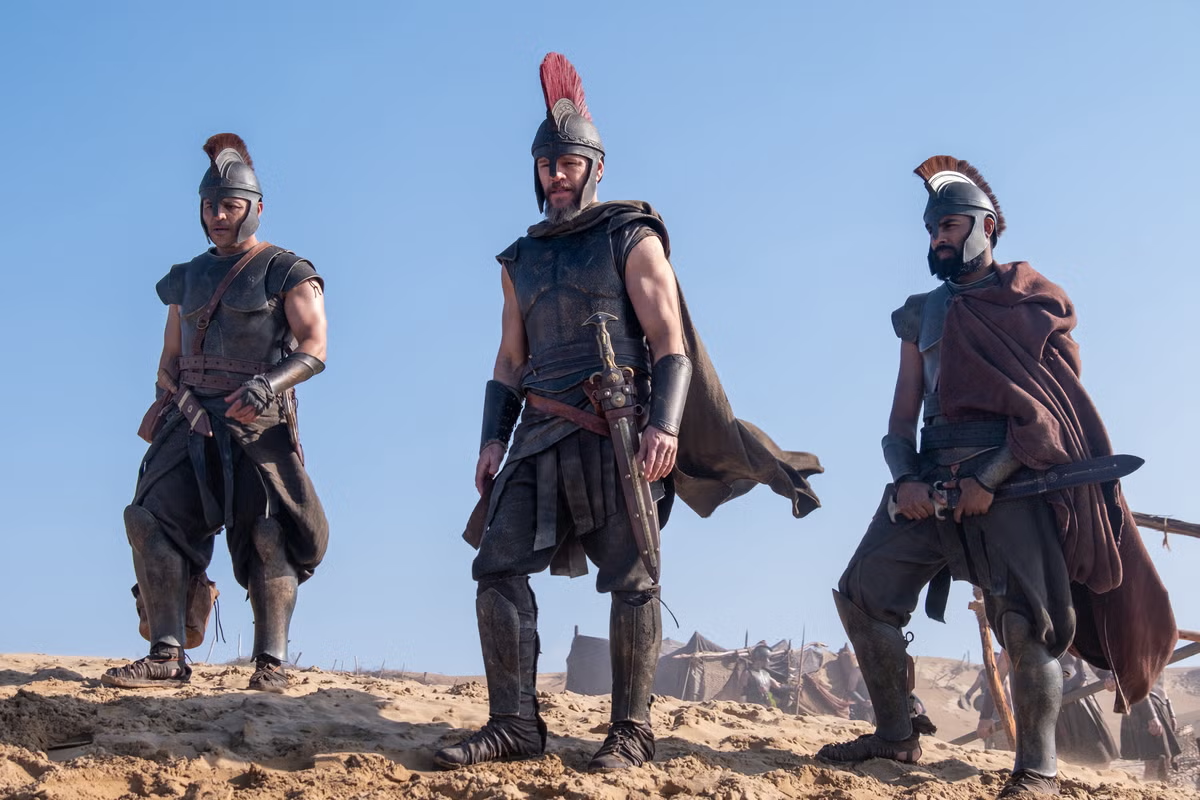
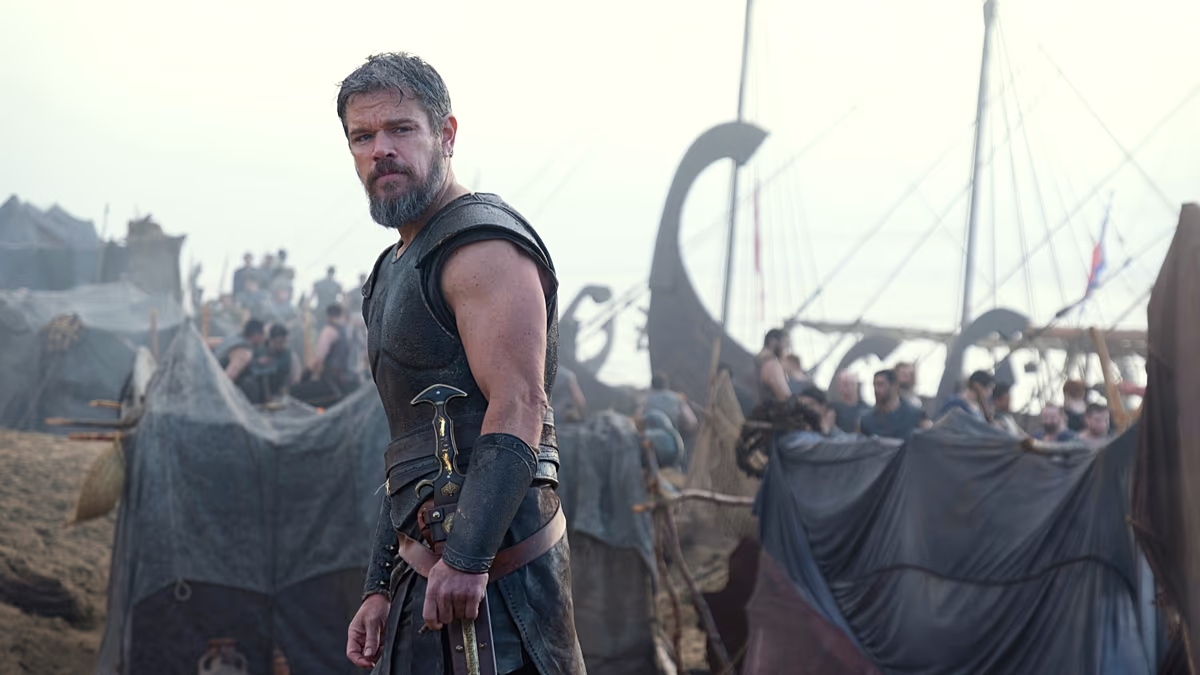
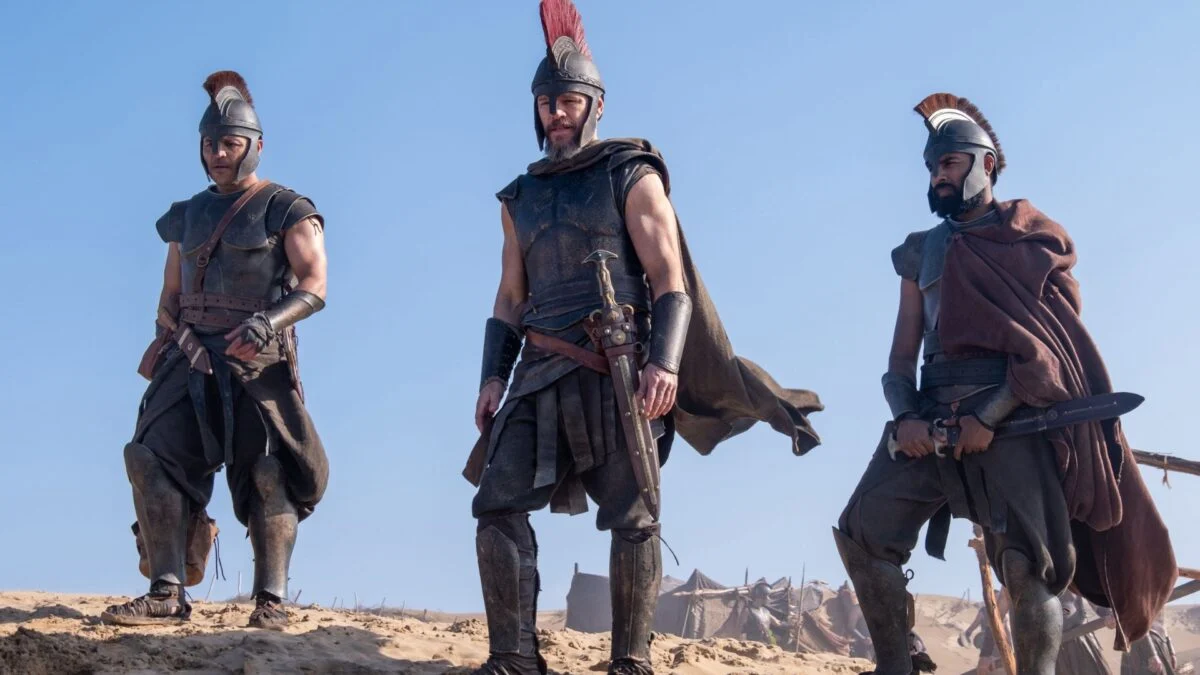
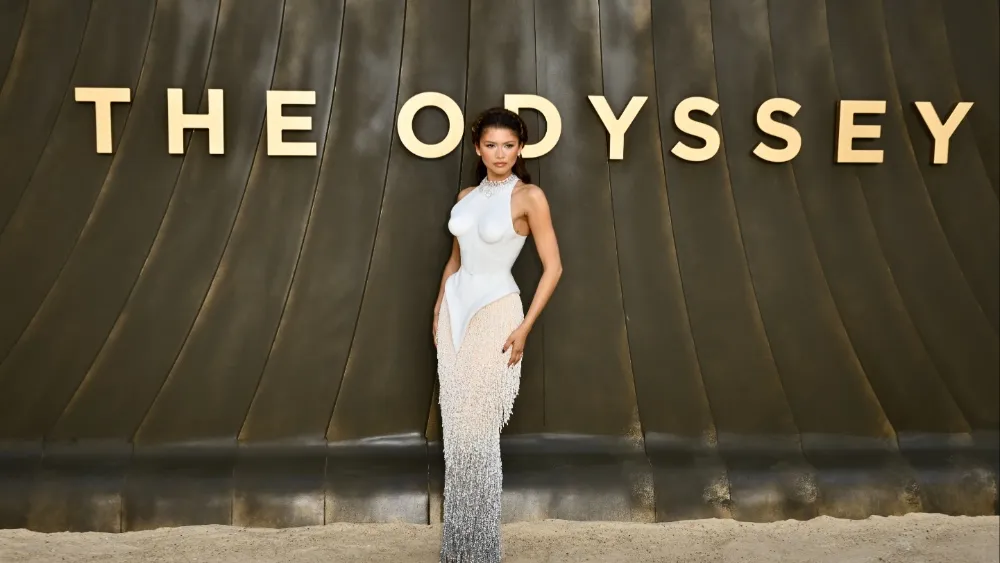
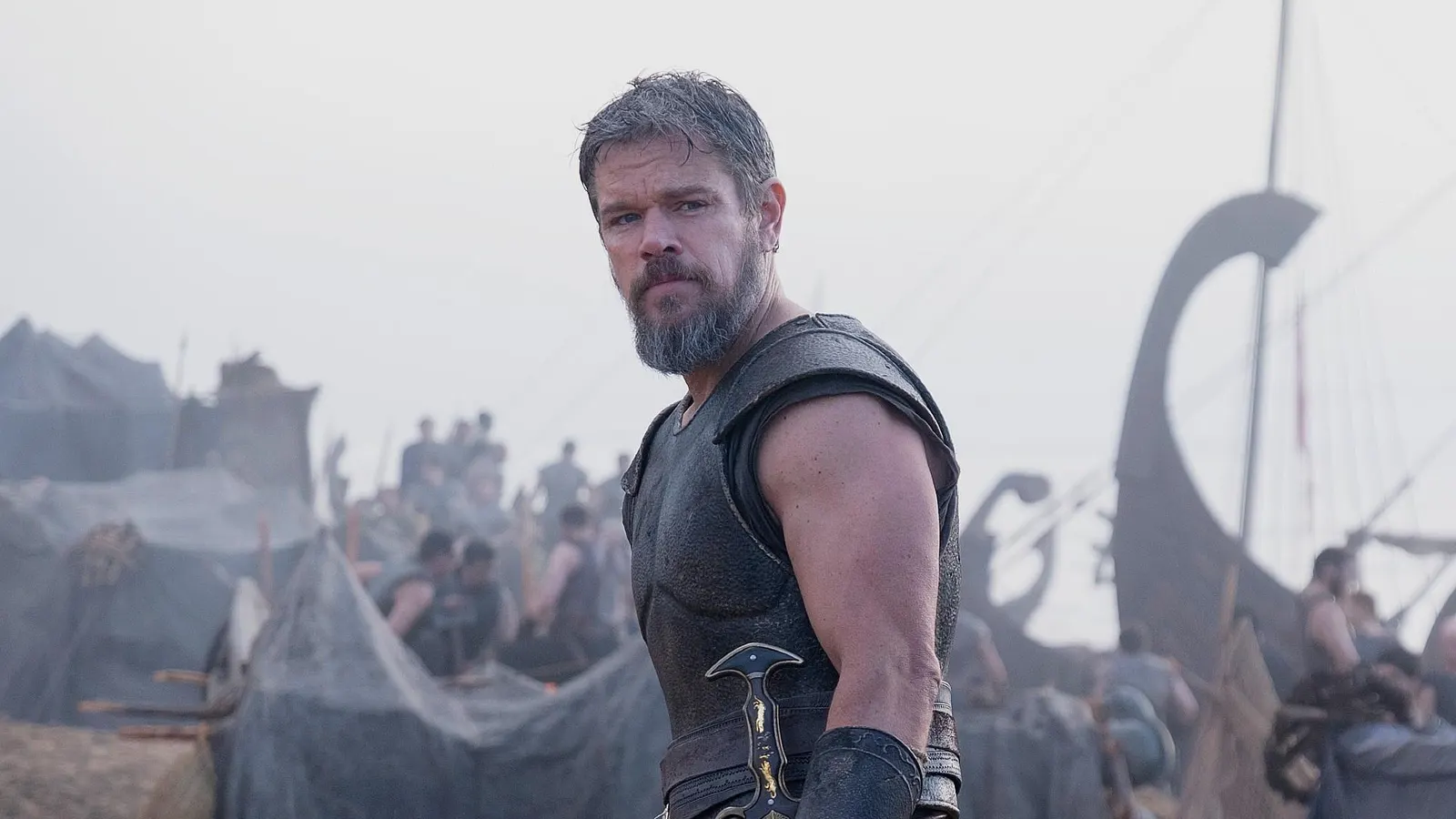
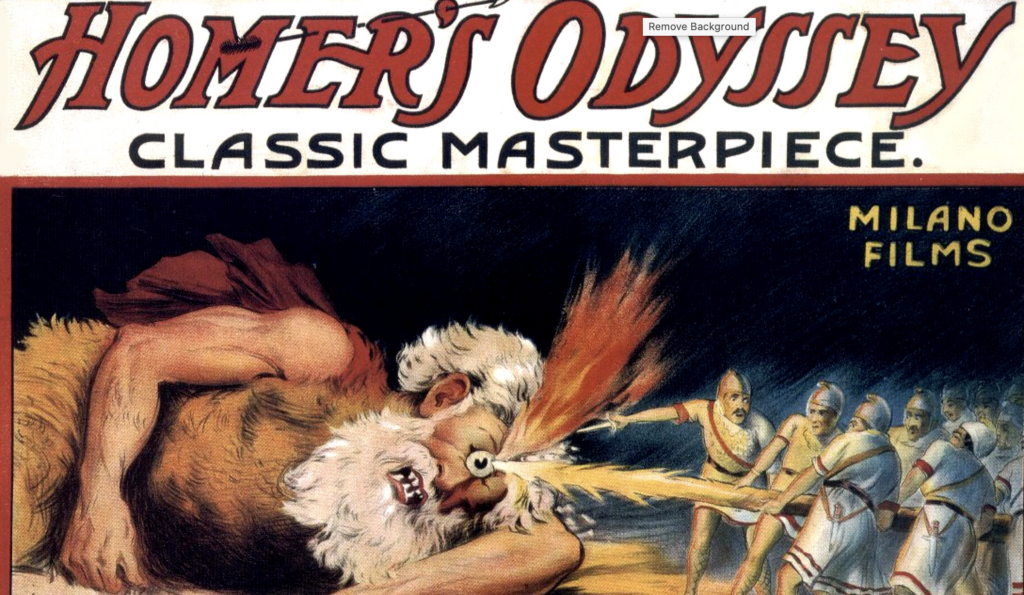
Public and commercial spaces around the world are now lined with imagery of a vertebra-studded battle helmet and statues surrounded by flame. It’s all part of the promotional campaign for Christopher Nolan’s adaptation of the Odyssey, which will begin opening in theaters later this month. Much has been said and written about how the project represents the next phase of Nolan’s ever-grander cinematic ambitions, but banking on the spectacle value of Homer has a long history in filmmaking. When the Italian silent adaptation L’Odissea came out in 1911, for example, it was uncertain even whether audiences would tolerate the 44 minutes it took to depict Odysseus’ arduous journey home.
Though it was released in the fall of 1911 in Italy and the following winter in the U.S., L’Odissea now looks like a summer blockbuster avant la lettre, or ante litteram — or then again, given the material, πρὶν ὀνομασθῆναι, though most of us are still waiting to see just how ancient Nolan and his collaborators have allowed themselves to get.
By the standards of their day, the makers of L’Odissea appear to have spared no expense on sets, costumes, and even visual effects, most notably in its portrayal of the cyclops Polyphemus. Technically, none of it may measure up to what Nolan and company have in store, but the theatrical gestures, shifting color tints, and occasionally battered textures do their part to conjure up a reality of their own.